Do Leveling Kits Affect Alignment ? What Truck Owners Should Know
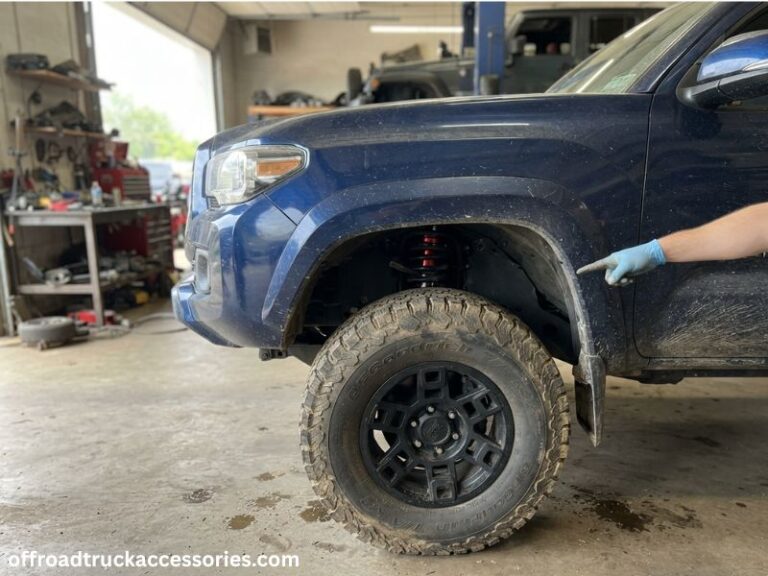
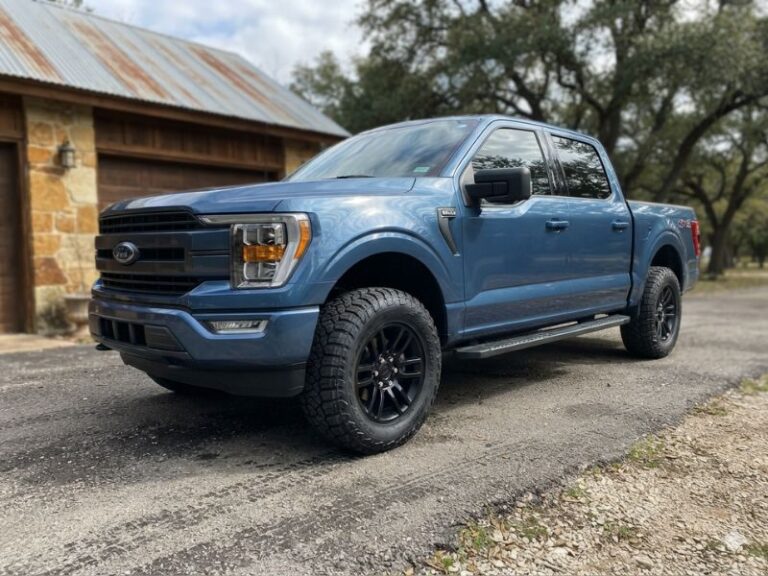
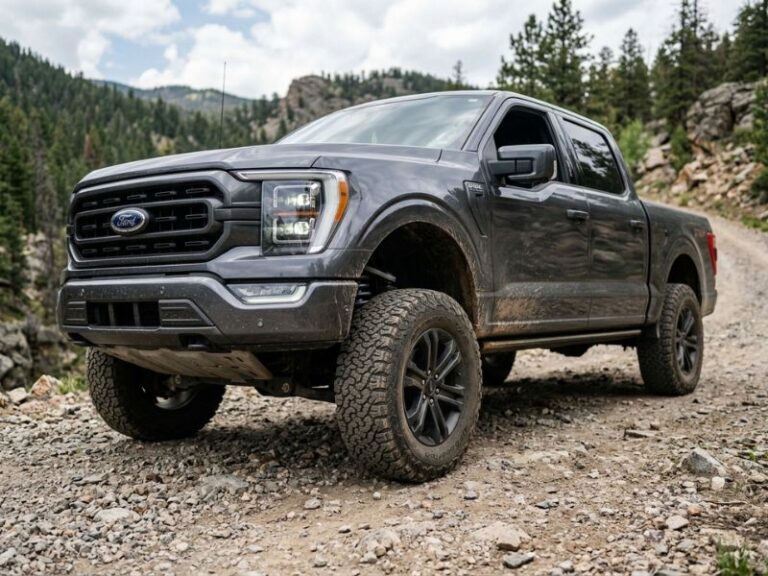
A leveling kit can improve a truck’s appearance by raising the front end and reducing the factory nose-down stance. It may also create additional tire clearance and improve the front approach angle. However, changing the suspension height also changes the position of several steering and suspension components.
So, do leveling kits affect alignment? Yes. Installing a leveling kit almost always changes at least one of the truck’s key alignment measurements, including camber, caster, and toe. The amount of change depends on the suspension design, leveling height, kit type, vehicle condition, and installation quality.
A moderate, vehicle-specific leveling kit can usually be aligned back within acceptable specifications. Problems are more likely when the kit raises the front too high, the suspension lacks sufficient adjustment range, worn components are already present, or the truck is driven without completing a professional alignment afterward.
Ignoring alignment after installation can lead to uneven tire wear, steering pull, poor highway stability, reduced fuel efficiency, and additional stress on suspension components. Understanding how leveling kits affect alignment can help you avoid these problems and protect your tires.
Do Leveling Kits Affect Alignment After Installation?

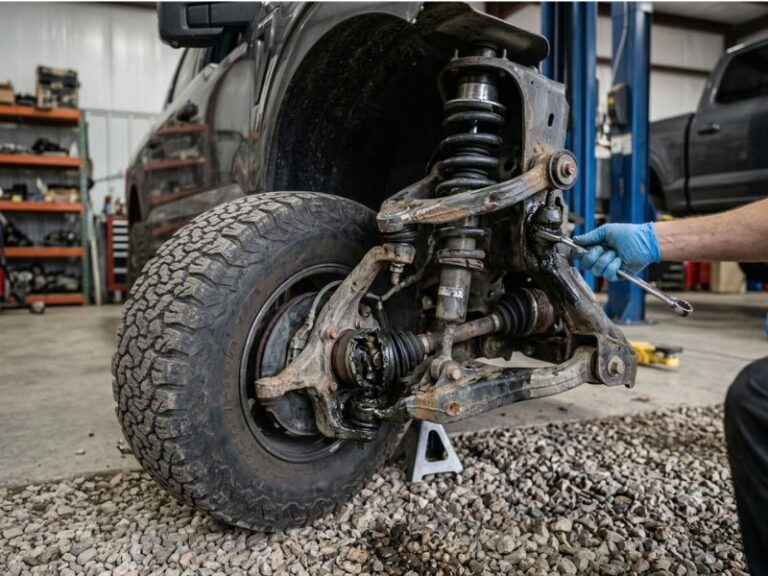
Yes, leveling kits affect alignment because raising the front of a truck changes the resting position of the control arms, steering linkage, struts, ball joints, and other suspension components.
From the factory, these parts are positioned to create specific alignment angles at the original ride height. When the front suspension is raised, the geometry moves away from that factory position.
Even a 1.5-inch or 2-inch leveling kit can change alignment measurements. A taller 2.5-inch or 3-inch kit may create a more significant change and can make it harder to restore ideal settings using factory adjustment points.
The truck may still appear to drive normally immediately after installation. However, small alignment errors can gradually damage the tires. A vehicle does not need to pull strongly or shake for its alignment to be incorrect.
A professional alignment should therefore be treated as part of the leveling-kit installation rather than an optional extra.
Why Trucks Need Alignment After a Leveling Kit
Wheel alignment controls how the tires sit against the road and how they move when the truck travels straight or turns.
The three primary alignment measurements are camber, caster, and toe. Each one affects tire wear and handling differently.
When a leveling kit raises the front suspension, it changes the relationship between the wheels, control arms, steering knuckles, and tie rods. The alignment settings that were correct at the original ride height may no longer be correct at the new height.
A proper alignment adjusts the suspension and steering components so the tires make appropriate contact with the road. It also helps the steering wheel return naturally after a turn and keeps the truck stable at highway speeds.
Without correction, the tires may drag slightly across the road instead of rolling smoothly. This can remove tread quickly even when the vehicle feels relatively normal from the driver’s seat.
How Leveling Kits Affect Camber
Camber describes the inward or outward tilt of a tire when viewed from the front of the truck.
If the top of the tire leans outward, the vehicle has positive camber. If the top leans inward, it has negative camber.
Raising the front suspension changes the control-arm position and may cause the wheels to tilt away from their factory camber setting. The exact direction and amount of change depend on the suspension design.
Incorrect camber can cause one side of the tire tread to wear faster than the other. Too much positive camber commonly wears the outside shoulder, while excessive negative camber can wear the inside edge.
Camber problems may not always cause a noticeable steering pull. The first clear sign may be uneven tread after several thousand miles.
Many trucks provide some factory camber adjustment through control-arm bolts, eccentric cams, or strut mounting points. However, a taller leveling kit may use most or all of the available adjustment range.
If factory components cannot restore the correct setting, aftermarket upper control arms or additional alignment hardware may be required.
How Leveling Kits Affect Caster
Caster is the forward or backward angle of the steering axis when viewed from the side of the vehicle.
Caster has a major influence on straight-line stability, steering feel, and how strongly the steering wheel returns to the center after a turn.
A truck with insufficient positive caster may feel loose or unstable on the highway. It may wander between lane markings and require frequent steering corrections. The steering wheel may also return slowly after turning.
Leveling kits can reduce available positive caster by changing the control-arm position. This issue is common on some independent front suspension designs, particularly when the front is raised near the maximum height supported by factory components.
A technician may be able to bring caster into the manufacturer’s acceptable range, but simply reaching the edge of the specified range does not always produce ideal driving behavior.
Some aftermarket upper control arms are designed with additional caster built into their geometry. They may provide better alignment adjustment while improving ball-joint angles and suspension clearance.
Caster should be checked carefully when a leveled truck feels unstable despite having correct tire pressure and balanced wheels.
How Leveling Kits Affect Toe
Toe describes whether the front edges of the tires point slightly inward or outward when viewed from above.
Toe is one of the most important measurements for tire life because even a small error can cause rapid tread wear.
When the front suspension height changes, the tie rods move to a different angle. This can alter the toe setting even when no steering parts were intentionally adjusted during installation.
Incorrect toe often creates feathered tread wear. When you run your hand across the tire, the tread blocks may feel smooth in one direction and sharp in the other.
Excessive toe can also make the truck feel nervous, unstable, or resistant to smooth steering inputs.
Toe is usually adjustable through the tie rods, so a qualified alignment technician can often correct it without replacing additional parts. However, the adjustment should be performed only after the suspension has been assembled correctly and the truck is sitting at its final ride height.
Can You Drive Without an Alignment After Leveling?
The truck may be physically drivable after installing a leveling kit, but driving for an extended period without an alignment is not recommended.
Even a short trip can begin wearing the tires if toe or camber is significantly incorrect. The damage becomes more expensive when the truck has large all-terrain or mud-terrain tires.
Ideally, the alignment shop should be located close to the installation location. Avoid planning a long highway trip immediately after completing the suspension work.
If the steering wheel is severely off-center, the truck pulls strongly, or the tires appear visibly tilted, the vehicle should be inspected before regular driving.
Alignment is also a safety issue. Incorrect settings can affect braking stability, steering response, and emergency handling.
What Happens If You Skip the Alignment?
Skipping the alignment can create several problems over time.
The most common result is uneven tire wear. Tires may wear rapidly on the inner or outer shoulders, reducing their lifespan even when plenty of tread remains elsewhere.
Poor alignment can also increase rolling resistance. When the tires do not point correctly, the engine must work harder to move the truck, which may slightly reduce fuel economy.
Steering problems may include pulling to one side, wandering, poor steering-wheel return, or an off-center steering wheel.
Incorrect alignment can also place additional loads on ball joints, tie rods, control-arm bushings, and wheel bearings. These components are designed to operate within specific positions, and forcing them to work against poor geometry may accelerate wear.
The cost of a professional alignment is usually much lower than replacing a damaged set of truck tires.
Does Leveling Kit Height Change Alignment Risk?
Yes, the amount of front lift has a direct effect on alignment risk.
A small 1-inch or 1.5-inch kit normally causes less suspension-geometry change than a 3-inch kit. A moderate 2-inch leveling kit may remain within factory adjustment limits on many trucks, but this is not guaranteed for every model.
As leveling height increases, the control arms and ball joints operate at steeper angles. The suspension may also lose some available downward travel.
A taller kit may move camber and caster beyond the adjustment range of factory components. That is when aftermarket upper control arms, longer shocks, geometry-correction brackets, or other supporting parts may become necessary.
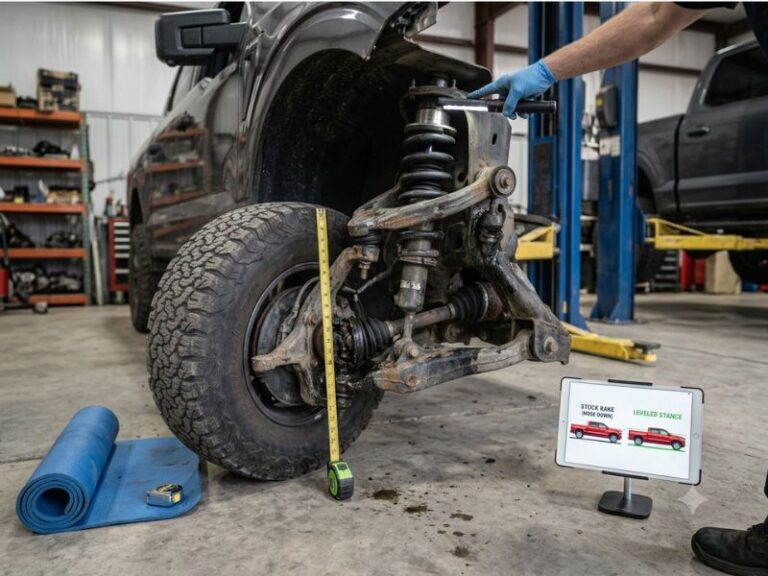
Choosing the tallest available kit simply for appearance is not always the best decision. The correct height should be based on the truck’s measured factory rake and the suspension manufacturer’s recommendations.
If the truck has only 1.75 inches of rake, installing a full 3-inch front kit may create a nose-high stance while unnecessarily increasing alignment difficulty.
Do Spacer Leveling Kits Affect Alignment More?
A spacer leveling kit does not automatically create worse alignment than every other design. The final ride height has a greater influence than the appearance of the spacer itself.
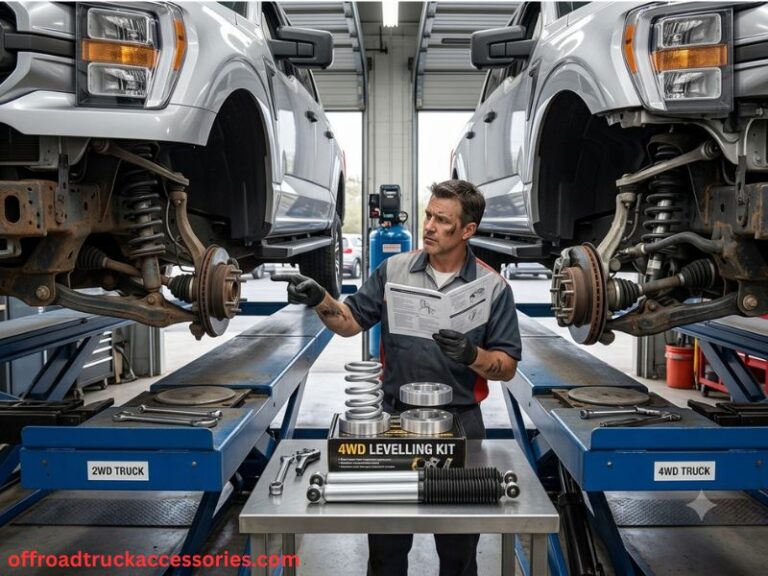
A strut spacer raises the truck by repositioning the factory strut assembly. This changes control-arm, ball-joint, and tie-rod angles while retaining the original strut and spring.
A preload spacer increases spring preload to raise the front. It may also change ride firmness and available suspension movement.
Adjustable struts and coilovers provide another method of increasing ride height. They may offer better damping and control, but raising the front to the same final height still changes alignment geometry.
Premium components cannot completely eliminate the need for alignment. Regardless of kit type, the truck should be aligned after the final ride height is set.
Can the Truck Be Aligned With Factory Components?
Many trucks can be aligned successfully after installing a moderate leveling kit using factory components.
Whether this is possible depends on the model, year, drivetrain, suspension design, kit height, and condition of the existing parts.
A technician may have enough adjustment to correct camber, caster, and toe after a 1.5-inch or 2-inch lift. A taller kit may push one or more measurements outside the available range.
The alignment report may show all readings within the manufacturer’s broad specifications, but that does not always mean the settings are ideal. For example, caster may technically be acceptable while still being lower than preferred for stable highway driving.
A skilled technician familiar with modified trucks can aim for settings that provide both tire life and predictable handling.
When factory adjustment is insufficient, aftermarket upper control arms are a common solution. They may restore alignment range and improve the operating angle of the upper ball joint.
Existing Suspension Wear Can Make Alignment Difficult
A leveling kit should not be installed without checking the condition of the existing suspension.
Worn ball joints, control-arm bushings, tie rods, wheel bearings, and strut mounts can prevent the technician from achieving or maintaining accurate alignment.
A worn joint may allow the wheel angle to change while driving, even if the alignment machine initially shows acceptable readings.
High-mileage trucks should receive a full suspension inspection before installation. Replacing worn parts first can prevent repeated alignment appointments and uneven tire wear.
The leveling kit may not directly cause the problem, but changing the suspension height can make an existing weakness more noticeable.
Loose hardware can produce similar symptoms. All fasteners should be tightened to the manufacturer’s torque specifications, and components with rubber bushings may need to be torqued while the truck is sitting at normal ride height.
How Larger Tires and Wheels Affect Alignment
Leveling kits are often combined with larger tires and aftermarket wheels. These changes can make alignment-related problems more noticeable.
A wider tire has a larger contact patch and may follow road grooves more aggressively. Heavy tires also increase unsprung weight, making worn suspension components easier to feel through the steering.
Aggressive wheel offset moves the tire farther away from the hub. This increases leverage on the wheel bearings, ball joints, tie rods, and control arms.
Wheel offset does not directly replace the need for alignment, but an unsuitable setup can make the truck feel unstable even after the alignment numbers are corrected.
Tire pressure, balancing, tread design, and road surface also affect steering behavior. If a leveled truck still wanders after alignment, the complete wheel-and-tire package should be inspected.
When Should the Alignment Be Checked Again?
The first alignment should be completed immediately after installing the leveling kit.
A second inspection may be useful after the suspension settles, especially if new springs, coilovers, control arms, or bushings were installed. Some components can settle slightly during the first few hundred miles.
The alignment should also be checked when you notice steering pull, uneven tire wear, an off-center steering wheel, or instability.
Hitting a pothole, curb, or off-road obstacle can also disturb alignment. Trucks used regularly on rough terrain may need more frequent inspections than vehicles driven only on paved roads.
Rotating the tires according to the manufacturer’s schedule can help reveal developing wear patterns before they become severe.
How to Avoid Alignment Problems With a Leveling Kit
Start by choosing a kit designed specifically for the exact truck model, year, drivetrain, and suspension package.
Measure the factory rake before selecting the lift height. Use the smallest increase necessary to achieve the desired stance rather than automatically choosing the tallest option.
Inspect the ball joints, tie rods, bushings, wheel bearings, shocks, and struts before installation. Worn components should be repaired first.
Have the kit installed correctly and complete a professional alignment as soon as the work is finished. Request a printed alignment report showing the final camber, caster, and toe readings.
If the technician cannot achieve acceptable settings, do not simply continue driving. Identify whether the truck needs upper control arms, alignment cams, replacement components, or a lower leveling height.
Regular tire inspections and suspension maintenance will help prevent small alignment issues from becoming expensive problems.
Final Thoughts
So, do leveling kits affect alignment? Yes, raising the front suspension changes camber, caster, and toe because the control arms, steering linkage, and suspension components move away from their original factory positions.
A moderate, vehicle-specific leveling kit can usually be aligned successfully, especially when the suspension is in good condition and the installation is completed correctly. Taller kits may require aftermarket control arms or additional alignment hardware.
Never treat alignment as an optional step after leveling a truck. A professional alignment protects tire life, steering stability, suspension components, and overall driving safety. Choosing the correct kit height, inspecting existing parts, and keeping a printed alignment report can help your leveled truck remain reliable and comfortable.