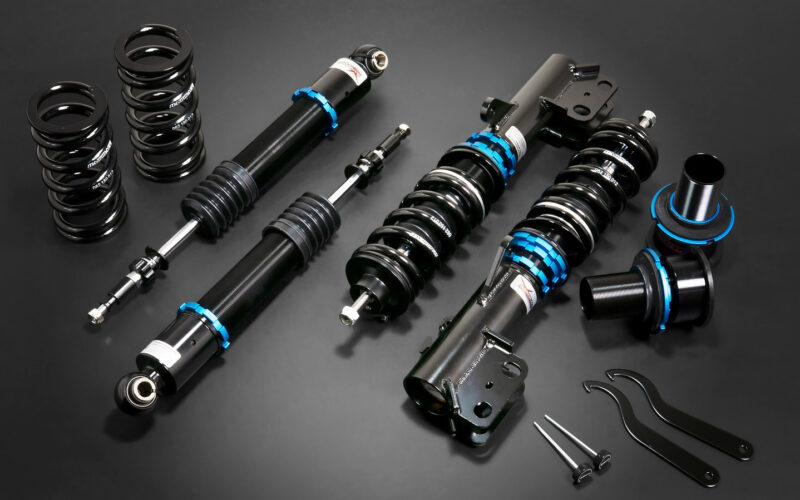
Coilovers can make your car faster through corners and help reduce lap times, but they do not directly increase engine power or top speed.
For drivers in the United States, coilovers are a common upgrade for street cars, sports cars, and track builds. They combine a coil spring and shock absorber into one unit. Many kits also let you change ride height, while some allow you to adjust damping, which controls how the suspension responds to movement.
The main benefit is better control over how a car moves through turns, brakes, and changes direction. A well-matched coilover setup can help tires maintain contact with the road and make the car more stable. These gains depend on the car, the suspension design, the tires, the road surface, and the quality of the setup.
However, a lower car is not always a faster car. Poorly chosen coilovers can make a vehicle bounce, lose grip on rough roads, or handle worse than it did with its factory suspension. The right choice depends on where you drive and what kind of speed you want to improve.
Coilovers affect speed mainly by changing how well a car uses its available tire grip. They do not create more engine power. Instead, they can help the driver carry more speed through turns, control body movement, and keep the car more settled during quick changes in direction.
A car’s speed depends on several systems working together. The engine or motor supplies power, the tires transfer that power to the road, and the suspension helps the tires stay in contact with the surface. A change to one system can improve or limit the results of another.
For example, a car with strong engine power may still lose time on a winding track if it rolls too much, understeers, or struggles to put power down when leaving a corner. A suitable suspension setup may help the driver use the available power more effectively.
Source: suspensionsetups.com
Cornering speed
Better bodycontrol and a suitable alignment may let the driver maintain more speed through turns without exceeding the tires’ grip limits.
Straight-line acceleration
Coilovers do not add engine power. Acceleration may improve if the suspension helps the tires use available traction, but gains are not guaranteed.
Braking performance
A balanced setup can help keep the car stable during braking. Actual stopping distance still depends heavily on tires, brakes, road conditions, and vehicle balance.
Top speed
Coilovers do not directly raise the engine’s power limit. Any change in top speed from ride height or airflow is vehicle-specific and should not be assumed.
Why Handling Can Matter More Than Horsepower
On a winding road course, a driver must slow down, turn, and accelerate many times. A car that can take corners with better control may gain time even when its engine output stays the same. That is one reason suspension tuning is a major part of many track builds.
On a long, straight drag strip, the result is different. Engine power, vehicle mass, gearing, tire grip, and traction control the outcome more directly. Suspension changes can still matter at launch, but they do not replace the need for adequate power.
Road course
Handling, braking stability, tire grip, and the ability to change direction can strongly affect lap times.
Drag strip
Launch traction and power delivery matter most, so the right suspension setup depends on the car and its drivetrain.
How Coilovers Improve Cornering Performance
Coilovers can improve cornering by changing spring support, damping, ride height, and the way the suspension responds to weight transfer. These changes can make the car feel more controlled and help the driver use its available grip. The best results come from a setup matched to the vehicle and its intended use.
When a car turns, its weight shifts toward the outside tires. The suspension compresses on one side and extends on the other. Springs and dampers control these movements, while the tires provide the grip needed to follow the chosen path.
Body roll is the visible tilt of the car during a turn. Reducing body roll can improve steering response, but less roll does not automatically mean more grip. Spring rates, anti-roll bars, suspension geometry, and tire behavior all work together.
Source: www3.wuling.id
More controlled body movement
Suitable springs and dampers can reduce unwanted movement and make the car respond more consistently when turning.
Better driver feedback
A balanced setup may make changes in grip and vehicle movement easier to sense, helping the driver make smoother inputs.
Improved corner exits
A well-tuned suspension can help the tires maintain useful contact with the road as the driver accelerates out of a turn.
Why Less Body Roll Does Not Always Mean More Grip
A stiff suspension can keep the body flatter, but it can also make the tires lose contact with uneven pavement. This is especially important on public roads, where dips, bumps, broken surfaces, and patchwork repairs are common.
Tire grip also depends on how load is shared across the tires. Suspension tuning changes that load distribution, but the relationship is complex. A setup that works well on a smooth race circuit may perform poorly on a rough street.
The goal is not to make the suspension as stiff as possible. It is to control body movement while allowing the tires to follow the road and maintain grip.
Smooth track
A firmer setup may improve response when the surface is predictable and the spring and damping rates are properly matched.
Rough street
A more compliant setup may offer better contact with uneven pavement and more predictable control.
Do Coilovers Make Your Car Faster in a Straight Line?
Coilovers usually do not make a car faster in a straight line by themselves. They do not increase engine displacement, turbocharger output, electric motor power, or torque. If two otherwise identical cars have the same power, gearing, mass, and traction, a suspension swap alone does not guarantee a quicker acceleration time.
Suspension behavior can still affect how effectively a car transfers power to the road. A front-wheel-drive car may struggle with wheelspin under hard acceleration, while a rear-wheel-drive car may need a setup that helps manage rear tire loading. All-wheel-drive cars have their own traction and balance needs.
For a drag car, the goal is to control weight transfer and keep the driven tires working within their useful grip range. A road-focused coilover kit may not have the spring rates or adjustment range needed for that job. Some specialized drag setups use different suspension parts or tuning methods.
The key point is that suspension can help a car use its existing power. It cannot replace the power needed to overcome aerodynamic drag, vehicle mass, and other forces that limit acceleration.
Source: carphanatics.com
If wheelspin is the problem
Tire condition, tire compound, alignment, differential behavior, and suspension tuning may all matter. A coilover upgrade is only one possible part of the solution.
If engine power is the limit
Coilovers will not supply the missing horsepower. A suspension change should not be expected to produce a major improvement in straight-line speed.
If the car is unstable under acceleration
Have the suspension, tires, alignment, and drivetrain checked before choosing a new setup. The cause may not be the original springs and dampers.
Can Coilovers Improve a Quarter-Mile Time?
They can help in some cases if the existing suspension struggles to put power down or maintain control during launch. However, the result depends on the car’s drivetrain, tires, power output, track surface, and suspension design.
A change that improves cornering on a road course may not improve a quarter-mile run. Drag racing rewards a different balance of launch traction, weight transfer, and stability. A driver should compare measured times rather than assume that a lower ride height or stiffer spring will be quicker.
Useful comparison
Compare repeatable quarter-mile times under similar conditions, with the same tires and comparable fuel load, weather, and launch method.
Avoid assumptions
A firmer ride or a lower stance is not proof that a car will launch faster.
Can Coilovers Increase Top Speed?
Coilovers do not directly increase a car’s top speed. At high speeds, engine power must overcome aerodynamic drag and rolling resistance. The gearing, engine output, tire limits, road conditions, and electronic speed limiters also affect the maximum speed a car can reach.
Ride height can affect airflow under and around the vehicle. In some designs, a suitable reduction in ride height may change aerodynamic lift or drag. However, lowering a car does not always reduce drag, and the outcome depends on its body shape, underbody design, and suspension geometry.
A car that sits too low can also lose useful suspension travel. At speed, a bump or dip may cause the suspension to reach its limit, making the vehicle less stable. An unsafe setup is not worth a possible aerodynamic benefit that has not been measured.
For most street cars, coilovers should be selected for their intended handling and ride characteristics rather than a promise of higher top speed. High-speed testing belongs in a controlled environment, not on public roads.
Source: martiniworks.s3-accelerate.amazonaws.com
Aerodynamic changes
Ride height may change airflow, but any improvement in drag or stability must be established for the specific vehicle.
Electronic limits
A speed limiter or gearing limit will not normally be removed by installing coilovers.
Suspension travel
Adequate travel is vital for stability. Excessive lowering can make the car less controlled on uneven surfaces.
Which Coilover Features Matter Most for Speed?
The most useful coilover features are the ones that match the car’s tires, suspension geometry, weight, and driving conditions. A high price or a long list of adjustments does not guarantee faster performance. The quality of the parts and the way they are set up matter more than the number of knobs.
Before buying a kit, check whether it is designed for your exact make, model, year, drivetrain, and intended use. A kit made for a similar vehicle may not have the same fit, spring rates, adjustment range, or suspension travel.
Source: i.ytimg.com
Spring rate
Spring rate describes how much force is needed to compress a spring by a given distance. Springs that are too stiff or too soft can reduce control or grip.
Damping adjustment
Damping controls how quickly the suspension moves after a bump or weight transfer. Adjustment can help tune response, but more damping is not always better.
Ride-height adjustment
Changing ride height can alter the center of gravity and suspension geometry. The safe range depends on the car and the kit.
Build quality
Reliable materials, proper seals, corrosion protection, and serviceable components affect long-term function and consistency.
Adjustment range
Separate rebound and compression controls can offer more tuning options, but they also require a sound method and an understanding of how each change affects the car.
What Is the Difference Between Cheap and Quality Coilovers?
Lower-cost coilovers can be suitable for some uses, but price alone cannot establish their performance. Differences may include damper design, spring quality, corrosion resistance, adjustment range, rebuild options, and the consistency of manufacturing.
A low-cost kit that uses poor damping or has limited suspension travel may make the car harsher without improving grip. A well-designed kit with suitable rates may deliver more predictable control, even if it offers fewer external adjustments.
Check technical specifications and documented fitment information before buying. Look for clear spring-rate data, ride-height limits, installation instructions, replacement parts, and support from the manufacturer.
Street use
Favor a kit with suitable comfort, useful travel, corrosion protection, and reliable support.
Track use
Look for documented spring and damping options suited to the car and intended circuit, plus access to competent setup advice.
How Ride Height and Alignment Affect Speed
Ride height and wheel alignment can affect handling as much as the choice of coilover kit. Lowering a vehicle changes the positions of suspension parts and may alter camber, toe, roll-center height, and bump-steer behavior. These effects vary by suspension design and how far the car is lowered.
Camber describes the inward or outward tilt of a wheel when viewed from the front or rear. Toe describes whether the front edges of the tires point toward or away from each other. Both settings affect how the tires meet the road, how the car responds to steering, and how the tread wears.
A track-focused alignment may improve cornering under certain conditions but cause faster tire wear or less predictable behavior in daily driving. There is no single alignment specification that makes every car faster in every situation.
Source: autoimage.capitalone.com
Too much lowering
Excessive lowering can reduce suspension travel, create poor geometry, and increase the chance of hitting the bump stops.
Incorrect toe
Poor toe settings can cause tire wear and unstable handling, even when the car has expensive coilovers.
Suitable camber
The best camber depends on the tire, suspension design, driving conditions, and how the tire loads during a turn.
Why a Professional Alignment Matters
After installing coilovers or changing ride height, have the alignment checked using specifications suitable for the vehicle and its intended use. A shop can measure camber, toe, and other adjustable angles and identify values outside the usable range.
If the car is used for both daily driving and occasional track events, tell the technician about both needs. This helps avoid an extreme setup that may work in one setting but cause excessive tire wear or poor road manners in another.
Before driving hard
Confirm that the installation is correct, the fasteners are secured to the specified torque, and the alignment is within an appropriate range.
After settling
Follow the kit maker’s instructions about settling the suspension and rechecking ride height, fasteners, and alignment.
Can Coilovers Make a Car Slower?
Yes. Coilovers can make a car slower if the kit is poorly matched to the vehicle, the setup reduces tire grip, or the installation creates problems. Stiffer springs and a lower ride height may look sporty while making the car less effective on real roads.
A suspension that cannot absorb bumps well may cause the tires to lose contact with the pavement. If that happens during braking or cornering, the driver may have less grip available. Excessive damping can also prevent the suspension from responding well to repeated bumps.
Other problems can include incorrect ride height, poor alignment, damaged components, loose hardware, and interference between the tires and body. These issues can affect both performance and safety.
Source: stanceauto.co.uk
Harsh bouncing
Possible causes include poor damping, excessive spring stiffness, limited suspension travel, or worn components. A qualified shop should inspect the setup.
Reduced grip on rough roads
The suspension may be too stiff or poorly controlled for the surface. A softer or better-matched setup may improve tire contact.
Unstable steering
Incorrect alignment, bump steer, worn parts, or installation errors may be responsible. Do not assume that changing damping alone will solve the issue.
Tire rubbing
The ride height, wheel offset, tire size, or suspension geometry may be unsuitable. Check clearance before normal use.
Warning Signs After Installation
Pay attention to new clunks, repeated bottoming, unusual steering behavior, tire contact with the body, or a sudden change in handling. These signs can point to an installation or setup problem that needs inspection.
If the vehicle feels unstable, a wheel rubs against the body, or a suspension part appears loose or damaged, stop driving when it is safe to do so and arrange a professional inspection. Do not try to solve a possible mechanical fault by making random adjustments.
Inspect first
Check the installation instructions and have the mounting points, clearances, dampers, springs, and related components inspected.
Do not chase stiffness
Increasing damping or spring rate without finding the cause can make the problem worse.
Coilovers vs. Stock Suspension: Which Is Faster?
Coilovers are not automatically faster than factory suspension. Modern performance cars can come with carefully developed springs, dampers, bushings, and suspension geometry. Replacing those parts with a basic aftermarket kit can reduce performance rather than improve it.
A coilover kit has a clearer advantage when the factory suspension does not meet a driver’s needs, such as when the driver wants adjustable ride height or a setup designed for regular track use. The gain still depends on choosing the right kit and tuning it properly.
For a daily driver, the original suspension may provide a better balance of grip, comfort, ground clearance, and durability. If the factory dampers are worn, replacing them with quality parts that suit the original design may be more useful than installing an aggressive coilover kit.
Source: stanceauto.co.uk
Keep stock suspension when
The car already handles well, comfort matters, the factory parts are in good condition, and adjustable ride height is not needed.
Consider coilovers when
You need a specific ride height, more tuning options, or a documented performance setup that suits your intended driving.
Repair before upgrading
If worn dampers, broken springs, damaged bushings, or poor alignment cause the problem, correct those faults first.
Will Coilovers Make a Daily Driver Faster?
For ordinary commuting, the speed benefit is often small or irrelevant. Most daily driving takes place well below the limits of tire grip, so the driver may notice a firmer ride or sharper steering more than a meaningful reduction in travel time.
A suitable setup may make emergency maneuvers feel more controlled, but no suspension modification removes the need for safe speeds and proper following distance. On public roads, comfort and predictable handling often matter more than maximum cornering speed.
If your car is used mainly for work, errands, and highway travel, assess whether adjustable suspension solves a real problem. Quality tires, sound brakes, good dampers, and correct alignment may offer more useful benefits for the money.
Daily use
Choose a road-friendly setup with enough suspension travel and a sensible ride height.
Occasional track use
Choose a kit designed for the car and driving demands, then have it set up and tested in a controlled environment.
How to Tell Whether Coilovers Actually Make Your Car Faster
The most reliable way to judge a suspension upgrade is to compare measured performance before and after the change. A firmer ride, a lower stance, or a sharper steering feel may be noticeable, but none of these proves that the car is faster.
Choose a test that matches your goal. For track performance, use repeatable lap times on the same course. For acceleration, compare measured runs in a controlled setting. For street use, focus on predictable handling, comfort, and whether the car remains safe and compliant with local rules.
Source: low-offset.com
1. Record the baseline
Before changing the suspension, record the current setup, tire type and condition, alignment, ride height, and relevant performance measurements.
2. Inspect the new setup
Confirm correct fitment, installation, clearances, alignment, and compliance with the kit manufacturer’s instructions.
3. Keep the test conditions similar
Use comparable tires, pressures, fuel load, vehicle settings, weather, and surface conditions where practical.
4. Measure the right outcome
Use lap time for a road course, acceleration time for a straight-line goal, and repeatable handling observations for general road use.
5. Check repeatability
Look for consistent changes across several valid runs rather than relying on one unusually good or bad result.
A Simple Hypothetical Lap-Time Example
Suppose a car completes a track lap in 100 seconds before a suspension change. After installation and setup, it completes the same lap in 98 seconds under comparable conditions. The difference is 2 seconds, or 2 percent of the original lap time.
This hypothetical result would suggest a useful improvement if it repeated across valid runs. It would not prove that the coilovers alone caused the change unless other factors, such as tires, alignment, driver inputs, temperature, and track conditions, were controlled well enough.
A single result should never be treated as a universal claim about a coilover brand or kit. The outcome applies to the specific car, setup, driver, and test conditions.
Calculate the change
Percentage improvement in lap time equals the time saved divided by the original lap time, multiplied by 100.
Interpret carefully
A repeatable improvement is more useful than a faster run that may have resulted from different conditions.
Are Coilovers Worth It for Your Car?
Coilovers are worth considering when their adjustment range and performance characteristics match a clear goal. A track driver may value repeatable handling and the ability to tune the suspension. A street driver may prefer a comfortable ride, reliable damping, and enough ground clearance for everyday roads.
Before spending money, check the condition of the current suspension. Worn dampers or damaged bushings can make a car feel vague or unstable, but a complete adjustable kit may not be the most practical repair. A suitable replacement that follows the original suspension design can restore the intended behavior at a lower overall cost.
Also consider installation, alignment, later maintenance, replacement parts, and the possible effect on warranty coverage. Some kits require periodic inspection or service. Lower ride height may also cause trouble with steep driveways, speed bumps, and uneven pavement.
For vehicles used on public roads in the United States, check applicable state and local rules before modifying ride height or lighting aim. A modification should not make the vehicle unsafe, interfere with tire clearance, or cause other equipment to operate outside its required range.
Source: carphanatics.com
Choose based on use
Decide whether the main goal is daily comfort, occasional spirited driving, track performance, or a specific ride height.
Budget for the full job
Include the kit, installation, alignment, any needed supporting parts, and future service rather than comparing purchase prices alone.
Check compatibility
Confirm the exact vehicle fitment and any limits on wheel, tire, brake, and suspension clearance.
Use a qualified installer
If you lack the right tools or suspension experience, have a qualified technician install and inspect the system.
What Should You Upgrade Before Coilovers?
For many drivers, tires are a sensible first performance upgrade because they provide the contact between the vehicle and the road. Tire quality, condition, pressure, and temperature affect grip during acceleration, braking, and cornering.
Brakes and suspension components should also be in sound condition before performance driving. Fresh dampers, correct alignment, and properly functioning bushings may resolve handling issues without the need for an adjustable kit.
The best upgrade order depends on the car and its faults. A technician who understands the vehicle and its intended use can help identify the part that limits performance instead of replacing components without a clear reason.
Tires
Check tread, age, pressure, and suitability for the weather and intended driving.
Brakes
Ensure the pads, rotors, fluid, and other parts are in suitable condition before demanding repeated hard stops.
Alignment and worn parts
Correct worn or damaged components and measure alignment before spending money on further suspension tuning.
Common Coilover Myths That Can Lead to Poor Results
Several common claims about coilovers confuse appearance with performance. A lower car may look more aggressive, and a stiff suspension may feel sporty, but neither feature proves that the car has gained grip or speed.
Good suspension tuning is about balance. The goal is to keep the vehicle stable, let the tires work effectively, and give the driver predictable responses across the conditions the car will face.
Source: martiniworks.s3-accelerate.amazonaws.com
Myth: Lower cars are always faster
Reality: Lowering may help in some cases, but excessive lowering can harm geometry, travel, and grip.
Myth: Stiffer springs always improve handling
Reality: Spring rates must suit the car, tires, dampers, and surface. Too much stiffness can reduce grip on rough pavement.
Myth: More adjustment means more speed
Reality: Extra controls are useful only when the driver or technician knows how to set them for the intended use.
Myth: Coilovers increase horsepower
Reality: Coilovers change suspension behavior, not engine output.
Myth: Every aftermarket kit beats factory suspension
Reality: Factory performance systems can be well developed, and a poor replacement can make the car handle worse.
Research Notes and Important Limits
This guide explains established suspension principles and their practical effects. It does not claim that a particular coilover kit has been tested on a specific vehicle, nor does it present an unverified lap-time gain as a measured result.
The central performance conclusion follows from the distinction between engine output and chassis control: coilovers can change how a car uses available grip, but the size and direction of the effect depend on the vehicle and setup. No universal percentage improvement can be assigned to all cars.
A useful evaluation should examine the exact kit instructions, vehicle service information, alignment requirements, and any available controlled testing for the car in question. Product claims should be checked against the conditions and measurements behind them.
Source: suspensionsetups.com
Documented principle
Springs and dampers influence suspension movement, body control, and tire contact with the road.
Vehicle-specific analysis
The effect on cornering, acceleration, braking, and top speed depends on the complete vehicle and operating conditions.
Not established universally
There is no sound basis for claiming that every coilover kit makes every car faster by a fixed amount.
Frequently Asked Questions
Q
Do coilovers increase horsepower?
No. Coilovers do not directly increase horsepower or torque because they are suspension components, not engine performance parts. They may help a car use its available power more effectively by improving control or traction in some conditions, but they do not create extra engine output.
Q
Do coilovers make a car faster around corners?
They can. A suitable setup may improve body control, steering response, and tire contact, allowing the driver to maintain more speed through a turn. The result depends on spring rates, damping, alignment, tires, suspension geometry, and the road surface.
Q
Do coilovers improve 0-to-60 mph times?
Not automatically. Coilovers do not add engine power, and the effect on acceleration depends on traction, drivetrain layout, and suspension tuning. If wheelspin or poor weight transfer limits the launch, a suitable setup may help, but the improvement must be measured on the specific car.
Q
Do coilovers make a car faster on the highway?
Usually, they do not produce a meaningful increase in normal highway speed. A coilover setup may change stability and handling feel, but it does not directly increase engine output or remove speed limits. Use legal speeds and choose a setup that maintains predictable handling and adequate suspension travel.
Q
Are coilovers better than lowering springs for speed?
Neither option is always faster. Coilovers often offer ride-height adjustment and, depending on the design, damping adjustment. Lowering springs paired with suitable dampers may provide a good result for some street cars. The better option is the one that matches the vehicle, driving needs, and desired balance of grip, comfort, and cost.
Q
Can coilovers make a car handle worse?
Yes. Poor spring and damping choices, excessive lowering, incorrect alignment, or installation errors can reduce grip and stability. A setup that is too stiff for rough roads may cause the tires to lose contact with the surface. Have the system inspected if the car develops bouncing, clunks, rubbing, or unusual steering behavior.
Q
Should I install coilovers on a daily driver?
Consider them if you need adjustable ride height or a well-matched suspension setup and accept the cost and possible loss of comfort. If the main goal is reliable daily travel, quality replacement dampers, sound tires, and correct alignment may be more practical. Keep enough ground clearance and suspension travel for the roads you use.
✦ Wrapping Up
Conclusion
Coilovers can make your car faster in corners and may help reduce lap times when the parts are well chosen and correctly tuned. Their main benefit is better control over suspension movement and the way the car uses its available tire grip, not an increase in engine power.
They do not automatically improve straight-line acceleration or top speed. A poorly matched setup can even make a car slower by reducing grip, limiting suspension travel, or causing unstable handling. Factory suspension may remain the better choice for many daily drivers.
Before buying coilovers, define your goal, check the condition of your current suspension, and compare kits designed for your exact vehicle. After installation, verify the fit, alignment, clearances, and settings, then measure performance under controlled and comparable conditions.
💡 Key Takeaway
If your goal is faster cornering or shorter lap times, choose coilovers designed for your car and driving conditions, have them installed and aligned correctly, and verify the result with repeatable testing. If you want more straight-line power, suspension upgrades alone will not deliver it.
Eric
Hi, I’m Eric Bennett, the person behind OffRoadTruckAccessories.com.
I created this blog to share my interest in trucks, off-road driving, automotive accessories, and DIY modifications. I enjoy learning how different truck accessories work, testing their usefulness, and understanding whether they are truly worth buying.
Will G37 coilovers fit G35? Learn which model years may share fitment, what changes with coupe, sedan, and AWD setups, and how to verify compatibility.