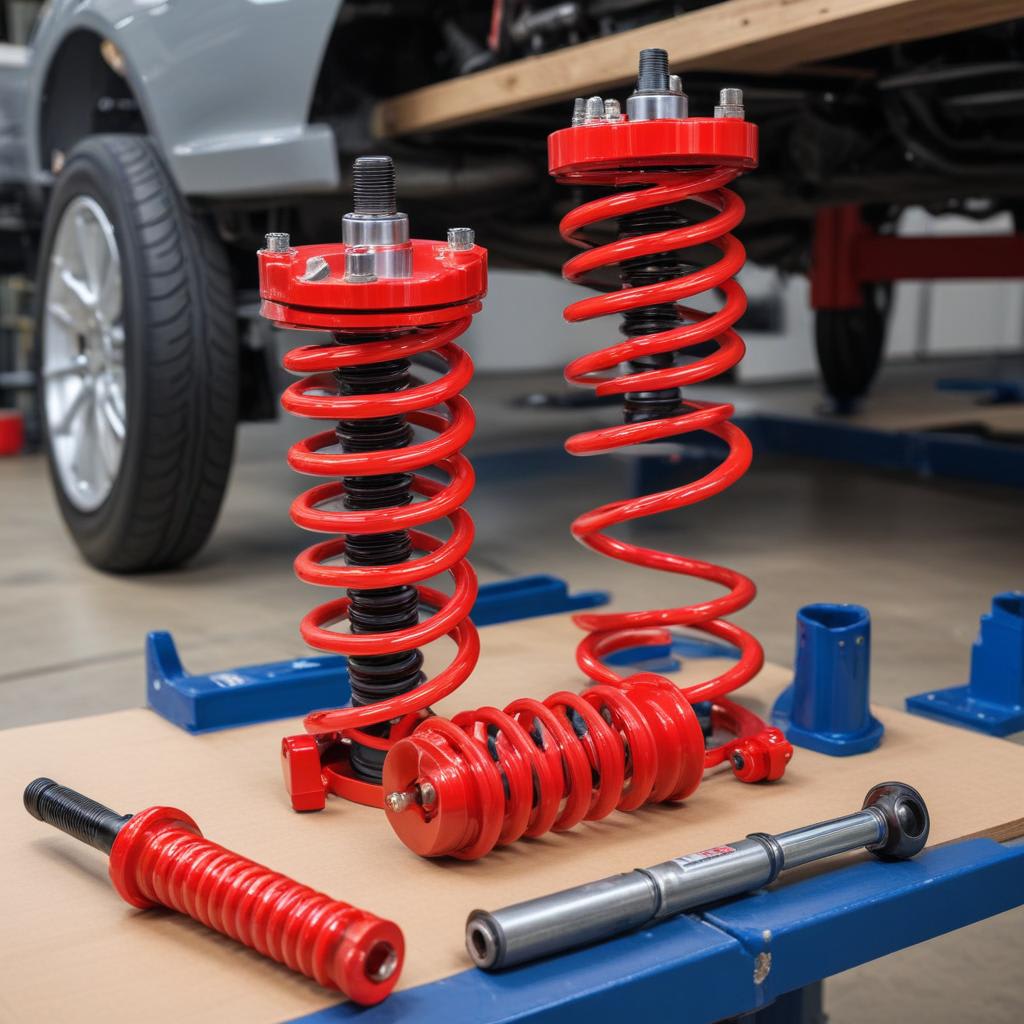
You can replace the springs on some coilovers, but you cannot safely install any lowering spring on any coilover. The replacement must match the coilover’s spring dimensions, load rating, travel, and design.
In the United States, many drivers lower their cars to improve appearance or change how the suspension feels on highways, city streets, and winding roads. Coilovers offer adjustable ride height on many applications, while lowering springs are often designed to work with specific factory struts or shocks. These parts can look similar, but they do not always fit or work together.
The key question is not simply whether a spring fits over a coilover. You also need to know whether the spring has the correct length, inner diameter, spring rate, and load capacity. A poor match can reduce suspension travel, cause unwanted movement, or affect tire grip and vehicle control.
Before changing anything, identify your vehicle, coilover model, and current spring specifications. Check the manufacturer’s instructions for approved replacement springs. If the spring type is not listed as compatible, ask a qualified suspension shop to confirm the fit before buying or installing parts.
Yes, you can install different springs on some coilovers, but only when the replacement springs meet the system’s requirements. Many aftermarket coilovers use removable springs, which allows the manufacturer to offer approved spring options for different handling goals. Other systems have specific spring shapes, seats, or mounting arrangements that limit what can be installed.
The phrase lowering springs usually refers to springs made to reduce a vehicle’s ride height when fitted with a suitable suspension setup. These springs are often sold for use with factory struts and shocks. A coilover spring, by contrast, is selected to work with a particular coilover assembly, including its spring seats and damper.
The distinction matters because a spring designed for a factory strut may not have the correct dimensions or operating range for an aftermarket coilover. Even if both springs lower the car, they may not provide the same suspension travel or handling response.
Treat compatibility as a specification question, not a visual judgment. If the coilover maker does not approve the proposed spring, do not assume that matching its diameter alone makes the combination safe.
Source: res.cloudinary.com
Compatible replacement spring
A spring with verified dimensions, rate, load capacity, and fitment for the exact coilover model may be suitable.
Factory replacement lowering spring
A spring made for the original suspension may not fit an aftermarket coilover or work correctly with its damper.
Unknown spring specifications
If the spring rate, dimensions, and intended application are unknown, compatibility has not been established.
What Is the Difference Between Lowering Springs and Coilovers?
Lowering springs are shorter or differently designed springs intended to reduce ride height when paired with suitable dampers. They commonly replace factory springs while retaining the original struts or shocks, provided the parts are designed to work together.
A coilover combines a coil spring and a damper in one assembly. Many aftermarket versions also include threaded bodies or adjustable spring seats that allow ride-height changes. Some models offer damping adjustment, while others use fixed damping.
A lowering spring is therefore one component, while a coilover is a larger suspension assembly. Replacing a coilover spring is a component change, not the same as fitting a complete lowering-spring kit to factory suspension.
Lowering springs
Usually selected for a specified vehicle and compatible factory dampers, with limited adjustment options.
Coilovers
Combine springs and dampers, and many aftermarket versions provide adjustable ride height or damping.
Why Spring Compatibility Matters
A coilover spring must support the vehicle’s load while operating within the damper’s intended range. The correct spring also needs to remain properly seated as the suspension moves through compression and rebound. A spring that is too short, too soft, or otherwise mismatched can create problems even when it fits the spring seat.
The damper controls spring movement. If you change the spring rate substantially, the existing damper may no longer control the spring as intended. This can affect body motion, tire contact, comfort, and stability, particularly over uneven pavement or during rapid steering changes.
A suitable setup depends on the complete suspension system. The spring, damper, bump stops, top mounts, tires, and alignment all influence the result. Choosing a spring based only on the amount of lowering can overlook these important relationships.
Source: b3124624.smushcdn.com
Inner diameter and spring seats
The spring must fit the intended seats and remain correctly located throughout the suspension’s operating range.
Free length
The spring’s unloaded length affects installed position and available travel. A shorter spring is not automatically a suitable lowering spring.
Spring rate
The rate describes how much force is needed to compress the spring by a given distance. An unsuitable rate can change ride quality and handling.
Load capacity
The spring must support the relevant corner load and intended vehicle use without exceeding its design limits.
Damper compatibility
The damper must provide suitable control for the selected spring and the vehicle’s intended operating range.
Why Matching the Diameter Is Not Enough
Two springs can share an inner diameter and still behave very differently. Their free lengths, wire sizes, coil shapes, rates, and maximum working loads may differ. Those differences affect where the spring sits, how much it compresses, and whether it stays secure when the suspension extends.
For example, a spring that fits the threaded seat may become loose when the wheel drops into a deep dip. Another spring may fit but reach coil bind, where its coils can no longer compress as intended, before the suspension reaches its designed travel. Both situations require attention to the complete specifications rather than appearance alone.
Correct physical fit
The spring matches the seat and mounting arrangement.
Correct operating fit
The spring remains secure and works within the approved travel and load limits.
How to Check Whether a Lowering Spring Fits Your Coilovers
Start with the exact coilover model and its manufacturer’s documentation. This is the most reliable way to find out whether the system accepts replacement springs and which specifications apply. Do not rely on a generic listing that says a spring fits a certain car without confirming compatibility with the installed coilover.
You should identify the vehicle’s year, make, model, trim, drivetrain, and suspension configuration. These details matter because the front and rear suspension may use different parts, and some vehicles have different suspension designs across trims. The coilover brand and part number are equally important.
Once you have the correct documentation, compare the proposed spring’s measurements and performance specifications with the approved requirements. If a specification is missing, ask the manufacturer or a qualified suspension specialist to verify it rather than guessing.
Source: i.ytimg.com
Identify the coilover
Record the brand, product line, part number, and any spring markings printed on the installed parts.
Read the manual
Check whether the maker permits spring replacement and lists compatible spring sizes or rates.
Verify the replacement
Compare inner diameter, free length, spring rate, load capacity, and seat compatibility.
Confirm damper suitability
Check whether the existing damper is approved for the proposed spring rate and intended ride height.
Ask for written confirmation
If fitment is unclear, obtain guidance from the coilover manufacturer or a qualified installer before buying parts.
Understand Spring Rate and Units
Spring rate is commonly listed in pounds per inch in the United States or newtons per millimeter in metric specifications. It indicates the force required to compress a spring by a stated distance within its working range. A higher rate generally means a stiffer spring, although the complete suspension design affects the result felt by the driver.
For a basic unit conversion, 1 pound per inch is approximately 0.175 newtons per millimeter. Therefore, a hypothetical spring rated at 400 pounds per inch is approximately 70 N/mm. This conversion changes the units only; it does not establish whether that spring suits a particular vehicle or damper.
Front and rear springs often use different rates because each end of the vehicle carries a different load and performs a different role. Never assume that one spring rate should be used at all four corners.
Compare like with like
Use the units, measurement method, and spring location stated by the manufacturer.
Avoid rate-only decisions
A spring with the desired rate may still have the wrong dimensions, load capacity, or free length.
What If the Manufacturer Does Not List Your Spring?
Treat an unlisted combination as unverified, not automatically compatible. Send the coilover maker the proposed spring specifications and ask whether the damper can control it and whether the spring can operate safely through the full travel range. If the maker cannot confirm the combination, use an approved spring or choose a complete suspension setup designed for your goal.
Best next step
Request specific compatibility guidance instead of relying on a seller’s general fitment claim.
Will Lowering Springs Make Coilovers Lower?
A replacement spring can change ride height, but the result depends on its free length, rate, installed preload, spring-seat position, and the vehicle’s corner load. A shorter spring does not always produce a predictable amount of lowering. The damper’s usable stroke and the coilover’s design may limit how low the vehicle can safely sit.
Many adjustable coilovers already provide a way to change ride height through their approved adjustment system. On some designs, ride height is adjusted through the lower mount rather than by changing spring preload. Other designs use different arrangements, so follow the instructions for the exact model.
Changing preload is not a universal method for lowering a car. Preload is the initial compression applied to a spring when it is installed. Altering it can affect spring retention and available suspension movement, depending on the coilover design. Do not use the spring seat as a substitute for the ride-height adjustment method specified by the manufacturer.
Source: f2suspension.com
Spring length
A different free length changes the installed spring position, but does not by itself determine final ride height.
Spring rate
A different rate can change how much the spring compresses under the vehicle’s weight.
Adjustment range
The coilover’s approved ride-height range determines how the assembly can be positioned.
Suspension travel
Lowering too far can leave too little compression travel or cause frequent contact with bump stops.
Why a Shorter Spring May Not Lower the Car as Expected
The vehicle settles according to the spring’s rate, installed geometry, and load, not simply its unloaded length. A shorter spring with a higher rate can support the same load with less compression than a softer spring. A change in spring seat position can also affect the installed setup.
If the goal is a specific ride height, use a coilover system designed to achieve it within its stated range. Measure the vehicle on level ground and use the manufacturer’s measurement method. After an approved change, check clearance, suspension movement, alignment, and tire fitment before normal driving.
Set a realistic target
Account for road clearance, tire clearance, and usable suspension travel.
Avoid excessive lowering
A very low ride height can increase the risk of scraping, poor travel, and tire contact with bodywork.
What Happens to Ride Quality and Handling?
Changing coilover springs can make the ride firmer, softer, or less controlled, depending on the replacement rate and the damper’s ability to manage it. A spring change does not guarantee better handling. The result depends on the full setup, tires, alignment, road surface, and driving conditions.
A spring that is too stiff for the damper may allow unwanted bouncing or reduce how well the tires follow uneven roads. A spring that is too soft for the application may allow excessive body movement or use too much suspension travel. Neither outcome is desirable simply because the car sits lower.
For daily driving in the United States, consider potholes, steep driveways, speed bumps, highway expansion joints, and changes in road surface. A setup intended for smooth race tracks may be uncomfortable or impractical on ordinary roads. Lower ride height can also affect alignment settings and clearance around suspension parts.
After a spring change, a professional inspection and alignment are sensible steps. If the car develops knocking, rubbing, unusual bouncing, steering changes, or tire contact, stop using it until the problem has been checked.
Source: slrspeed.com
Ride comfort
Spring rate and damping affect how the car responds to bumps and road joints.
Tire grip
The suspension needs to maintain appropriate tire contact as the road surface changes.
Steering and alignment
Ride-height changes can alter suspension geometry and alignment measurements.
Noise and clearance
Incorrect spring seating or reduced clearance can cause contact, rattles, or other warning signs.
Can Lowering Springs Damage Coilovers?
An approved replacement spring should operate within the limits of the coilover system. An incompatible spring can create excessive loads, poor retention, coil bind, or unsuitable damper movement. These conditions may damage suspension parts or compromise vehicle control.
A spring change can also expose problems with worn dampers, damaged mounts, or incorrect setup. Inspect the full assembly rather than assuming that the spring alone is responsible for every change in ride quality. Replace worn or damaged components as directed by the manufacturer.
Possible warning signs
Listen for new clunks, check for rubbing, and watch for unusual bouncing or uneven ride height.
Required response
Stop driving if a spring is loose, damaged, incorrectly seated, or causing unsafe tire or suspension contact.
Lowering Springs vs. Replacement Coilover Springs
The right option depends on whether you want to retain factory suspension, adjust the height of an existing coilover system, or replace worn parts. These choices serve different purposes and should not be treated as interchangeable.
A vehicle that still has factory struts may benefit from a vehicle-specific lowering-spring kit designed for those dampers. A vehicle that already has aftermarket coilovers may be better served by approved replacement springs. If the current coilovers cannot achieve the desired height or handling characteristics, a complete matched system may be the more reliable solution.
Source: slrspeed.com
Keep factory suspension
Choose lowering springs specifically listed for the vehicle and its compatible factory dampers.
Change an existing coilover setup
Use replacement springs approved for the installed coilover model and intended driving conditions.
Need a major change
Consider a complete suspension kit that matches the desired ride height, damping, and use.
Which Option Makes More Sense for Daily Driving?
For a daily driver, a matched setup with adequate suspension travel and predictable road behavior is usually the most practical goal. Lowering springs can suit a driver who wants a modest height change without replacing the entire suspension, provided the springs and dampers are compatible.
Replacement coilover springs may make sense when the existing system supports spring changes and the driver wants a different spring rate or setup. The benefit is less clear if the desired spring is not approved or if the current dampers are not suited to it.
A complete matched kit can simplify compatibility decisions, although it may cost more than replacing a spring alone. Compare the total cost of parts, labor, alignment, and any required replacement hardware rather than considering only the spring price.
Best for retaining factory dampers
A vehicle-specific lowering-spring kit approved for the original suspension.
Best for adjusting an existing setup
A replacement spring with verified fitment for the exact coilover.
Best when compatibility is uncertain
A matched suspension kit or professional assessment of the current system.
Common Mistakes to Avoid When Changing Coilover Springs
The most common mistake is choosing a spring because it looks similar to the one already installed. Visual similarity does not confirm the correct rate, load rating, free length, or compatibility with the damper. Use documented specifications before making a purchase.
Another mistake is trying to obtain extra lowering by cutting a spring or making unapproved changes to the suspension. Cutting a coil spring changes its properties and can damage its finish or affect how it seats. Do not modify a spring unless the manufacturer explicitly provides an approved procedure for the exact part.
Spring replacement can also involve substantial stored energy. A compressed spring can release force suddenly if handled incorrectly. Use suitable equipment and the correct service procedure, or have a qualified suspension technician do the work. Never loosen a spring assembly without understanding how it is retained and safely unloaded.
Source: driftworks.com
Do not assume universal fitment
Confirm compatibility for the exact coilover and vehicle combination.
Do not cut the spring
Use a spring designed for the required application and ride height.
Do not ignore travel limits
Check the approved compression and rebound range and the role of bump stops.
Do not reuse damaged hardware
Follow the manufacturer’s instructions for inspection and replacement of worn or damaged parts.
Do not skip alignment checks
Have wheel alignment checked after ride-height changes and correct any related clearance issues.
When Should You Use a Suspension Shop?
Use a qualified suspension shop when spring specifications are missing, the spring is difficult to retain, the assembly needs specialized compression tools, or the proposed change falls outside the manufacturer’s documented setup. Professional help is also appropriate if the vehicle has unusual suspension modifications or signs of previous damage.
Ask the shop to confirm spring compatibility, damper suitability, ride height, suspension travel, and alignment requirements. Request that any proposed nonstandard combination be checked against the manufacturer’s guidance rather than approved solely because the components can be assembled.
Before installation
Confirm the parts, service method, and compatibility of the full assembly.
After installation
Check spring retention, fastener installation, clearance, alignment, and any new noises or handling changes.
A Practical Decision Checklist Before You Buy
Before spending money on lowering springs for coilovers, use a simple checklist to establish whether the proposed combination is suitable. This helps prevent buying a spring that fits physically but fails to meet the suspension’s operating requirements.
Start with the reason for the change. A cosmetic height adjustment, a firmer road setup, and a track-focused suspension change may require different spring rates and damper settings. Your target should guide the parts choice, but the manufacturer’s limits still define what is acceptable.
Source: static.wixstatic.com
Vehicle information confirmed
Record the year, make, model, trim, drivetrain, and relevant suspension details.
Coilover model identified
Find the exact part number and determine whether the manufacturer permits spring replacement.
Spring specifications verified
Confirm the inner diameter, free length, rate, load capacity, and seat arrangement.
Damper compatibility established
Verify that the damper and its travel range are suitable for the replacement spring.
Ride height and clearance checked
Ensure that the planned setup leaves adequate clearance and usable suspension travel.
Installation and alignment planned
Arrange the correct service procedure and a post-installation alignment check.
What If the New Setup Feels Wrong?
If the car sits unevenly, makes new noises, rubs a tire, or bounces more than expected, do not try to fix the problem by making random adjustments. First, stop driving if there is any sign of a loose spring, tire interference, or compromised control. Have the assembly inspected before returning the vehicle to the road.
If the parts appear secure but the ride has changed, ask the installer to recheck the spring specifications, damper settings, installed position, and alignment. A measured diagnosis is more useful than assuming that every problem requires a stiffer spring or a lower ride height.
Uneven ride height
Check the installation, spring seating, corner loads, and approved adjustment procedure.
New knocking or rubbing
Inspect spring retention, tire clearance, mounts, and nearby suspension components.
Excessive bouncing
Have the spring rate, damper control, and suspension condition assessed.
Frequently Asked Questions
Q
Can you put any lowering spring on coilovers?
No. The spring must match the coilover’s dimensions, spring-seat design, rate, load capacity, and operating range. A spring made for factory struts may not be suitable for aftermarket coilovers, even if it appears to fit.
Q
Can you use lowering springs instead of coilover springs?
Only if the replacement spring is confirmed compatible with the exact coilover. The term lowering spring does not guarantee a universal design. Check the manufacturer’s approved spring specifications before replacing the original coilover spring.
Q
Will lowering springs make my coilovers ride lower?
They may change the ride height, but the result depends on spring length, rate, installed position, vehicle load, and the coilover’s adjustment range. A shorter spring does not guarantee a particular drop, and excessive lowering can reduce suspension travel.
Q
Do I need different shocks when changing coilover springs?
Coilovers already include dampers, but those dampers still need to suit the replacement spring. A substantial change in spring rate or working range may require a different damper or a matched suspension kit. Follow the coilover manufacturer’s recommendations rather than assuming the existing damper will work.
Q
Can I lower coilovers by adjusting spring preload?
Not as a universal method. Preload is the initial compression applied to the spring during installation, and its effect depends on the coilover design. Use the manufacturer’s specified ride-height adjustment method and do not reduce spring retention or usable travel to achieve a lower stance.
Q
Do I need an alignment after changing coilover springs?
An alignment check is recommended after a spring change that alters ride height or suspension geometry. The installer should also check tire clearance, spring seating, fasteners, and suspension travel before the car returns to normal use.
Q
Is it safe to cut coilover springs to lower a car?
No, cutting springs is not a suitable general method for lowering a vehicle. It changes the spring’s properties and can create seating, travel, or structural problems. Use an approved spring and adjustment method designed for the specific suspension.
✦ Wrapping Up
Conclusion
You can put a different spring on some coilovers, but a conventional lowering spring is not automatically compatible with an aftermarket coilover. Correct fitment depends on the spring’s dimensions, rate, load capacity, seat design, and the damper’s approved operating range.
For the best result, identify the exact coilover model and check the manufacturer’s replacement spring guidance before buying parts. If your goal is a lower stance, better road comfort, or improved handling, choose a setup that achieves that goal without sacrificing spring retention, suspension travel, tire clearance, or vehicle control.
💡 Key Takeaway
Find your coilover brand and part number, obtain the approved spring specifications, and confirm compatibility before installation. If the combination cannot be verified, choose an approved replacement spring or a matched suspension kit and have the completed setup inspected and aligned.
Eric
Hi, I’m Eric Bennett, the person behind OffRoadTruckAccessories.com.
I created this blog to share my interest in trucks, off-road driving, automotive accessories, and DIY modifications. I enjoy learning how different truck accessories work, testing their usefulness, and understanding whether they are truly worth buying.
Will G37 coilovers fit G35? Learn which model years may share fitment, what changes with coupe, sedan, and AWD setups, and how to verify compatibility.