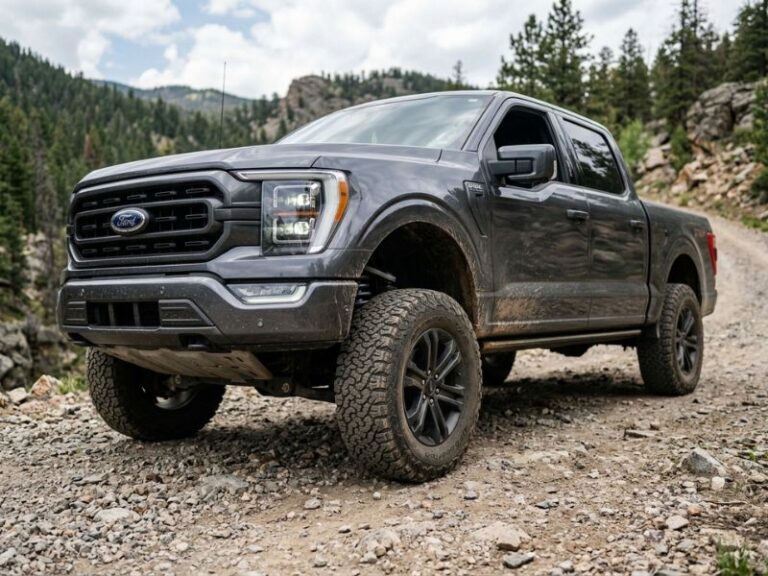
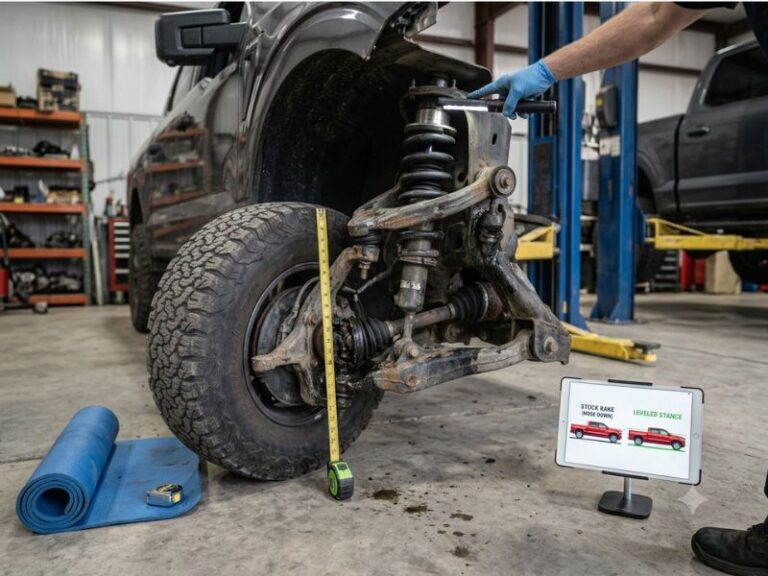
Can You Add a Leveling Kit to a Lifted Truck? Complete Guide
Can you add a leveling kit to a lifted truck? Yes, it may be possible, but it is usually not recommended unless the leveling kit is specifically designed to work with your existing lift system. Adding a leveling kit on top of a suspension lift can create excessive height, change suspension geometry, affect alignment, and place extra stress on steering and drivetrain components.
The complete details are explained below. In this article, you will learn why truck owners consider adding leveling kits to lifted trucks, when the combination may work, what problems can occur, how it affects suspension components, and what safer options are available for achieving additional height or a more balanced stance.
Can You Add a Leveling Kit to a Lifted Truck?
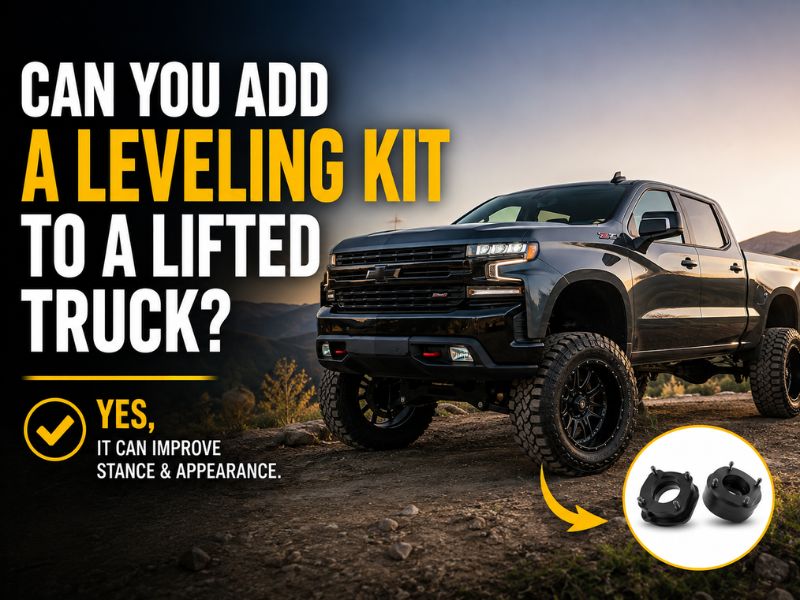
You can physically install a leveling kit on some lifted trucks, but compatibility is the most important factor.
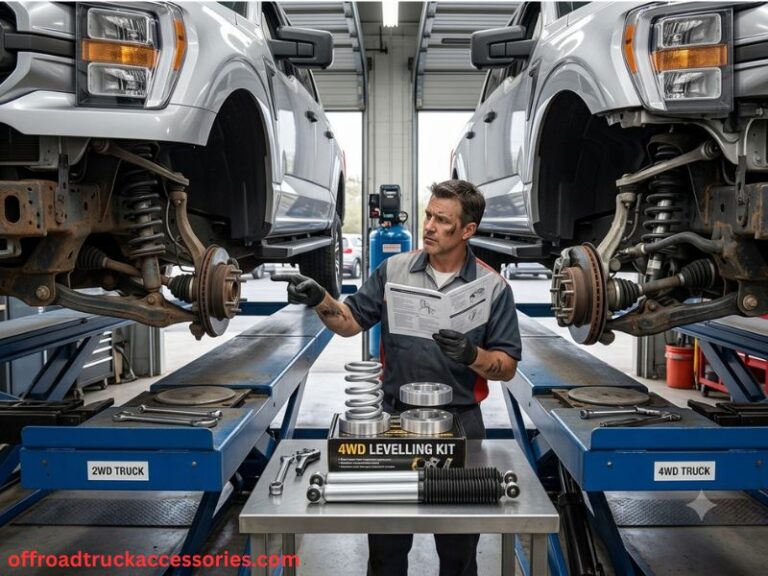
A suspension lift is designed as a complete system. The lift manufacturer chooses specific components such as springs, shocks, control arms, brackets, steering corrections, and alignment hardware to work together at a certain ride height.
Adding a separate leveling kit changes the final suspension height beyond what the original lift was designed for.
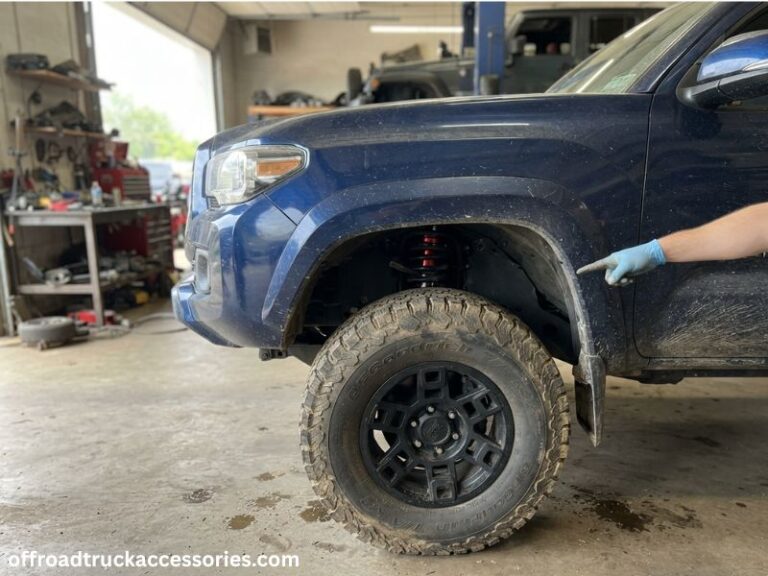
For example, a truck with a 4-inch suspension lift may already have corrected suspension geometry. Adding a 2-inch front leveling spacer could increase the front height further, but it may also create new problems with:
- Control arm angles
- Ball joint position
- CV axle angles
- Shock travel
- Steering geometry
- Alignment adjustment
The fact that two parts physically fit together does not mean they are engineered to work together.
Before adding a leveling kit, you should confirm compatibility with the lift manufacturer and understand how the additional height affects the entire suspension system.
Why Do People Add Leveling Kits to Lifted Trucks?
Many truck owners add leveling kits to lifted trucks because they want to change the stance after installing a suspension lift.
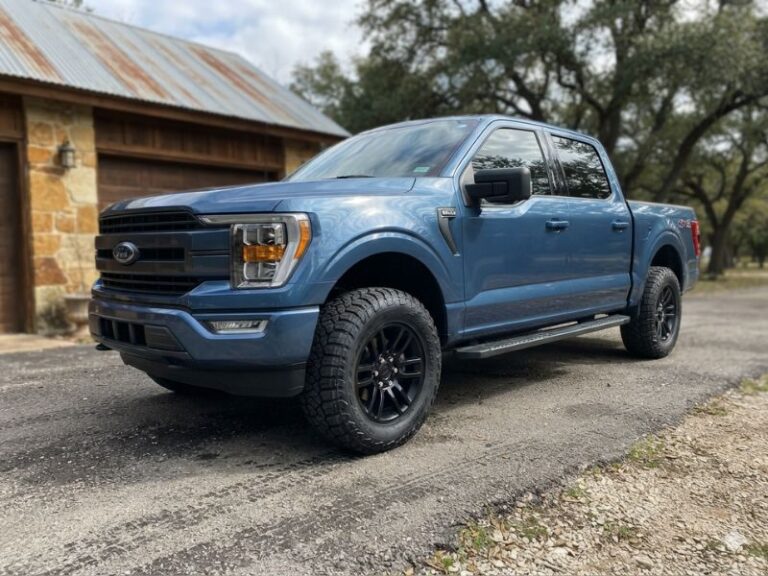
A common reason is remaining factory rake. Even after installing a lift kit, some trucks still sit slightly lower in the front than the rear. Owners may add a small front spacer to create a more level appearance.
Other reasons include:
- Fitting larger front tires
- Creating a more aggressive stance
- Compensating for heavy front accessories
- Raising the front after installing a bumper or winch
For example, a truck with a heavy steel front bumper and winch may sit lower in the front after modification. Some owners consider additional front height to restore the original stance.
However, adding a leveling kit is not always the best solution. A properly selected spring, coilover adjustment, or lift upgrade may solve the problem more effectively.
Is Adding a Leveling Kit on Top of a Lift Safe?
The safety of adding a leveling kit depends on the existing lift design, the additional height, and whether the complete suspension remains within acceptable operating limits.
A small adjustment may be acceptable when the lift manufacturer provides approved components for additional height.
However, stacking unrelated suspension parts can create problems because the original lift was not designed for the new final position.
A suspension system must maintain proper relationships between:
- Control arms
- Shocks
- Springs
- Steering components
- Axles
- Brake lines
- Suspension stops
When additional height is added without correcting these areas, the truck may look taller but perform worse.
A safe suspension setup is not only about ride height. It is about keeping the suspension working correctly throughout its full range of movement.
Can You Stack a Leveling Kit on a Suspension Lift?
Adding a leveling kit on top of a suspension lift is often called stacking suspension components.
Stacking can create issues because different kits may have different design goals.
A lift kit may already include:
- Extended shocks
- Corrected control arms
- Differential drops
- Track bar brackets
- Alignment hardware
Adding another front spacer changes the geometry again.
For example, a 6-inch lift kit may be designed around a specific control-arm angle. Adding another 2 inches of front lift can push the upper control arms and ball joints into a less desirable position.
The result may include:
- Reduced suspension travel
- Poor alignment range
- Increased component wear
- Uncomfortable ride quality
Some manufacturers offer approved upgrades that increase lift height within their own product line. These are different from combining random parts from different companies.
How a Leveling Kit Affects Suspension Geometry on a Lifted Truck
Suspension geometry is one of the biggest concerns when adding more height.
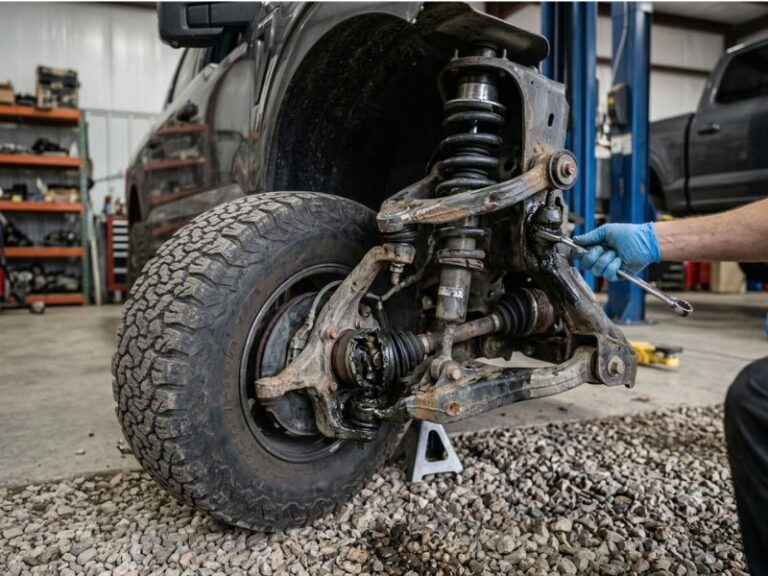
When a truck is lifted, engineers consider how the wheels move through suspension travel. The control arms, steering linkage, and axles must remain within safe angles.
Adding a leveling kit changes the resting position again.
On independent front suspension trucks, this can affect:
- Upper control arm angles
- Lower control arm position
- CV axle angles
- Steering alignment
- Shock extension
On solid axle trucks, it can affect:
- Track bar angle
- Drag link angle
- Axle centering
- Steering response
A suspension system that works perfectly at a 4-inch lift may not work correctly at a 5.5-inch or 6-inch front height without additional corrections.
This is why suspension modifications should be planned as a complete system rather than added piece by piece.
Does Adding a Leveling Kit Affect Alignment?
Yes, adding a leveling kit to a lifted truck can affect alignment.
Every change in suspension height can alter:
- Camber
- Caster
- Toe
A lifted truck already requires specific alignment settings. Adding more front height may move those measurements outside the adjustment range.
Poor alignment can cause:
- Uneven tire wear
- Steering pull
- Highway instability
- Off-center steering wheel
- Reduced tire lifespan
Large aftermarket tires make this issue more noticeable because they are expensive and more sensitive to incorrect alignment.
After adding any suspension component, the truck should receive a professional alignment. The technician should verify whether the suspension can still achieve acceptable alignment numbers.
If proper alignment cannot be achieved, additional components such as adjustable control arms or alignment correction parts may be necessary.
Can a Leveling Kit Damage Ball Joints on a Lifted Truck?
A leveling kit can increase stress on ball joints when added to an already lifted truck.
The higher the front suspension sits, the more the control arms and ball joints operate away from their factory position.
Excessive angles can create additional stress during:
- Full suspension extension
- Off-road articulation
- Hard impacts
- Large tire loads
Signs of ball joint stress may include:
- Clunking noises
- Loose steering feel
- Uneven tire wear
- Torn ball-joint boots
- Reduced suspension movement
Aftermarket upper control arms may help restore geometry on some setups, but they do not automatically make every stacked suspension combination safe.
The final ride height and suspension design determine whether additional components are required.
Can a Leveling Kit Cause CV Axle Problems?
On lifted 4WD trucks with independent front suspension, adding more front height can increase CV axle angles.
The CV axle transfers power from the front differential to the wheels. It is designed to operate within a specific range of movement.
A suspension lift may already include components to manage CV angles. Adding a leveling kit can increase the angle further.
Potential problems include:
- Increased CV joint stress
- Torn axle boots
- Grease leakage
- Clicking during turns
- Premature axle wear
The risk increases when combined with:
- Large tires
- Heavy wheels
- Aggressive wheel offset
- Frequent off-road driving
A taller-looking truck is not always a more capable truck. Maintaining proper drivetrain angles is essential for reliability.
Does a Leveling Kit Reduce Suspension Travel on a Lifted Truck?
Yes, it can.
Suspension travel includes both compression and droop movement. A lifted truck already uses different shock lengths and suspension components to maintain useful travel.
Adding more front height can move the suspension closer to full extension.
When this happens:
- Shocks may top out
- Wheels may lose contact during articulation
- Ride quality may become harsher
- Suspension components may receive more impact force
Off-road drivers should pay particular attention because suspension travel is critical for traction.
A truck that looks taller in a parking lot may actually perform worse on trails if the suspension cannot move properly.
Do You Need Longer Shocks After Adding a Leveling Kit?
Possibly.
The correct shock length depends on the final suspension height and available travel.
A lifted truck already has shocks selected for its current lift height. Adding another leveling component may move the shocks outside their intended operating range.
A shock that is too short may limit droop and top out frequently. A shock that is too long may bottom out during compression.
The correct solution is not simply installing the longest shock available. The shock must match the complete suspension geometry.
If you increase lift height, check:
- Compressed shock length
- Extended shock length
- Suspension travel
- Brake-line length
- Control-arm movement
Can You Add a Leveling Kit to a Body-Lifted Truck?
A body lift and suspension lift are different modifications.
A body lift raises the truck body away from the frame while leaving most suspension components at factory height.
Because a body lift does not significantly change suspension geometry, adding a leveling kit may create fewer suspension-angle concerns compared with stacking two suspension modifications.
However, tire clearance, bumper alignment, steering components, and overall appearance still need evaluation.
A truck with both a body lift and suspension lift should be inspected carefully before adding additional height.
Better Alternatives Than Adding a Leveling Kit
If your lifted truck needs more front height, there may be safer alternatives.
One option is using the lift manufacturer’s approved upgrade components. Many suspension companies offer additional height options within their product family.
Another option is replacing springs or coilovers with components designed for the desired final height.
For adjustable suspension systems, increasing height within the manufacturer’s recommended range may be possible without adding separate spacers.
If the issue is front sag caused by accessories such as bumpers or winches, heavy-duty springs or weight-rated suspension components may be a better solution.
The best modification depends on why you want more height.
What Should You Check Before Adding a Leveling Kit?
Before adding a leveling kit to a lifted truck, inspect the entire suspension system.
Confirm:
- Current lift height
- Lift brand and model
- Existing suspension components
- Current alignment settings
- Tire size and wheel offset
- Remaining suspension travel
Check for existing problems such as:
- Worn ball joints
- Damaged bushings
- CV boot damage
- Steering looseness
- Shock leaks
Adding more height to a worn suspension system can make existing problems worse.
Consult the lift manufacturer whenever possible. They can confirm whether additional height is supported and recommend compatible components.
Is a Leveling Kit Worth It on a Lifted Truck?
A leveling kit can be worthwhile in specific situations, such as correcting front rake or compensating for additional front-end weight.
However, it is usually not the best solution when the goal is simply adding more lift height.
A properly engineered suspension upgrade will normally provide better results than stacking unrelated components.
The safest approach is to design the suspension around the final height you want rather than adding parts gradually without considering geometry.
Final Thoughts
So, can you add a leveling kit to a lifted truck? Yes, but it should only be done when the combination is specifically approved and the final suspension geometry remains within safe limits.
Adding a leveling kit on top of a lift can create problems with alignment, ball joints, CV axles, shocks, steering, and suspension travel if the parts were not designed to work together.
Before adding more height, measure the current setup, check the lift manufacturer’s recommendations, and consider a complete suspension upgrade instead. A properly engineered system will provide better performance, reliability, and safety than simply stacking additional lift components.