No, not all coilovers fit every car. Coilovers must match your vehicle’s make, model, year, suspension design, mounting points, and other fitment needs.
In the United States, drivers upgrade suspension systems for many reasons. Some want better handling on winding roads. Others want a lower ride height for a custom build or more control on a track. Before buying coilovers, however, you need to know whether the kit fits your exact vehicle.
A coilover combines a spring and a shock absorber into one assembly. Many kits also let you adjust ride height, and some let you change damping. These features can improve control when the parts match the car and are set up well. A kit made for another vehicle may have the wrong mounts, spring setup, or overall dimensions.
The safest way to choose coilovers is to check the manufacturer’s fitment list and installation details. Confirm your vehicle’s year, make, model, trim, and suspension type. Also check for changes such as a sport suspension package, factory electronic dampers, or a previous suspension conversion. These details can change which parts will work.
Coilovers cannot fit every car because vehicle suspension systems differ in design, size, and mounting layout. A kit designed for one vehicle may not attach to another vehicle’s strut towers, control arms, or suspension links. Even if the parts look similar, small differences can prevent a safe installation.
Automakers also change suspension parts between generations and trims. A sedan and its sport version may share a name but use different dampers, springs, or mounts. Some models also have separate front and rear suspension designs that require specific components.
Fitment is more than making a coilover bolt into place. The spring must support the vehicle correctly, the damper must work through the intended range, and the suspension must move without hitting nearby parts. A part that attaches but binds or limits suspension travel is not a suitable fit.
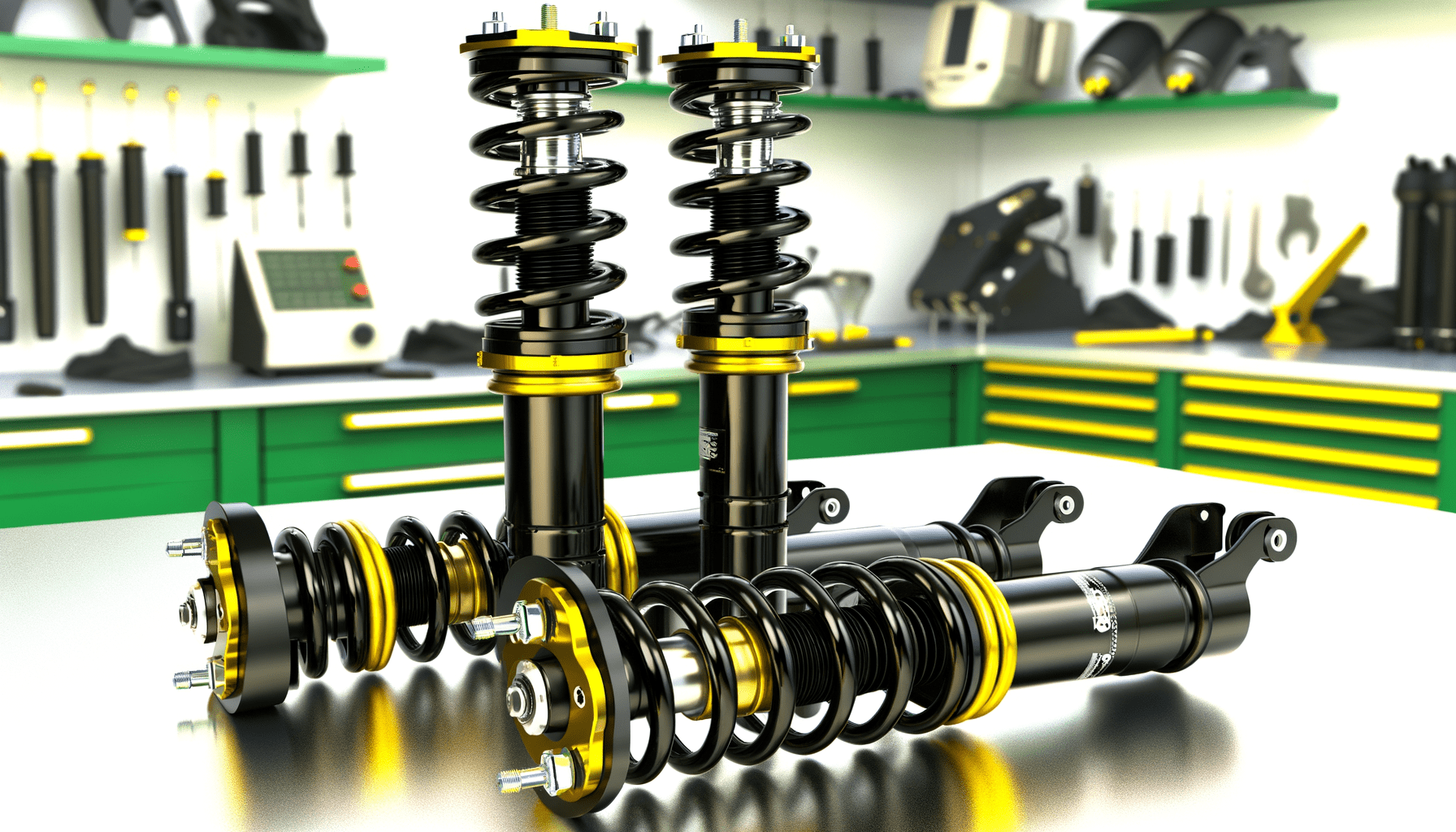
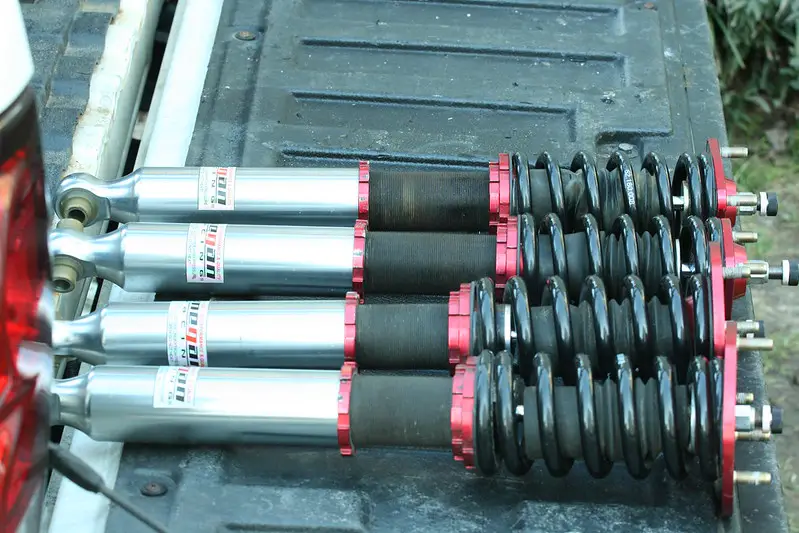
Source: carphanatics.com
Mounting points
The coilover must attach to the correct upper and lower mounts without unsafe changes to the vehicle or suspension parts.
Dimensions
The body length, spring size, mounting width, and available adjustment range must suit the suspension layout.
Spring and damper design
The spring and damper must suit the vehicle’s weight, suspension geometry, and intended use.
Clearance
The assembly must clear the tires, wheels, brake lines, steering parts, and nearby bodywork throughout suspension travel.
What Does Vehicle-Specific Fitment Mean?
Vehicle-specific fitment means the manufacturer lists a coilover kit for a defined range of vehicles and configurations. The kit is designed around the stated suspension layout and mounting points. This usually makes installation more direct than using a universal assembly.
The fitment listing may cover only certain years, body styles, or trims. Read all notes and exclusions. If the guide lists a specific chassis code or factory suspension package, confirm that your car matches it before ordering.
Exact application
Match the vehicle identification details requested by the manufacturer, including model year and trim.
Listed exclusions
Check whether the kit excludes sport packages, electronic dampers, special brakes, or other factory options.
Which Factors Determine Coilover Compatibility?
Several vehicle details determine whether a coilover kit will fit. Start with the car’s identity, then confirm the suspension design and the exact requirements in the product’s fitment guide. Do not rely on a seller’s broad claim that a kit fits many cars.
A useful compatibility check considers both physical installation and correct operation. Physical fit means the assembly can attach and clear nearby parts. Functional fit means the spring and damper can work within a suitable range without creating unsafe suspension behavior.
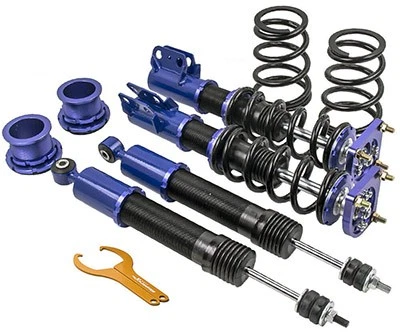
Source: low-offset.com
Make, model, and year
These details identify the intended application, but they may not be enough when a model has several suspension options.
Trim and factory options
Sport packages, larger brakes, factory lowering systems, and electronic dampers may affect compatibility.
Suspension layout
MacPherson struts, double-wishbone systems, and multi-link designs use different arrangements and mounting points.
Vehicle weight
Spring rates and damping must suit the supported load and intended driving conditions.
Wheel and tire setup
Wheel width, offset, tire size, and brake components can affect clearance after installation.
Why Suspension Design Matters
Some cars use a MacPherson strut, where the strut forms part of the wheel’s locating system. Other cars use separate dampers and springs, double-wishbone suspension, or multi-link arrangements. Each design places different demands on the coilover assembly.
A coilover made for a strut-based front suspension cannot automatically replace a separate spring and damper arrangement. A conversion may be possible for some vehicles, but it needs parts engineered for that purpose and a proper review of suspension geometry.
Strut-based suspension
Check the strut mounting pattern, lower bracket shape, upper mount, and steering clearance.
Separate spring and damper
Confirm that the proposed kit is designed to replace both components and uses appropriate spring seats and mounts.
Special suspension systems
Air suspension, electronically controlled dampers, and unusual rear layouts may need dedicated kits or additional compatible components.
How Model Years and Trims Affect Fitment
A vehicle’s name does not guarantee that its suspension parts remain the same across every year. A redesign can change the chassis, mount spacing, control arms, or suspension travel. Even within one generation, performance trims may use different components.
For example, two versions of the same American-market sedan may have different factory dampers or spring rates. A coilover kit listed for the standard model should not be assumed to fit a performance trim unless the manufacturer confirms that application.
Check the production range
Verify the exact start and end years listed for the kit rather than assuming nearby years share all suspension parts.
Check the trim
Use the correct trim and package details when the catalog separates base, sport, and performance versions.
How to Check Whether Coilovers Fit Your Car
The most reliable way to check fitment is to start with the vehicle details and compare them with the coilover manufacturer’s official application information. This is more dependable than choosing parts based on appearance, price, or a seller’s general compatibility claim.
Before ordering, collect your vehicle information and identify any non-stock suspension parts. If the car has been modified, its current setup may differ from the factory specification. A qualified suspension shop can help confirm which components are present.
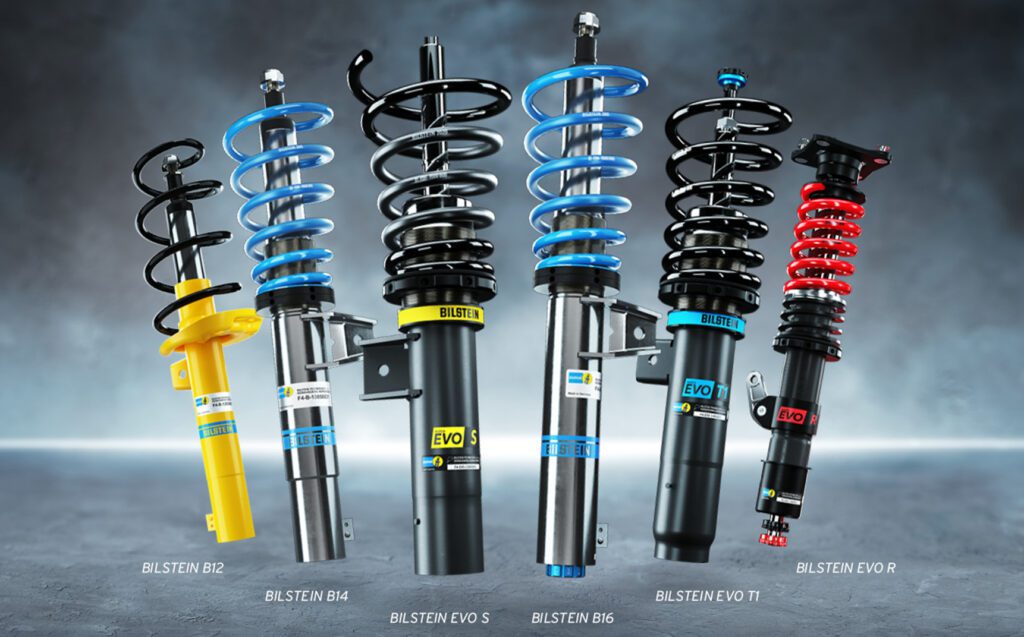
Source: suspensionlist.com
Step 1: Identify your vehicle
Record the model year, make, model, trim, body style, and relevant factory suspension package. Use the vehicle identification number when a manufacturer or parts catalog requests it.
Step 2: Find the official fitment listing
Search the coilover maker’s application catalog or installation documentation. Confirm that your exact configuration is listed.
Step 3: Read the exclusions
Look for notes about electronic dampers, factory sport suspension, engine variants, body styles, and required extra parts.
Step 4: Review the mounting details
Compare the specified upper mounts, lower brackets, and intended suspension layout. Ask the manufacturer if any details are unclear.
Step 5: Confirm wheel and brake clearance
Review any wheel, tire, or brake restrictions in the instructions, especially if the vehicle has aftermarket wheels or larger brakes.
Step 6: Confirm installation and alignment needs
Check whether the kit needs special tools, additional parts, electronic system work, or a professional alignment after installation.
What If the Manufacturer Does Not List Your Car?
If your vehicle does not appear in the fitment catalog, do not assume that a similar kit will work. Contact the manufacturer or an authorized technical support team with your vehicle details. Provide photographs or measurements only when requested and when they can be collected safely.
If no approved kit exists, a suspension specialist can assess whether a custom setup is practical. The assessment should cover mounting strength, spring selection, damping, travel, steering geometry, tire clearance, and any changes to electronic systems. Custom fabrication is not a substitute for engineering validation.
Best next step
Ask for written confirmation of compatibility before buying or modifying suspension parts.
Warning sign
Avoid a seller who cannot explain the intended application or recommends cutting, drilling, or forcing parts into place without an approved procedure.
Can Universal Coilovers Fit Different Cars?
Universal coilovers can suit more than one vehicle in some applications, but the word universal does not mean that a single assembly fits every car. The term may refer to adjustable components, a broad range of dimensions, or parts intended for custom suspension work.
A universal coilover may require special mounts, brackets, spring seats, or fabrication. These changes can affect suspension geometry and the loads placed on the chassis. A part that can be adapted physically is not necessarily safe or suitable for road use.
For most daily-driven vehicles, a complete kit listed for the exact application is the simpler route. Universal components make more sense when a qualified builder has the skills, measurements, and engineering information needed to design and validate the installation.
Source: static.wixstatic.com
Vehicle-specific kit
Usually offers the clearest path to fitment because the manufacturer identifies the vehicles it supports.
Universal coilover assembly
May suit several applications but needs a careful check of dimensions, mounting requirements, spring and damper suitability, and travel.
Custom suspension conversion
May be feasible on some builds but needs professional design, fabrication, and validation rather than trial-and-error fitting.
Why Similar Dimensions Are Not Enough
Two coilovers can have similar lengths and spring diameters but still differ in important ways. The upper mount may use a different bolt pattern, while the lower bracket may have a different width or angle. Damper valving and spring rates may also differ.
The mounting points must carry the loads they were designed to handle. Changing a bracket or mount without proper engineering can affect strength and wheel alignment. Measurements are useful for screening parts, but they do not replace confirmed compatibility.
Do not judge by appearance
Matching colors, shapes, or general dimensions does not prove that a kit fits.
Do not force a mount
A bolt should not need unsafe changes or excessive force to make an incompatible component attach.
Do Coilover Spring Rates and Damper Settings Need to Match?
Yes, spring rates and damping must suit the vehicle and the way it will be driven. Spring rate describes how much force is needed to compress a spring by a given amount. Damping controls how the suspension responds as it moves.
A spring that is too stiff for the setup can make the ride harsh and reduce tire contact on rough roads. A spring that is too soft may allow excessive movement or bottoming under certain conditions. Poorly matched damping can make the car bounce, feel unsettled, or respond slowly to changes in direction.
There is no single spring rate that suits every car. Vehicle weight, weight distribution, suspension motion ratio, tire grip, road surface, and intended use all matter. Use the manufacturer’s recommended configuration as the starting point rather than copying settings from another vehicle.
Source: i.ebayimg.com
Daily driving
A road-focused setup should balance control, comfort, suspension travel, and tire contact on uneven pavement.
Track use
A track setup may use different spring rates and damping, but changes should suit the vehicle, tires, circuit, and driving conditions.
Mixed use
A car driven on public roads and at occasional track events needs a setup that remains predictable and suitable for both environments.
Does Ride Height Affect Coilover Fitment?
Ride height affects how much suspension travel remains and how the suspension arms move. Lowering a vehicle too far can cause the damper to reach its limits, reduce bump travel, or bring the tires into contact with the bodywork.
An adjustable coilover does not mean the car can be lowered without limits. Follow the maker’s approved adjustment range and minimum ride-height guidance. After adjustment, inspect clearances and obtain a professional wheel alignment.
Keep usable travel
Set the height within the kit’s approved range and avoid a setup that repeatedly bottoms out.
Check full movement
A qualified installer should confirm that the tires and suspension parts clear nearby components throughout the permitted range of motion.
Can Coilovers Replace Factory Shocks and Struts?
Coilovers can replace factory shocks or struts when the kit is designed for that vehicle and suspension arrangement. Many complete kits replace the original spring and damper assembly, while some designs retain certain factory components or use separate parts at the rear.
The exact replacement process depends on the car. Some vehicles use a front strut assembly and a separate rear spring and damper. Others use different layouts or electronically controlled suspension. A coilover kit must specify how it works with the original setup.
Do not assume that every kit replaces all four corners in the same way. Read the parts list and installation manual to learn which factory components are removed, retained, or replaced. Confirm whether the kit requires additional hardware or compatible electronic controls.
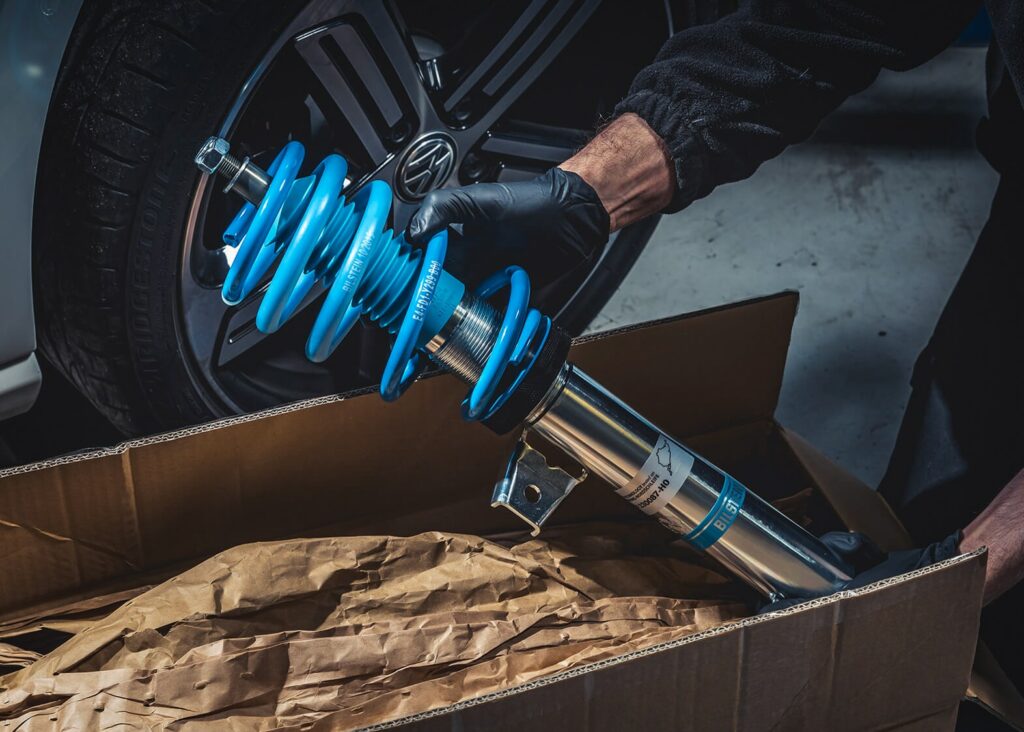
Source: carphanatics.com
Complete replacement kit
May replace the factory springs and dampers with assemblies designed for the vehicle.
Partial replacement design
May retain some factory components, depending on the suspension layout and kit instructions.
Electronic suspension
May require dedicated electronic dampers, approved cancellation devices, or other specified parts. Check the manufacturer’s instructions.
What About Cars With Air Suspension?
Cars with factory air suspension need special attention because the system uses air springs and may include height sensors, electronic controls, and other components. A coilover conversion is possible on some vehicles, but it is not a direct swap unless a compatible conversion kit is specified.
Before changing the system, confirm how the conversion affects ride-height control, warning lights, suspension settings, and any linked vehicle systems. A qualified shop should follow the kit’s instructions and local roadworthiness requirements.
Confirm conversion support
Use a kit intended for the exact vehicle and factory air suspension configuration.
Check electronic effects
Verify the approved approach for sensors, control modules, and warning messages.
What Happens If You Install the Wrong Coilovers?
Installing incompatible coilovers can cause more than a poor fit. The parts may fail to attach correctly, restrict suspension movement, contact nearby components, or create unsafe handling. An incorrect spring or damper setup can also make the vehicle less predictable on rough roads and during sudden maneuvers.
Some fitment problems are visible during installation, while others appear only when the suspension moves or the car is driven. This is why a successful bolt-up does not prove that the setup is safe. The installation must match the kit instructions and the vehicle’s requirements.
Incorrect mounting
A mismatched mount or bracket can create poor alignment or an insecure attachment.
Restricted suspension travel
The assembly may bottom out, top out, or bind before the wheel can move through its intended range.
Tire or wheel contact
Incorrect dimensions or ride height can cause contact with suspension parts or bodywork.
Poor handling
Unsuitable spring rates, damping, or suspension geometry can reduce stability and tire contact.
Component damage
Interference or excessive loads may damage suspension parts, brake hoses, wiring, tires, or mounts.
Warning Signs After Installation
Listen and watch for new clunks, scraping, repeated bottoming, steering changes, or visible tire contact. Uneven ride height or a warning light after installation may also indicate a problem that needs inspection.
If the car feels unstable, a wheel contacts a component, a mount appears loose, or a brake hose or wire is stretched, stop driving and arrange a professional inspection. Do not try to solve a serious fitment problem by making unapproved cuts or adjustments.
Stop if there is contact or binding
Do not continue driving a vehicle with suspected suspension interference or restricted wheel movement.
Recheck the installation
Have a qualified technician compare the installed parts with the manufacturer’s instructions and inspect all related components.
Get an alignment
Arrange a wheel alignment after installation and ride-height changes, following the kit and vehicle requirements.
Are Coilovers Worth It If Your Car Has Limited Options?
Coilovers can be worthwhile when they meet a clear goal and a compatible kit is available. They may offer adjustable ride height and, on some models, adjustable damping. The value depends on the quality of the kit, the condition of the original suspension, installation costs, and how you use the car.
If your vehicle has few off-the-shelf options, compare a custom coilover conversion with high-quality replacement dampers and springs designed for the factory suspension. A standard replacement setup may provide the comfort and reliability you need without the extra design work and cost of a custom build.
Include the full cost when comparing options. The purchase price is only one part of the job. Labor, alignment, replacement mounts, electronic components, and later maintenance may add to the total. A custom setup may cost more if fabrication and testing are needed.
Choose coilovers when
You need approved ride-height adjustment, suitable damping options, or a suspension setup intended for your driving goals.
Keep the factory-style setup when
Your priority is straightforward maintenance, stock ride height, or a comfortable daily ride and suitable replacement parts are available.
Consider a specialist when
Your car has unusual suspension geometry, a custom chassis, air suspension, or no confirmed direct-fit kit.
How to Compare the Total Cost
Request a quote that includes the full kit, installation labor, any required extra parts, and a wheel alignment. If the car has electronic dampers or a custom suspension layout, ask whether diagnostic work or fabrication is needed.
Also check the manufacturer’s warranty terms and service guidance. Some kits have specific limits on adjustment, use, or maintenance. Understanding those limits before purchase helps prevent avoidable costs later.
Upfront cost
Compare complete kits that fit the same vehicle and serve the same purpose.
Installation cost
Include labor, alignment, and any required supporting parts.
Long-term care
Check inspection intervals, replacement parts, corrosion care, and warranty conditions.
Frequently Asked Questions
Q
Can I put any brand of coilovers on my car?
You can choose among different brands when they offer a kit approved for your exact vehicle and configuration. Brand choice alone does not determine compatibility. Check the official fitment list, exclusions, mounting details, and installation instructions before ordering.
Q
Can coilovers from one car fit another car?
Sometimes, but only when the manufacturer confirms compatibility or a qualified suspension specialist validates a properly engineered conversion. Similar chassis dimensions or matching bolt patterns do not prove that the spring, damper, mounts, and suspension geometry are suitable.
Q
Are coilovers universal?
Most complete coilover kits are vehicle-specific. Some universal assemblies are sold for custom applications, but they may need special mounts, fabrication, and careful spring and damper selection. They should not be treated as direct-fit parts for every car.
Q
Do I need an alignment after installing coilovers?
Yes, a wheel alignment is generally needed after coilover installation or ride-height changes because these changes can affect suspension geometry. Follow the vehicle and kit instructions, and have a qualified technician check alignment and tire clearance before normal driving.
Q
Can coilovers damage my car if they do not fit?
Yes. Incorrect coilovers can cause mounting problems, suspension binding, tire contact, poor handling, or damage to related parts. Do not drive the car if the suspension appears insecure, binds, or contacts nearby components. Have the setup inspected before use.
Q
Can I install coilovers myself?
A capable home mechanic may be able to install a vehicle-specific kit by following the correct service manual and kit instructions. The work can involve loaded springs, specialized tools, critical fasteners, and safety-sensitive components. If you lack the proper tools or experience, use a qualified suspension shop.
✦ Wrapping Up
Conclusion
No, you cannot assume that any coilovers will fit any car. Compatibility depends on the suspension layout, mounting points, model year, trim, spring and damper specifications, and available clearance. Even a part that bolts into place may not work correctly on a different vehicle.
Start with your exact vehicle details and check the coilover manufacturer’s official fitment guide. Review every exclusion, confirm any electronic suspension requirements, and ask for technical support if the listing is unclear. If a direct-fit kit is unavailable, consult a qualified suspension specialist before considering custom parts.
Once you have a compatible kit, follow its installation and adjustment limits. Check for interference, preserve suitable suspension travel, and arrange a professional alignment. These steps help you choose parts that suit your car and support predictable handling.
💡 Key Takeaway
Before buying coilovers, verify the exact year, make, model, trim, and suspension package against the manufacturer’s fitment guide. If compatibility is uncertain, obtain written confirmation or consult a qualified suspension specialist.
Eric
Hi, I’m Eric Bennett, the person behind OffRoadTruckAccessories.com.
I created this blog to share my interest in trucks, off-road driving, automotive accessories, and DIY modifications. I enjoy learning how different truck accessories work, testing their usefulness, and understanding whether they are truly worth buying.
Will G37 coilovers fit G35? Learn which model years may share fitment, what changes with coupe, sedan, and AWD setups, and how to verify compatibility.