How to Tell If My F150 Has a Leveling Kit: Expert Information
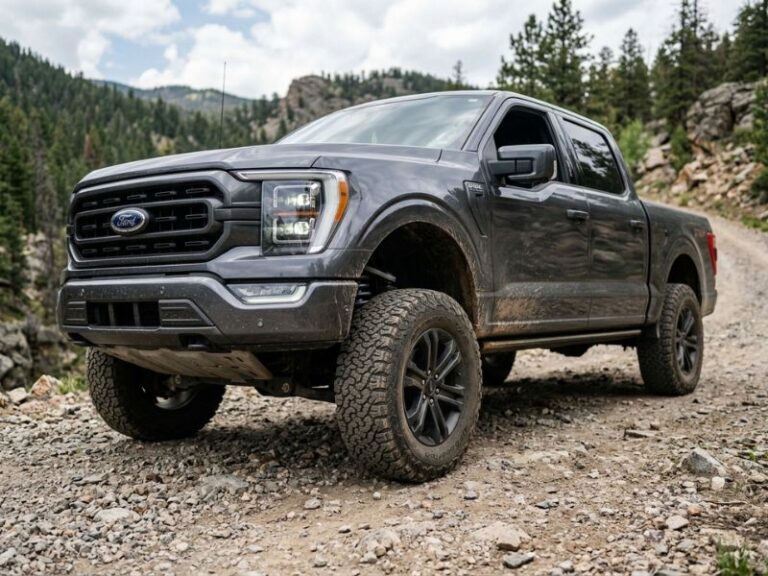
How to tell if my F150 has a leveling kit? The easiest way is to check whether the front of your F-150 sits level with the rear and inspect the front suspension for spacers or other aftermarket components. A stock F-150 usually has a slight factory rake, so a level stance is often the first clue that a leveling kit has been installed.
I’ve found that many F-150 owners aren’t sure whether their truck already has a leveling kit, especially if they purchased it used. Since previous owners don’t always document suspension modifications, it’s common to wonder what upgrades have already been made before buying new tires or changing the suspension.
The good news is that you don’t need advanced mechanical skills to figure it out. In most cases, a few simple measurements and a careful inspection of the front suspension are enough to identify whether your F-150 has been leveled.
In this guide, I’ll show you how to tell if my F150 has a leveling kit using several simple methods. I’ll explain how to measure ride height, inspect leveling kit spacers, identify common aftermarket suspension components, and spot the signs that indicate whether your F-150 has a factory suspension or an installed leveling kit.
How to Tell If My F150 Has a Leveling Kit
Before diving into the inspection process, it’s helpful to understand the fundamental purpose of a leveling kit. From the factory, most Ford F-150s, like many pickup trucks, come with a slight rake. This means the rear of the truck sits a bit higher than the front. This design choice isn’t arbitrary; it’s intended to accommodate the weight of cargo or a trailer, preventing the truck from squatting excessively and maintaining proper headlight aim and suspension geometry under load.
A leveling kit is designed to eliminate this factory rake by raising the front of the truck to match the height of the rear. It’s typically a relatively inexpensive and straightforward modification compared to a full lift kit, which raises both the front and rear significantly. The primary reasons F-150 owners install leveling kits include:
- Aesthetics: Many prefer the more aggressive, balanced look of a level truck.
- Tire Clearance: Leveling kits often allow for the installation of slightly larger tires, typically one or two sizes up from stock, without rubbing issues.
- Improved Approach Angle: For light off-roading, raising the front can slightly improve the approach angle, reducing the chance of scraping the front bumper.
It’s important to differentiate a leveling kit from a full lift kit. While both raise the truck, a leveling kit specifically targets the front end to achieve a level stance, usually adding 1 to 2.5 inches of lift. A full lift kit, on the other hand, raises both the front and rear, often by 3 inches or more, and typically involves more extensive suspension component replacement.
Visual Cues: The Easiest Way to Spot a Leveling Kit
The most immediate and often conclusive way to determine if your F-150 has a leveling kit is through visual inspection. You don’t need to be a mechanic to spot these signs, though a tape measure can certainly help confirm your suspicions.
Measure the Fender Heights
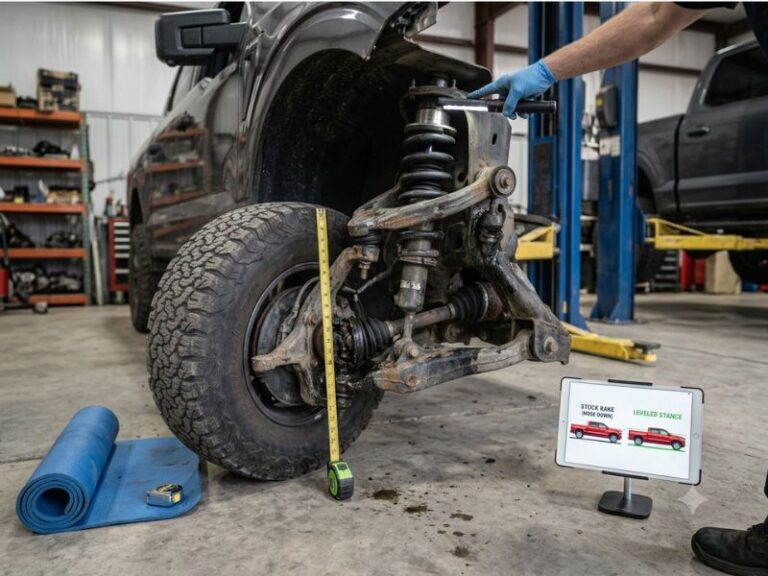
This is the most reliable initial step. Park your F-150 on a flat, level surface. Using a tape measure, measure the distance from the ground to the bottom edge of the fender flare, directly above the center of the wheel, for both the front and rear wheels. Take multiple measurements if needed to ensure accuracy.
- Stock F-150: You’ll typically find the rear fender height is 1 to 3 inches higher than the front. The exact difference can vary slightly by model year, trim level, and suspension package.
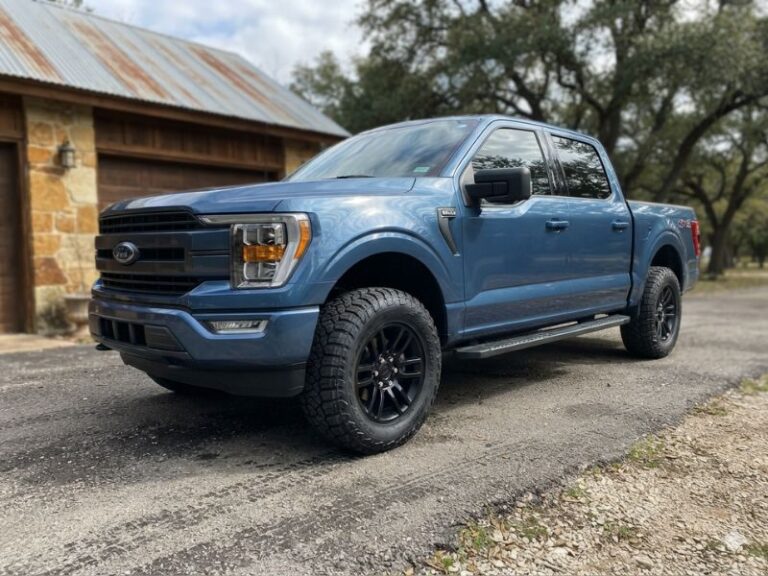
- Leveled F-150: If the truck has a leveling kit, the front and rear fender heights will be much closer, often within half an inch of each other, or even perfectly level. If the front is higher than the rear, it’s likely an aggressive leveling kit or a poorly installed one.
Remember that tire size can influence these measurements. If the truck has significantly larger tires on the front than the rear (which is uncommon for a level setup), it could skew the results. However, for most F-150s, this method provides a strong indication.
Observe the Truck’s Stance
Step back and look at your F-150 from a distance on level ground. Does it appear to sit perfectly flat from front to back? Or does it still have a noticeable upward slope towards the rear? Your eye can often pick up on a leveled stance quite quickly. If the truck looks “even,” it’s a good sign a leveling kit is present.
Check for Larger Tires
While not a direct indicator of a leveling kit, larger-than-stock tires are a common reason people install them. If your F-150 has tires that look noticeably bigger than what you’d typically see on an unmodified truck of the same year and model, especially if they fill the wheel wells more completely, it suggests a leveling kit might have been installed to accommodate them.
Mechanical Inspection: What Components to Look For
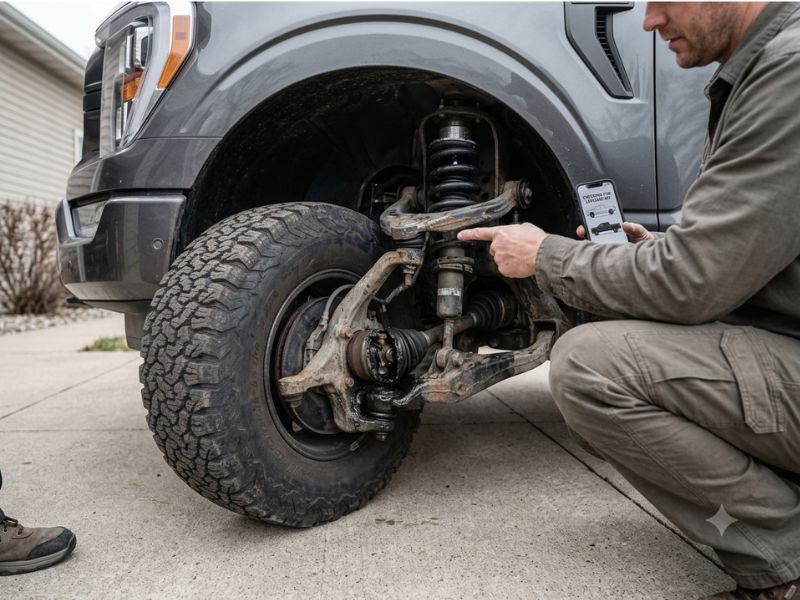
Visual cues are a great start, but a mechanical inspection provides definitive proof. Leveling kits achieve their lift in a few primary ways, each leaving distinct evidence. You’ll need to get under the front end of your truck, so ensure it’s safely parked on a level surface, ideally with the wheels chocked.
Spacer Kits (Most Common)
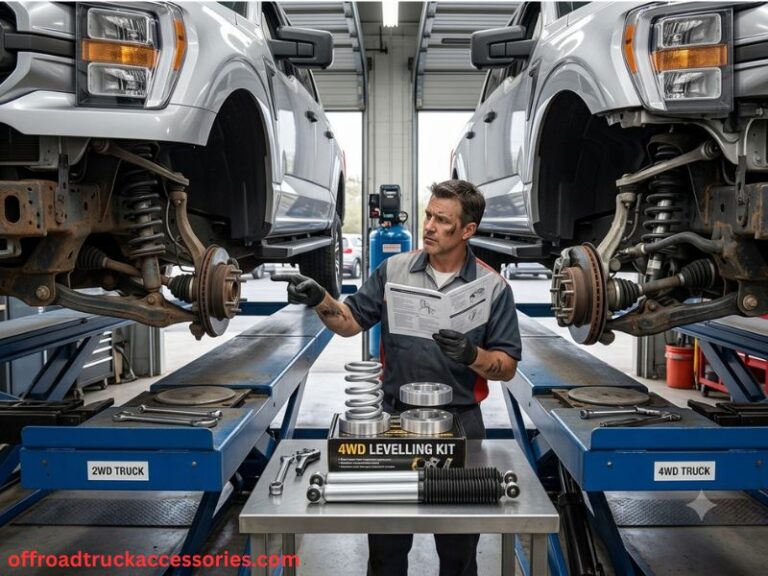
These are by far the most prevalent type of leveling kit due to their simplicity and cost-effectiveness. Spacers are typically made from aluminum, steel, or high-density polyurethane and are installed in one of two main locations:
Upper Strut Spacers
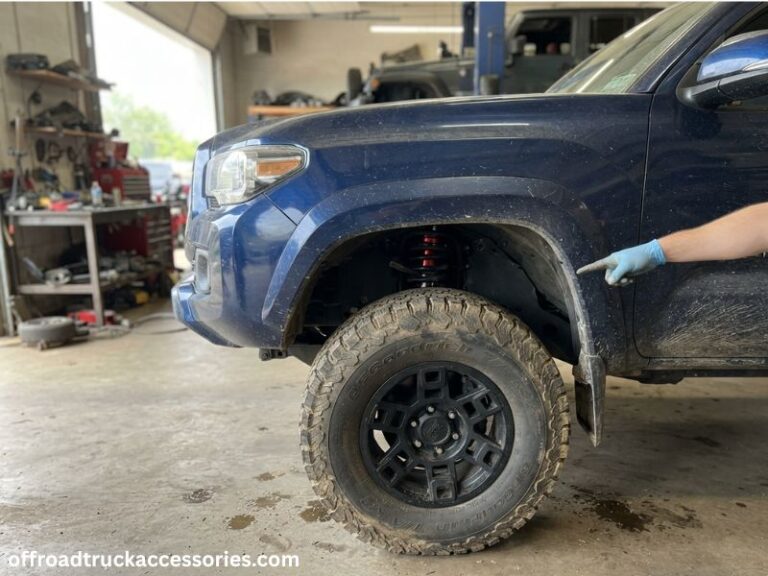
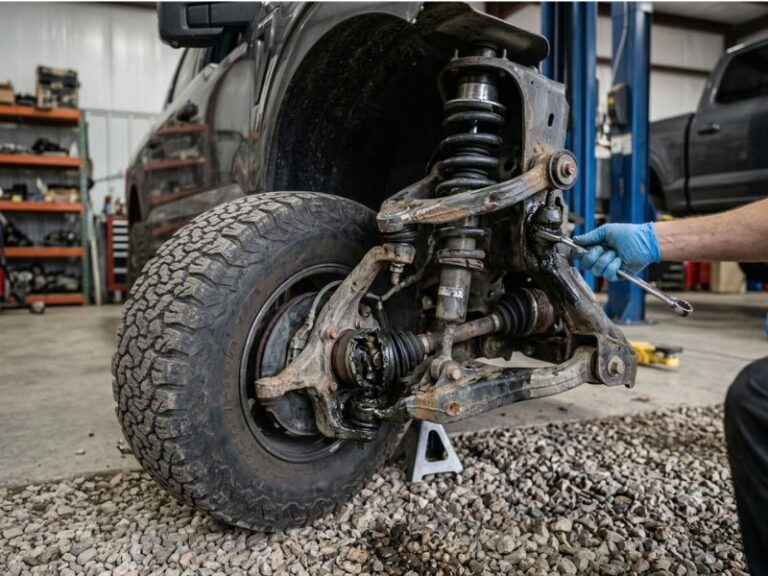
This is the most common type. Look directly above the front coil spring and shock absorber assembly (the strut). If you see a thick block or disc installed between the top of the strut mount and the truck’s frame, that’s an upper strut spacer. These are usually bolted in place and are quite visible once you get a good look at the suspension.
- Appearance: They can be round, square, or irregularly shaped, often black, silver, or sometimes red/blue if anodized. They range from about 1 to 2.5 inches thick.
- Location: Directly on top of the strut tower, where the three bolts secure the strut to the frame.
Lower Strut Spacers
Less common than upper spacers, these are installed between the bottom of the strut and the lower control arm. They effectively extend the strut downwards. These can be harder to spot without removing the wheel, but if you’re looking for them, you might see an extension plate bolted to the bottom of the strut.
- Appearance: Often a metal block or plate.
- Location: Between the bottom of the strut and the lower control arm mounting point.
Coil Spring Spacers
Some leveling kits use spacers that sit either above or below the coil spring itself, rather than the entire strut assembly. This is more common in trucks with separate coil springs and shocks, though some F-150 setups might use them.
- Location: Look at the coil spring. If there’s a thick rubber or polyurethane puck either directly on top of the spring (under the upper spring perch) or directly below the spring (on top of the lower control arm), that’s a coil spring spacer.
Longer Coil Springs
Another method, though less common for simple leveling kits and more often part of a full suspension upgrade, is the installation of longer coil springs. If the coil springs themselves appear significantly taller or have more coils than stock, without any visible spacers, this could be the cause of the lift. This is harder to confirm without knowing the exact stock spring dimensions.
Adjustable Coilovers or “Leveling Struts”
Some higher-end leveling solutions replace the entire factory strut assembly with an aftermarket adjustable coilover or a “leveling strut.” These are designed to provide lift without external spacers.
- Appearance: Aftermarket coilovers often have a different color (e.g., red, yellow, blue, or zinc-plated) than the stock black Ford struts. They might also feature larger diameter bodies, remote reservoirs, or threaded collars for height adjustment.
- Branding: Look for brand names like Bilstein, Fox, Eibach, Rancho, Rough Country, or Icon on the strut body.
- Adjustability: Many adjustable coilovers have a threaded body with a locking ring, allowing the ride height to be fine-tuned. If you see these threads and rings, it’s a strong indicator of an aftermarket adjustable setup.
If you see any of these components, especially spacers, it’s a clear indication that your F-150 has been modified with a leveling kit.
What to Look For (and Not Look For) in the Rear
A true leveling kit only modifies the front suspension to bring it up to the rear’s height. Therefore, if you see modifications in the rear suspension, it’s likely not just a leveling kit, but potentially a full lift kit or a separate rear lift to accommodate heavier loads or a specific aesthetic.
Rear Block Kits
The most common way to lift the rear of an F-150 is with a block kit. These are thick blocks of metal (often cast iron or aluminum) installed between the leaf springs and the rear axle. If you see these blocks, especially if they are thicker than the small factory blocks (if present), it indicates a rear lift has been installed. This would mean it’s more than just a leveling kit.
Add-a-Leaf (AAL) Kits
An Add-a-Leaf kit involves inserting an additional leaf spring into the existing leaf spring pack. This not only adds lift but also increases the spring rate, making the rear suspension stiffer. If you see an extra leaf spring that looks different or is clearly an addition to the factory pack, it’s a rear lift modification.
Aftermarket Shocks
While aftermarket shocks in the rear don’t necessarily mean a lift, if they are significantly longer than stock or are part of a matching set with aftermarket front coilovers, it could be an indicator of a comprehensive suspension upgrade rather than just a front-end level.
The key takeaway here is: if the rear suspension shows signs of modification designed to increase height, you’re likely looking at a full lift kit, not just a leveling kit.
Potential Side Effects and Considerations of a Leveling Kit
While leveling kits are popular, they can introduce certain changes and considerations you should be aware of, especially if you’ve just discovered one on your F-150.
Changes to Ride Quality
A leveling kit can subtly alter the ride quality. By extending the front struts, it can change the angle of the control arms and tie rods, potentially leading to a slightly stiffer or sometimes bouncier ride, depending on the kit’s design and quality. If the kit over-extends the suspension, it can also lead to a harsher ride due to limited downward travel.
Alignment Issues
Any change to the front suspension height requires a wheel alignment. If a leveling kit was installed and the alignment wasn’t performed or was done incorrectly, you might experience:
- Uneven tire wear: The most common symptom, often seen as feathering or excessive wear on the inner or outer edges of the tires.
- Steering pull: The truck might drift to one side, requiring constant correction.
- Loose or vague steering: A less precise feel to the steering.
If you suspect your F-150 has a leveling kit, I recommend having the alignment checked by a reputable shop, especially if you notice any of these symptoms.
Component Wear
Leveling kits can put additional stress on certain front-end components by altering their operating angles. These include:
- Upper Control Arms (UCAs): The ball joint on the UCA can operate at a more extreme angle, leading to premature wear. Some leveling kits or larger lift kits include aftermarket UCAs designed to correct these angles.
- CV Axle Boots (4×4 models): For 4×4 F-150s, raising the front end increases the angle of the CV axles. This can cause the boots to wear out faster, leading to grease leaks and eventual CV joint failure if not addressed.
- Tie Rod Ends: Similar to UCAs, the tie rod ends can also experience increased wear due due to altered geometry.
It’s a good idea to periodically inspect these components for signs of wear, especially if you’ve just acquired a truck with a leveling kit.
Headlight Aim
Raising the front of the truck without adjusting the headlights will cause them to aim higher than intended. This can reduce your visibility on the road and blind oncoming drivers. If you discover a leveling kit, check your headlight aim and adjust it if necessary, or have a shop do it for you.
Warranty Implications
It’s worth noting that installing an aftermarket leveling kit can potentially affect your factory warranty, particularly for suspension and drivetrain components. While the Magnuson-Moss Warranty Act protects consumers, a dealership could argue that a modification caused a specific failure. This is less of a concern for used trucks out of warranty, but something to consider if your F-150 is still under factory coverage.
Tools and Tips for Your Inspection
To conduct a thorough inspection, you’ll need a few basic tools and follow some best practices:
Essential Tools
- Tape Measure: Crucial for fender height measurements. A retractable metal tape measure is ideal.
- Flashlight or Headlamp: Essential for illuminating dark areas under the truck and identifying components.
- Camera (Phone): Useful for taking pictures of suspicious components for later comparison or research.
- Jack and Jack Stands (Optional but Recommended): If you need to remove a wheel for a better view or to inspect components more closely, always use jack stands for safety. Never rely solely on a jack.
Inspection Tips
- Park on Level Ground: This is critical for accurate height measurements and ensuring the truck’s suspension is in a neutral position.
- Clean the Area: If the suspension components are covered in mud or grime, a quick spray with a hose can make it easier to spot aftermarket parts.
- Compare Sides: Always inspect both the driver’s and passenger’s side front suspension. A leveling kit will be installed on both sides.
- Research Stock Photos: If you’re unsure what a stock F-150 suspension looks like for your specific year and trim, do a quick online search for “stock F-150 [year] front suspension” to compare.
- Feel for Gaps: Sometimes, a spacer might be hidden or less obvious. Feel around the top of the strut mount for any added material.
Don’t be afraid to get a little dirty. A thorough inspection often requires getting down on your hands and knees or even laying on your back to get a good view of the suspension components.
When to Seek Professional Help
While many of these checks are straightforward, there are times when it’s best to consult with a professional mechanic or a reputable off-road shop. If you:
- Are unsure about what you’re seeing: Suspension components can look complex, and if you’re not confident in your identification, a professional can confirm.
- Notice unusual noises or handling: Clunking, squeaking, excessive vibration, or poor steering could indicate issues related to the leveling kit or its installation.
- Plan to remove or modify the kit: If you want to return the truck to stock height or upgrade to a different lift, a professional can advise on the best approach and perform the work safely.
- Need an alignment: As mentioned, an alignment is crucial after any suspension height change.
A professional eye can not only confirm the presence of a leveling kit but also assess its condition and any potential wear on surrounding components, giving you peace of mind.
Conclusion
Determining whether your F-150 has a leveling kit doesn’t have to be a mystery. By combining simple visual observations with a targeted mechanical inspection, you can quickly and confidently assess your truck’s front suspension.
Remember to start with fender height measurements, then look for the tell-tale signs of spacers above or below the struts, or aftermarket adjustable coilovers. Understanding these indicators will not only answer the question of how to tell if my F-150 has a leveling kit but also empower you to make informed decisions about your truck’s maintenance, performance, and future modifications.
Always prioritize safety during your inspection and don’t hesitate to consult a professional if you have any doubts or concerns about your F-150’s suspension. A reliable answer to “how to tell if my f150 has a leveling kit” comes from applying these points to the specific situation rather than relying on one rule.