How to Tell If a Truck Has a Leveling Kit: Easy Ways to Check
How to tell if a truck has a leveling kit? The easiest way is to compare the front and rear ride height and inspect the front suspension for spacers or aftermarket components. A leveled truck usually sits flatter than a stock truck, which typically has the front end slightly lower than the rear.
Many truck owners install leveling kits to eliminate the factory rake, improve the truck’s appearance, and create space for larger tires. If you’re buying a used truck or simply aren’t sure whether one has already been modified, identifying a leveling kit can help you understand its suspension setup.
Fortunately, you don’t need to be a mechanic to spot most leveling kits. A few simple visual inspections and basic measurements are often enough to determine whether your truck has been leveled. In some cases, checking the suspension components can provide a clear answer.
In this guide, you’ll learn how to tell if a truck has a leveling kit using several easy methods. I’ll explain how to measure ride height, inspect the front suspension, identify common signs of aftermarket leveling kits, and recognize when additional modifications may have been made. By the end, you’ll be able to confidently determine whether a truck has a leveling kit installed.
How to Tell If a Truck Has a Leveling Kit
Before diving into how to spot a leveling kit, it’s essential to understand the factory setup of most pickup trucks. Manufacturers design trucks with a slight forward rake, meaning the rear of the truck sits a bit higher than the front. This isn’t an accident; it serves several practical purposes related to vehicle dynamics and utility.
Purpose of the Factory Rake
The primary reason for the factory rake is to accommodate loads. When you hitch a trailer or load the truck bed with cargo, the rear suspension compresses. If the truck were perfectly level when empty, adding weight would cause the rear to sag below the front, leading to a “squatted” appearance. This squatting can negatively affect handling, headlight aim, and even tire wear. The rake ensures that when the truck is under load, it settles closer to a level stance, maintaining proper geometry and appearance.
Another factor is aerodynamics. While subtle, the slight upward angle at the rear can contribute to better airflow over the truck, potentially improving fuel efficiency at highway speeds. It also plays a role in braking stability, helping to prevent nose-diving under heavy braking by distributing forces more evenly.
Visualizing the Rake
To visualize the rake, imagine a horizontal line drawn from the top of the front wheel well to the top of the rear wheel well. On a stock truck, you’ll typically notice that the rear wheel well opening sits a couple of inches higher than the front. This difference in height is the factory rake. My observation is that this difference is usually between 1.5 to 3 inches, depending on the truck model and manufacturer.
What Exactly Is a Leveling Kit?
A leveling kit is a suspension modification designed to raise the front end of a truck to match the height of the rear. Unlike a full lift kit, which raises both the front and rear of the vehicle, a leveling kit specifically targets the front suspension to eliminate the factory rake. This results in a more aggressive, level stance that many truck owners prefer.
Components of a Leveling Kit
Leveling kits come in various forms, depending on the truck’s front suspension design. The most common types include:
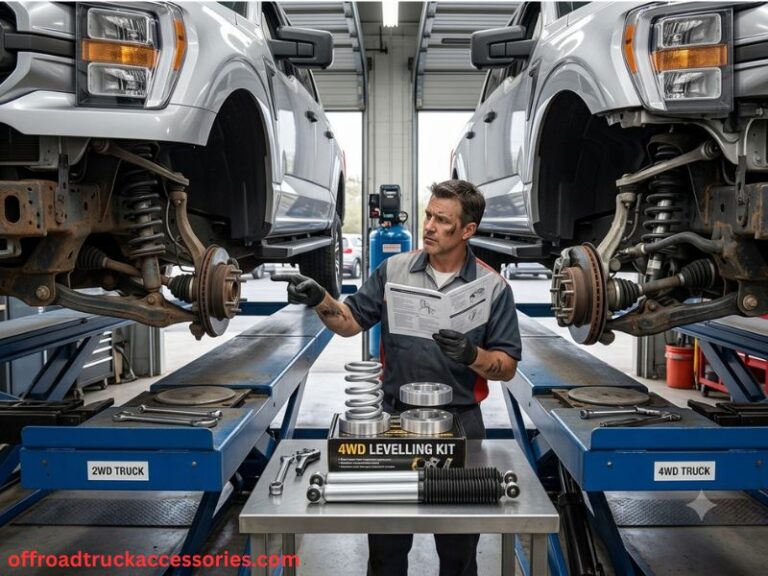
- Spacer Kits: These are the most prevalent and often the most affordable. Spacers are installed either above or below the front coil springs or struts. They physically extend the strut assembly, effectively raising the front of the truck.
- Torsion Keys: For trucks with torsion bar front suspension (common in older models), leveling is achieved by replacing the factory torsion keys with aftermarket ones that have a different indexing. This allows for increased tension on the torsion bars, raising the front end.
- Coil Spring Spacers: Similar to strut spacers, these are used on trucks with separate coil springs and shock absorbers. The spacer is placed on top of the coil spring to add height.
- Adjustable Struts/Coilovers: Some higher-end leveling solutions involve replacing the entire front strut assembly with an adjustable coilover. These allow for precise height adjustments, often offering multiple settings to achieve the desired level.
The choice of kit depends on the truck’s make, model, and year, as well as the owner’s budget and desired ride quality. Regardless of the type, the goal remains the same: to bring the front of the truck up to the same height as the rear.
Initial Visual Cues: The Stance
The most immediate and often most reliable indicator of a leveling kit is the truck’s overall stance. This is where your eyes become your primary tool for assessment. I always start my evaluation with a walk-around, taking in the vehicle’s profile from a distance.
Elimination of the Factory Rake
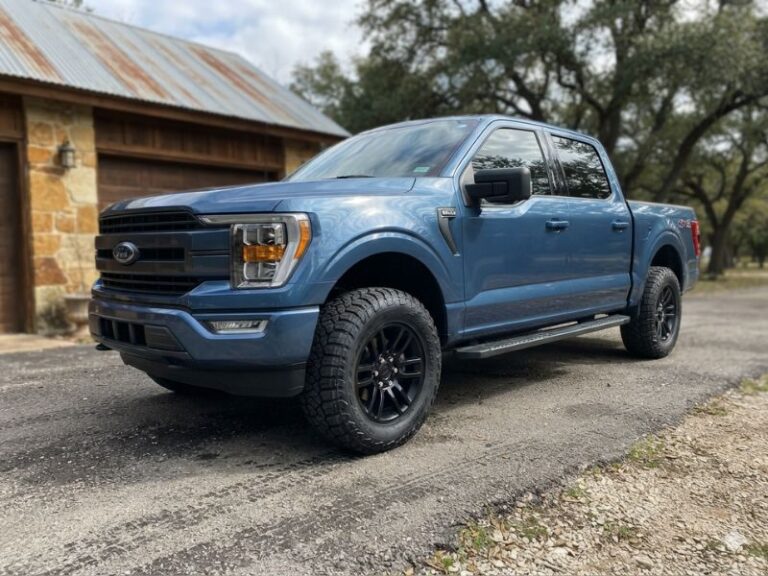
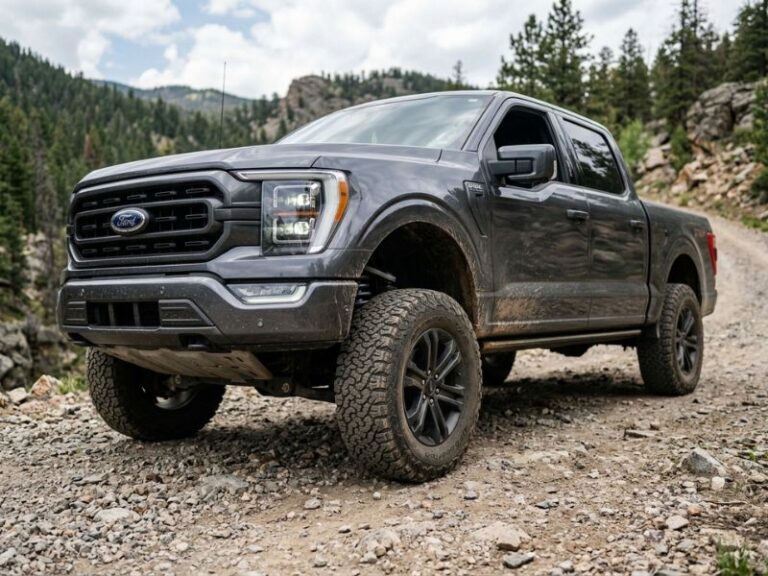
As I mentioned, stock trucks have a noticeable rake, with the rear sitting higher than the front. If a truck appears perfectly level from front to back, especially when viewed on flat ground, it’s a strong sign that a leveling kit has been installed. Imagine drawing a horizontal line through the center of the wheel hubs, or even the top of the tires; if that line appears parallel to the ground, the truck is likely leveled.
Increased Front Fender Gap
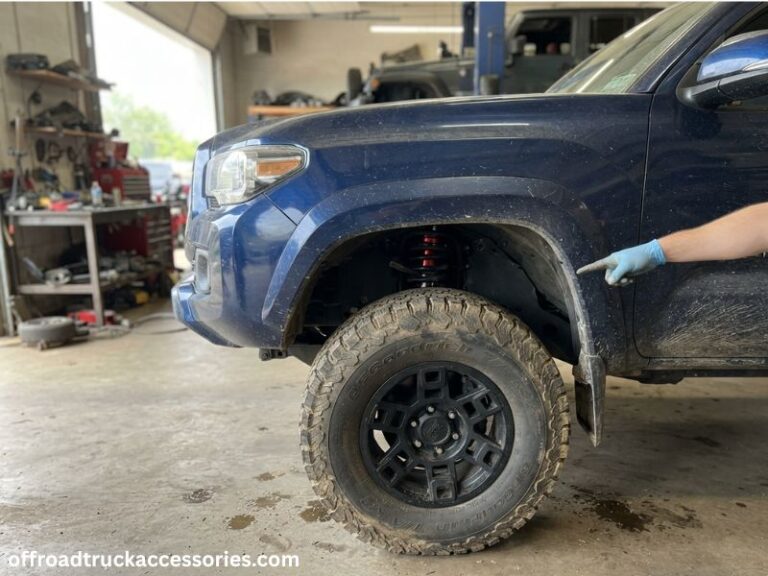
Another key visual cue is the gap between the top of the tire and the fender flare. On a stock truck, the rear fender gap is typically larger than the front. With a leveling kit, the front suspension is raised, which increases the front fender gap. If you observe that the front and rear fender gaps are roughly equal, or if the front gap seems unusually large compared to what you’d expect from a stock truck, it’s a good indication of a leveling modification.
I find it helpful to compare the truck in question to a known stock model of the same year and trim. This side-by-side comparison can make subtle differences in fender gap much more apparent.
Tire Size and Clearance
While not a direct indicator of a leveling kit itself, larger tires often accompany leveling kits. Owners frequently install leveling kits to gain clearance for bigger tires and wheels. If you see a truck with significantly larger-than-stock tires, especially if they appear to fill the wheel wells nicely without rubbing, it suggests that some form of suspension modification, likely a leveling kit, has been performed to accommodate them.
However, it’s important to note that some owners install leveling kits purely for aesthetics without changing tire size, so this isn’t a definitive sign on its own.
Closer Inspection: Components to Look For
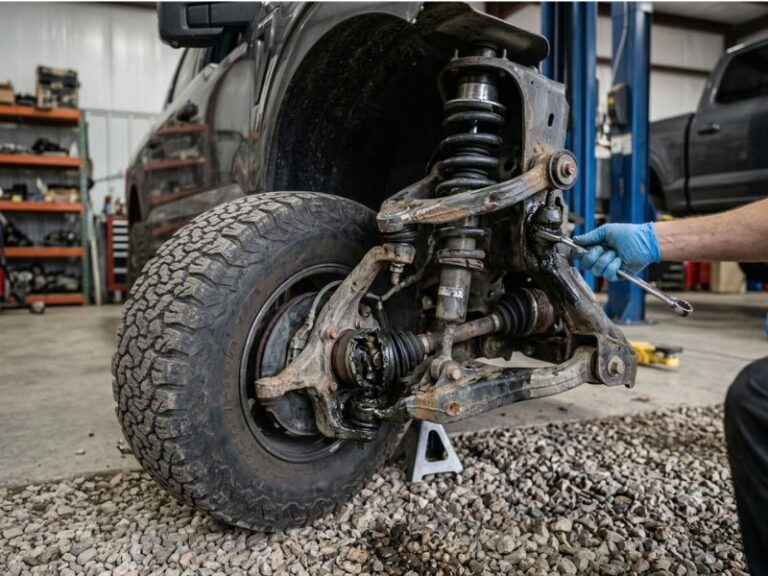
Once the initial visual assessment suggests a leveling kit might be present, the next step is to get down and inspect the front suspension components more closely. This is where you’ll find the concrete evidence.
Strut Spacers
For trucks with independent front suspension using coil-over struts (the most common setup today), strut spacers are the most frequent leveling method. These spacers are typically made of aluminum, steel, or high-density polyurethane and are installed either on top of the strut assembly or sometimes below the coil spring.
- Top-Mount Spacers: These are installed between the top of the strut assembly and the frame mount. You’ll see an additional block or puck-shaped component sitting on top of the strut tower, often colored black, silver, or red. This is usually the easiest type of spacer to spot.
- Bottom-Mount Spacers: Less common but still used, these spacers are installed between the bottom of the coil spring and the lower control arm. They can be harder to see without crawling under the truck.
I recommend using a flashlight and looking directly at the top of the front strut towers. If you see an aftermarket block or disc that doesn’t look like a factory component, you’ve likely found a strut spacer. Factory struts typically mount directly to the frame or a simple bracket without an additional block.
Torsion Keys
For trucks with torsion bar suspension (e.g., some older GM trucks, Ford Rangers), leveling is achieved with aftermarket torsion keys. The torsion bars run horizontally under the truck, connecting the lower control arms to a crossmember. At the crossmember, there’s a key that allows for adjustment.
Aftermarket torsion keys are often a different color (e.g., red, blue) or have a different casting shape than the factory keys. They are designed with a different index to increase the tension on the torsion bars, raising the front end. You’ll need to look under the truck, near the middle of the frame, where the torsion bars connect to the crossmember. Compare the keys you see to images of factory keys for that specific truck model.
Aftermarket Coilovers or Adjustable Struts
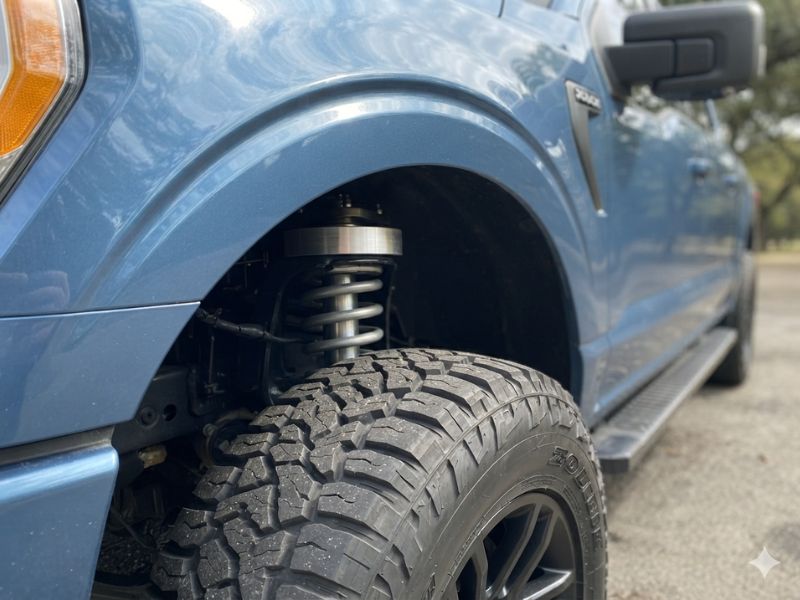
Some higher-quality leveling kits replace the entire factory strut assembly with an aftermarket coilover or adjustable strut. These often feature larger diameter bodies, different spring colors (e.g., red, yellow), and sometimes an external reservoir. They might also have threaded bodies or multiple circlip grooves for height adjustment.
If you see a strut that looks significantly different from a standard black or gray factory strut, especially if it’s brightly colored or has visible adjustment mechanisms, it’s likely an aftermarket component. Brands like Bilstein, Fox, Eibach, and King are common manufacturers of these types of suspension upgrades.
Upper Control Arms (UCAs)
While not a direct component of a leveling kit, aftermarket Upper Control Arms (UCAs) are often installed in conjunction with leveling kits, especially those on the taller side (2.5 inches or more). When you raise the front end, it changes the angle of the control arms and ball joints. Stock UCAs can become stressed or limit suspension travel at these new angles.
Aftermarket UCAs are designed to correct the geometry, providing better articulation and preventing premature wear. They often look beefier than factory UCAs, may be a different color, and might use uniball joints instead of traditional ball joints. If you spot aftermarket UCAs, it’s a strong indicator that the front suspension has been modified, likely with a leveling or lift kit.
Measuring for Confirmation
When visual inspection isn’t entirely conclusive, or if you want definitive proof, taking measurements is the most accurate way to determine if a truck has a leveling kit. This method removes much of the guesswork.
Measuring Fender Height
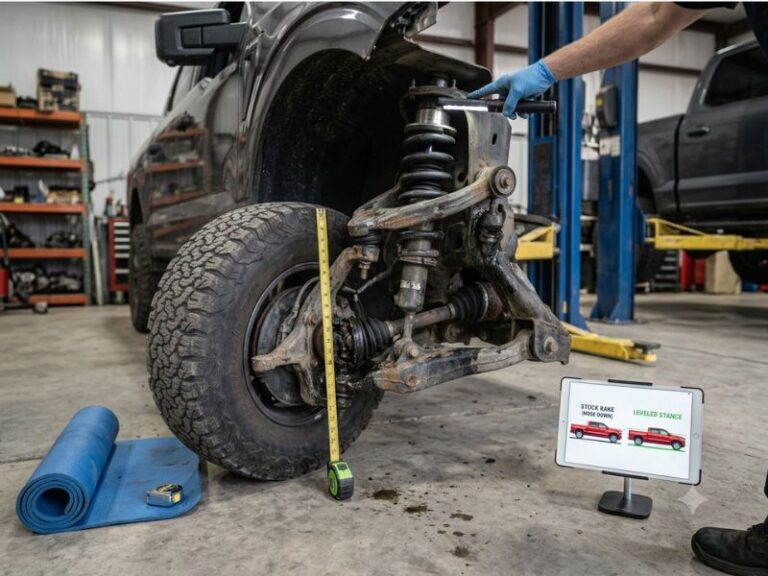
I always recommend measuring from the ground to the bottom edge of the fender flare, directly through the center of the wheel hub. Do this for both the front and rear wheels while the truck is on a flat, level surface and unloaded.
Here’s what to look for:
- Stock Truck: The rear measurement will typically be 1.5 to 3 inches higher than the front measurement.
- Leveled Truck: The front and rear measurements will be very close, usually within 0.5 to 1 inch of each other. A perfectly level truck will have identical measurements.
- Lifted Truck: Both front and rear measurements will be significantly higher than stock, and the difference between front and rear might still show a slight rake, or it could be perfectly level depending on the lift kit.
It’s crucial to measure both sides of the truck (front left, front right, rear left, rear right) to account for any slight variations or uneven ground. Average the front measurements and the rear measurements for the most accurate comparison.
Measuring Hub to Fender
An alternative and often more consistent measurement is from the center of the wheel hub to the bottom edge of the fender flare. This method eliminates variables like tire size or inflation pressure, focusing purely on the suspension height.
Again, compare the front hub-to-fender measurement to the rear. A leveled truck will show these measurements to be very similar, whereas a stock truck will have a larger measurement at the rear.
Ride Quality and Handling Changes
While not a visual or component-based indicator, changes in ride quality and handling can sometimes hint at a leveling kit, especially if it’s a poorly designed or installed one. This is more of a subjective assessment, but it can contribute to the overall picture.
Stiffer Ride
Some leveling kits, particularly those that pre-load the factory coil springs or torsion bars excessively, can result in a stiffer, harsher ride. This is because the suspension has less downward travel before hitting its limits. If the front end feels unusually firm or bouncy over bumps compared to what you’d expect from a stock truck, it might be due to a leveling kit.
Alignment Issues
Raising the front end of a truck significantly alters its suspension geometry. While most quality leveling kits account for this, some cheaper kits or improper installations can lead to alignment issues. If you notice uneven tire wear (especially on the inside or outside edges of the front tires), or if the steering feels loose or pulls to one side, it could be a symptom of an unaligned or poorly leveled truck.
I always recommend getting an alignment after installing any suspension modification, including a leveling kit, to prevent these issues.
Limited Down Travel
A leveled truck might have reduced downward suspension travel. This can become noticeable when driving over uneven terrain or speed bumps, where the suspension might “top out” more easily, resulting in a clunking sound. This is less common with well-designed kits but can occur if the lift height is pushed too far without addressing other components.
Distinguishing Leveling Kits from Full Lift Kits
It’s important to differentiate a leveling kit from a full lift kit, as they achieve different goals and involve different components. While both raise the truck, their approach and extent of modification vary significantly.
Key Differences
- Height Increase: Leveling kits typically raise the front of the truck by 1.5 to 3 inches, specifically to match the rear. Full lift kits raise both the front and rear of the truck, usually by 3 inches or more, often significantly more (e.g., 4, 6, 8 inches).
- Components: Leveling kits primarily focus on front suspension components (spacers, torsion keys, adjustable struts). Full lift kits involve a much broader range of components for both front and rear, including taller coil springs, lift blocks or add-a-leafs for the rear, longer shocks, drop brackets for control arms, steering components, and sometimes even new driveshafts.
- Stance: A leveled truck will appear perfectly flat from front to back. A fully lifted truck will sit much higher overall, and depending on the kit, it might still retain a slight factory rake, or it could be perfectly level at its new elevated height.
If you see large lift blocks under the rear leaf springs (more than 1-2 inches) or significantly longer rear shocks, you’re likely looking at a full lift kit, not just a leveling kit. Similarly, if the entire truck sits dramatically higher off the ground, it’s probably a full lift.
Why Does It Matter?
Understanding if a truck has a leveling kit is important for several reasons, especially if you’re considering purchasing a used vehicle or modifying your own.
Resale Value and Warranty
Modifications can affect a truck’s resale value, sometimes positively, sometimes negatively. More importantly, suspension modifications can potentially void parts of the factory warranty, especially if issues arise that can be attributed to the aftermarket components. I always advise checking with the manufacturer or dealer regarding warranty implications before making significant changes.
Maintenance and Repair
Aftermarket suspension components might require different maintenance procedures or specialized parts for repair. Knowing what’s installed helps you or your mechanic source the correct components and perform appropriate service. Some leveling kits can also accelerate wear on certain factory components like ball joints or CV axles if not properly designed or installed.
Driving Dynamics
While leveling kits generally have a minimal impact on driving dynamics compared to full lift kits, they can still alter the vehicle’s center of gravity and suspension geometry. This can subtly affect handling, braking, and steering feel. Being aware of these changes helps you understand how the truck will behave on the road.
Future Modifications
If you plan to further modify a truck, knowing its current suspension setup is crucial. A truck that already has a leveling kit might be a good starting point for a larger lift, or it might require different components to achieve your next modification goal.
My Practical Advice for Inspection
When I’m trying to determine if a truck has a leveling kit, I follow a systematic approach:
- Start with the Stance: From about 10-15 feet away, observe the truck’s profile on a flat surface. Does it look perfectly level? Is the front fender gap similar to the rear? This gives me my first strong indication.
- Examine the Front Wheel Wells: Get closer and look directly into the front wheel wells. Use a flashlight if needed. I specifically look for spacers on top of the strut towers or between the coil spring and the lower control arm. If it’s a torsion bar truck, I’ll look for aftermarket keys.
- Check for Aftermarket Components: Are the front struts or coilovers factory-looking, or do they appear aftermarket (different color, larger body, external reservoirs, visible adjustment mechanisms)? Are the upper control arms stock or beefier aftermarket units?
- Measure for Confirmation: If I’m still unsure, or if I need definitive proof, I’ll grab a tape measure and take the ground-to-fender or hub-to-fender measurements. This is the most objective way to confirm.
- Consider Tire Size: While not proof, significantly larger tires often go hand-in-hand with leveling kits. If the tires are much bigger than stock, it reinforces the likelihood of a suspension modification.
Remember, a combination of these indicators provides the most accurate assessment. One sign alone might not be conclusive, but several pointing in the same direction usually confirm the presence of a leveling kit.
Conclusion
Identifying whether a truck has a leveling kit involves a blend of visual observation, component inspection, and precise measurement. By understanding the factory rake and the various ways leveling kits achieve their goal, you can confidently assess a truck’s suspension modifications. From the subtle elimination of the factory rake and the increased front fender gap to the tell-tale signs of strut spacers, aftermarket torsion keys, or adjustable coilovers, the evidence is there for those who know what to look for. My advice is to always combine these methods for the most accurate determination. Knowing how to tell if a truck has a leveling kit not only satisfies curiosity but also provides crucial information for potential buyers, maintenance planning, and future customization. A reliable answer to “how to tell if a truck has a leveling kit” comes from applying these points to the specific situation rather than relying on one rule.