Can I Stack a Leveling Kit With a Lift Kit? Complete Guide
Can I stack a leveling kit with a lift kit? Yes, it is physically possible on some trucks, but it is generally not recommended unless both components are specifically designed to work together. Stacking a leveling kit on top of a lift kit can create excessive suspension height, poor alignment, reduced suspension travel, and additional stress on steering and drivetrain components.
The complete details are explained below. In this article, you will learn what stacking suspension components means, why truck owners do it, when it may work, what problems it can create, how it affects suspension geometry, and what safer alternatives can provide the height or stance you want.
Can I Stack a Leveling Kit With a Lift Kit?
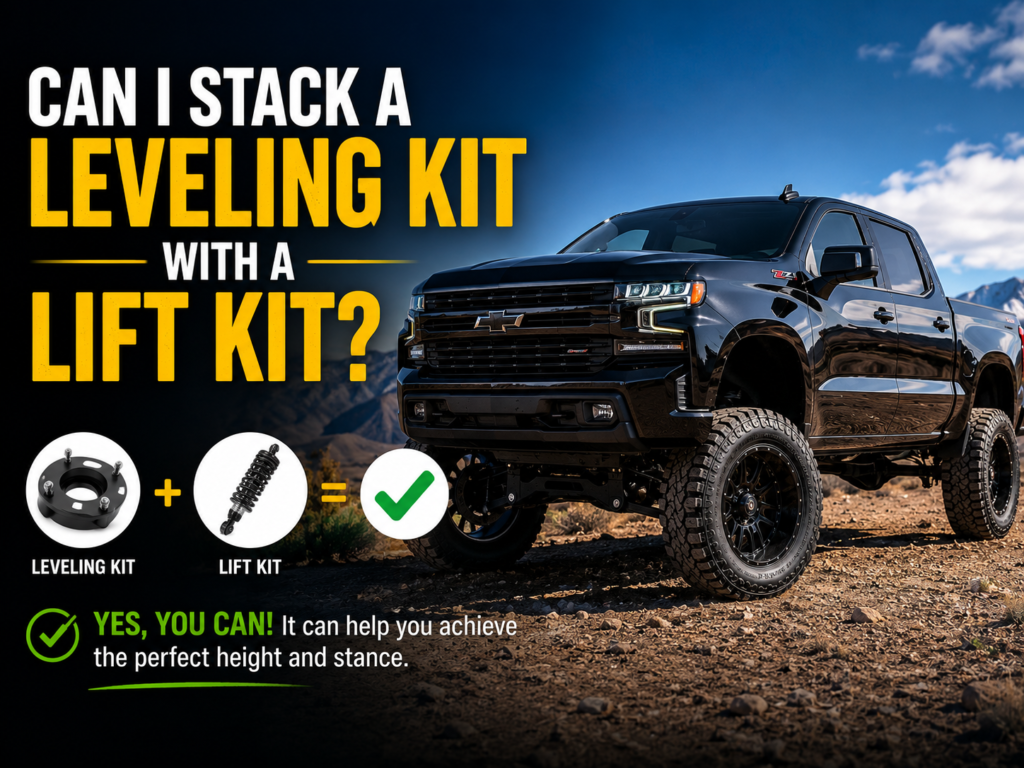
You can stack a leveling kit with a lift kit, but whether you should depends on the specific truck, lift system, and leveling component.
A lift kit is designed as a complete suspension package. Manufacturers engineer the system around a specific ride height and include components that work together, such as:
- Springs
- Shocks
- Control arms
- Steering correction parts
- Alignment hardware
- Suspension brackets
Adding a leveling kit afterward changes the final ride height beyond the original design.
For example, a truck with a 4-inch suspension lift may already have corrected suspension geometry. Adding a 2-inch leveling spacer may increase the front height, but it can also push suspension components outside their intended operating range.
The issue is not simply the extra inches of height. The problem is that every suspension component must continue working correctly at the new position.
A taller truck is not automatically a better setup. Proper geometry, suspension travel, and component angles are what determine whether the modification is reliable.
Why Do People Stack a Leveling Kit on a Lift Kit?
Most owners stack leveling kits because they want to change the truck’s appearance or solve a specific stance issue.
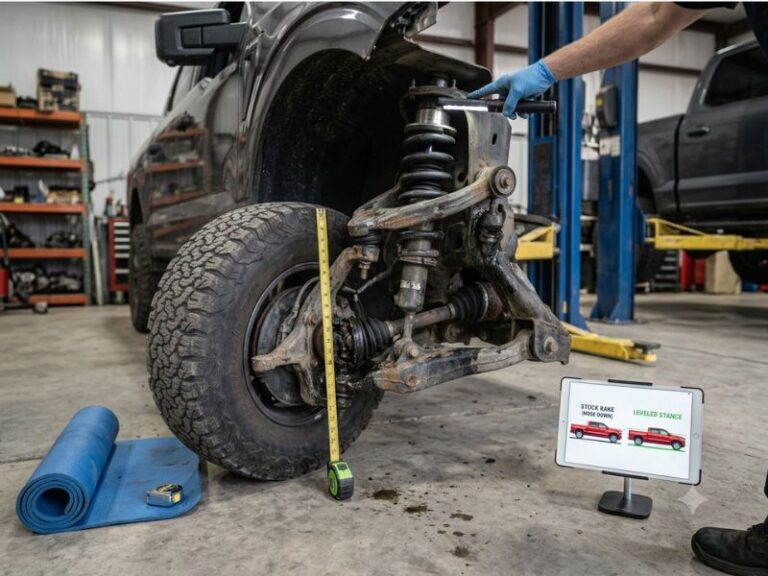
A common reason is front rake. Some lifted trucks still sit slightly lower in the front because manufacturers and lift companies often maintain some rake for towing, hauling, or off-road performance.
Adding a small leveling kit can make the truck appear more balanced from the side.
Other reasons include:
- Fitting larger front tires
- Creating a more aggressive stance
- Compensating for heavy front accessories
- Raising the front after installing a bumper or winch
However, adding more height is not always the best solution. A truck that needs more front support because of extra weight may need different springs or coilovers rather than an additional spacer.
Understanding why you want more height helps determine the correct modification.
What Does Stacking Suspension Components Mean?
Stacking means combining multiple height-increasing components that were not originally designed as one system.
For example:
- Installing a leveling spacer on a truck that already has a suspension lift
- Adding a coil spacer on top of lifted springs
- Increasing adjustable coilover height beyond the lift manufacturer’s recommendation
- Combining parts from different suspension brands
Each component may work correctly by itself, but combining them changes the total suspension geometry.
A suspension system is not only about how high the truck sits. Engineers also consider:
- Control-arm movement
- Shock extension and compression
- Steering angles
- Axle position
- Brake-line length
- Alignment range
When separate systems are combined without testing, these relationships can change.
Why Lift Kits Are Designed as Complete Systems
A quality lift kit is engineered as a complete package.
When manufacturers create a suspension lift, they consider how the vehicle will behave at the new height. They may include specific parts to maintain safe operation.
For example, an independent front suspension truck may require:
- Differential correction
- New control arms
- Replacement knuckles
- Extended shocks
- Alignment adjustments
A solid axle truck may require:
- Adjustable track bars
- Control-arm correction
- Steering geometry changes
- Longer shocks
Adding another leveling kit can interfere with those corrections.
A lift kit that works perfectly at 4 inches may not maintain proper geometry after adding another 2 inches of front height.
This is why manufacturers usually recommend using components designed together rather than mixing unrelated suspension parts.
How Stacking Affects Suspension Geometry
Suspension geometry is one of the biggest concerns when stacking a leveling kit with a lift kit.
Every time you raise the truck, you change the relationship between suspension components.
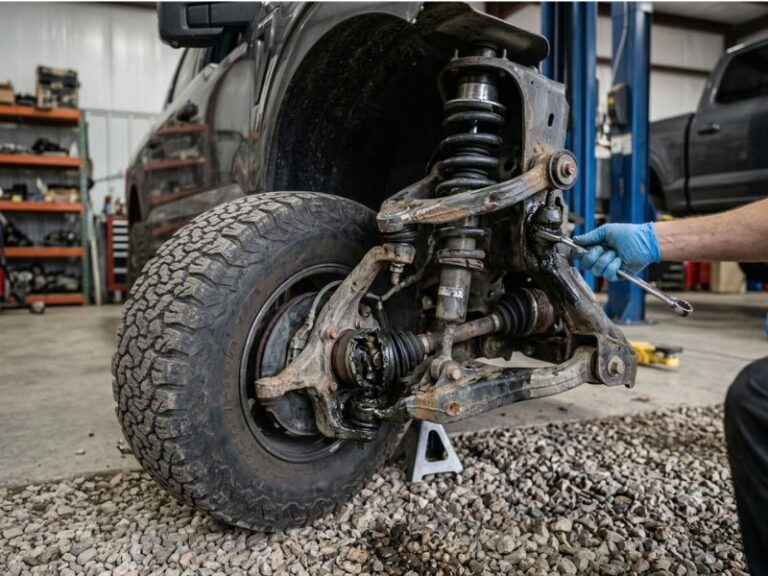
On independent front suspension trucks, stacking may affect:
Control arm angles:
Raising the front changes how the upper and lower control arms sit. Excessive angles can increase stress on ball joints and bushings.
CV axle angles:
Four-wheel-drive trucks rely on CV axles to transfer power to the front wheels. Additional height can increase operating angles and stress.
Shock travel:
The factory lift shocks may no longer have enough usable extension or compression range.
Alignment:
Camber, caster, and toe may move outside adjustment limits.
On solid axle trucks, stacking can affect:
- Track bar angle
- Axle centering
- Drag-link geometry
- Steering response
A proper suspension setup must maintain correct movement throughout the entire travel range, not just while parked.
Can Stacking a Leveling Kit Damage Ball Joints?
Yes, stacking can increase stress on ball joints if it creates excessive operating angles.
Ball joints allow suspension movement while connecting control arms to the steering knuckle.
When the truck is raised beyond the intended range, the ball joints may operate closer to their maximum angle.
Over time, this can contribute to:
- Premature wear
- Torn ball-joint boots
- Clunking noises
- Loose steering feel
- Alignment problems
Aftermarket upper control arms can sometimes improve geometry on lifted trucks by repositioning the ball joint and increasing adjustment range.
However, stronger parts do not automatically make an incorrect suspension combination safe. The complete system must still operate within proper limits.
Can Stacking Affect CV Axles?
On four-wheel-drive trucks, stacking a leveling kit with a lift kit can increase CV axle stress.
The CV axle connects the differential to the wheel hub and allows power transfer while the suspension moves.
When the front suspension is raised higher, the axle operates at a steeper angle.
Possible problems include:
- CV boot damage
- Grease leakage
- Clicking noises during turns
- Increased joint wear
- Vibration under acceleration
The risk increases when combined with:
- Large tires
- Heavy wheels
- Aggressive wheel offset
- Frequent off-road use
A lift kit may already include solutions for managing axle angles. Adding another leveling component can undo those corrections.
Can Stacking Cause Alignment Problems?
Yes, alignment problems are one of the most common issues after stacking suspension components.
The three major alignment measurements are:
- Camber
- Caster
- Toe
Incorrect camber can cause uneven tire wear. Poor caster can make the truck feel unstable at highway speeds. Incorrect toe can quickly damage tires.
A lifted truck already requires careful alignment. Adding additional front height may push adjustment components to their limits.
Signs of alignment problems include:
- Steering pulling to one side
- Steering wheel not centered
- Uneven tire wear
- Poor handling
- Tire rubbing
A professional alignment should always be performed after changing suspension height.
If the alignment shop cannot achieve acceptable measurements, the truck may require additional correction components or a different suspension approach.
Does Stacking Reduce Suspension Travel?
Yes, stacking can reduce usable suspension travel.
Suspension travel includes both:
- Compression travel when the wheel moves upward
- Droop travel when the wheel moves downward
When additional height is added, the suspension may sit closer to full extension.
This can cause:
- Shock topping out
- Harsh impacts over bumps
- Reduced traction off-road
- Increased stress on suspension parts
A truck may look taller but actually perform worse because the suspension has less room to move.
This is especially important for trucks used on trails, where wheel articulation is critical.
Can You Use Longer Shocks to Fix a Stacked Setup?
Longer shocks may help in some situations, but they are not a complete solution.
Shock length must match the complete suspension geometry.
Installing longer shocks without checking other components can create new problems. The shocks may allow more extension than the ball joints, brake lines, CV axles, or control arms can safely handle.
A proper suspension setup requires matching:
- Shock length
- Spring height
- Control-arm movement
- Steering geometry
- Brake-line length
Simply adding longer shocks does not make an incorrectly stacked lift safe.
When Can You Stack a Leveling Kit and Lift Kit?
There are situations where combining components may work.
A stacking setup is more acceptable when:
- The lift manufacturer approves the combination
- The leveling component is designed for that specific lift
- Suspension geometry remains within safe limits
- Alignment can be corrected properly
- Shock travel remains acceptable
Some manufacturers offer approved height upgrades within their own product line. These are not random combinations because they are engineered and tested together.
The safest approach is using components from the same manufacturer whenever possible.
A suspension specialist can also measure the truck and confirm whether the additional height is realistic.
Safer Alternatives to Stacking
Instead of adding a leveling kit on top of a lift kit, consider alternatives designed for your goal.
If you want more height:
- Upgrade to a taller lift system
- Replace springs with higher-rated components
- Install adjustable coilovers
- Use manufacturer-approved lift upgrades
If you want to remove front rake:
- Use a lift-specific leveling solution
- Adjust existing suspension settings
- Choose a complete kit designed for the desired stance
If you added heavy accessories:
- Use weight-rated springs
- Upgrade front suspension components
A complete solution is usually safer than combining multiple unrelated parts.
What Should You Check Before Stacking?
Before adding a leveling kit to a lifted truck, inspect the complete suspension.
Check:
- Current lift height
- Lift brand and model
- Existing suspension components
- Tire size
- Wheel offset
- Alignment measurements
- Available suspension travel
Inspect for existing issues such as:
- Worn ball joints
- Damaged bushings
- CV boot problems
- Shock leaks
- Steering looseness
Adding more height to a worn suspension system can make problems worse.
Always check manufacturer compatibility before purchasing additional parts.
Does Stacking Affect Warranty?
Adding a leveling kit to a lifted truck can affect warranty coverage depending on the manufacturer, vehicle, and type of failure.
A modification does not automatically remove every warranty benefit, but components damaged because of the modification may not be covered.
For example, if a suspension component fails because excessive lift changed its operating angle, the repair may be questioned.
Keep records of:
- Parts purchased
- Installation receipts
- Alignment reports
- Manufacturer recommendations
Proper documentation helps show that the modification was installed correctly.
Final Thoughts
So, can I stack a leveling kit with a lift kit? Yes, but it should only be done when the combination is specifically approved and the final suspension geometry remains safe.
Stacking unrelated suspension components can create problems with alignment, ball joints, CV axles, shocks, steering, and suspension travel.
Before adding more height, evaluate your current lift system and consider a complete suspension upgrade designed for your target height. A properly engineered setup will provide better reliability, handling, and performance than simply combining multiple lift components.