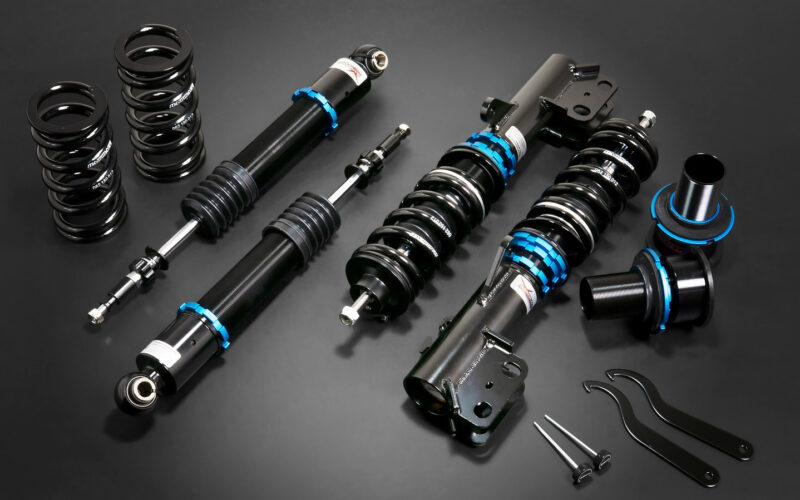
Most cars need four coilovers for a complete four-wheel conversion. Some vehicles use only two coilovers as part of a partial suspension upgrade, while others need a different setup based on their design.
If you are shopping for coilovers in the United States, the right number depends on your vehicle and your goal. A typical passenger car has four wheels, but that does not mean every suspension system uses four separate coilover units. Some cars have front coilovers and rear springs with separate shocks. Others use a coilover-style assembly at each wheel.
A coilover combines a coil spring and a shock absorber in one assembly. Many aftermarket kits replace the original suspension at all four corners, but some kits cover only the front or rear axle. Before buying a kit, check your vehicle’s suspension design, the parts included, and the fitment notes for your exact model and year.
The safest approach is to match the kit to the vehicle manufacturer’s design and the suspension maker’s fitment instructions. Choosing the wrong number or mixing parts that were not designed to work together can affect ride height, handling, tire clearance, and suspension travel.
For most cars receiving a complete coilover conversion, you need four coilovers: one for each wheel. This gives the front left, front right, rear left, and rear right corners their own matched suspension units.
However, four is not a universal rule for every suspension upgrade. Some cars have a coilover-style setup on one axle and separate springs and shocks on the other. An axle-specific kit may replace only the two units at the front or rear, provided the manufacturer offers that configuration and the installation instructions permit it.
The key question is whether you want to replace the entire suspension system with coilovers or change only one axle. The first usually calls for a four-corner kit. The second may call for two units, but the correct answer comes from the vehicle’s design and the kit specifications.
Source: accutuneoffroad.com
Complete four-corner conversion
Choose a vehicle-specific kit with four coilover assemblies when the product is designed to replace suspension at all four wheels.
Front-axle or rear-axle upgrade
A pair may be appropriate when the kit covers only one axle and the vehicle’s remaining suspension components are intended to stay in place.
Vehicle with mixed suspension layouts
Check whether one axle uses coilovers and the other uses separate springs and shocks before deciding which parts to buy.
Why Four Coilovers Are Common
A typical car has four suspension corners, and a full coilover kit can provide a spring and damper assembly for each one. This lets the kit manufacturer specify a matched setup for the front and rear, including spring rates, damping, and adjustment ranges.
The front and rear units may not be identical. Front suspension parts often have different lengths, mounts, spring rates, or adjustment features from the rear units. Four coilovers therefore means four suitable assemblies, not four copies of the same part.
Front pair
Two units are fitted at the left and right front corners when the vehicle and kit use this design.
Rear pair
Two compatible units are fitted at the left and right rear corners.
When Two Coilovers May Be Enough
Two coilovers may be enough when you are replacing only one axle’s suspension. For example, a vehicle-specific front kit could contain two front coilovers while retaining the original rear spring and shock arrangement.
Do not assume that any pair can be installed on either axle. The parts must be designed for the exact vehicle, and the installation must preserve proper spring support, damping, clearance, and suspension travel.
Axle-specific kit
Confirm that the kit is explicitly sold for the front or rear axle and lists your vehicle.
Compatible remaining suspension
Verify that the original or replacement components on the other axle can safely remain in use.
What Is a Coilover and How Does It Work?
A coilover is a suspension assembly that combines a coil spring with a shock absorber or damper. The spring supports the vehicle’s weight and compresses when a wheel moves over a bump. The damper controls that movement so the body does not keep bouncing after the spring compresses.
Many aftermarket coilovers also have threaded bodies or spring seats that allow ride-height adjustment. Some include damping adjustments, which change how the damper resists movement. These features vary by design, so not every coilover offers the same range of settings.
A coilover is not simply a spring or a shock absorber sold by itself. A complete assembly may include both, along with mounts, adjustment collars, and other hardware. The product description should make clear whether the package includes two assemblies, four assemblies, or only selected components.
Source: suspensionsetups.com
Coil spring
Supports vehicle load and compresses as the wheel moves.
Damper
Controls suspension movement and helps limit unwanted bouncing.
Mounts and adjusters
Connect the assembly to the vehicle and may allow ride-height or damping changes, depending on the design.
Coilovers Versus Separate Springs and Shocks
Some vehicles use a strut with a coil spring fitted around it, which resembles a coilover assembly. Other vehicles place the spring in one location and the shock absorber in another. In that second layout, replacing the shock alone does not automatically replace the spring.
Aftermarket product names can be confusing. A seller may use terms such as coilover kit, coil spring conversion, or adjustable suspension kit for products with different parts. Check the diagrams and package contents instead of relying on the product title alone.
Integrated assembly
The spring and damper are combined into one unit.
Separate spring and shock
The spring and damper are mounted separately, so the required replacement parts may differ.
How to Find the Right Number for Your Vehicle
To determine how many coilovers you need, identify your exact vehicle and inspect its suspension layout. The model name alone may not be enough because trims, model years, performance packages, and prior modifications can change the parts required.
Use the manufacturer’s fitment guide and installation manual as your main references. If a listing says it fits your car but does not clearly state the number of assemblies, ask the seller to confirm the package contents before ordering.
The goal is to match the kit to the suspension you actually have. A complete four-corner kit, a two-unit axle kit, and a conversion kit that works with other suspension parts are different products, even if their names sound similar.
Source: www.youtube.com > Krebsbach Racing
Step 1: Record vehicle details
Write down the model year, make, model, trim, engine or performance package where relevant, and any factory suspension option.
Step 2: Identify the suspension layout
Check whether each axle uses coilover-style assemblies or separate springs and shocks. Use a service manual or a qualified mechanic if the layout is unclear.
Step 3: Read the kit description
Look for wording such as front pair, rear pair, complete four-corner kit, or full vehicle kit.
Step 4: Verify compatibility
Confirm the kit’s part number and fitment notes with the manufacturer or an authorized seller.
Step 5: Check what is included
Make sure the package includes the required assemblies, springs, mounts, and installation hardware.
Use the Vehicle Identification Number When Needed
A vehicle identification number, or VIN, can help a parts department identify the correct factory configuration. It is especially useful when a model has several trims or suspension options.
A VIN lookup does not guarantee that a modified vehicle still has its original suspension. If a previous owner changed springs, struts, mounts, or control arms, compare the current hardware with the vehicle’s service information before choosing a kit.
Factory vehicle
Use the VIN and original equipment details to narrow down the correct fitment.
Modified vehicle
Inspect the installed parts and document previous changes before buying replacements.
Check the Kit Contents Before Paying
A product described as a set of coilovers may contain two assemblies or four, depending on the listing. Some sellers also list a single replacement unit for repairs. Never assume that the word set means a complete vehicle kit.
Check the product photographs, quantity field, part numbers, and included-parts list. If these details conflict, obtain written confirmation from the seller before placing the order.
Quantity
Confirm whether the package contains one, two, or four complete coilover assemblies.
Axle coverage
Verify whether the parts cover the front, rear, or all four corners.
Additional hardware
Check whether mounts, top hats, bushings, and required fasteners are included or sold separately.
Do Front-Wheel Drive, Rear-Wheel Drive, and AWD Cars Need Different Numbers?
Front-wheel drive, rear-wheel drive, and all-wheel drive do not determine how many coilovers a vehicle needs. The suspension layout does. A four-wheel car may use four coilover assemblies, two coilovers with a different rear setup, or another design based on its platform.
Front-wheel drive cars often have a front engine and transmission that place a large share of the powertrain weight near the front axle. Rear-wheel drive cars may use a different front and rear suspension design. All-wheel drive cars can have added components that affect packaging and clearance, but none of these layouts automatically requires a specific coilover count.
The correct number comes from the suspension kit made for the exact vehicle. Do not buy a kit just because it is advertised for front-wheel drive, rear-wheel drive, or all-wheel drive cars in general.
Source: carsandwrenches.com
Front-wheel drive
Check the actual front and rear suspension designs; the drive wheels do not set the coilover count.
Rear-wheel drive
Verify the kit’s fitment and axle coverage because front and rear suspension designs can differ.
All-wheel drive
Check clearance and fitment for the specific AWD version, as it may differ from a similar two-wheel-drive model.
Why the Exact Trim Matters
Two versions of the same car may have different brakes, suspension mounts, ride heights, or factory performance packages. These differences can affect coilover fitment even when the body and model name look almost identical.
A kit that fits a base trim may not fit a sport or performance trim. Check the manufacturer application chart and any exclusions for special editions, electronic dampers, or factory adaptive suspension.
Performance package
Confirm compatibility with the original sport suspension and any special mounting points.
Electronic suspension
Check whether the kit supports the vehicle’s electronic damping system or requires a manufacturer-approved conversion.
How Many Coilovers Do Trucks and SUVs Need?
Trucks and SUVs may need four coilover assemblies for a complete conversion, but their suspension layouts vary widely. Some use coilover-style front suspension and a rear solid axle with leaf springs. Others use independent suspension with separate springs and shocks or coilovers at both axles.
A truck with front coilovers and rear leaf springs does not automatically need four coilovers. A front kit may replace the two front assemblies while the rear leaf springs remain in place. To change the rear suspension, you may need a different system designed for that axle rather than a simple pair of coilovers.
Off-road use adds more factors. Travel length, load, tire size, suspension geometry, and intended terrain all affect which parts are suitable. A shock or coilover that fits physically may still be wrong for the vehicle’s weight and use.
Source: ar.inspiredpencil.com
Truck with front coilovers and rear leaf springs
A front-only conversion may use two units if the kit is designed for that truck and leaves the rear system unchanged.
SUV with four coilover-style corners
A complete kit may include four assemblies, with separate specifications for the front and rear.
Off-road truck
Check load rating, travel, mounting design, and suspension geometry before selecting a kit.
Do Lifted Trucks Need More Than Four Coilovers?
A lift does not automatically increase the number of coilovers needed. Many four-corner suspension systems still use four units after a suitable lift conversion, while some trucks use different front and rear components.
A lifted truck may need longer or differently tuned suspension parts, but the correct design depends on the vehicle and lift system. Do not add extra units or fit longer coilovers without confirming that the mounts, spring rates, and travel range are appropriate.
Lift height
Confirm that the kit is intended for the vehicle’s target ride height and suspension configuration.
Load and use
Choose parts based on vehicle weight, cargo, towing needs, and intended terrain.
Can You Install Only Two Coilovers on a Car?
Yes, two coilovers can be appropriate for a vehicle when the parts are intended for one axle and the rest of the suspension remains compatible. However, installing a pair simply to save money can create a poor match between the front and rear suspension.
The front and rear suspension work together to control body motion, tire contact, and handling. Changing the spring rate, damping, or ride height at only one end can alter the vehicle’s balance. The result depends on the original design, the parts selected, and the driving conditions.
Before choosing a two-unit setup, confirm that the manufacturer supports it for your vehicle. If the goal is a full suspension upgrade, a matched kit designed for all four corners is usually the more direct option.
Source: accutuneoffroad.com
When two units can work
The kit is designed for a specific axle, the vehicle is listed as compatible, and the installation instructions permit the configuration.
When two units are not enough
The goal is a complete four-corner conversion, but the package covers only the front or rear axle.
When to seek help
The proposed setup mixes unrelated parts or changes ride height without a clear compatibility plan.
Should You Replace Coilovers in Pairs?
If one coilover fails, replacing both units on the same axle can help maintain consistent damping and suspension behavior, especially when the other unit has similar age and wear. However, the need depends on the type of failure, the condition of the remaining unit, and the manufacturer’s repair guidance.
Some manufacturers allow individual replacement components or assemblies. Others recommend matched replacements or specific service procedures. Check the parts maker’s instructions and have the opposite side inspected before deciding.
Inspect both sides
Look for leaks, damage, worn mounts, uneven ride height, and other signs of wear.
Match specifications
Use parts with the correct part numbers and specifications for the vehicle and axle.
How Much Does a Set of Coilovers Cost?
The cost depends on the vehicle, kit design, brand, adjustability, and installation work. A two-unit axle kit and a complete four-unit kit are not directly comparable, so check the package contents before comparing prices.
Your total budget may include the coilovers, installation labor, alignment, replacement hardware, and any extra work needed to address worn suspension parts. Some vehicles also need electronic suspension compatibility solutions or other model-specific components.
For US buyers, labor rates vary by location and shop. Request a written estimate that separates parts from labor and alignment so you can compare quotes fairly. Do not choose a kit based on price alone if it lacks verified fitment for your vehicle.
Source: www.youtube.com > SD Wheel
Parts cost
Compare complete kits with the same axle coverage, adjustment features, and included hardware.
Installation labor
Ask whether the quote includes removal of the original suspension and installation of all supplied parts.
Wheel alignment
Budget for an alignment after suspension work, especially when ride height or suspension geometry changes.
Extra repairs
Worn mounts, damaged fasteners, seized hardware, and other problems can add to the final cost.
Is a Four-Coilover Kit Twice the Price of a Two-Coilover Kit?
Not always. Four-unit kits contain more assemblies, but the price also reflects design, materials, adjustment features, and vehicle-specific engineering. Some two-unit kits use specialized parts that cost more than basic units in a larger kit.
Compare the same product category and verify whether the listed price covers one assembly, one axle, or the whole car. A low price may reflect incomplete contents rather than a better deal.
Compare like for like
Check axle coverage, spring specifications, adjustment options, warranty terms, and included hardware.
Calculate the full cost
Add parts, labor, alignment, and likely supporting repairs before choosing a kit.
Common Mistakes When Buying Coilovers
The most common mistake is assuming that all cars need the same number and type of coilovers. The correct setup depends on the original suspension, the purpose of the upgrade, and the kit’s stated coverage.
Another mistake is buying based on appearance alone. A kit that lowers a car may not provide the ride quality, travel, load support, or adjustment range you need. Lowering the vehicle too far can also reduce clearance and create problems with tires, steering, or suspension components.
Read the installation instructions before buying. If the kit requires special tools, additional parts, or professional setup, account for those needs before work begins.
Source: ar.inspiredpencil.com
Assuming every kit includes four units
Read the package quantity and axle coverage rather than relying on the word kit.
Ignoring trim differences
Check fitment for the exact year, model, trim, and factory suspension package.
Mixing incompatible parts
Avoid combining springs, dampers, mounts, or adjusters unless the manufacturers confirm compatibility.
Skipping alignment
Arrange a proper alignment after installation when required by the vehicle and suspension maker.
Ignoring unusual handling
Do not continue normal driving if the car develops severe pulling, loose suspension hardware, tire contact, or other signs of unsafe installation.
Safety Checks After Installation
A correctly selected kit must also be installed and adjusted correctly. The spring must be seated as intended, fasteners must meet the specified torque, and the assembly must clear the tire, brake lines, steering parts, and other nearby components through the permitted range of motion.
Follow the kit manufacturer’s instructions and the vehicle service manual. Because suspension springs can store substantial energy, removal and installation may require specialized tools and training. Have a qualified mechanic perform the work if you do not have the right equipment or experience.
After installation, arrange the required wheel alignment and follow the manufacturer’s inspection or retorque instructions. If you notice clunks, rubbing, abnormal tire wear, or unstable handling, stop and have the setup checked before continuing to drive.
Before driving
Confirm correct installation, fastener torque, spring seating, and clearance according to the service instructions.
During the first inspection
Check for leaks, unusual noises, loose hardware, and contact between tires and suspension parts.
If something feels wrong
Avoid driving the vehicle until a qualified technician identifies and corrects the problem.
Frequently Asked Questions
Q
Do I need two or four coilovers?
You usually need four coilovers for a complete four-corner conversion on a car designed for that setup. Two may be enough for a vehicle-specific front or rear axle upgrade. Check the suspension layout and the exact kit contents before buying.
Q
Do coilovers come in pairs or sets of four?
Both types are sold. Some packages contain a pair for one axle, while complete kits include four assemblies. A listing may also offer a single replacement unit. Confirm the quantity and axle coverage with the seller.
Q
Can I install coilovers on only the front wheels?
You can install front coilovers when the kit is designed for the vehicle and the rear suspension is intended to remain unchanged. The front and rear setup must still work together. Do not mix parts without checking fitment and suspension compatibility.
Q
Do all four coilovers have to be the same?
No. Front and rear coilovers often differ in length, spring rate, mounting design, and damping specifications. They should match the kit’s intended configuration, not necessarily each other. Use the correct left-right and front-rear part numbers.
Q
Do I need four coilovers if my truck has leaf springs in the rear?
Not necessarily. Some trucks use front coilovers and rear leaf springs, so a front-only kit may contain two coilovers. A rear suspension change requires parts designed for that truck’s axle and mounting arrangement.
Q
Should I replace all four coilovers if one is damaged?
Not in every case. The correct repair depends on the failure, the age and condition of the other units, and the manufacturer’s service guidance. Inspect the opposite side and use compatible replacement parts. Replacing both units on the same axle may be appropriate when matched damping is needed.
Q
Will four coilovers make my car handle better?
Four suitable coilovers can allow changes to ride height and, on adjustable models, damping. Better handling is not guaranteed. Results depend on the spring and damper setup, tire grip, alignment, suspension geometry, and road conditions. An unsuitable setup can make the car less comfortable or less stable.
Q
Can I install coilovers myself?
A skilled home mechanic may be able to install a vehicle-specific kit with the correct tools and service information. However, suspension work can involve highly loaded springs and critical fasteners. If you lack the required tools or experience, use a qualified suspension shop and arrange the required alignment.
✦ Wrapping Up
Conclusion
Most cars need four coilovers for a complete four-corner suspension conversion, but the correct number depends on the vehicle’s suspension design and the kit you choose. Some vehicles use two coilovers on one axle and a different spring-and-shock arrangement on the other.
Before ordering, confirm your exact model year, make, model, trim, and suspension layout. Then check the manufacturer’s fitment guide, package quantity, included hardware, and installation requirements. This simple check can prevent a wrong purchase and reduce the risk of an unsafe suspension setup.
A suitable kit must do more than fit the mounting points. It must also provide the correct spring and damping specifications, adequate suspension travel, and proper clearance. Have the installation inspected and the wheels aligned as required.
💡 Key Takeaway
Start by checking whether your vehicle uses coilovers at all four corners. If it does and you want a full conversion, look for a compatible four-coilover kit. If you want to upgrade only one axle, buy a two-unit kit only when the manufacturer confirms that configuration for your exact vehicle.
Eric
Hi, I’m Eric Bennett, the person behind OffRoadTruckAccessories.com.
I created this blog to share my interest in trucks, off-road driving, automotive accessories, and DIY modifications. I enjoy learning how different truck accessories work, testing their usefulness, and understanding whether they are truly worth buying.
Will G37 coilovers fit G35? Learn which model years may share fitment, what changes with coupe, sedan, and AWD setups, and how to verify compatibility.