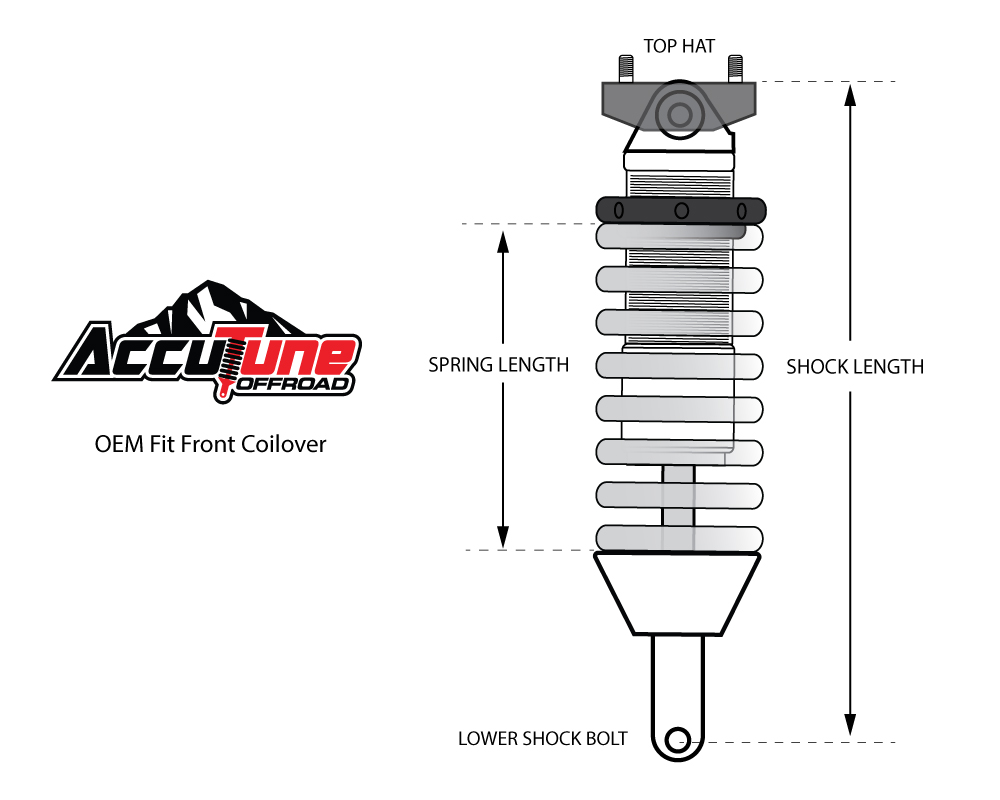
You need coilovers that match your vehicle, mounting points, required shock length, spring specifications, suspension travel, and intended use. Check your exact vehicle and suspension setup before choosing a size.
If you plan to upgrade your car or truck in the United States, choosing the right coilover size starts with fitment, not appearance. A coilover is a spring and shock assembly that helps support the vehicle and control suspension movement. The correct size depends on the vehicle model, suspension design, ride height, and the way you drive.
A coilover that looks right may still be too long, too short, or too wide for your suspension. A poor match can reduce suspension travel, cause parts to hit each other, or change how the vehicle handles. The safest starting point is a vehicle-specific kit or a verified set of measurements from the suspension manufacturer.
This guide explains how to choose coilover dimensions for daily drivers, performance cars, trucks, and off-road vehicles. It also covers shock diameter, compressed and extended length, spring size, and the measurements you should confirm before ordering.
The right coilover size is the one designed to fit your suspension and provide the travel and spring support your vehicle needs. There is no single coilover length or diameter that works for every car. A Honda Civic, Ford Mustang, Jeep Wrangler, and Chevrolet Silverado can require very different parts.
Start by identifying your exact vehicle and its current suspension setup. Then decide whether you want to lower the car, improve handling, carry a load, or increase off-road travel. These goals affect the kit, spring rate, shock dimensions, and adjustment range you should consider.
For many street cars, a complete vehicle-specific coilover kit is the simplest option. For custom builds, off-road trucks, and modified suspensions, you may need to compare compressed length, extended length, mounting dimensions, spring specifications, and clearance.
Source: accutuneoffroad.com
Daily driving
Choose a street-focused kit designed for your exact vehicle and normal road conditions. Ride comfort, usable travel, and predictable handling matter more than maximum adjustment.
Performance driving
Look for a kit with suitable damping, spring rates, and travel for your vehicle and driving conditions. Track use may need different specifications from a comfortable street setup.
Off-road driving
Check shock body diameter, heat management, mounting strength, travel, spring capacity, and the suspension’s full movement range. A larger shock is not automatically the correct choice.
Custom suspension
Confirm every critical dimension with the suspension manufacturer or a qualified suspension shop before ordering separate springs and dampers.
Can Any Coilovers Fit Any Car?
No. Coilovers differ in mounting points, dimensions, spring rates, damping, and the suspension geometry they are designed to work with. Even two cars from the same manufacturer can use different parts because of changes in model year, engine, trim, drivetrain, or suspension design.
A universal coilover may work in a custom build, but only when its specifications suit the vehicle and the mounts are engineered for the intended loads. Do not assume that a similar bolt pattern or a matching advertised length proves compatibility.
Verify the application
Use the manufacturer’s fitment guide and check model year, body style, drivetrain, and any stated exclusions.
Check modifications
Tell the supplier about lift kits, control arms, custom mounts, unusual wheel setups, and other suspension changes.
Understand Coilover Size and Diameter
Coilover size can refer to several different measurements. Before comparing products, determine whether a listing describes the shock body diameter, shock length, spring dimensions, or the complete assembly. These measurements describe different parts and cannot be used interchangeably.
Off-road shock listings often use labels such as 2.0, 2.5, and 3.0. These labels commonly refer to nominal shock body diameters in inches. They do not tell you whether the shock will fit your mounting points or whether its extended and compressed lengths are correct.
For example, a 2.5-inch shock body may offer more internal space for oil and heat management than a comparable 2.0-inch design. However, actual damping, construction, reservoir design, and performance depend on the specific product. A larger body can also need more mounting clearance.
Source: chevyhardcore.com
2.0-inch shock
A common option for lighter-duty applications and some street or off-road setups. Suitability depends on vehicle weight, use, damping design, and the manufacturer’s specifications.
2.5-inch shock
Often considered for more demanding off-road use or applications that need greater heat management. Check available space and the exact shock design.
3.0-inch shock
Used in some demanding performance and off-road applications. Its larger size may require substantial mounting space and a suspension designed to support it.
Is a Bigger Coilover Always Better?
No. The best diameter is the smallest suitable option that meets the demands of your vehicle and intended use, or a larger design when the application genuinely needs its added capacity. A larger shock does not correct poor geometry, an unsuitable spring rate, or inadequate mounting strength.
A large shock can also contact a control arm, tire, frame, or other component if the suspension was not designed around it. For street cars, a correctly matched vehicle-specific kit is usually a better starting point than selecting a shock by diameter alone.
Match the duty
Consider vehicle weight, speed, rough-road use, load, and the amount of sustained suspension activity.
Check the space
Confirm body, spring, reservoir, hose, and adjuster clearance throughout suspension movement.
How to Measure the Correct Coilover Length
Coilover length is one of the most important fitment checks. You need to know how long the assembly is when fully extended and how short it becomes when fully compressed. You must also confirm the length at the installed ride height and the available suspension travel.
Extended length describes the distance between the shock’s mounting reference points when the shock is fully extended. Compressed length describes the distance between those same points when it is fully compressed. Always use the manufacturer’s stated measuring points because eye-to-eye, stud, and other mount styles are measured differently.
A shock that is too long may limit droop or pull against a joint when the suspension hangs. A shock that is too short may bottom out before the suspension reaches its intended compression limit. Either problem can damage parts or reduce control.
Source: accutuneoffroad.com
Measure the installed position
With the vehicle safely supported and the suspension handled according to the service procedure, record the distance between the intended shock mounting points at normal ride height.
Determine full compression
Use the suspension manufacturer’s specifications or a qualified technician to establish the mounting distance at the intended compression limit. Do not force the suspension or rely on the shock as a bump stop unless its design explicitly permits it.
Determine full extension
Check the maximum safe mounting distance while accounting for control arms, ball joints, brake hoses, ABS wiring, driveshafts, and other travel limits.
Compare the candidate shock
Verify that its compressed and extended lengths suit the required movement range and mounting style.
How Much Suspension Travel Do You Need?
There is no universal travel figure for all vehicles. The required amount depends on the suspension design, ride height, wheel movement, intended use, and the limits of the surrounding parts. Street cars and long-travel off-road vehicles can have very different requirements.
Shock travel is not always the same as wheel travel. On a suspension with a motion ratio, the wheel may move a different distance from the shock. A qualified suspension technician can account for this relationship and check whether the spring, damper, joints, and bump stops remain within their safe operating ranges.
Avoid bottoming out
Maintain the manufacturer’s required compression clearance and suitable bump-stop control.
Avoid topping out
Ensure the shock does not become the unintended limit for suspension droop or pull on connected parts.
Check full wheel movement
Verify clearance at the relevant steering angles and suspension positions, not only when the vehicle sits on level ground.
Choose the Correct Coilover Spring Size
Spring size matters as much as shock size. A coilover spring must fit the spring seats, support the intended load, and provide a suitable rate and working range. The right spring is not chosen by outside appearance alone.
Three key measurements are spring inner diameter, free length, and spring rate. Inner diameter must suit the coilover seats or approved adapters. Free length is the spring’s length when it is not under load. Spring rate describes how much force is needed to compress the spring by a given distance.
Spring rates may be stated in pounds per inch in the United States or newtons per millimeter in metric specifications. These units are not interchangeable without conversion. Front and rear springs may also use different rates because each axle carries a different load and has a different suspension design.
Source: www.holley.com
Inner diameter
Choose a spring that fits the specified seats and any approved hardware. Do not assume that a spring with a similar outside diameter will fit.
Free length
Confirm that the spring length works with the coilover body, adjustment range, preload requirements, and available travel.
Spring rate
Use a rate recommended for the vehicle, axle load, motion ratio, tire setup, and driving purpose.
Load capacity
Check the manufacturer’s ratings and design limits. The spring, damper, mounts, and suspension must all suit the intended vehicle load.
What Spring Rate Should You Choose?
A spring that is too soft may allow excessive body movement or use too much travel. A spring that is too stiff may reduce comfort and make it harder for the tires to follow uneven pavement. The correct rate balances support, control, and the intended driving conditions.
Do not copy another owner’s spring rate without checking the setup. Two cars of the same model may have different engine weights, corner weights, suspension motion ratios, and intended uses. A manufacturer-approved rate range or a setup recommendation from a suspension specialist is a stronger starting point.
Daily street use
Prioritize a rate that works with the damper and maintains useful travel on ordinary roads.
Track use
Consider vehicle balance, tire choice, aerodynamic load where relevant, track conditions, and damper tuning.
Truck or off-road use
Account for axle weight, cargo, accessories, terrain, wheel travel, and the suspension’s leverage ratio.
Compare Coilover Measurements Before Buying
A measurement checklist helps you compare coilovers without mixing up dimensions. Use the manufacturer’s drawings and specifications for each candidate, then compare them with the requirements of your vehicle. The values below are measurements to collect, not universal target sizes.
If a seller lists only a general size label or a product photo, request the complete technical specifications. If the seller cannot confirm mounting dimensions, compressed length, extended length, and spring compatibility, do not assume the part will fit.
Source: accutuneoffroad.com
Vehicle application
Record the year, make, model, trim, drivetrain, and any suspension modifications.
Mounting dimensions
Record eye widths, bolt diameters, stud details, bracket spacing, and other dimensions required by the mounting design.
Shock dimensions
Record body diameter, compressed length, extended length, and usable stroke from the manufacturer’s documentation.
Spring dimensions
Record inner diameter, free length, rate, and the required spring-seat or retainer specifications.
Adjustment range
Confirm the approved ride-height range, preload requirements, and whether changing height affects available travel.
Hypothetical Coilover Measurement Example
Suppose a custom suspension requires a shock with a specified mounting length of 14 inches at one operating position and 19 inches at another. These figures are hypothetical and do not describe a recommended setup for any particular car. The correct candidate must meet the required compressed and extended limits while preserving the intended travel and clearance.
A shock with a 2.5-inch body would not automatically qualify. If its compressed length is too long, it may bottom out too early. If its extended length is too short, it may limit droop. Mounting style and spring fit must also match before the shock can be considered suitable.
Compare like with like
Measure from the same mounting reference points for both the vehicle and the candidate shock.
Check the full range
Confirm that both ends of the shock’s travel suit the suspension’s safe operating limits.
Get confirmation
Ask the manufacturer or suspension specialist to verify the application before purchase.
Which Coilovers Do I Need for My Vehicle Type?
The vehicle’s suspension design and intended use should guide your choice. A kit built for a compact car may focus on lowering and road handling, while a truck kit may need greater travel, higher load capacity, or a remote reservoir. These are different engineering needs, not just different sizes.
Choose a complete kit designed for your vehicle when possible. Custom parts can work well when selected and installed correctly, but they require more measurements and a clear understanding of suspension geometry.
Source: accutuneoffroad.com
Compact cars and sedans
Look for vehicle-specific kits with suitable ride-height adjustment, damping, spring rates, and clearance for normal road use.
Sports cars
Compare handling goals, track use, tire setup, damping adjustment, and the effect of ride height on suspension geometry.
Pickup trucks
Confirm the front and rear suspension designs, axle loads, lift or leveling changes, and the required shock travel.
SUVs and off-road vehicles
Check loaded and unloaded ride height, tire clearance, steering travel, bump stops, droop limits, and heat management for the intended terrain.
Custom builds
Use measured mounting points and documented component limits. Have a qualified fabricator or suspension specialist verify mounts and geometry.
Do Front and Rear Coilovers Need to Be the Same Size?
No. Front and rear coilovers often differ because the suspension layout, vehicle weight distribution, mounting positions, and travel requirements differ. Some vehicles also use a coilover at one end and a separate spring and shock at the other.
Buy the correct front and rear components specified for the vehicle. Do not assume that four identical assemblies will fit or provide the right support. When selecting separate parts for a custom setup, confirm the dimensions and spring rates for each axle independently.
Front suspension
Check steering clearance, control-arm movement, brake-line routing, and any strut-specific mounting requirements.
Rear suspension
Check the rear mounting design, available travel, tire clearance, and any load changes caused by cargo or towing.
How Ride Height Changes Coilover Fitment
Ride height affects the position of the suspension and the amount of compression and droop available in use. Lowering a car or lifting a truck can change the operating position of the shock, spring, control arms, and other connected parts. A coilover’s advertised adjustment range does not guarantee that every height within that range is safe for every vehicle.
Use the manufacturer’s approved ride-height range and keep enough suspension travel for the intended driving conditions. Excessive lowering may cause the suspension to rest too close to its compression limit. An excessive lift can alter steering angles, joint operating angles, and driveshaft geometry, depending on the vehicle.
Spring preload and ride-height adjustment are also different. Preload changes how much the spring is compressed by the adjuster at the specified setup position. Ride-height adjustment changes the installed position of the vehicle, depending on the coilover design. Follow the kit instructions rather than using spring preload as a universal way to change height.
Source: storage.googleapis.com
Before lowering
Check the approved lowering range, tire clearance, alignment adjustment, and remaining compression travel.
Before lifting
Check the kit’s intended lift range, shock length, steering and joint angles, brake lines, and driveshaft limits where applicable.
After adjustment
Recheck clearance and suspension movement, then obtain a professional wheel alignment when required by the installation instructions.
Can You Use Shorter Coilovers to Lower a Car?
Only if the shorter coilovers are designed for the vehicle and the required suspension range. A shorter assembly does not automatically provide the correct spring support, damping, mounting fit, or wheel travel.
A proper lowering kit accounts for the vehicle’s suspension design and intended ride height. Before installing shorter parts, verify compressed and extended lengths, spring fit, bump-stop requirements, and clearance throughout the operating range.
Avoid guesswork
Do not choose a shorter shock based only on the amount of lowering you want.
Verify geometry
Check whether the new height changes control-arm angles, steering behavior, or the ability to align the wheels.
Common Coilover Sizing Mistakes to Avoid
Most sizing problems begin when buyers compare only one dimension or assume that a part described as universal will fit. A coilover is part of a connected suspension system, so the shock, spring, mounts, and vehicle geometry must work together.
Before ordering, review the manufacturer’s technical sheet and vehicle fitment notes. If a specification is missing, get written confirmation rather than relying on a photograph, a general size label, or another owner’s setup.
Source: accutuneoffroad.com
Confusing diameter with length
A 2.0-inch or 2.5-inch label generally refers to nominal shock body diameter in relevant off-road listings. It does not establish the correct mounting length.
Ignoring mounting details
A shock can have the right length but the wrong eye width, bolt size, stud type, or bracket configuration.
Choosing a spring by appearance
Spring inner diameter, free length, rate, and capacity all affect compatibility and performance.
Ignoring full suspension movement
A coilover that clears at static ride height may contact the tire or chassis when steering or suspension position changes.
Assuming every adjustment is safe
Maximum lowering or lifting may exceed the approved range or reduce usable travel.
Skipping alignment and inspection
Suspension changes can affect wheel alignment and handling. Follow the installation manual and arrange professional checks where required.
When Should You Ask a Suspension Specialist?
Get professional help if the vehicle has custom mounts, a modified control-arm layout, an unusual lift, or unclear travel limits. Specialist advice is also useful when selecting separate shocks and springs rather than a matched kit.
Suspension components carry substantial loads. Never work under a vehicle supported only by a jack, and never remove a coil spring without suitable tools and training. A compressed spring can release significant energy, and incorrect installation can affect vehicle control.
Custom fabrication
Have mounting strength, geometry, and component compatibility checked by a qualified professional.
Unclear specifications
Ask the manufacturer or supplier to confirm the required dimensions and intended application.
Unusual noises or contact
Stop driving if a new installation causes binding, severe knocking, tire contact, or other signs of a serious fitment problem. Arrange an inspection before continuing.
A Practical Checklist Before You Buy
The best next step is to gather your vehicle details and compare them with the specifications of a complete kit or a proposed custom setup. This avoids paying for parts that do not fit or that cannot provide the required travel.
Keep the measurements, manufacturer documents, and supplier confirmation together. If you change the vehicle’s ride height, wheels, tires, or suspension components later, review whether the original fitment assumptions still apply.
Source: accutuneoffroad.com
Step 1: Identify the vehicle
Write down the model year, make, model, trim, drivetrain, and existing suspension modifications.
Step 2: Define the goal
Decide whether the priority is daily comfort, lower ride height, track handling, towing, load support, or off-road travel.
Step 3: Collect the specifications
Record shock length, stroke, mounting style, spring dimensions, spring rate, and the manufacturer’s stated fitment.
Resolve any missing or conflicting measurements with the supplier or a qualified suspension specialist.
Step 6: Inspect after installation
Follow the service manual, verify fasteners and clearance, arrange alignment as required, and check for abnormal behavior.
What Information Should You Give a Coilover Supplier?
Provide the exact vehicle details, intended ride height, typical load, driving conditions, and all relevant suspension modifications. For a custom setup, include measured mounting distances and any available drawings or photographs that clearly show the mounting points.
Ask the supplier to confirm the part number, spring specifications, compressed and extended lengths, mounting hardware, adjustment limits, and any required accessories. A clear answer to these questions is more useful than a general statement that a coilover should fit.
Request documented fitment
Ask for a manufacturer fitment reference or written confirmation for your exact setup.
Confirm all required parts
Check whether the kit includes springs, top mounts, adjusters, reservoirs, and the hardware needed for the intended installation.
Frequently Asked Questions
Q
How do I know what size coilovers fit my car?
Start with a kit listed for your exact year, make, model, trim, and drivetrain. Confirm the mounting points, shock length, spring specifications, approved ride-height range, and any exclusions. If you are building a custom setup, compare measured mounting distances with the manufacturer’s full specifications before buying.
Q
What do 2.0, 2.5, and 3.0 coilovers mean?
In many off-road shock listings, these numbers refer to nominal shock body diameters in inches. They do not describe the complete coilover length or the amount of suspension travel. The correct diameter depends on the application, available space, vehicle demands, and the specific shock design.
Q
Are front and rear coilovers the same size?
Not necessarily. Front and rear suspension systems often have different mounting points, travel requirements, and spring rates. Some vehicles do not use a true coilover at both ends. Follow the vehicle-specific kit instructions or verify each custom component separately.
Q
Can I use universal coilovers on my vehicle?
Universal coilovers can suit some custom applications, but they are not automatically compatible with a particular vehicle. The mounts, lengths, spring seats, load capacity, and suspension geometry must all be suitable. Have custom mounting work and travel limits checked by a qualified suspension professional.
Q
Does lowering my car mean I need shorter coilovers?
Not always. A lowering kit may use a shock and spring assembly designed for the vehicle’s intended lowered ride height. Choosing a shorter shock by itself can reduce travel or create fitment problems. Check the kit’s approved adjustment range, compressed and extended lengths, and alignment requirements.
Q
How do I choose the right coilover spring rate?
Use the rate recommended for your vehicle and intended use, taking account of axle load, suspension motion ratio, damper tuning, and ride-height goals. A spring that is too soft can allow excessive movement, while one that is too stiff can reduce comfort and tire contact on rough surfaces. For a custom setup, seek guidance from the suspension manufacturer or a qualified tuner.
Q
Can I install coilovers without measuring my current suspension?
A verified vehicle-specific kit may not require you to calculate every dimension yourself, because the manufacturer has designed it for the stated application. However, you should still confirm fitment and any exclusions. Custom shock selection requires accurate measurements and verification of the full suspension range.
✦ Wrapping Up
Conclusion
The correct coilover size depends on your vehicle, mounting points, shock length, spring specifications, suspension travel, and driving goals. A larger shock body or a shorter assembly is not automatically better. Fitment and safe operating range matter more than a single number in a product title.
For most drivers, a complete kit designed for the exact vehicle is the most straightforward starting point. If you need custom coilovers, gather the mounting measurements and verify compressed length, extended length, spring rate, and clearance with the manufacturer or a qualified suspension specialist.
💡 Key Takeaway
Before buying, record your vehicle’s exact details and intended ride height, then verify the coilover’s mounting dimensions, compressed and extended lengths, spring specifications, and approved travel range. Do not install a part until its compatibility is confirmed.
Eric
Hi, I’m Eric Bennett, the person behind OffRoadTruckAccessories.com.
I created this blog to share my interest in trucks, off-road driving, automotive accessories, and DIY modifications. I enjoy learning how different truck accessories work, testing their usefulness, and understanding whether they are truly worth buying.
Will G37 coilovers fit G35? Learn which model years may share fitment, what changes with coupe, sedan, and AWD setups, and how to verify compatibility.