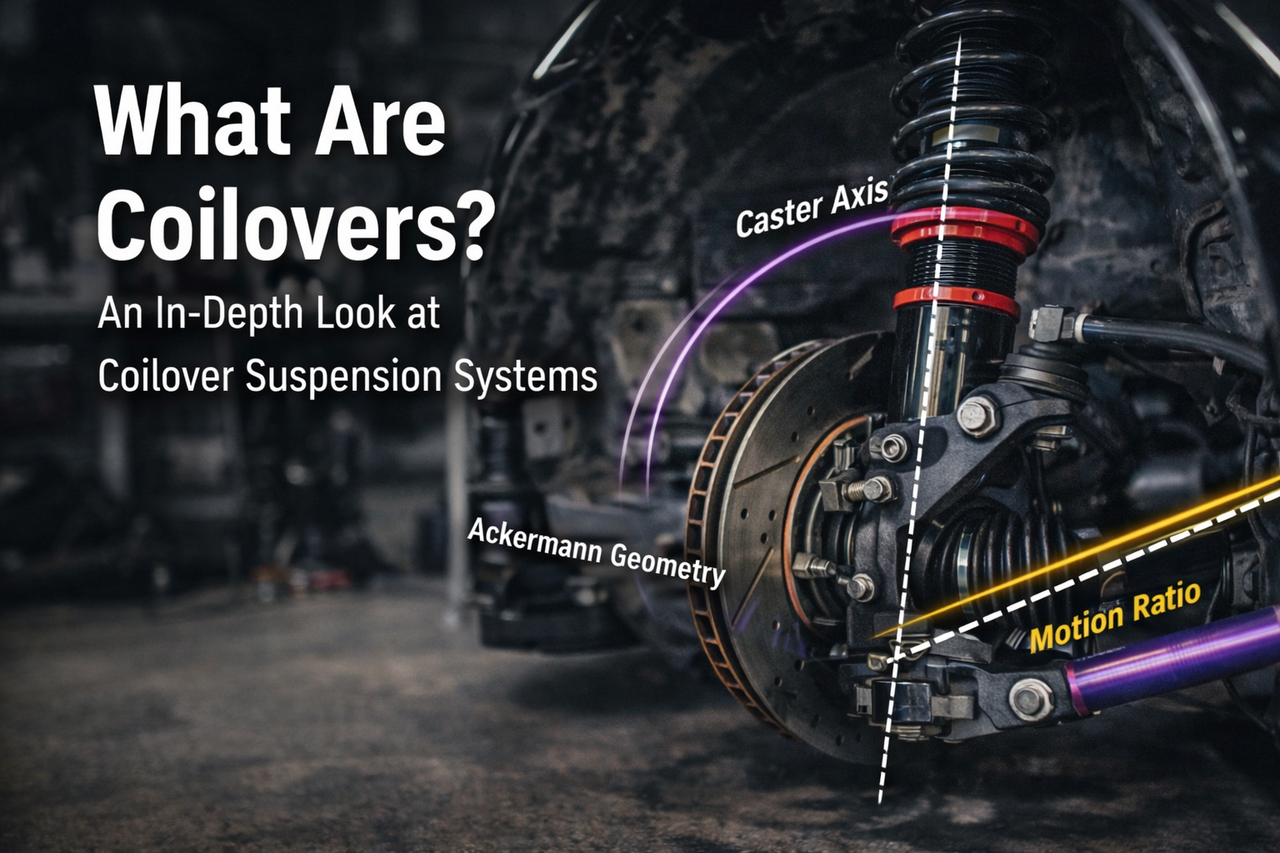
No, coilovers are not the same as suspension. Coilovers are a type of suspension assembly, while suspension refers to the entire system that helps a vehicle ride smoothly, handle bumps, and stay stable on the road.
If you drive in the United States, your car’s suspension helps you handle everything from uneven city streets to highway curves and rough country roads. Most cars have a suspension system with springs, shocks or struts, control arms, bushings, and other parts. Coilovers are one way to build or upgrade part of that system.
The confusion comes from how people talk about car modifications. A driver may say they are replacing their suspension with coilovers. In most cases, they mean they are replacing the original springs and dampers with a coilover assembly. The rest of the suspension, including parts that guide wheel movement, usually remains in place.
Understanding this difference helps you choose the right parts. Coilovers can offer more control over ride height and, on some models, damping. However, they are not always more comfortable or better than factory suspension. The right setup depends on your car, driving needs, road conditions, budget, and the features of the parts you choose.
A car suspension system is the group of parts that connects the wheels to the vehicle’s body or frame. It allows the wheels to move over bumps while helping the body remain controlled. It also helps the tires keep useful contact with the road.
Suspension does more than make a car feel smooth. It affects steering response, tire wear, body movement, and stability during braking and cornering. The system must balance comfort with control, and the best balance depends on the vehicle’s design and intended use.
A suspension system contains several parts that work together. Their exact design varies by vehicle, so not every car uses the same layout.
Source: i.ytimg.com
Springs
Springs compress over bumps and support the vehicle’s weight. They also help determine ride height and how much the body moves under load.
Shocks and struts
These dampers control spring movement. Without proper damping, the vehicle could continue bouncing after a bump. A strut may also serve as a structural part of the suspension.
Control arms and links
These parts guide wheel movement and help maintain the intended wheel position as the suspension moves.
Bushings and joints
These parts allow controlled movement between components while managing vibration and force.
Sway bars
A sway bar links suspension movement across the vehicle and can help limit body roll during cornering.
How Does Suspension Work?
When a tire passes over a bump, the wheel moves upward. The spring compresses to absorb part of that movement, while the damper controls how quickly the spring compresses and returns. Suspension links guide the wheel along its designed path.
This process helps reduce harsh movement in the cabin and keeps the tires in contact with the road. A well-matched spring and damper setup can improve control without making every bump feel severe. A poor match can lead to excess bouncing, a harsh ride, or reduced tire contact on rough roads.
Comfort
Spring rates, damper tuning, tire sidewalls, and suspension travel all affect how bumps feel inside the car.
Control
Damping and suspension geometry help manage body movement and wheel behavior during turns, braking, and acceleration.
What Are Coilovers?
A coilover is a suspension assembly that combines a coil spring with a shock absorber or damper. The term comes from the spring being fitted over the damper body. Many coilovers use a threaded body or adjustable spring perch, which can allow the installer to change the vehicle’s ride height.
Coilovers are common in performance cars, track cars, and modified street vehicles. They also appear in some factory suspension designs. The presence of a coilover does not automatically mean a car has an aftermarket suspension or a racing setup.
Coilovers come in many designs. Basic units may offer ride-height adjustment only, while more advanced models may provide damping adjustment, separate compression and rebound controls, or other features. Some designs use separate spring and damper mounting points while still being described as coilover systems.
The key point is that coilovers are a specific type of suspension component or assembly. They do not replace every part of the suspension system.
Source: i.pinimg.com
Spring and damper together
The coil spring supports the vehicle and compresses over bumps. The damper controls spring movement.
Ride-height adjustment
Many coilovers use threaded adjustment hardware. The allowed range and correct adjustment method depend on the design.
Damping adjustment
Some models let the user change damper response. Not all coilovers include this feature, and adjustment ranges vary.
Vehicle-specific fit
A coilover must match the car’s suspension layout, mounting points, load requirements, and intended use.
Are All Coilovers Adjustable?
No. Many aftermarket coilovers offer ride-height adjustment, but some have a fixed setup. Damping adjustment is another feature and should not be assumed from the word coilover alone.
Some kits use separate controls for compression and rebound. Others use one control that affects both. These features do not guarantee better performance, because the spring rate, damper design, adjustment range, and vehicle setup must work together.
Fixed coilovers
These provide a set spring and damper combination without user ride-height or damping controls.
Ride-height adjustable coilovers
These allow changes within a specified range, subject to correct spring preload and suspension setup.
Damping adjustable coilovers
These provide one or more damping controls, depending on the model.
Are Coilovers the Same as Suspension?
No. Suspension is the broad term for the full system, while coilovers are one type of spring-and-damper assembly used within that system. Calling coilovers and suspension the same thing is like calling an engine part the same thing as the entire engine.
The terms can sound interchangeable in car modification discussions because installing a coilover kit can replace major parts of the original suspension. Yet the car still relies on other suspension components to guide the wheels and control movement.
For example, installing coilovers on a car with independent front suspension usually does not remove the need for control arms, ball joints, steering links, or sway bars. These parts continue to perform their own jobs unless a separate kit replaces or modifies them.
The distinction also matters when shopping for replacement parts. A seller advertising a complete suspension kit may include coilovers and other components, while a coilover kit may contain only the spring-and-damper assemblies and their mounting hardware.
Source: slrspeed.com
Suspension
The complete collection of parts that supports the vehicle and controls wheel movement.
Coilovers
A spring-and-damper assembly used as part of the suspension.
Suspension upgrade
A change to one or more suspension parts, which may include coilovers, springs, dampers, links, or bushings.
Why Do People Say They Are Replacing Their Suspension With Coilovers?
Drivers often use suspension as shorthand for the factory springs and dampers. When they install a coilover kit, they may replace those parts in one step, making it sound as if the entire suspension has been changed.
In practice, the scope of the work depends on the kit. A standard coilover installation usually leaves many original suspension parts in place. A full suspension overhaul may also replace worn bushings, joints, arms, mounts, and other parts.
Partial replacement
A coilover kit replaces specified spring-and-damper assemblies while retaining compatible original parts.
Full suspension overhaul
A broader job may include coilovers or standard dampers along with other worn or unsuitable components.
Coilovers vs. Stock Suspension: The Main Differences
The main difference is that stock suspension describes the factory-installed setup, while coilovers describe a particular suspension design. Stock suspension can itself use coilovers, depending on the vehicle. In many everyday cars, however, the factory setup uses conventional springs and separate shocks or struts.
An aftermarket coilover kit may offer more control over ride height and damping than the original setup. Whether that control is useful depends on the driver’s goals and the quality of the kit. A well-designed factory system may provide a better balance of comfort, noise control, durability, and handling for ordinary road use.
The comparison is not simply between old parts and better parts. It is between two configurations with different design goals, features, costs, and setup needs.
Source: truetyres.com
Adjustability
Many aftermarket coilovers offer ride-height adjustment, and some offer damping controls. Factory systems may be fixed or electronically controlled.
Ride comfort
Factory suspension is often tuned for a broad range of daily driving conditions. Aftermarket coilovers can be comfortable, but stiff springs, poor damping, or limited travel can make the ride harsh.
Handling
A suitable coilover setup can improve body control for a specific use. The result depends on the whole vehicle setup rather than the coilover label.
Cost
Aftermarket coilovers can cost more than standard replacement parts and may require installation, alignment, and follow-up checks.
Maintenance
Coilovers may need periodic checks of adjustment hardware, mounts, leaks, corrosion, and manufacturer-specified service items.
Can Stock Suspension Be Better Than Coilovers?
Yes. For a driver who wants a quiet, comfortable, low-maintenance car, a healthy factory setup may be the better choice. Original parts are usually selected to suit the vehicle’s weight, tire size, steering, brakes, and intended use.
A quality coilover kit can be a good choice for a driver who needs ride-height adjustment or a suspension setup designed for track use. But an unsuitable kit can reduce comfort and suspension travel, increase noise, or make the car harder to control on rough roads.
If the original suspension is worn, replacing it with quality parts that match the factory design may restore handling more effectively than installing a low-cost coilover kit.
Choose stock-style parts
Best when the goal is to restore factory ride quality, maintain original ride height, or limit modification costs.
Consider coilovers
Useful when adjustable ride height or a suitable performance-oriented spring-and-damper package meets a clear need.
Coilovers vs. Shocks, Struts, and Lowering Springs
Coilovers, shocks, struts, and lowering springs are related but distinct terms. Knowing what each part does helps you avoid buying a component that does not meet your needs.
A shock absorber controls spring movement but does not usually support the vehicle through a structural suspension role. A strut combines damping with a structural role in many suspension layouts. A coil spring supports the vehicle’s weight, and a lowering spring is designed to reduce ride height when fitted to a compatible setup.
A coilover combines a spring and damper in an assembly. This can reduce the number of separate spring-and-damper mounting arrangements, but it does not make every other suspension component unnecessary.
Source: totallymotor.co.uk
Shock absorber
Controls suspension movement and helps limit unwanted bouncing.
Strut
Provides damping and serves as a structural part of certain suspension designs.
Lowering spring
Changes spring characteristics and usually reduces ride height when correctly matched with the vehicle and dampers.
Coilover
Combines a coil spring and damper, often with adjustment features on aftermarket versions.
Are Coilovers Better Than Lowering Springs?
Neither option is always better. Lowering springs can be a practical way to reduce ride height while retaining much of the original suspension hardware. They are often simpler than a full coilover conversion, but their results depend on spring design and damper compatibility.
Coilovers may offer a wider range of height adjustment and, on some models, damping control. They also tend to cost more and can require more careful setup. A spring-and-damper combination designed to work together can perform well even without extensive adjustment.
For a daily driver, compare the expected ride height, suspension travel, spring rate, damper match, warranty, and road conditions before choosing either option.
Lowering springs
Consider them when a modest ride-height change is the main goal and the springs are designed for the existing dampers or a specified replacement damper.
Coilovers
Consider them when the available adjustments and tuning options are useful enough to justify the cost and setup requirements.
What Do Coilovers Change About Ride Height and Handling?
Coilovers can change ride height and suspension response, but the amount of change depends on the model and how it is installed. Lowering a car can change suspension geometry, alignment, available travel, and the way the tires respond to bumps.
A lower center of gravity can reduce some body movement during cornering, but lowering alone does not guarantee better grip. Excessive lowering can put suspension parts outside their intended operating range, reduce bump travel, and create poor alignment or tire contact issues.
Handling also depends on tire grip, wheel alignment, spring rates, damping, suspension geometry, vehicle weight, and driving conditions. A coilover kit should be selected as part of a complete setup, not as a shortcut to better performance.
Source: store.supashock.com
Ride height
Affects ground clearance, suspension travel, and the position of suspension links.
Spring rate
Affects how much the spring compresses under a given load and influences body movement and ride feel.
Damping
Controls how quickly the suspension responds to movement. Incorrect settings can make the car feel unsettled or harsh.
Wheel alignment
Changes in ride height can affect camber and toe, so an alignment check is usually needed after installation or significant height changes.
Can Coilovers Improve Daily Driving?
They can, if the coilovers are designed for street use and correctly matched to the car. A well-tuned kit may provide the desired balance of body control and comfort, particularly for drivers who need adjustable ride height.
However, a performance kit with stiff springs or limited suspension travel may feel worse on broken pavement, potholes, and uneven neighborhood streets. Some drivers may be happier with new factory-style dampers and springs.
Before buying coilovers for a daily driver, review the manufacturer’s stated use, spring rates where published, adjustment instructions, service needs, and any limits on ride height. Do not assume that a high price or many adjustment knobs guarantee a better ride.
For comfort
Prioritize a street-oriented kit with suitable spring rates, sufficient travel, and damping tuned for ordinary roads.
For track use
Choose a setup based on the car, tires, track conditions, and intended performance goals, then have it tuned and checked appropriately.
How to Decide Whether You Need Coilovers
Start with the reason you want to change the suspension. If your car bounces, clunks, leans more than usual, or feels unstable, worn or damaged parts may be the cause. Coilovers are not automatically the right repair for those symptoms.
If your goal is to restore the original ride, inspect the current suspension and replace worn parts with compatible components. If you want adjustable ride height or a performance setup, compare coilovers with other options and consider how the car will be used most often.
A good decision accounts for the full cost. The purchase price is only one part of the budget. Installation, alignment, any needed supporting parts, and future maintenance can affect the total.
Source: ksportusa.com
Daily commuting
Factory-style replacement parts may be the most practical option when comfort, quiet operation, and predictable road behavior matter most.
Appearance changes
Coilovers may suit drivers who need ride-height adjustment, but verify that the intended height preserves safe clearance and suspension travel.
Occasional track driving
A properly selected coilover kit may provide useful tuning options, but tire choice, alignment, brakes, and driver skill remain important.
Competition use
A specialized setup may be appropriate, provided it meets the rules and technical needs of the specific racing class.
What Should You Check Before Buying?
Confirm that the kit is designed for your exact year, make, model, trim, and drivetrain. Vehicles that look similar may use different mounting points, suspension layouts, axle loads, or electronic systems.
Read the installation guide and fitment notes before ordering. Check whether the kit includes all required hardware and whether separate mounts, adjustable links, or other components are needed. For vehicles with electronic dampers, leveling systems, or driver-selectable suspension modes, confirm how the kit handles those features.
Also review warranty terms, service requirements, and any road-use or inspection rules that apply where you drive. In the United States, vehicle modification rules can differ by state and may affect legal ride height, lighting aim, tire coverage, and inspection requirements.
Fitment
Verify exact vehicle compatibility instead of relying only on a broad model name.
Adjustment range
Check the manufacturer’s permitted ride-height range and follow the stated adjustment procedure.
Total cost
Include installation, alignment, supporting parts, and possible maintenance.
Professional setup
Use a qualified technician when you lack the tools or experience needed to work safely on a loaded suspension.
Common Coilover Mistakes to Avoid
The most common mistake is assuming that coilovers are a complete replacement for every suspension component. They replace only the parts included in the kit, and worn or damaged supporting parts may still need attention.
Another mistake is lowering the car as far as possible without checking suspension travel, wheel clearance, and alignment. A car that sits lower may look different, but it can scrape on road features, ride poorly, or develop tire wear if the setup is unsuitable.
Installation errors can also affect safety. Suspension parts carry vehicle loads, and springs can store substantial energy. Incorrect lifting, improper spring handling, loose fasteners, or the wrong installation procedure can cause serious injury or mechanical failure.
Buying by price alone
Compare fitment, intended use, construction, service requirements, and manufacturer support rather than choosing the cheapest kit without review.
Ignoring alignment
Have wheel alignment checked after installation and after significant ride-height changes.
Using unsuitable settings
Follow the manufacturer’s spring preload, height adjustment, and damping instructions. More stiffness is not always better.
Overlooking worn parts
Inspect mounts, bushings, ball joints, control arms, and other supporting parts before completing an upgrade.
Skipping final checks
Check for tire rubbing, interference, unusual noises, correct fastener installation, and any required post-installation service.
When Should You Seek Professional Help?
Seek a qualified mechanic or suspension specialist if you hear new clunks, feel unusual steering changes, notice severe tire rubbing, or find that the vehicle sits unevenly after installation. These symptoms can point to incorrect setup, damaged parts, or a fitment problem.
Do not keep driving a vehicle that has loose suspension parts, a visibly damaged spring, severe tire interference, or a major change in steering control. Arrange a safe inspection and repair before returning the car to normal use.
A professional installation is especially valuable when the kit requires spring preload adjustments, special tools, electronic system changes, or setup work beyond your experience.
Before installation
Confirm fitment, inspect the existing suspension, and identify any damaged parts.
After installation
Verify fasteners, clearance, ride height, alignment, and any manufacturer-required rechecks.
Coilovers and Suspension: A Simple Comparison
The table below summarizes the terms that are most often confused. The important distinction is between the entire suspension system, individual parts, and a specific spring-and-damper assembly.
Suspension system
The full arrangement of springs, dampers, links, joints, and related parts that supports the vehicle and controls wheel movement.
Stock suspension
The factory-installed suspension configuration, which may include coilovers or other spring-and-damper layouts.
Aftermarket coilovers
Replacement spring-and-damper assemblies that may provide ride-height or damping adjustments, depending on the kit.
Complete suspension kit
A package that may contain several kinds of components. Its contents must be checked rather than assumed from the name.
Which Option Fits Your Goal?
For a standard road car that needs repair, start with an inspection and identify the actual fault. If the springs and dampers are worn, quality factory-style replacements may be enough.
For a modified road car, coilovers may make sense when adjustable height or a particular handling setup is needed. For track use, choose parts based on the vehicle and the demands of the circuit, then confirm that the full suspension and tire setup work together.
If you are unsure, ask a suspension specialist to compare the cost and expected result of factory-style parts, lowering springs, and coilovers for your exact car.
Best for restoring factory behavior
Compatible factory-style springs and dampers are often the direct route when the original design meets your needs.
Best for adjustable ride height
A suitable height-adjustable coilover kit can offer a practical adjustment range.
Best for a specific performance goal
Choose a complete, compatible setup that accounts for spring rate, damping, geometry, tires, and alignment.
Next-Question Gap Map
The following questions are inferred next needs based on the reader’s path from understanding coilovers to choosing and maintaining a setup. They are editorial planning ideas, not verified search-volume findings. No live competitor-page review or search-demand measurement is claimed in this article.
Do coilovers replace shocks and struts?
Reader stage: part selection. Priority: high. Useful answer: explain that coilover kits replace the assemblies specified by their design, not every shock, strut, or suspension component on every vehicle.
Are coilovers comfortable for daily driving?
Reader stage: choosing a setup. Priority: high. Useful answer: compare street-oriented spring and damper tuning, available travel, road conditions, and factory-style alternatives.
Do coilovers need a wheel alignment?
Reader stage: after installation. Priority: high. Useful answer: explain why ride-height changes can affect wheel angles and why alignment should be checked.
How much does a coilover installation cost?
Reader stage: budgeting. Priority: medium. Useful answer: provide current, vehicle-specific part and labor ranges only after checking reliable, dated sources for the relevant market.
How long do coilovers last?
Reader stage: maintenance. Priority: medium. Useful answer: distinguish design, use, weather exposure, service requirements, and signs of wear instead of giving an unsupported universal lifespan.
Frequently Asked Questions
Q
Are coilovers the same as suspension?
No. Suspension is the complete system that supports the vehicle and guides wheel movement. Coilovers are one type of assembly within that system, combining a coil spring and damper.
Q
Do coilovers replace the entire suspension?
Usually, no. A coilover kit replaces the spring-and-damper assemblies specified for that vehicle. Control arms, ball joints, bushings, sway bars, and other components generally remain unless a separate kit replaces them.
Q
Do all cars have coilovers?
No. Cars use different suspension designs. Some factory vehicles use coilover assemblies, while others use separate springs and dampers or other layouts. The exact design depends on the vehicle.
Q
Are coilovers better than stock suspension?
Not in every situation. Coilovers can provide useful adjustment and performance options, but a suitable factory setup may deliver better comfort, quiet operation, and everyday practicality. The result depends on the parts, installation, and intended use.
Q
Can I install coilovers on my daily driver?
Yes, if the kit is compatible with your car and designed for road use. Check the spring rates, damping, suspension travel, ride-height range, maintenance needs, and applicable vehicle rules before choosing a kit.
Q
Do coilovers make a car ride rougher?
They can, but they do not always. Ride comfort depends on spring rates, damper tuning, available travel, tire setup, and road conditions. A stiff or poorly matched kit may feel harsh, while a well-matched street kit can provide a controlled ride.
Q
Do coilovers need an alignment after installation?
A wheel alignment should generally be checked after coilover installation, especially if ride height changes. The technician can inspect toe and camber and confirm that the settings meet the vehicle’s requirements.
✦ Wrapping Up
Conclusion
Coilovers are not the same as suspension. Suspension is the complete system that connects the wheels to the vehicle and controls movement, while coilovers are spring-and-damper assemblies used as part of that system.
The right choice depends on what you want to change. Factory-style suspension parts may be best for restoring comfort and normal road behavior. Coilovers may be useful when adjustable ride height or a specific performance setup is needed, provided the kit fits the car and is installed correctly.
Before buying, check vehicle compatibility, the kit’s adjustment features, the total installation cost, and the effect on ride comfort and suspension travel. After installation, have the alignment and related safety checks completed.
💡 Key Takeaway
Identify your main goal first: restoring worn suspension, changing ride height, improving handling, or preparing for track use. Then compare compatible factory-style parts, lowering springs, and coilovers before deciding.
Eric
Hi, I’m Eric Bennett, the person behind OffRoadTruckAccessories.com.
I created this blog to share my interest in trucks, off-road driving, automotive accessories, and DIY modifications. I enjoy learning how different truck accessories work, testing their usefulness, and understanding whether they are truly worth buying.
Will G37 coilovers fit G35? Learn which model years may share fitment, what changes with coupe, sedan, and AWD setups, and how to verify compatibility.