Yes, coilovers should be allowed to settle into a consistent ride height before the final wheel alignment. However, you do not always need to wait several days. Follow the coilover maker’s instructions, set the final ride height, and let the suspension settle as directed. Arrange an alignment promptly after installation or any ride height change.
Across the United States, drivers install coilovers on daily cars, sports cars, and track builds to change ride height and handling. Yet a common question comes up after installation: should the car be driven for a few days before going to an alignment shop? The answer depends on the suspension design and the maker’s instructions.
Coilovers combine a spring and a damper in one adjustable assembly. Their height settings can change the position of the wheels and affect camber and toe. If the suspension height changes after an alignment, the final wheel settings may change too.
The goal is not to make new coilovers wear in. It is to let the suspension parts seat as designed, check the ride height, and align the car in its intended final setup. A short settling drive may be enough for some systems, while others require a different procedure. There is no single waiting period that fits every car.
Yes, the suspension should reach a consistent ride height before the final alignment whenever the installation procedure calls for settling. This helps the alignment technician work with the car in its intended operating position. The exact process depends on the coilover kit and vehicle.
Some installation instructions call for lowering the car onto its wheels and rolling it back and forth. Others specify a short drive or another settling procedure. Eibach’s installation guidance, for example, describes driving after certain spring installations to help components seat. That guidance is not a universal mileage rule for every coilover kit.
The key distinction is between settling the suspension and waiting for an arbitrary number of days. A car that has been correctly installed, settled, and checked may be ready for alignment the same day. Another setup may need further checks before the final measurements are useful.
Do not delay alignment simply because someone online recommends a week of driving. Equally, do not skip the settling process when the maker requires it. Use the instructions for your exact suspension kit and vehicle.
Source: slideserve.com
Best approach
Complete the installation checks, settle the suspension as directed, verify the final ride height, and arrange the alignment.
When to wait
Wait until the specified settling procedure is complete or until an installer has corrected any issue with ride height, spring seating, or hardware.
When not to drive
Do not drive a car with loose suspension hardware, binding parts, damaged lines, unsafe tire clearance, or other unresolved installation faults.
Why Suspension Settling Matters
A suspension system supports the vehicle and controls how its wheels move over bumps and through turns. When new components are installed, the springs, mounts, bushings, and related parts must sit correctly in their intended positions. The suspension may show a small change in measured height as parts seat or as the car is moved through its normal range of travel.
Wheel alignment describes the angles of the wheels relative to the vehicle and road. Camber is the inward or outward tilt of a wheel when viewed from the front. Toe describes whether the fronts of the tires point inward or outward when viewed from above. Caster describes the angle of the steering axis when viewed from the side.
Changes in ride height can affect these angles. If the car is aligned before the final height is established, later adjustments may make some of the alignment readings different. The technician may then need to repeat part of the work.
Consistent height
A stable ride height gives the technician a more reliable starting point for the final alignment.
Correct wheel angles
The alignment can be adjusted for the actual suspension position rather than a temporary one.
How Long Should Coilovers Settle Before Alignment?
The correct waiting period is the one specified by the coilover maker, not a fixed number of hours or miles that applies to all vehicles. Some setups need only a proper settling procedure after installation. Others may require a specified drive, a height recheck, or additional adjustments before alignment.
A short, controlled drive may help the suspension reach a more consistent position when the installation instructions permit it. On other systems, rolling the car on level ground and allowing the suspension to move through its normal travel may be the specified procedure. Always complete the required safety checks first.
Do not confuse a settling period with a break-in period for an engine or transmission. Coilover springs and dampers do not all require the same break-in process. A large or continuing change in ride height should not be dismissed as normal settling.
For a street car, the practical goal is to finish the installation, follow the maker’s procedure, confirm the height, and obtain an alignment as soon as the setup is ready. If you cannot confirm that the suspension is installed correctly, ask a qualified technician to inspect it before driving.
Source: slideserve.com
Same-day alignment
This can be appropriate when the suspension is correctly installed, the required settling steps are complete, the height is set, and the manufacturer does not specify a longer wait.
A few days of waiting
Do not treat this as a universal requirement. Follow it only when the applicable installation guidance or a qualified technician supports it.
Unexpected height changes
If a corner keeps dropping or the car sits unevenly, inspect the setup instead of waiting longer and assuming it will fix itself.
Should You Drive Before Getting an Alignment?
A short drive may be part of the settling process, but it is not a substitute for an alignment. Before driving, check that all suspension fasteners have been tightened to the specified torque, the springs are seated correctly, and the wheels and tires clear nearby parts.
If the steering wheel is badly off-center, the car pulls sharply, a tire rubs, or the suspension makes a new clunk, stop and arrange an inspection. Do not use a high-speed drive to settle newly installed parts. If the car cannot be driven safely, have it transported to a repair shop.
Before driving
Confirm that the installation is complete and that the vehicle has no obvious safety faults.
During the check
Use a safe route and gentle driving only when permitted by the installation instructions.
After the check
Recheck the ride height and arrange the final alignment.
Why Ride Height Must Be Set Before Alignment
Set the intended ride height before the final alignment because the height of the chassis affects suspension geometry. Lowering a car often changes camber and toe, although the amount and direction depend on the suspension design. The result may differ between the front and rear axles.
Ride height also affects suspension travel. If the car is set too low for its components, it may have less room to absorb bumps, and tires or suspension parts may contact nearby surfaces. A proper alignment cannot correct an unsuitable ride height or a mechanical clearance problem.
If you plan to change the height after alignment, tell the shop before work begins. The technician can explain whether the planned change will require another alignment check. For a car that sees track use, other setup steps, such as corner balancing, may also be relevant.
Measure the height consistently. A common method is to measure from the center of each wheel hub to the fender arch above it. This avoids some of the variation caused by tire size and tire pressure when measuring from the ground. Use the measurement points recommended by the coilover maker if they differ.
Source: slideserve.com
Choose the final height
Set the height you intend to keep for normal driving or the intended track setup.
Measure all corners
Record measurements on level ground and use the same reference points at each corner.
Check clearance
Inspect tire, wheel, brake line, sensor wire, and suspension clearance throughout the permitted range of movement.
Does Lowering a Car Change Camber and Toe?
Yes, lowering can change camber and toe because the control arms and other suspension links move through an arc as the chassis changes height. The exact result depends on the vehicle’s suspension layout and how far the car is lowered.
Too much toe can cause rapid tire wear, while unsuitable camber can affect tire contact and wear patterns. Some vehicles have enough factory adjustment to reach the desired specifications. Others may need suitable adjustment parts if the new ride height places the alignment outside the available range.
Ask the alignment shop to provide the measured results and explain any setting that cannot be brought within the desired range. Do not assume that the factory alignment targets will be achievable at every ride height.
Camber
The inward or outward tilt of the wheel. Lowering may increase negative camber on some suspension designs.
Toe
The direction the tires point when viewed from above. Incorrect toe can cause fast or uneven tire wear.
Caster
The steering-axis angle when viewed from the side. Its adjustment range depends on the vehicle design.
How to Prepare Coilovers for a Wheel Alignment
The best preparation process is simple: verify the installation, set the ride height, settle the suspension, and inspect the car before the alignment. A shop can then measure the wheel angles and make adjustments with the suspension in its intended position.
Suspension work can be hazardous. Springs store energy, and a car supported incorrectly can fall. If you lack the proper tools, lifting equipment, or experience, have a qualified mechanic complete the installation and safety checks.
Source: slideserve.com
Step 1: Read the instructions
Use the instructions for the exact coilover kit and vehicle. Confirm the allowed height range, installation order, torque specifications, and settling procedure.
Step 2: Check the installation
Confirm that mounts, springs, collars, fasteners, brake lines, and sensor wires are correctly positioned. Follow the maker’s torque requirements.
Step 3: Set the height
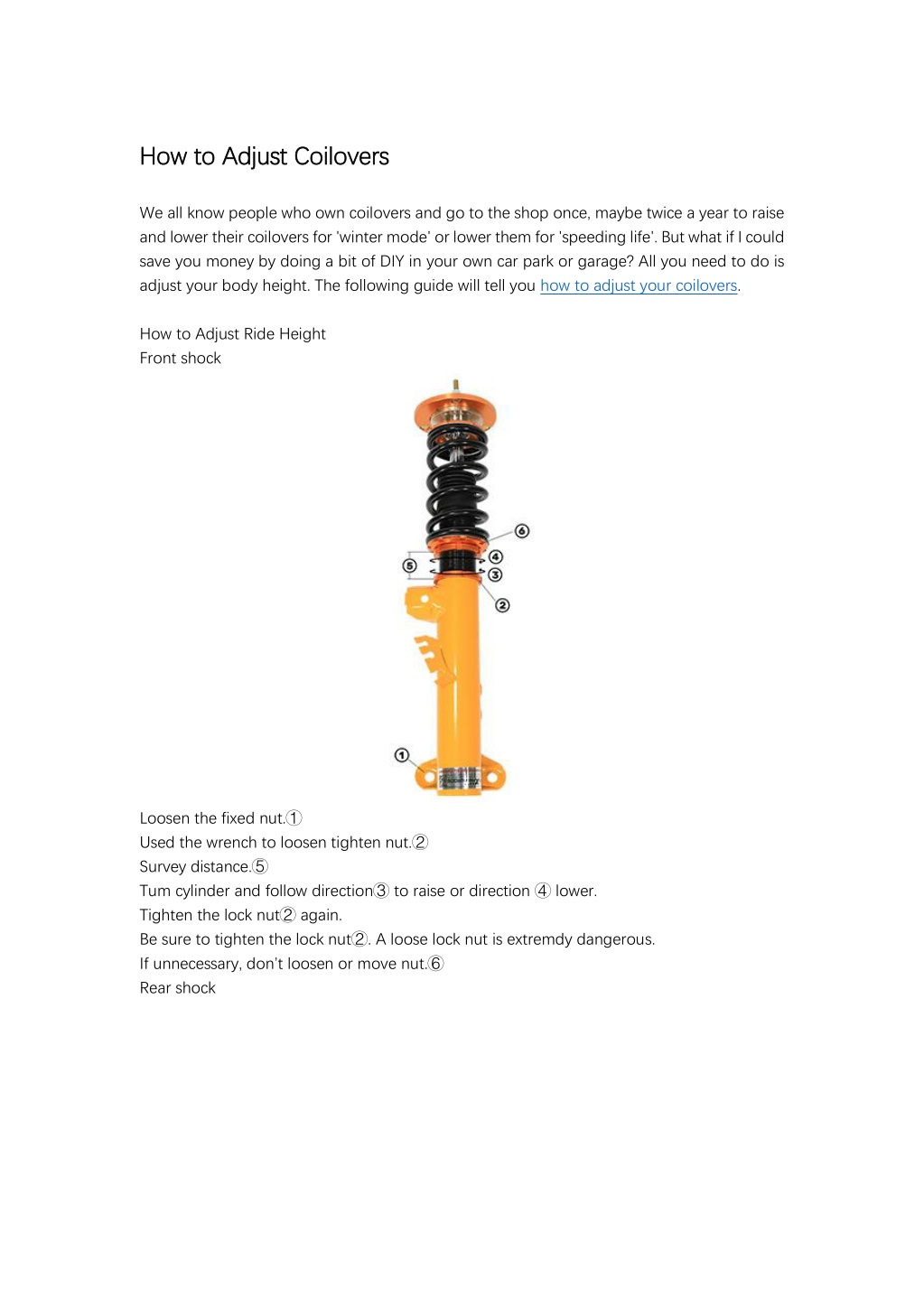
Adjust the coilovers to the intended final ride height while staying within the permitted range. Do not use spring preload as a height adjustment unless the design specifies that method.
Step 4: Settle the suspension
Follow the required procedure. This may involve rolling the vehicle, cycling the suspension in a controlled way, or taking a short drive if the instructions allow it.
Step 5: Measure again
Place the vehicle on level ground and recheck the ride height at the recommended measurement points. Investigate any unexpected differences.
Step 6: Get the alignment
Ask for a suitable alignment for the vehicle, tire setup, ride height, and intended use. Request a printout of the before-and-after readings.
What Should You Tell the Alignment Shop?
Tell the technician which coilovers are installed, whether the car has been lowered, and whether the ride height is final. Share the maker’s instructions if they include special alignment or setup requirements.
Explain how you use the car. A daily driver, a track car, and a competition vehicle may need different alignment targets. The factory specifications are a useful starting point, but the correct final settings depend on the vehicle, tire choice, and intended use.
Ask the shop to check all four wheels when the vehicle’s design and service procedure call for a four-wheel alignment. A printout can show whether the settings are within the chosen specifications and whether any adjustment limit has been reached.
Provide the kit details
Give the shop the coilover brand, model, and relevant installation instructions.
Describe the intended use
State whether the car is used on public roads, at a track, or for another specific purpose.
Keep the report
Save the alignment results so they can be compared after later suspension changes.
Signs That Coilovers Have Settled Correctly
A settled suspension should have a consistent ride height and correctly seated components. There should be no unexplained movement, loose hardware, unusual noises, or signs of interference. These checks do not prove that the wheel alignment is correct, but they help confirm that the car is ready for alignment.
Compare measurements taken on the same level surface and with the same method. Small differences can arise from the floor, vehicle load, tire pressure, fuel level, or measurement error. Use the vehicle and coilover maker’s guidance to judge whether a difference is acceptable.
A large or continuing change in height is not something to ignore. A spring that is not seated correctly, a loose component, an unsuitable adjustment, or a damaged part may need attention. Have a qualified technician inspect the car before further driving if the cause is unclear.
Source: slideserve.com
Consistent measurements
The ride height remains reasonably consistent after the prescribed settling procedure.
Correct seating
The springs, mounts, and related components sit in their specified positions.
No interference
The tires, brake lines, sensor wires, and suspension parts have the required clearance.
No new faults
There are no unexplained clunks, binding, loose parts, or signs of damage.
What If One Corner Sits Lower Than the Others?
First, confirm that the car is on level ground and that the measurements use the same reference points. Check the vehicle load and tire pressures as well. Do not assume that every corner must have an identical fender gap, because vehicle design and intended setup can affect the measurements.
If a large difference remains, have the installer check spring seating, adjustment settings, mounts, and related suspension parts. Do not keep turning adjustment collars without understanding the kit’s design and required preload. Incorrect changes can affect handling, travel, and component life.
Once the cause is corrected and the ride height is set, repeat the settling procedure and obtain the final alignment. An alignment adjustment alone cannot repair a spring or mounting fault.
Recheck the basics
Confirm the ground is level, the car is unloaded as intended, and the measurements are consistent.
Inspect the suspension
Ask a qualified installer to look for incorrect seating, damage, or improper adjustment.
Align after correction
Complete the final alignment only after the cause of the height difference has been resolved.
Common Coilover Alignment Mistakes to Avoid
The most common mistake is treating settling as a fixed waiting period instead of a process. Waiting several days will not correct an incorrectly installed spring, a loose fastener, or a ride height that is outside the kit’s allowed range.
Another mistake is aligning the car before deciding how low it should sit. If you change the height afterward, the wheel angles may change and the previous alignment may no longer be suitable. Set the height first whenever possible.
Drivers may also assume that a straight steering wheel proves the alignment is correct. It does not. The car can have incorrect toe or camber even if the steering wheel appears centered. A proper alignment requires measurement with suitable equipment.
Finally, do not copy alignment settings from another car without checking whether they suit your suspension, tires, and intended use. A setup designed for a track may not be suitable for a street-driven car. Use the vehicle’s service information and discuss any performance settings with a qualified alignment technician.
Source: slideserve.com
Avoid arbitrary delays
Follow the specified settling procedure rather than waiting a random number of days.
Avoid repeated height changes
Finalize the intended height before alignment to reduce unnecessary repeat work.
Do not ignore symptoms
Pulling, rubbing, new noises, or uneven tire wear can signal a problem that needs inspection.
Do not guess alignment targets
Choose settings based on the car, tires, suspension, and intended use.
Do Coilovers Need Another Alignment After Height Adjustments?
Yes, a significant ride height adjustment should be followed by an alignment check. Changing the height can change camber and toe, so the previous readings may no longer be correct. The need for a full adjustment depends on the size of the change and the vehicle’s suspension design.
If you make several height changes while setting up the car, complete the final alignment only after the height is established. If you change the height again later, tell the shop what changed and ask whether another alignment is needed.
This is especially relevant when moving between a street setup and a track setup. Keep a record of height measurements and alignment results so you can track changes and spot unexpected differences.
Final setup
Align the car after the final ride height has been established.
Later adjustments
Recheck alignment after changes that affect suspension geometry.
How to Tell Whether an Alignment Is Needed Now
After coilover installation, plan for an alignment even if the car seems to drive normally. The suspension geometry may have changed without producing an obvious steering symptom. A professional measurement is the reliable way to check the settings.
If the car already has coilovers and you are unsure whether it needs an alignment, consider what has changed. Recent suspension work, a ride height adjustment, a hard impact, or signs of uneven tire wear are good reasons to have the alignment inspected.
Do not keep driving normally if the vehicle has severe pulling, unstable steering, tire rubbing, or a suspected loose suspension part. These symptoms may indicate a problem beyond alignment. Arrange an inspection and avoid driving until the vehicle is safe.
Source: slideserve.com
Recently installed coilovers
Schedule an alignment after completing the maker’s installation and settling steps.
Changed ride height
Check alignment because the change may have altered wheel angles.
Uneven tire wear
Ask a technician to inspect both alignment and the suspension for worn or damaged parts.
Steering or clearance problem
Arrange a safety inspection before further driving if the car pulls sharply, rubs, or shows signs of a mechanical fault.
Frequently Asked Questions
Q
Can I get an alignment immediately after installing coilovers?
Yes, if the required settling procedure is complete, the ride height is final, and the installation has passed all safety checks. Some kits permit a same-day alignment. Follow the instructions for your exact setup rather than assuming every kit needs the same delay.
Q
How many miles should I drive before aligning coilovers?
There is no universal mileage requirement for all coilovers. Follow the manufacturer’s instructions, which may call for a short drive or another settling method. Do not use an arbitrary mileage target as a replacement for checking the installation and ride height.
Q
Will coilovers lower more after they settle?
A small change in measured height may occur as parts seat or the suspension settles into a consistent position. The amount varies by kit and vehicle. A large or continuing change should be inspected instead of being assumed to be normal.
Q
Should I align my car before or after adjusting coilover height?
Set the intended ride height first, complete the required settling steps, and then get the final alignment. Changing the height afterward can alter camber and toe, which may require another alignment check.
Q
Do coilovers need a four-wheel alignment?
A four-wheel alignment is often the best option when the vehicle has adjustable front and rear suspension or when rear wheel angles affect the overall setup. The correct service depends on the vehicle design. Ask the shop to follow the vehicle’s alignment procedure and provide the measured results.
Q
What happens if I skip alignment after installing coilovers?
The car may have incorrect wheel angles, uneven tire wear, poor steering response, or reduced stability. Some problems may not be obvious during a short drive. Arrange an alignment after installation, and have any mechanical or clearance faults corrected first.
Q
Do I need another alignment if I adjust the coilovers by a small amount?
Even a small height change can affect alignment, but the effect depends on the suspension design and amount of adjustment. Ask the alignment shop whether the change requires a new measurement or full adjustment. Recheck after changes that affect wheel geometry.
✦ Wrapping Up
Conclusion
Coilovers should be allowed to settle to a consistent ride height before the final wheel alignment when the installation procedure calls for it. The required time is not the same for every car or kit. A short settling procedure may be enough, while other systems require additional checks.
Set the final ride height, inspect the installation, follow the maker’s instructions, and arrange an alignment promptly. Do not assume that waiting several days will fix an uneven ride height or a mechanical fault. If the car shows signs of unsafe handling or incorrect installation, have it checked before driving.
💡 Key Takeaway
Read the instructions for your exact coilover kit, verify the installation and final ride height, complete the specified settling procedure, and book a professional alignment. Recheck alignment after later ride height changes.
Eric
Hi, I’m Eric Bennett, the person behind OffRoadTruckAccessories.com.
I created this blog to share my interest in trucks, off-road driving, automotive accessories, and DIY modifications. I enjoy learning how different truck accessories work, testing their usefulness, and understanding whether they are truly worth buying.
Will G37 coilovers fit G35? Learn which model years may share fitment, what changes with coupe, sedan, and AWD setups, and how to verify compatibility.