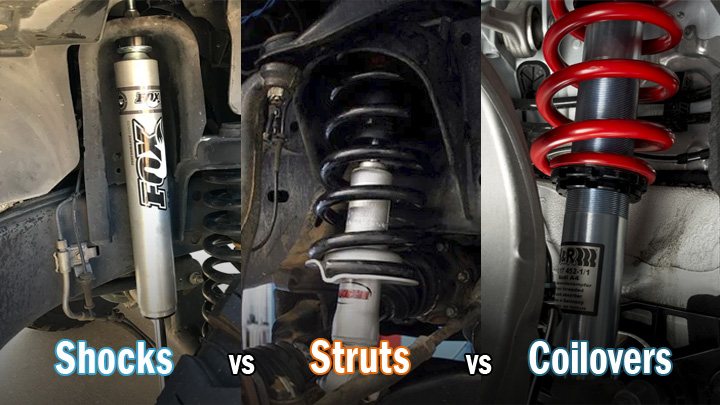
Yes, coilovers can replace shocks and struts when the kit is designed for your vehicle and suspension layout. Most complete coilover kits combine a spring and shock absorber in one assembly, replacing the original spring and damper setup at the corners they cover.
Car owners across the United States often consider coilovers when they want a lower stance, better handling, or more control over their suspension. Before buying a kit, it helps to know what the original shocks and struts do. These parts control how the wheels move over bumps and help keep the tires in contact with the road.
A coilover combines a coil spring with a shock absorber in one assembly. Some kits also include adjustable mounts, threaded bodies, or damping controls. A complete vehicle-specific kit can replace the original suspension parts at the front, rear, or all four corners, depending on its design.
However, coilovers do not automatically replace every suspension part. The right answer depends on the vehicle, the kit, and whether the original suspension uses separate springs and dampers or a strut assembly. Checking these details before installation helps avoid fitment problems, unnecessary purchases, and unsafe changes to the suspension.
Coilovers replace the original spring and damper arrangement when the kit is built for that purpose. The spring supports the vehicle’s weight, while the damper controls the spring’s movement. Combining these parts into one assembly can simplify the suspension layout and allow more adjustment.
The exact replacement depends on the factory design. A car with front struts may use complete front coilover assemblies. A car with separate rear springs and shocks may need a different rear arrangement. Some kits replace only selected corners, so the product instructions must confirm what is included.
The key distinction is between replacing a suspension assembly and replacing the entire suspension system. Coilovers usually cover the spring and damper functions, but the vehicle still needs compatible mounts, links, joints, bushings, and other parts.
Source: ar.inspiredpencil.com
Spring replacement
The coil spring in the new assembly generally takes over the job of the original spring at each covered corner.
Shock or strut replacement
The coilover’s damper controls spring motion and replaces the original damper where the kit is designed to fit.
Mounting hardware
Some kits reuse factory mounts or require separate compatible mounts, top hats, or other hardware.
Other suspension parts
Control arms, steering links, sway bars, and wheel bearings remain separate components unless a kit specifically includes replacements.
What Is A Coilover?
A coilover is a suspension unit that places a coil spring around or over a shock absorber. The term comes from coil spring over shock. Many performance kits use a threaded body or adjustable spring perch to change ride height. Some also offer settings for damping, which controls how quickly the suspension compresses and returns.
Not every coilover has the same features. Basic designs may provide limited adjustment, while advanced systems may offer separate compression and rebound controls. A threaded body alone does not mean that the damper has adjustable stiffness.
Fixed damping
The damper uses a set tuning chosen by the manufacturer.
Adjustable damping
The driver or technician can change one or more damping settings within the system’s intended range.
Adjustable ride height
The threaded perch or body allows a specified range of height changes, depending on the design.
What Do Shocks And Struts Do?
Shock absorbers reduce unwanted spring movement after a bump, dip, or turn. Without proper damping, a vehicle may continue to bounce after crossing an uneven patch of road. Shocks also help the tires maintain contact with the road as the suspension moves.
Struts perform a similar damping role but also form part of the wheel’s structural support and location system in many suspension designs. A strut often connects the steering knuckle to the vehicle body and affects alignment geometry. A conventional shock absorber does not always perform this structural role.
Shock absorber
Controls spring movement and helps stabilize the vehicle.
Strut assembly
Combines damping with a structural suspension role in designs that use struts.
Coilover assembly
Combines a spring and damper in a single unit, with the exact structural role determined by its design.
Do Coilovers Replace Both Shocks And Struts?
Coilovers can replace both shocks and struts, but the answer depends on which parts your vehicle uses and which parts the kit replaces. A vehicle may use struts at the front and separate shocks at the rear. A complete compatible kit can replace the original assemblies at all four corners, even though the factory parts are not all the same type.
For example, a front coilover designed to replace a factory strut can take over the spring and damping functions of that assembly. A rear coilover can replace a separate rear spring and shock arrangement only if the kit is designed to mount correctly in that suspension layout.
Some kits are sold as front-only or rear-only conversions. Others are full suspension packages. Read the parts list carefully instead of assuming that the word complete means every original suspension component is included.
Source: ar.inspiredpencil.com
Front struts
A compatible front coilover assembly can replace the original strut and spring arrangement.
Rear shocks
A compatible rear coilover may replace the rear shock and spring arrangement, but the mounting and suspension design must support it.
Four-corner kits
A full kit may replace the spring and damper assemblies at all four corners, with the exact components listed by the manufacturer.
When Coilovers Replace Factory Struts
On a vehicle that uses MacPherson struts, a complete front coilover assembly commonly replaces the factory strut and its surrounding coil spring. The new assembly must match the vehicle’s mounting points, steering knuckle connection, suspension travel, and intended load range.
Because a strut can help locate the wheel, incorrect fitment can affect handling and alignment. A kit that looks similar to the original part is not enough. Confirm the exact year, make, model, trim, drivetrain, and suspension version before ordering.
Confirm fitment
Use the manufacturer’s application list and installation instructions.
Check mounting points
Verify that the upper mounts and lower connections match the vehicle.
Check alignment needs
Plan for a professional alignment after installation when required by the vehicle or kit instructions.
When Coilovers Replace Separate Rear Shocks
Some vehicles use a rear shock absorber beside a separate coil spring. A coilover conversion may combine these functions in one unit, but the original spring location and the new mounting points must be compatible with the conversion.
On some cars, the original rear spring sits on a control arm while the shock mounts elsewhere. Moving the spring load to the shock mount can change the forces acting on the suspension. Only use a conversion specifically engineered for that layout, with any required reinforcement or hardware installed as directed.
Do not assume direct fitment
A rear coilover designed for another model may not fit or safely support the same loads.
Check load paths
The mounting points must be designed to handle the spring forces.
Follow the approved kit design
Do not relocate springs or modify mounts without suitable engineering guidance.
Coilovers Vs. Shocks And Struts: Main Differences
The main difference is that a coilover integrates a coil spring with a damper, while a shock absorber is primarily a damping device and a strut also serves a structural role in many suspension systems. The names describe different types of components, not three parts that every vehicle uses separately.
Factory suspension systems often use a mix of springs, shocks, and struts. Coilovers can combine the spring and damper into one assembly, but they do not make the vehicle’s remaining suspension hardware unnecessary.
The table below compares the usual functions. Specific designs can differ, so the manufacturer’s technical information should take priority when a component has an unusual layout.
Source: ar.inspiredpencil.com
Coilover
Combines a spring and damper, often with options for ride-height adjustment and sometimes damping adjustment.
Shock absorber
Controls suspension movement but generally does not carry the vehicle’s static load through a surrounding coil spring.
Strut
Provides damping and, in many layouts, helps support and locate the wheel.
Separate spring
Supports vehicle weight and works with a shock or strut to control wheel movement.
Comparison Of Function And Adjustment
Coilovers are often selected for adjustable ride height and handling changes. Conventional replacement shocks or struts are often chosen to restore factory performance and ride comfort. Neither type is automatically better for every driver.
A properly matched factory-style replacement can be a sensible choice for a daily driver that needs reliable comfort and stock ride height. A compatible coilover kit may suit a driver who wants a specific height or a suspension setup tailored to performance use.
Ride comfort
Depends on spring rate, damper tuning, suspension travel, tire setup, and road conditions.
Handling
Depends on the complete suspension setup, alignment, tires, and vehicle design rather than the coilover label alone.
Maintenance
Depends on the damper design, serviceability, exposure to road debris, and the manufacturer’s maintenance instructions.
What Parts Do Coilovers Replace, And What Stays?
A coilover kit normally replaces the spring and damper components at the corners it covers. It may also include upper mounts, camber plates, or other mounting parts, but those items vary by kit.
Other suspension components remain in place unless the kit specifically replaces them. A coilover installation does not repair worn ball joints, damaged control arms, loose tie rods, failed wheel bearings, or worn sway-bar links.
Inspecting these parts before installation is useful because a new suspension assembly cannot correct every cause of noise, vibration, poor steering, or uneven tire wear. Worn parts should be repaired with suitable replacements.
Source: ar.inspiredpencil.com
Usually replaced
The original spring and shock or strut assembly at the corners covered by the kit.
May be included
Top mounts, camber plates, spring seats, adjustment tools, and specified installation hardware.
Usually retained
Control arms, steering links, sway bars, knuckles, wheel bearings, and other components not listed in the kit.
May need separate attention
Worn bushings, damaged mounts, seized adjustment hardware, and parts that fail inspection.
Do You Need New Top Mounts?
Some coilover kits include new upper mounts, while others are designed to reuse factory mounts. The correct option depends on the kit and vehicle. A worn or damaged mount may need replacement even when the coilover itself is new.
Top mounts can affect noise, vibration, steering feel, and alignment. Follow the kit instructions and use the specified hardware rather than mixing parts based on appearance alone.
Inspect existing mounts
Check for damage, excessive movement, and wear before reusing factory hardware.
Check bearing design
Some mounts contain bearings or rubber elements that serve specific steering and isolation functions.
Do Coilovers Replace Control Arms?
No, coilovers do not normally replace control arms. Control arms help locate the wheels as the suspension moves, while the coilover supports the spring and controls damping. Both systems must work together.
Lowering a vehicle can change suspension angles and alignment. Some vehicles may need compatible adjustable arms to achieve the intended alignment range, but these parts are separate purchases and are not automatically required for every installation.
Check alignment range
Confirm that the intended ride height allows the vehicle to reach suitable alignment settings.
Inspect joints and bushings
Repair worn components before relying on a new suspension setup.
Should You Replace Worn Shocks And Struts With Coilovers?
Choose coilovers when you need their specific features and have confirmed that the kit fits your vehicle. If the goal is simply to restore a worn suspension system to its original ride and handling, compatible factory-style shocks or struts may be the more practical option.
Coilovers can offer greater control over ride height and, on some models, damping. However, those benefits depend on the quality of the design, the adjustment range, and the way the system is set up. A poorly matched coilover can ride harshly, reduce usable suspension travel, or handle worse than a suitable factory-style system.
Before buying, compare the full cost of the kit and installation with the cost of replacing the original parts. Include any required mounts, alignment work, supporting components, and future maintenance. The lowest purchase price does not always mean the lowest total cost.
Source: ar.inspiredpencil.com
Choose coilovers for adjustment
They can suit drivers who need a specific ride height or want to tune a vehicle for a defined driving purpose.
Choose factory-style replacements for restoration
They are often suitable when the priority is to recover the original ride height and expected road manners.
Check daily driving needs
Rough roads, frequent passengers, cargo, and long commutes can make comfort and suspension travel especially important.
Avoid buying on appearance alone
A low stance does not prove that the spring rate, damping, or geometry suits the vehicle.
When Factory-Style Shocks And Struts Make More Sense
Factory-style replacements often make sense when the original suspension design meets your needs and the main problem is wear. They can preserve the intended ride height and reduce the need for extra adjustments or supporting modifications.
This option may also simplify maintenance for a vehicle used mainly for commuting, family trips, or daily errands. Select parts that match the vehicle’s exact specification, since different trims or factory suspension packages may use different components.
Stock ride height
A factory-style setup is a strong starting point when you want to retain the original stance.
Simple repair
A direct replacement can reduce the need to adjust ride height or tune damping.
When Coilovers May Be Worth It
Coilovers may be worthwhile when adjustable ride height is a real requirement or the driver needs a suspension system intended for track use, autocross, or another defined purpose. The kit should match the vehicle and the way it will be used.
For road use, keep enough suspension travel for bumps and dips. Excessive lowering can cause tire rubbing, bottoming, poor alignment, and added stress on suspension components. A lower car is not automatically a better-handling car.
Planned ride height
Choose a kit with an adjustment range that supports the intended height without compromising its designed operation.
Matched spring and damper tuning
Use a setup designed to work as a system instead of selecting spring rates by appearance or guesswork.
How To Confirm Coilover Compatibility Before Buying
Confirm compatibility by matching the coilover kit to the exact vehicle and checking which factory components the kit replaces. A listing that names the correct model family may still exclude a particular trim, drivetrain, body style, or factory suspension package.
The safest starting point is the manufacturer’s application guide and installation manual. If the fitment information is unclear, ask the manufacturer or a qualified suspension shop to verify the part number before you order.
Source: ar.inspiredpencil.com
Vehicle details
Record the model year, make, model, trim, drivetrain, and any factory sport or adaptive suspension package.
Kit coverage
Confirm whether the kit includes front components, rear components, or a full four-corner setup.
Mounting design
Check upper mounts, lower brackets, spring positions, and any required conversion hardware.
Electronic systems
Determine whether the vehicle uses electronically controlled dampers and whether the kit supports them or requires an approved solution.
Legal and warranty requirements
Check applicable state or local vehicle rules, inspection requirements, and warranty terms before making changes.
Check Adaptive Suspension Before Replacing Parts
Some vehicles have electronically controlled dampers that change their response based on selected driving modes or sensor inputs. A standard mechanical coilover kit may not retain those functions. Depending on the vehicle, removing the original dampers can also trigger warning messages or affect related systems.
Read the kit documentation for the exact vehicle and suspension package. Do not assume that an electronic warning can be safely ignored or that an adapter will preserve all factory functions.
Identify the factory system
Use the vehicle manual, build information, or a qualified technician to determine which suspension system is installed.
Verify electronic compatibility
Check the kit’s stated support for factory damping controls and related warning systems.
What Happens During Coilover Installation?
Coilover installation involves removing the original spring and damper components, fitting the approved replacement assemblies, setting the initial adjustments, and checking the complete suspension. The exact process varies by vehicle, so the manufacturer’s instructions must guide the work.
Suspension springs can store enough energy to cause serious injury if released incorrectly. Strut removal may also require special tools, correct support of the vehicle, and careful handling of brake hoses, wiring, and steering connections. Use a qualified mechanic if you lack the tools or training for this work.
After installation, the vehicle should be checked for secure fasteners, correct clearance, and any interference through the permitted suspension and steering range. A professional alignment is generally appropriate after ride-height changes and should follow the vehicle and kit requirements.
Source: ar.inspiredpencil.com
Inspect before installation
Check the condition of mounts, bushings, ball joints, tie rods, brake hoses, and other related parts.
Use approved procedures
Follow the kit instructions for installation, adjustment, and specified fastener torque.
Set the intended height
Keep within the manufacturer’s permitted adjustment range and preserve adequate suspension travel.
Check clearances
Verify tire, wheel, brake-line, wiring, and body clearance as directed by the manufacturer.
Complete alignment checks
Have the alignment measured and adjusted as needed before normal driving.
How To Tell If The Installation Is Correct
A correct installation should have secure mounting points, no unexpected contact between components, and suspension movement within the intended range. The vehicle should sit as intended by the setup, although left-to-right height can vary for documented reasons such as fuel load, road surface, or vehicle design.
Do not treat a short drive without obvious noise as proof that the installation is safe. Have the work inspected if the vehicle pulls to one side, makes new clunks, rubs a tire, displays a suspension warning, or feels unstable.
No new interference
The tires and suspension components should clear nearby parts under the conditions specified by the manufacturer.
No unexpected noises
Clunks, knocks, or repeated rubbing require inspection rather than repeated adjustment by guesswork.
Stable road behavior
Steering and handling should be consistent with a correctly installed and aligned setup.
Common Coilover Mistakes To Avoid
The most common mistakes involve choosing an incompatible kit, lowering the vehicle too far, confusing ride-height adjustment with damping adjustment, and overlooking the rest of the suspension. Each can reduce the benefit of the upgrade or create a safety problem.
A coilover should be treated as part of a complete suspension system. Tires, alignment, spring rates, damper tuning, mounting points, and available suspension travel all affect how the car behaves.
Buying by model name alone
Confirm the exact application and factory suspension version instead of relying on a broad vehicle listing.
Lowering beyond the intended range
Excessive lowering can reduce travel, cause bottoming, and create tire or body interference.
Assuming all coilovers are adjustable in every way
Ride-height adjustment and damping adjustment are different functions, and some kits offer only one or neither.
Ignoring worn suspension parts
Replacing dampers will not fix loose joints, damaged bushings, or worn steering components.
Skipping alignment
Ride-height changes can alter alignment, so the measurements must be checked and corrected as needed.
Using the wrong spring settings
Spring preload and ride height must be set according to the design, rather than adjusted randomly to achieve a particular stance.
Does More Preload Mean A Higher Ride Height?
Not necessarily. Spring preload is the initial compression applied to a spring, while ride height is the position of the vehicle under its supported weight. On many conventional coilover designs, the threaded spring perch controls preload, while a separate body-length adjustment changes ride height. Other designs use different arrangements.
Changing preload can affect available suspension travel and the way the spring behaves without providing the intended height adjustment. Follow the kit’s specific setup method instead of assuming that turning any collar will safely raise the car.
Identify the adjustment
Determine whether the collar changes spring preload, overall body length, or both.
Keep settings within specifications
Use the manufacturer’s permitted preload and ride-height ranges.
Can Coilovers Make A Car Ride Worse?
Yes, a coilover setup can feel harsher or less controlled if its spring rate, damping, ride height, or suspension travel does not suit the vehicle and road conditions. Stiffer springs are not automatically better, and soft damping cannot always compensate for an unsuitable spring rate.
If comfort matters most, compare the kit’s documented spring and damping characteristics with your intended use. A well-matched factory-style system may provide a better result than an aggressive lowering setup on rough public roads.
Consider road quality
Frequent potholes and uneven pavement increase the importance of usable suspension travel.
Match the intended use
Street, track, and mixed-use setups can require different spring and damping choices.
How Much Does Replacing Shocks And Struts With Coilovers Cost?
The total cost depends on the vehicle, kit design, parts quality, labor rates, and any additional work required. A coilover conversion can cost more than replacing worn shocks or struts with direct-fit factory-style parts, especially when it requires new mounts, electronic compatibility solutions, or supporting suspension components.
There is no single price that applies to every car in the United States. Request an itemized estimate for your exact vehicle, including the kit, installation labor, alignment, required hardware, and any repairs found during inspection. Check current local quotes rather than relying on a general online price.
Also consider ongoing care. Some coilovers need periodic cleaning, adjustment checks, or service according to their design and operating conditions. A kit with a higher initial cost may not be the best value if its features do not meet your needs.
Parts
Compare complete kits with the cost of suitable replacement shocks, struts, springs, and mounts.
Labor
Ask whether the quote includes removal, installation, setup, and any extra work required by the vehicle.
Alignment
Include a professional alignment when required after suspension replacement or ride-height adjustment.
Additional hardware
Check for separate mounts, adapters, electronic components, or other items not included in the kit.
Future maintenance
Review service requirements and parts availability before making a long-term purchase.
A Practical Cost Comparison
Compare the two options using the same vehicle, repair scope, and labor assumptions. A quote for two front struts should not be compared directly with a complete four-corner coilover kit because the parts and work covered are different.
For a fair comparison, ask the shop to list every included component and service. This helps reveal whether one estimate excludes alignment, mounts, or other items that appear in the second quote.
Factory-style replacement
Best compared as the cost to restore the required original spring and damper functions.
Coilover replacement
Best compared as the cost of the complete compatible kit, installation, setup, alignment, and required supporting parts.
Frequently Asked Questions
Q
Do coilovers replace all four shocks and struts?
A complete four-corner coilover kit can replace the original spring and damper assemblies at all four wheels when it is designed for that vehicle. However, some kits cover only the front or rear, and some vehicles use different suspension layouts at each end. Check the parts list to confirm exactly what the kit replaces.
Q
Can I install coilovers without replacing my shocks?
A coilover assembly that replaces a factory spring and shock or strut normally takes over the damper function at the covered corner, so the original damper is not retained as a separate working unit. Some suspension setups use separate springs and shocks, and some conversion kits cover only certain components. Follow the kit’s application and installation instructions.
Q
Are coilovers better than regular shocks and struts?
Not in every situation. Coilovers can provide ride-height adjustment and sometimes damping control, which may help when the driver needs a specific setup. Suitable factory-style shocks and struts can be a better choice for restoring stock ride height, comfort, and normal road behavior. The result depends on the parts, vehicle, and setup.
Q
Do coilovers make a car lower?
Many coilover kits allow the car to be lowered, but the amount depends on the kit’s design and adjustment range. Some systems support other height settings, and not every coilover is intended for a major drop. Keep ride height within the manufacturer’s specifications and preserve enough suspension travel for safe road use.
Q
Do coilovers replace springs as well as shocks?
Yes, a typical complete coilover assembly combines a coil spring and damper, replacing both original functions at the corner it covers. However, the exact kit may use separate rear springs or other factory components, depending on the vehicle’s suspension layout. Verify the included parts before ordering.
Q
Can I use coilovers with factory electronic suspension?
Only when the coilover kit is compatible with the vehicle’s electronic suspension requirements or provides an approved conversion method. Removing electronically controlled dampers may disable some factory functions or trigger warnings. Check the exact kit documentation and consult a qualified technician before changing the system.
Q
Do coilovers need an alignment after installation?
An alignment check is generally appropriate after coilover installation, especially when ride height changes. Suspension geometry can affect toe, camber, and other alignment settings, which influence tire wear and handling. Follow the vehicle and kit instructions and have the alignment corrected when needed.
✦ Wrapping Up
Conclusion
Coilovers can replace shocks and struts when the kit is designed for the vehicle and the suspension layout. A typical complete coilover combines a coil spring and damper in one assembly, taking over the functions of the original spring and shock or strut at the corners it covers.
The key is to confirm what the kit actually replaces. Coilovers do not normally replace control arms, ball joints, tie rods, or every other suspension component. Some vehicles also use separate rear springs and shocks, so a compatible kit may use a different arrangement at the front and rear.
For a daily driver that needs its original ride restored, factory-style replacements may be the simpler choice. If adjustable ride height or a purpose-built performance setup is the goal, coilovers may be suitable when their fitment, tuning, travel, and maintenance needs match the vehicle.
💡 Key Takeaway
Before purchasing coilovers, confirm the exact vehicle application, the parts included, the permitted ride-height range, electronic compatibility, installation requirements, and alignment needs. If the kit or mounting design is unclear, ask a qualified suspension shop to verify it before installation.
Eric
Hi, I’m Eric Bennett, the person behind OffRoadTruckAccessories.com.
I created this blog to share my interest in trucks, off-road driving, automotive accessories, and DIY modifications. I enjoy learning how different truck accessories work, testing their usefulness, and understanding whether they are truly worth buying.
Will G37 coilovers fit G35? Learn which model years may share fitment, what changes with coupe, sedan, and AWD setups, and how to verify compatibility.