Yes, most complete coilover kits come with shock absorbers built into the assembly. A coilover combines a spring and a shock absorber, so you usually do not need to buy separate shocks for the positions covered by the kit. However, the exact parts included depend on the kit and your vehicle.
If you are upgrading your car’s suspension in the United States, you may wonder whether a coilover kit includes shocks or whether you must buy them separately. The answer is usually yes for a complete coilover assembly. The spring wraps around a shock absorber, and both parts work together to control wheel movement and support the vehicle.
The main thing to check is what the seller means by a coilover kit. Some kits include complete front and rear assemblies, while others cover only one axle or require certain factory parts to be reused. Reading the parts list for your exact vehicle helps you avoid buying extra shocks or missing parts before installation.
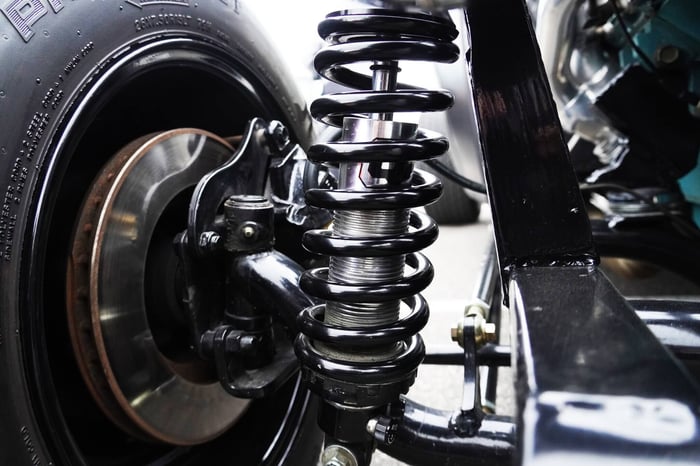
Coilovers usually include shocks because the shock absorber is a core part of the assembly. The word coilover refers to a coil spring fitted over or around a shock absorber. This design combines two suspension functions in one compact unit.
The coil spring supports the vehicle’s weight and compresses when a wheel passes over a bump. The shock absorber, also called a damper, controls how quickly the spring compresses and rebounds. Without effective damping, the spring could keep bouncing after the wheel hits a road defect.
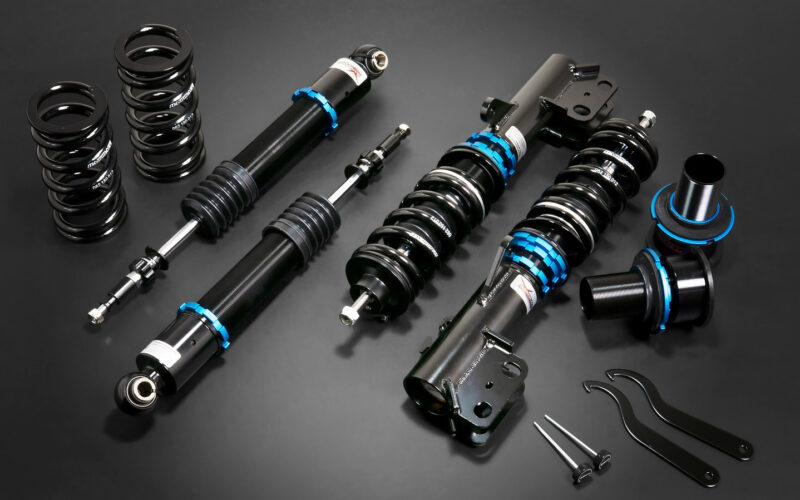
Most complete aftermarket coilovers are sold as assembled or partly assembled units. They often include a spring, damper body, spring perch, and adjustment hardware. Some designs also include top mounts, while others require the original mounts or separate compatible parts.
Source: ar.inspiredpencil.com
Coil spring
Supports the vehicle’s weight and stores energy as the suspension moves over bumps.
Shock absorber
Controls spring movement to help the tire maintain contact with the road.
Spring perch and adjusters
Hold the spring in place and may allow changes to ride height or spring preload.
Mounting hardware
Connects the assembly to the vehicle. Its inclusion depends on the kit design.
Why Are Shocks Built Into Coilovers?
The spring and damper must work together to manage suspension movement. Combining them makes it possible to package the components as a single assembly and tune the spring and damping characteristics for a specific purpose.
Many performance coilovers also allow the owner or technician to change ride height, damping, or both. These adjustments do not mean the shock absorber is a separate item. The damper remains part of the coilover assembly.
Combined design
The spring sits around the damper rather than operating as an unrelated part.
Matched components
The spring rate and damping design are selected to work together within the kit’s intended use.
What Parts Come With a Coilover Kit?
A coilover kit normally includes the main spring and shock assembly, but the full parts list varies by manufacturer, vehicle, and kit type. Some kits are nearly ready to install, while others reuse factory mounts or need additional compatible hardware.
Do not assume that the word complete means every suspension part is included. A seller may use that term to describe a complete assembly for one axle rather than a full set for all four wheels. Check the product description, fitment notes, and installation instructions before placing an order.
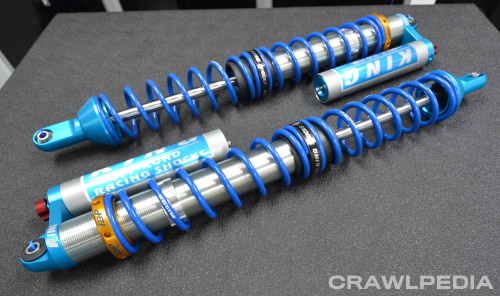
Source: crawlpedia.com
Coilover assemblies
These usually contain the spring and shock absorber, with the number supplied depending on whether the kit covers one axle or the entire vehicle.
Top mounts
Some kits include new upper mounts or camber-adjustable plates. Others require reuse of compatible factory mounts.
Locking collars and spring seats
These hold the spring and secure adjustment settings on designs that use threaded bodies.
Adjustment tools
Some packages provide spanner wrenches for adjusting threaded collars, but not all include them.
Installation hardware
Bolts, nuts, washers, bushings, and other items may be supplied, reused, or purchased separately according to the vehicle and kit.
Do Coilovers Come With Front and Rear Shocks?
Many four-corner coilover kits include assemblies for both the front and rear suspension. However, some products are front-only or rear-only kits. Others are designed for vehicles with different front and rear suspension layouts.
A listing that shows two coilovers may cover only one axle. Before ordering, confirm the number of assemblies, the axle positions covered, and whether the kit is compatible with your exact model, trim, drivetrain, and production year.
Front kit
Usually covers the two front suspension positions when sold as a pair.
Rear kit
May include two rear coilovers or separate components, depending on the vehicle’s original suspension design.
Full vehicle kit
Normally covers all four corners, but the listing should explicitly confirm this.
Do Coilovers Include New Mounts?
Not always. Some coilovers have built-in upper mounts, while others are designed to use the factory mounts. A kit may also require separate camber plates, replacement bushings, or vehicle-specific mounting hardware.
Inspect the parts list before assuming that the old mounts can be reused. Worn, damaged, or incompatible mounts can cause noise, poor fitment, or handling problems. Follow the manufacturer’s instructions for any required replacement parts.
Built-in mounts
Useful when the kit is designed to replace the original assembly with a complete unit.
Factory mounts
May be reused when the coilover manufacturer explicitly allows it and the parts are in suitable condition.
Are Coilovers the Same as Shocks and Struts?
Coilovers contain a damper, but the term does not mean that every coilover is identical to a standard shock or strut. A shock absorber mainly controls suspension movement, while a strut also serves as a structural part of certain suspension designs.
A traditional suspension may have a separate coil spring and shock absorber. In another design, a coil spring sits around a strut. An aftermarket coilover can replace the spring and damper arrangement with a height-adjustable assembly, but only when the kit is engineered for that vehicle.
This distinction matters when you shop for parts. A coilover may replace the factory spring and shock or strut at a given corner, but it does not automatically replace every component in the suspension system.
Source: animalia-life.club
Standard shock absorber
Damps suspension movement and may be fitted separately from the coil spring.
Strut
Combines damping with a structural role in the suspension and helps locate the wheel.
Coilover
Combines a coil spring and damper in one assembly, often with ride-height adjustment.
Can Coilovers Replace Factory Shocks?
Yes, a properly matched coilover kit can replace factory shocks and springs at the positions it covers. Whether it replaces a complete factory strut assembly depends on the suspension design and the kit’s construction.
Some vehicles use a separate rear spring and shock. In these cases, a coilover conversion may need different mounts or additional hardware. Never assume that a universal coilover can replace the original parts without checking the fitment instructions.
Direct-fit replacement
Uses an assembly specifically designed for the vehicle and its mounting points.
Conversion setup
May require approved brackets, mounts, or other parts to work with the original suspension layout.
Do You Need to Buy Separate Shocks With Coilovers?
You usually do not need separate shocks for the suspension positions covered by a complete coilover kit. Buying another shock for the same position is generally unnecessary unless the product is a partial kit or the manufacturer specifies a separate component.
If the package contains only springs, spring sleeves, or conversion hardware, you may still need compatible dampers. Check the exact product description instead of relying on the product name or photographs.
Complete coilover kit
Usually includes the damper and spring together.
Spring-only kit
Does not necessarily include shocks or struts.
Partial conversion kit
May depend on existing dampers or separate vehicle-specific parts.
How Coilover Shocks Work
A coilover shock absorber controls the movement of the spring as the wheels travel over bumps, dips, and uneven pavement. The spring supports the car, while the damper reduces unwanted bouncing and helps the suspension settle after movement.
Inside a typical hydraulic damper, a piston moves through fluid as the suspension compresses and extends. Valves regulate the flow of fluid, creating resistance that controls movement. Some designs use gas pressure to help manage aeration and maintain consistent damping behavior.
The spring and shock must suit the vehicle and intended use. A stiff spring paired with unsuitable damping can produce a poor ride or unstable wheel control. A suitable setup balances support, control, available suspension travel, and the demands of the road.
Source: chevyhardcore.com
Compression
The damper controls movement as the wheel rises and the suspension compresses.
Rebound
The damper controls the spring as it extends after compression.
Spring support
The spring carries the vehicle’s load and affects how much the suspension moves.
Tire contact
Proper damping helps the tire follow the road rather than continuing to bounce after a bump.
What Is a Damping Adjustment?
Some coilovers allow you to adjust damping to change how the suspension responds to movement. Depending on the design, an adjustment may affect rebound, compression, or a combined setting.
A damping adjustment is different from changing spring preload or ride height. Turning an adjuster does not necessarily make the spring stiffer, and lowering the car does not automatically improve handling. Follow the manufacturer’s adjustment range and setup instructions.
Fixed damping
The damper has a set tuning and does not provide a user-adjustable damping control.
Adjustable damping
Allows changes within the range designed by the manufacturer.
Ride-height adjustment
Changes the vehicle’s height through the intended adjustment mechanism and may affect alignment and suspension travel.
Types of Coilovers and Their Included Parts
Coilovers come in several designs, and the type affects the parts included, available adjustments, and intended use. The most useful comparison is not the price or number of adjusters alone. It is whether the assembly matches your vehicle and your driving needs.
Combines the spring and damper in one unit and may include mounts and height-adjustment hardware.
Sleeve-style coilover
Uses a threaded sleeve and adjustable spring perch with a compatible shock or strut. Depending on the kit, the damper may be reused or supplied separately.
Height-adjustable coilover
Allows ride-height changes through a designed adjustment system. The exact adjustment range and method vary by model.
Damping-adjustable coilover
Provides a means to alter damper settings, subject to the manufacturer’s design.
Motorsport coilover
May offer specialized springs, damping options, and rebuildable components for a defined competition or track application.
Are Budget Coilovers Supplied With Shocks?
A budget coilover kit can include complete spring-and-damper assemblies, but a low price does not prove that a kit is incomplete or complete. The listing must confirm which components are supplied for the specific vehicle.
Compare the included parts, fitment details, warranty terms, replacement-part availability, and installation requirements. A kit that needs extra mounts or separate rear dampers may cost more to install than its initial price suggests.
Check the parts list
Look for explicit references to dampers, springs, mounts, and the number of assemblies supplied.
Check replacement support
Confirm whether individual dampers, seals, springs, and other service parts are available when needed.
How to Check Whether a Coilover Kit Includes Shocks
The most reliable way to confirm whether a coilover kit includes shocks is to check its exact part number and included-parts list. Product photos can help, but they may show a sample assembly or accessories that are not included with every package.
Before buying, confirm the vehicle fitment, axle coverage, number of assemblies, and required additional parts. If the listing is unclear, ask the seller to confirm in writing whether dampers are included and whether any factory components must be reused.
Source: qa1.net
Step 1: Confirm your vehicle
Record the make, model, production year, trim, and drivetrain where relevant. Some vehicles use different suspension parts across trims or production changes.
Step 2: Find the exact part number
Use the manufacturer’s catalog or official fitment tool rather than relying only on a broad product title.
Step 3: Read the included-parts list
Look for coilover assemblies, springs, dampers, top mounts, adjustment collars, and installation hardware.
Step 4: Check front and rear coverage
Confirm whether the package covers two corners or all four and whether the front and rear components differ.
Step 5: Review installation requirements
Check whether factory mounts, bushings, bolts, or other parts must be reused or purchased separately.
Step 6: Verify any uncertainty
Ask the manufacturer or seller to confirm the contents and compatibility before ordering.
What If the Product Listing Only Says Coilover Springs?
A listing that says coilover springs may describe springs only, rather than complete coilover assemblies. Springs cannot replace a worn shock absorber on their own because they do not provide the same damping function.
Check the item description and package contents carefully. If the listing mentions sleeves, spring seats, or springs but does not identify dampers, do not assume that new shocks are included.
Look for damper details
The listing should identify the shock or strut assembly if it is included.
Confirm reuse requirements
A sleeve kit may be designed to work with specific existing dampers.
Do You Need New Shocks When Installing Coilovers?
If you install a complete coilover kit that replaces the original spring and damper at a given wheel, you generally do not need to buy a second shock for that same position. The coilover already provides the spring and damping functions.
However, a partial kit may rely on existing dampers or require separate parts. A vehicle may also use a different suspension layout at the rear than at the front, so check the manufacturer’s instructions for each axle.
If the old shocks are worn, a complete coilover assembly can replace them when the kit is designed for that purpose. Reusing worn or leaking dampers with a sleeve-style system may lead to poor suspension control, so inspect the existing parts before deciding what to replace.
Source: www.youtube.com > milanmastracci
Complete replacement kit
Usually provides the shock absorbers needed at the covered suspension positions.
Sleeve conversion
May require compatible existing dampers or separately purchased shocks.
Mixed suspension setup
May retain factory components at some positions if the kit is specifically designed for that arrangement.
Signs That Existing Shocks May Need Replacement
Visible fluid leaks, damaged mounts, unusual knocking, or repeated bouncing can point to a suspension problem. These symptoms do not prove that the shock absorber alone is at fault, since worn bushings, loose hardware, tires, and other parts can cause similar issues.
Have the suspension inspected if the vehicle feels unstable, makes new noises, or shows signs of damage. Do not use a simple bounce test as the only way to judge damper condition.
Fluid leakage
Oil around the damper body may indicate a leak, although the source should be confirmed.
Poor body control
Excessive bouncing or a floating feel can indicate worn or unsuitable damping.
Unusual noises
Clunks or rattles may come from mounts, bushings, loose hardware, or damaged suspension parts.
Uneven tire wear
May relate to alignment, tire condition, or suspension faults and needs proper diagnosis.
What to Know Before Installing Coilover Shocks
Correct fitment and installation are essential for safe handling. Coilovers can change ride height, suspension travel, alignment, and the way the vehicle responds to bumps. A kit that physically fits the mounting points may still be unsuitable for the vehicle’s weight or intended use.
Read the manufacturer instructions before installation. Use the specified tools, tightening procedures, and adjustment limits. Suspension springs can store substantial energy, so spring removal and disassembly require suitable equipment and training.
Verify fitment
Use the manufacturer’s application guide and confirm any restrictions for trim, drivetrain, brakes, or wheel setup.
Check spring and damper compatibility
Use components intended to work together for the vehicle’s weight and driving needs.
Follow the adjustment limits
Do not exceed the manufacturer’s permitted ride-height, preload, or damping settings.
Arrange a wheel alignment
Ride-height changes can affect alignment angles. Follow the kit instructions and obtain a professional alignment when required.
Inspect after installation
Check for interference, correct fastener installation, abnormal noises, and any other conditions listed in the service instructions.
Can You Install Coilovers at Home?
An experienced home mechanic with the right tools and service information may be able to install a suitable bolt-on kit. However, the work involves loaded springs, vehicle support, suspension fasteners, and components that affect steering and control.
Never work under a car supported only by a hydraulic jack. Use suitable jack stands on approved support points and follow the vehicle’s service procedures. Do not loosen a compressed spring or dismantle a strut without the correct spring compressor and the required training. A qualified suspension shop is the safer option when the procedure or parts are unfamiliar.
Use proper support
Secure the vehicle on correctly rated stands on a suitable surface.
Avoid unsafe spring handling
Use the prescribed equipment and never attempt to release spring tension with improvised tools.
Get professional checks
Have the installation, fasteners, and wheel alignment checked according to the kit and vehicle instructions.
Common Coilover Buying Mistakes to Avoid
The most common buying mistake is assuming that every product called a coilover kit contains the same parts. Differences in suspension layout, kit coverage, mounting design, and adjustment features can change what you need to order.
Compare the exact contents and fitment rather than choosing by price or product photographs alone. A clear parts list can help prevent duplicate purchases and reduce the risk of ordering an assembly that does not suit your vehicle.
Assuming every kit includes four assemblies
Some kits cover only the front or rear axle. Confirm the number and location of all supplied units.
Confusing springs with complete coilovers
A spring-only product may need separate dampers and mounting parts.
Ignoring factory mount requirements
A kit may require compatible original mounts or additional hardware.
Choosing an incompatible universal part
Suspension geometry, dimensions, load requirements, and mounting points must suit the vehicle.
More adjustment options are useful only when the design, settings, and setup match the vehicle’s needs.
Overlooking installation and alignment costs
Budget for required parts, professional labor, and alignment where applicable.
How Much Should You Budget for the Complete Setup?
The total cost depends on the vehicle, kit type, included hardware, and labor. A kit’s advertised price may not include mounts, replacement fasteners, other required components, installation, or alignment.
Request an itemized quote that lists the coilover kit, any additional parts, labor, and alignment. This gives you a more useful comparison than the price of the kit alone and helps reveal whether separate shocks are actually needed.
Parts
Include the kit and any required mounts, hardware, or compatible additional dampers.
Labor
Allow for installation time based on the vehicle and the complexity of the suspension design.
Alignment
Include the alignment work required after installation or ride-height changes.
Future service
Check the availability and cost of replacement dampers, seals, springs, and other service parts.
A Simple Checklist Before You Buy
Before ordering, use this checklist to confirm that the kit contains the shock absorbers and other components you need. It is especially useful when a retailer uses broad terms such as complete suspension kit or adjustable coilover package.
Vehicle details confirmed
The part number matches your vehicle’s year, model, trim, drivetrain, and suspension configuration.
Shock absorbers included
The product description confirms that the dampers are part of the supplied assemblies.
Axle coverage confirmed
You know whether the package includes two assemblies or a full set for all four corners.
Mounts and hardware checked
You know which mounts, bolts, bushings, and adjustment tools are supplied or need to be reused.
Installation requirements understood
The required tools, procedures, alignment steps, and any extra components have been identified.
Warranty and service support reviewed
You have checked the warranty terms and whether replacement parts are available.
What Should You Do If the Listing Is Unclear?
Do not guess based on a photograph. Send the seller the exact part number and ask whether the package includes shock absorbers for the front, rear, or all four suspension positions. Also ask whether the factory mounts or separate dampers are required.
Keep the product description and written confirmation until the kit arrives. When the package arrives, compare its contents with the supplied list before beginning installation.
Best next step
Confirm the exact package contents and vehicle compatibility with the manufacturer or seller before paying.
Frequently Asked Questions
Q
Do all coilovers come with shocks?
Most complete coilover assemblies include shock absorbers because the damper is part of the design. However, spring-only products, sleeve kits, and partial conversion kits may require separate compatible shocks. Always check the exact parts list.
Q
Do coilovers replace both springs and shocks?
A complete coilover assembly generally replaces the spring and damper arrangement at the suspension position it is designed to cover. Whether it also replaces a complete factory strut or requires separate mounts depends on the vehicle and kit.
Q
Do I need to buy shocks separately for coilovers?
Usually not if you buy a complete coilover kit that includes the required dampers. You may need separate shocks if the product is a spring-only or sleeve-style kit that uses existing dampers, or if the manufacturer’s instructions specify additional components.
Q
Do coilovers come with front and rear shocks?
Many full-vehicle kits include front and rear coilover assemblies, but some products cover only one axle. Check the package quantity and confirm that the exact front and rear parts are included for your vehicle.
Q
Are coilover shocks better than standard shocks?
Neither design is automatically better for every driver. Coilovers can offer integrated spring-and-damper packaging and adjustable ride height, while standard replacement shocks may suit a vehicle that needs a simple factory-style repair. The right choice depends on fitment, ride comfort, handling goals, maintenance needs, and cost.
Q
Can I keep my old shocks when installing coilover springs?
That depends on the product. Some sleeve-style systems are designed to work with specific existing shocks, while complete coilover kits include their own dampers. Reuse an old shock only when the kit manufacturer permits it and the shock is compatible and in suitable condition.
Q
Do coilovers need an alignment after installation?
An alignment is generally recommended after a suspension change that affects ride height or suspension geometry. Follow the manufacturer’s instructions and have a qualified shop check the alignment so the vehicle handles correctly and the tires wear as intended.
✦ Wrapping Up
Conclusion
Yes, most complete coilover kits come with shocks built into the spring-and-damper assemblies. For the suspension positions covered by the kit, you generally do not need to purchase another set of shocks. The main exceptions are spring-only products, sleeve conversions, partial kits, and designs that rely on compatible factory dampers.
Before buying, confirm the exact part number, vehicle fitment, number of assemblies, and included hardware. Check whether the kit covers the front, rear, or all four wheels, and find out whether you must reuse factory mounts or buy other parts. Careful checks help you avoid extra costs and choose a suspension setup that fits your vehicle and driving needs.
💡 Key Takeaway
Check the manufacturer’s parts list for your exact vehicle and confirm that the kit includes the required shock absorbers, springs, mounts, and hardware before ordering. If the suspension design or installation steps are unclear, ask a qualified suspension technician to verify the setup.
Eric
Hi, I’m Eric Bennett, the person behind OffRoadTruckAccessories.com.
I created this blog to share my interest in trucks, off-road driving, automotive accessories, and DIY modifications. I enjoy learning how different truck accessories work, testing their usefulness, and understanding whether they are truly worth buying.
Will G37 coilovers fit G35? Learn which model years may share fitment, what changes with coupe, sedan, and AWD setups, and how to verify compatibility.