
How Much to Install Coilovers BMW: A Practical Pricing Guide
Figuring out how much to install coilovers bmw owners often face is not as simple as reading the price on a coilover box. The final bill can include installation labor, seized hardware, a four-wheel alignment, replacement mounts, and adjustments that are easy to overlook when comparing online prices. The BMW model, drivetrain, suspension design, and condition of the car all affect the result.
A realistic budget usually has three parts: the coilover kit, the installation, and the alignment afterward. A basic street installation may be manageable within a few hundred dollars beyond the kit, while a premium setup, difficult rusted hardware, replacement suspension parts, or corner balancing can raise the total substantially. Exact pricing requires quotes for your specific chassis and parts.
This guide explains how to build an accurate estimate, confirm that the coilovers fit your BMW, arrange the work safely, and check the finished installation. You will also learn which charges are necessary, which services are optional, and when a shop should stop and report a problem instead of assembling an unsafe suspension.
At a glance
- Separate the coilover kit, installation labor, alignment, and possible replacement parts.
- Confirm chassis, drivetrain, suspension electronics, and included hardware before scheduling work.
- Do not judge the installation by ride height alone; inspect clearances and verify alignment.
How to estimate how much to install coilovers bmw
The safest way to estimate the cost is to treat the project as a complete suspension job rather than a single labor line. Start with a kit that is documented for the exact BMW, then ask an experienced shop for an itemized quote that includes installation, alignment, and any likely repairs.
Tools you will need
- Vehicle identification information, including model, model year, chassis code, engine, and drivetrain, to verify compatibility
- The coilover manufacturer’s installation instructions and parts list
- A written shop estimate showing labor, alignment, replacement hardware, and optional services separately
- Optional: a tape measure and tire-pressure gauge for documenting the finished ride height and setup
Step 1 Identify the BMW and the suspension you actually have
Write down the model, model year, chassis code if known, engine, body style, and whether the car is rear-wheel drive or all-wheel drive. Also note whether it has electronic dampers, adaptive suspension, self-leveling rear suspension, or a factory performance package.
These details matter because two BMWs with similar names can use different strut bodies, spring lengths, mounting hardware, or electronic-damper provisions. A kit listed for an E90 3 Series, for example, should not be assumed to fit every E9x variant without checking the manufacturer’s application chart.
Success means the kit’s application list specifically identifies your chassis and configuration. If the listing only says “BMW 3 Series” or uses a vague year range, pause and confirm the part number with the manufacturer or a knowledgeable supplier.
Step 2 Choose the coilover kit based on the intended use
Decide whether the car is primarily a daily driver, a spirited street car, or a track vehicle. A street-oriented kit generally prioritizes reasonable ride quality, corrosion resistance, and usable adjustment range. A track-focused kit may use stiffer springs and more aggressive damping that are less comfortable and less forgiving on public roads.
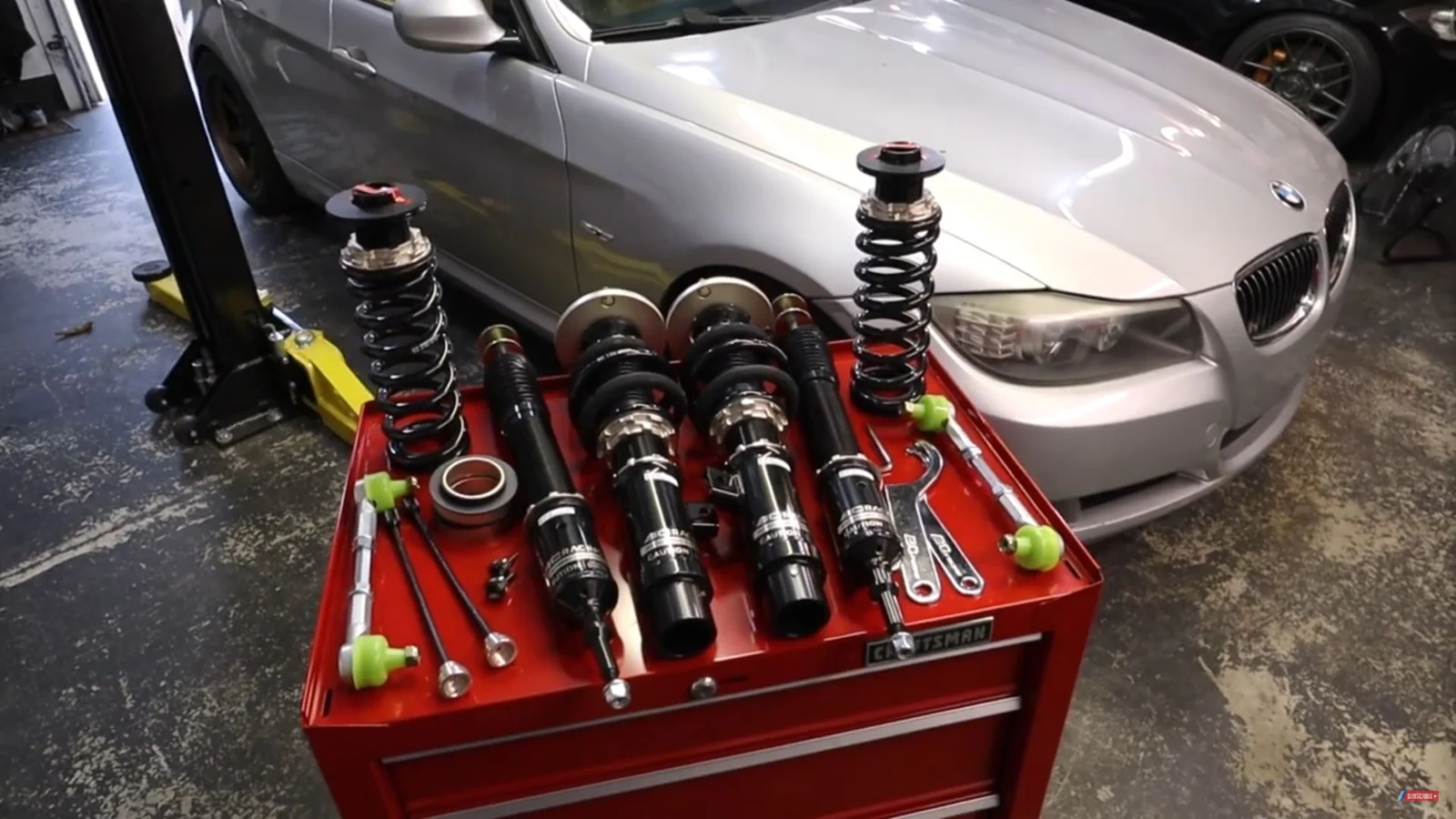
Check whether the kit includes front and rear dampers, springs, spring seats, adjustment hardware, dust boots, and mounting adapters. Some kits reuse factory upper mounts or require separate camber plates. Others may require specific rear shock mounts or reinforcement hardware.
Do not compare prices until you know what is included. A cheaper kit that requires separate mounts, camber plates, or electronic-damper solutions may cost more after the missing parts are added.
Important
Never disable or bypass an electronic suspension system without understanding the vehicle’s warning systems and the kit maker’s instructions. A warning light solution is not a substitute for compatible suspension hardware or safe damping control.
Step 3 Inspect the car before requesting installation
Look for worn control-arm bushings, cracked mounts, leaking shocks, damaged wheel bearings, bent wheels, rusted fasteners, and uneven tire wear. You do not need to diagnose every part yourself, but photographs and a basic inspection can reveal why a shop may recommend additional work.
Coilovers do not repair worn suspension joints. Installing them over damaged control arms or deteriorated mounts can produce noise, poor alignment, unpredictable handling, or premature wear. Ask the shop whether its estimate includes a pre-installation inspection and whether inspection time is billed separately.
A useful quote distinguishes known repairs from possible repairs. “Replace damaged hardware if necessary” is reasonable; an open-ended list of unspecified parts makes the final cost difficult to control.
Step 4 Get an itemized labor estimate
Ask for separate prices for removing the original suspension, assembling the coilovers, installing them, setting an initial ride height, and performing the alignment. Front strut work often requires spring-compressor procedures if original components are being disassembled, while some coilover kits arrive preassembled.
Labor varies with access, rust, the suspension design, and the shop’s familiarity with BMWs. A car from a rust-prone region may need extra time for seized bolts or damaged fasteners. An all-wheel-drive model may also have different clearance and removal requirements than a rear-wheel-drive version.
The estimate should state whether replacement nuts, bolts, one-time-use fasteners, upper mounts, or rear shock mounts are included. It should also identify whether the shop will call you before exceeding the quoted amount.
Step 5 Add the alignment and setup costs
Budget for a professional four-wheel alignment after the coilovers are installed. Changing ride height changes suspension geometry, and even a careful installation can leave toe, camber, or steering-wheel centering outside the desired range.
Ask whether the alignment includes a printout showing before-and-after readings. For a street car, the shop should set alignment values appropriate for the tires and intended use, not simply make every number look identical. Some BMWs have limited factory adjustment in certain corners; the shop should explain what can and cannot be corrected with standard hardware.
Corner balancing is a separate service. It uses scales to distribute the vehicle’s weight more evenly across the four wheels, usually after the ride height and spring settings are established. It can be valuable for a competition car, but it is not automatically necessary for a normal commuter.
Step 6 Ask about the final ride-height and damping setup
Clarify how the shop will set the initial height. The goal is not always the lowest possible stance. Adequate suspension travel, tire clearance, ground clearance, and correct driveline angles are more important than making the wheel arch as close to the tire as possible.
If the kit has adjustable damping, ask whether the shop will use the manufacturer’s baseline setting. Record the setting so you can return to it if later adjustments make the car uncomfortable or unstable. Make sure adjustment knobs remain accessible and are not blocked by trim or other components.
Success means the car sits evenly enough for its intended use, the tires clear the body and suspension through normal movement, and the suspension still has usable travel. A dramatic drop with constant bottoming, rubbing, or harsh impacts is not a successful setup.
Step 7 Approve the work only after reviewing the complete quote
Combine the kit price, shipping or taxes, labor, replacement parts, alignment, and any optional setup services. Keep an allowance for problems discovered after disassembly, but require the shop to contact you before adding nonessential work.
When comparing quotes, compare the scope rather than only the total. One shop may include a printout alignment and new hardware while another lists only basic installation. A low number is not useful if it excludes the service needed to make the car safe and properly aligned.
At this point, you should be able to answer four questions: which kit is being installed, what labor is included, what happens if worn parts are found, and how the finished car will be aligned and checked. A useful way to approach how much to install coilovers bmw is to check your progress after each stage.
Step 8 Inspect and test the completed installation
Before driving away, look at each corner of the car. Confirm that the springs are seated, lock collars are tight, adjustment hardware is installed, brake lines and ABS wires are secured, and no tire is touching a spring, perch, liner, or body panel.
Ask for the alignment results and any notes about parts that were replaced. The steering wheel should be close to centered, and the car should not lean noticeably unless the manufacturer’s design or fuel load explains a small difference.
Begin with a slow drive on a quiet road. Listen for clunks, scraping, repeated knocking, or spring movement. Test braking and gentle lane changes before driving at highway speed.
If the car pulls strongly, the steering wheel is badly off-center, a tire rubs, or a suspension noise appears, stop and return to the installer.
What determines the total coilover installation price?
The largest variables are the coilover kit itself, the BMW’s chassis, the condition of the original suspension, and the services included by the shop. The answer to how much to install coilovers bmw owners need should therefore be treated as a range built from line items, not a universal flat fee.
Coilover kit quality and included parts
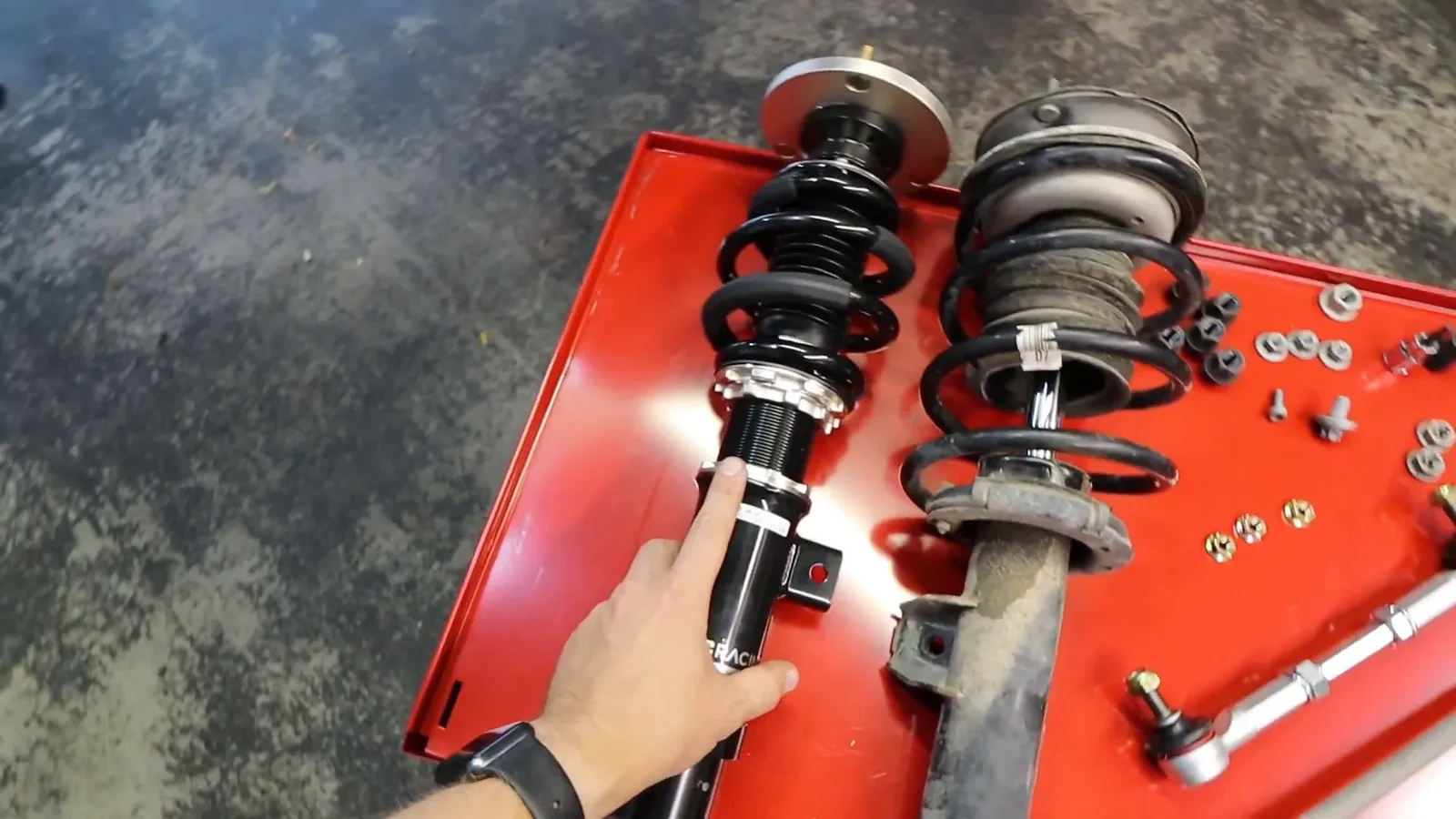
Entry-level kits may cost less but can have fewer adjustment features or less corrosion protection. Higher-end kits may include adjustable damping, better seals, rebuildable dampers, stronger mounts, or more detailed spring-rate options. These features matter only when they suit the car’s use and the owner is prepared to set them correctly.
Check whether the price includes camber plates. These replace or supplement the factory upper mounts and can provide additional alignment adjustment, but they may add noise or require more maintenance on a street car. Do not add them solely because they sound performance-oriented.
Labor complexity and vehicle condition
Suspension labor is affected by seized bolts, broken wiring clips, corroded spring perches, and previous modifications. A car that has already had suspension work may come apart easily, while an older car with rust or neglected hardware may require extra time and replacement parts.
BMW-specific experience is useful because the technician must understand the correct assembly order, torque procedures, ride-height sensors, and alignment limitations for the chassis. The shop should use the manufacturer’s instructions and appropriate torque specifications rather than relying on appearance alone.
Alignment, corner balancing, and related services
A basic post-installation alignment is usually a sensible part of the project. Corner balancing is more specialized, and replacement mounts, adjustable control arms, or subframe work may be needed when the desired ride height exceeds the adjustment range of the factory suspension.
Be cautious with quotes that bundle every performance service together. A street BMW may benefit from a careful installation and alignment without needing racing alignment targets, extreme camber, or a full corner-balance session.
| Category | What it covers |
|---|---|
| Parts | Coilover kit, mounts, hardware, adapters, and any required electronic-damper solution |
| Installation | Removal, assembly, fitting, initial height adjustment, and torque checks |
| Finishing services | Four-wheel alignment, optional corner balancing, and follow-up adjustments |
How to verify fitment and finished suspension behavior
Fitment verification is more than confirming that the bolt pattern matches. The complete suspension must work with the BMW’s brakes, wheels, tires, sensors, mounts, and intended ride height. A professional installation should leave visible evidence that these relationships were checked.
Review the fitment details before installation
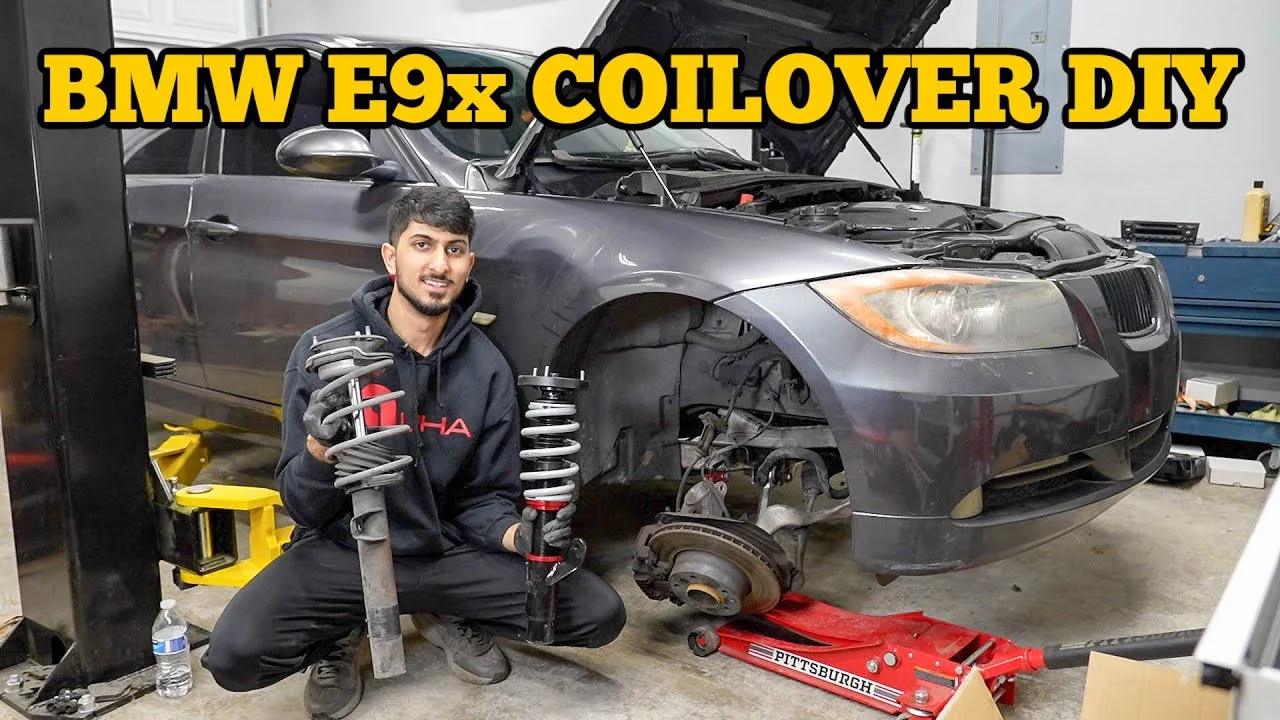
Compare the manufacturer’s application notes with your vehicle identification information. Look for exclusions involving xDrive, convertible bodies, touring or wagon models, adaptive dampers, larger factory brakes, and different axle loads.
Confirm the permitted wheel and tire sizes and the minimum ride height, if specified. Ask whether wheel spacers are required or merely suggested. A spacer should never be used to solve unknown interference without checking hub engagement, fastener length, and fender clearance.
Check for clearance after the car is lowered
With the vehicle on the ground, inspect the inner tire sidewall, spring perch, damper body, sway-bar links, brake hose, and wheel-well liner. Clearance must remain adequate while steering left and right and while the suspension moves through its normal range.
Freshly installed parts can settle slightly, and tire rubbing may appear only over a bump or during a full-lock turn. Recheck after the first short drive and again after the initial fastener-retorque or inspection interval specified by the kit maker.
Use handling and alignment symptoms as evidence
Uneven tire wear, wandering, a crooked steering wheel, repeated impact noises, and a car that pulls under braking all deserve attention. These symptoms can indicate alignment problems, loose hardware, worn components, or an incorrect setup rather than a need for a stiffer damper setting.
Check your result
A finished installation should have no rubbing or clunking, a stable steering wheel, secure wiring and brake lines, even tire clearance, and an alignment report that the shop can explain.
Common problems that increase the final bill
Unexpected charges are most manageable when you know which problems are legitimate and which should be explained before approval. Ask for photographs or a clear description when a shop recommends additional work discovered during disassembly.
Worn mounts and bushings
Upper mounts, rear shock mounts, control-arm bushings, and sway-bar links may be worn before the coilover project begins. Replacing them can be sensible while access is easy, but the shop should identify the failed part and explain whether it affects safety, alignment, noise, or long-term durability.
Electronic suspension warnings
Some BMWs monitor factory dampers or ride-height components. A compatible coilover installation may require an approved cancellation method, retained sensors, or coding according to the manufacturer’s instructions. A warning light should be diagnosed rather than ignored.
Rubbing, harshness, or bottoming
Rubbing can come from excessive lowering, incorrect wheel offset, tire size, alignment, or insufficient clearance. Harshness and bottoming may indicate too little suspension travel, an unsuitable spring rate, incorrect preload, or damping that is set too aggressively.
Raising the car slightly is often more effective than adding random spacers or cutting trim. If the cause is unclear, stop driving hard and have the installer inspect the spring seating, ride height, and clearance under load.
Alignment outside the desired range
Lowering can increase negative camber or change toe. Mild changes may be normal, but excessive toe can quickly damage tires and make the car unstable. Adjustable control arms or camber plates may be appropriate, but only after the shop confirms that ordinary factory adjustments cannot achieve a safe alignment.
Beginner FAQs about BMW coilover installation
These answers cover the questions that most often affect a first installation and its final price.
Can I install BMW coilovers at home?
It is possible for an experienced home mechanic with proper lifting equipment, spring-handling knowledge, torque tools, and the correct instructions. A beginner should not improvise with unsafe jack support or a poor-quality spring compressor. The job also still needs a professional alignment afterward.
Does the coilover price include installation?
Usually not. Online listings commonly show the parts price only. Ask the seller or shop whether mounts, adapters, shipping, taxes, labor, alignment, and electronic-suspension accessories are included.
Do coilovers require an alignment?
Yes, an alignment is strongly recommended after changing ride height or replacing suspension components. Even if the steering wheel feels straight, toe or camber may have changed enough to affect tire wear and handling.
Is corner balancing necessary for a daily-driven BMW?
Not usually. A quality installation, sensible ride height, and professional alignment are normally the priorities for a street car. Corner balancing becomes more relevant when the car is used for competition or has major weight and suspension changes.
How low should I set the car?
Set it high enough to preserve suspension travel, tire clearance, ground clearance, and acceptable alignment. The lowest possible setting can make the car slower, less comfortable, and less reliable if it causes rubbing or bottoming.
Make the estimate complete before scheduling the work
To determine how much to install coilovers bmw owners should expect, price the entire job: a compatible coilover kit, required mounts and hardware, installation labor, a four-wheel alignment, and any clearly identified repairs. Compare itemized quotes rather than isolated labor numbers, and make sure optional corner balancing or aggressive alignment settings are not presented as mandatory.
After installation, verify the hardware, wiring, tire clearance, ride height, steering behavior, and alignment report before using the car normally. If you hear clunks, experience rubbing or pulling, or cannot confirm fitment, stop and have a qualified BMW suspension shop inspect it. A properly installed setup is measured by safe, predictable behavior—not simply by how low the car sits.


