Yes, coilovers can lower your car. Most lowering coilover kits let you adjust the distance between the body and the road, but the final height depends on the kit, its settings, and your vehicle.
Across the United States, drivers use coilovers to change the stance, handling, and ride height of cars, trucks, and sport vehicles. Some want less space between the tires and fenders. Others want better control on a road course or a setup that suits their daily drive.
Coilovers combine a spring and a shock absorber into one suspension unit. Many kits also let you adjust ride height. However, not every coilover is designed to lower every car, and some kits are made to raise vehicles for off-road use.
Before you buy a kit, check its fit for your exact make, model, and year. You should also consider tire clearance, ground clearance, ride comfort, and the work needed to set up the suspension. A lower car can look good, but the right setup must still work safely on real roads.
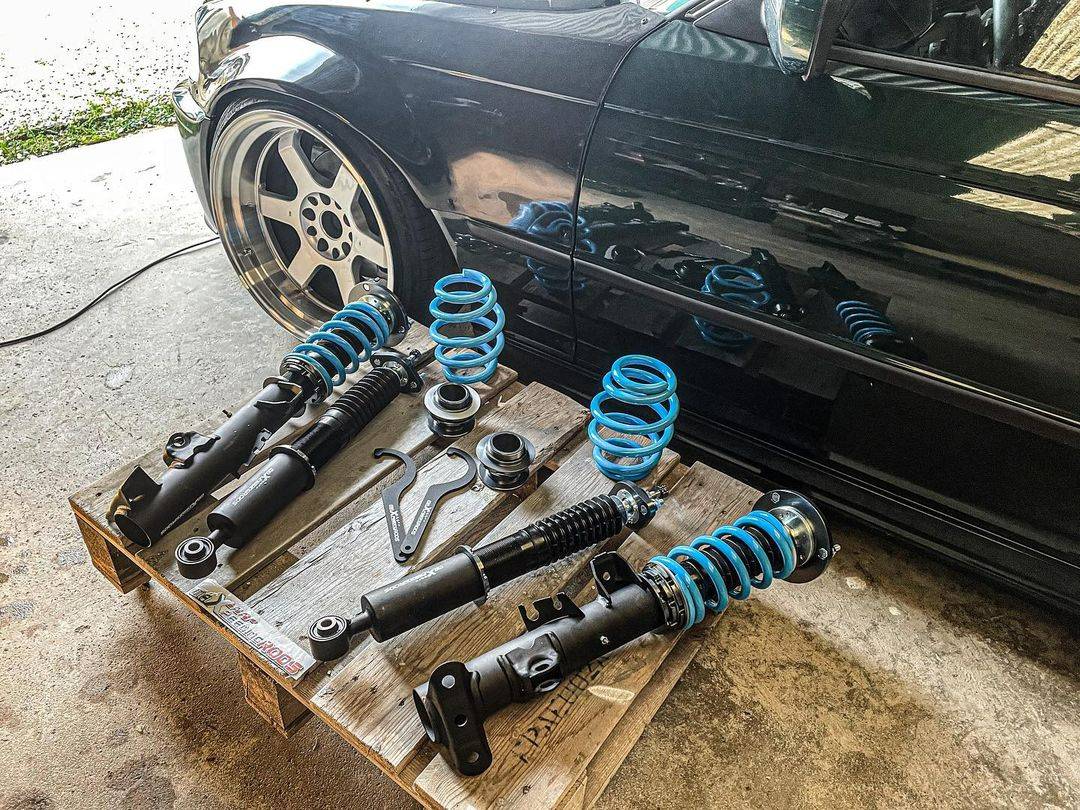
Coilovers lower a car by changing the working position of its suspension. On many street coilovers, an adjustable threaded body or lower mount lets you change how the suspension unit sits in relation to the vehicle. This can reduce the distance between the car’s body and the road.
A coilover has two main parts: a coil spring and a damper. The spring supports the vehicle’s weight and compresses when the wheels move. The damper controls that movement so the car does not keep bouncing after a bump.
The way a coilover changes ride height depends on its design. Some kits use a separate height-adjustment collar and lower mount. Others use a different spring seat arrangement. You must follow the instructions for the exact kit because adjustment methods are not the same across all brands.
Source: assets.progressiveparts.com
Coil spring
Supports the vehicle and affects how much the suspension compresses under load.
Damper
Controls spring movement and helps keep the tires in contact with the road.
Height adjustment
Changes the installed position of the suspension unit on kits designed for adjustable ride height.
Spring preload
Sets how much the spring is compressed when the suspension is extended. It is not the same as ride-height adjustment on many coilover designs.
Do All Coilovers Lower a Car?
No. Many performance coilovers lower a vehicle, but coilovers are not all built for the same purpose. Some provide a lowered street setup, while others are designed to maintain factory height or increase ride height for off-road use.
A kit may also have a limited adjustment range. If its minimum permitted height is close to the factory height, it may not give you the stance you want. Check the manufacturer’s listed range before buying.
Street coilovers
Often offer a lower ride height and settings intended for road use.
Track coilovers
May offer extensive setup options, but their spring rates and damping may suit track use better than everyday roads.
Off-road coilovers
May be designed to increase clearance or support greater suspension travel rather than lower the vehicle.
How Much Can Coilovers Lower Your Car?
The amount of lowering depends on the coilover kit and the vehicle. Some kits provide a modest drop, while others allow a more noticeable change. There is no single lowering amount that applies to every car.
The manufacturer’s stated adjustment range is the best starting point. Check whether the figure describes the suspension’s adjustment range, the expected change from factory ride height, or a recommended setting. These measurements are not always interchangeable.
For example, a hypothetical kit may allow a vehicle to sit 1 to 3 inches lower than its original ride height. That does not mean every car using that kit can safely reach both ends of the range. Tire size, suspension geometry, and the manufacturer’s limits still matter.
Source: i.ytimg.com
Vehicle design
The original suspension layout and available mounting space affect the range of possible adjustments.
Coilover design
Threaded mounts, spring seats, and the kit’s approved adjustment limits determine how height can change.
Vehicle load
Passengers, cargo, and added equipment can change the measured ride height.
Spring and tire setup
Spring characteristics and tire dimensions affect suspension behavior and available clearance.
How to Estimate the Change in Ride Height
Measure the vehicle on level ground before installation. Use a repeatable reference point, such as the distance from the center of each wheel hub to the fender edge. Record the front and rear measurements separately.
After installation, place the vehicle on level ground and measure from the same points. Keep the tire pressures, load, and measuring method consistent. This gives you a useful comparison without confusing changes in tire size with changes in suspension height.
If the car has just been lowered, its suspension may need time to settle through normal movement. Follow the kit maker’s procedure before making a final adjustment. Do not drive a vehicle that has unsafe tire clearance or suspension parts that are not properly secured.
Before installation
Record all four corner measurements and note the tire size and vehicle load.
After installation
Repeat the measurements using the same reference points and conditions.
Final check
Confirm that the measured height is within the kit’s approved range and that the suspension operates freely.
Do Coilovers Lower Your Car More Than Lowering Springs?
Coilovers often provide more ride-height control than lowering springs, but they do not always lower a car more. The result depends on the specific products being compared and the limits of the vehicle’s suspension.
Lowering springs replace the original springs with shorter or differently rated springs that reduce ride height. They usually retain the factory dampers, unless the installation includes replacement dampers. Coilover kits replace the spring and damper assembly with a matched or adjustable unit.
If you want a fixed drop for regular street driving, lowering springs may meet your needs. If you want to fine-tune ride height or adjust damping on a kit that supports it, coilovers may offer more control. The best choice depends on your goals, budget, and road conditions.
Source: low-offset.com
Lowering springs
Usually offer a set drop and can be a simpler option when compatible factory dampers remain suitable.
Coilovers
Often allow ride-height changes and may offer damping adjustment, depending on the kit.
Matched suspension kits
Can provide springs and dampers designed to work together, even when ride height is not adjustable.
Which Option Is Better for a Daily Driver?
For a daily driver, choose the suspension that gives you the needed height, predictable handling, and reasonable comfort. A well-matched spring and damper setup may be more useful than a coilover kit adjusted to its lowest possible position.
If your routes include potholes, steep driveways, parking ramps, and speed bumps, keeping enough ground clearance may matter more than achieving an extreme drop. Check the manufacturer’s guidance for street use before choosing a setup.
Choose lowering springs when
You want a set ride-height change and do not need frequent adjustment.
Choose adjustable coilovers when
You need a supported height range or damping adjustments that suit your driving needs.
Keep the factory setup when
Comfort, ground clearance, and low maintenance matter more than changing the vehicle’s stance.
Can Coilovers Improve Handling?
Coilovers can improve handling when their spring rates, damping, ride height, alignment, and tire setup suit the vehicle and its use. However, lowering the car alone does not guarantee better grip or safer handling.
A lower center of gravity can reduce body roll in some conditions. Yet a very low setup can reduce suspension travel, change wheel alignment, and make it harder for the tires to follow uneven pavement. These effects can offset the benefit of a lower body.
The damper settings also matter. If the damping is too firm for the spring and road surface, the tires may lose contact with rough pavement more easily. If damping is too soft for the setup, the vehicle may feel unsettled during turns or quick changes in direction.
Source: d1hv7ee95zft1i.cloudfront.net
Potential benefit
A suitable setup can improve body control and let the driver tune the suspension for a specific purpose.
Possible drawback
Poor settings or reduced suspension travel can hurt ride quality and control on rough roads.
Alignment matters
Changing ride height can alter wheel angles, so alignment should be checked after installation and final height adjustment.
Do Stiffer Coilovers Always Handle Better?
No. A stiff setup can reduce body movement, but stiffness alone does not determine grip. Spring rates, damping, tire properties, road surface, and suspension geometry all affect how the vehicle responds.
On a smooth track, a carefully tuned setup may provide useful control. On uneven public roads, a setup that is too stiff may make the tires less able to follow bumps. For a street car, balanced control is generally more useful than choosing the firmest available setting.
Start with the maker’s baseline
Use the recommended settings for your vehicle and intended driving conditions.
Change one setting at a time
This makes it easier to identify the effect of each permitted adjustment.
Do not use public roads as a test track
Evaluate ride and steering behavior during normal, legal driving and seek professional setup help when needed.
What Are the Downsides of Lowering Your Car With Coilovers?
Lowering a car can create clearance, comfort, maintenance, and handling trade-offs. These risks depend on how far the vehicle is lowered, the quality and fit of the kit, and how well the suspension is installed and maintained.
A car that sits too low may scrape its front bumper, exhaust, underbody panels, or other low parts. It may also have less suspension travel before the bump stops engage, which can make the ride harsh and increase stress on some components.
A low setup can also cause tire rubbing against the fender or inner wheel housing. The problem may appear during a turn, over a bump, or when the car carries passengers. The wheels must have enough clearance through the full range of normal suspension movement and steering.
Source: accutuneoffroad.com
Reduced ground clearance
Steep driveways, road humps, ramps, and potholes can become harder to manage.
Changed ride quality
A short spring travel range or poorly matched damping can create a rough ride.
Tire and wheel interference
Incorrect wheel fitment or insufficient clearance can damage tires and nearby parts.
More setup work
Installation, alignment, height checks, and periodic inspections may add to the total cost.
Possible legal or inspection issues
State and local requirements differ, so check the rules that apply where the vehicle is registered and driven.
Can Lowering Coilovers Damage Your Car?
Coilovers do not automatically damage a car. Problems are more likely when the kit is unsuitable, the ride height is outside its approved range, the suspension is installed incorrectly, or the vehicle is driven with rubbing or inadequate travel.
Repeated underbody impacts can damage low-mounted components. Tire contact with the body can harm the tire or wheel housing. Incorrect alignment can also cause uneven tire wear and affect how the car steers.
If you hear repeated clunks, feel sudden changes in steering, notice tire rubbing, or find that the car bottoms out during ordinary driving, have the suspension inspected. Do not keep driving if a tire is damaged or a suspension part appears loose or broken.
Inspect for rubbing
Check tire and wheel clearance at the front and rear, including during steering and suspension movement.
Check for impacts
Look for signs of scraping or damage on low-mounted components.
Get a professional inspection
Have unusual noises, handling changes, or repeated bottoming out checked before further use.
How to Choose the Right Coilover Ride Height
The right ride height is the lowest setting that still meets your vehicle’s clearance, suspension travel, tire fitment, and driving needs, provided it remains within the manufacturer’s approved limits. You do not need to use the lowest setting just because the kit allows it.
Start by deciding how you use the car. A vehicle that travels to work every day faces different road conditions from one used mainly for track events. The best setup should account for real roads, passenger loads, driveway angles, and the tires and wheels fitted to the car.
Before buying, check the exact vehicle application and the kit’s adjustment range. Also review whether the kit includes new top mounts, adjustment tools, or any parts required for your specific suspension design. Do not assume that every item needed for installation is included.
Source: shunauto.com
For daily driving
Keep enough clearance for speed bumps, uneven roads, steep entrances, and normal passenger loads.
For a show car
Plan for the limits of tire clearance, suspension travel, and safe access to ramps and transport equipment.
For track use
Choose a setup designed for the car and track conditions, and have alignment and suspension settings checked by a qualified specialist.
Questions to Ask Before Buying
A coilover kit should match the vehicle and its intended use. Product photos alone do not prove fitment or show how a particular car will sit after installation.
Ask the seller or manufacturer about approved ride-height limits, spring rates, damping adjustment, service requirements, and compatibility with any factory electronic suspension features. Confirm the details for the exact kit version.
Is it made for my exact vehicle?
Confirm make, model, year, trim, and any relevant drivetrain or suspension differences.
What is the approved height range?
Find out how the manufacturer defines the range and whether it is measured against factory height.
Can I adjust the damping?
Check whether the kit offers damping adjustment and how the maker recommends setting it.
What maintenance is required?
Review inspection, cleaning, corrosion care, and damper service guidance for your climate and use.
How to Install and Adjust Coilovers Safely
Coilover installation requires correct tools, secure vehicle support, and knowledge of the vehicle’s suspension. If you lack experience with suspension work, use a qualified automotive technician. A mistake involving a loaded spring, an unsecured vehicle, or a loose suspension fastener can cause serious injury or loss of control.
The exact process varies by vehicle and coilover design. Follow the vehicle service manual and the kit maker’s instructions for removal, installation, adjustment, and tightening. Do not rely on a generic torque value or adjustment procedure for every car.
Source: bikeprotector.co.uk
Prepare the vehicle
Confirm fitment, read the instructions, use the required safety equipment, and support the vehicle with equipment rated for the job.
Install the correct parts
Follow the specified procedure for mounting points, fasteners, spring seats, and any supplied hardware.
Set the initial height
Use the approved adjustment method and keep the suspension within the stated limits.
Check all clearances
Verify tire, wheel, brake hose, wiring, and suspension clearance through the required range of movement.
Align the wheels
Arrange a suitable wheel alignment after the final ride height is set.
Why Spring Preload Is Not the Same as Ride Height
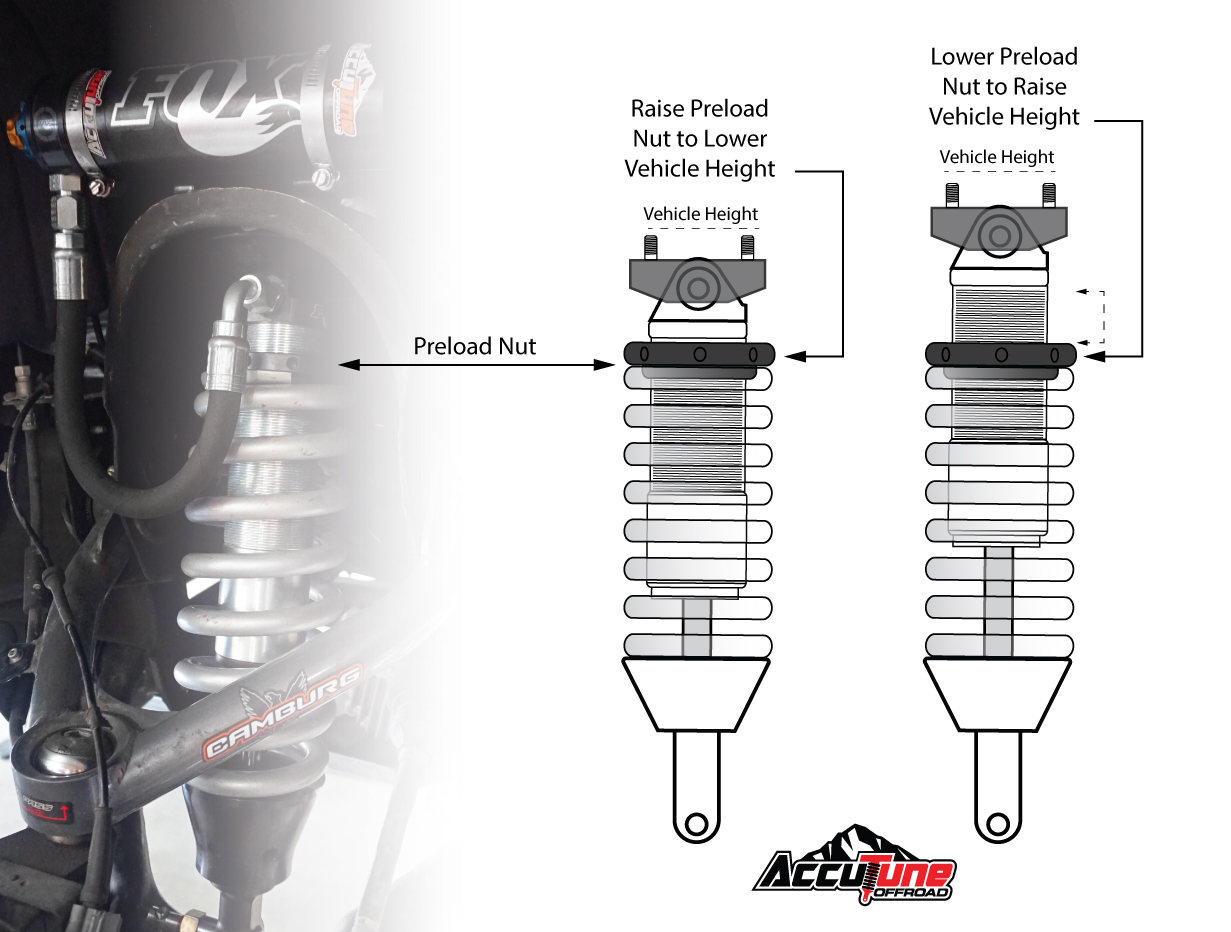
Spring preload is the amount of compression applied to a spring when the suspension is extended. Ride-height adjustment changes the position of the suspension assembly relative to the chassis on designs that support that method.
On many independent-height coilovers, changing preload is not the correct way to set ride height. Excessive or incorrect preload changes can affect suspension behavior and may cause the spring to become loose at full extension or leave too little usable travel.
Some coilover designs use spring-seat changes as part of their height adjustment, so the correct method depends on the product. Follow the manufacturer’s specific instructions rather than assuming that turning any collar will lower the car safely.
Use the correct adjustment point
Identify which collar or mount controls ride height on your exact coilover design.
Keep the spring secure
Maintain the specified spring seating and preload settings throughout the approved suspension range.
Avoid extreme settings
Do not exceed the maker’s minimum or maximum adjustment limits to achieve a lower stance.
What to Check After Installation
Once the installation is complete, confirm that all specified fasteners are tightened to the correct values. Check that hoses, wiring, and nearby parts are routed correctly and do not bind or rub during steering or suspension movement.
Follow the maker’s procedure for settling the suspension and rechecking ride height. Get a wheel alignment and have the final setup inspected before returning to normal use. Any required post-installation checks should follow the vehicle service information.
If the car pulls to one side, makes new suspension noises, rubs a tire, or feels unstable, stop and investigate the cause. Do not try to solve every problem by lowering or raising the car again without identifying the fault.
Ride height
Measure all four corners on level ground using consistent reference points.
Alignment
Confirm that wheel angles meet suitable specifications for the vehicle and intended use.
Clearance
Check for contact with tires, bodywork, brake lines, and other components.
Road behavior
Watch for unusual noises, steering changes, harsh impacts, or signs of instability.
Common Coilover Problems and What They Mean
A car that sits too low, rides harshly, or makes new noises after a coilover installation needs a careful inspection. The symptom alone does not identify the cause, so check fitment, installation, clearances, and adjustment settings before changing parts.
Do not assume that every problem means the coilovers are defective. Incorrect height settings, worn mounting parts, loose fasteners, unsuitable wheel fitment, and alignment changes can all affect how the vehicle behaves.
Source: autoimage.capitalone.com
The car sits lower than expected
Check the specified adjustment range, spring seating, installed parts, and the method used to measure ride height.
The car scrapes on ordinary roads
Check ground clearance, suspension travel, tire fitment, and whether the selected height is suitable for the route.
The suspension feels very harsh
Check damping settings, spring rates, available travel, bump-stop setup, and tire pressures.
There is a clunking noise
Have mounting points, fasteners, top mounts, and nearby components inspected for movement or contact.
The tires wear unevenly
Check wheel alignment, tire pressure, and suspension condition rather than assuming ride height is the only cause.
When Should You Stop Driving?
Stop driving and arrange a safe inspection if a tire contacts the body, a tire is damaged, a suspension mount is loose, or steering behavior changes sharply. A broken or improperly secured suspension component can affect vehicle control.
Minor concerns should also be checked promptly. Repeated scraping, bottoming out, or new noises can signal that the setup needs correction before further wear or damage occurs.
Do not continue with tire damage
A damaged tire can fail and should be assessed before the vehicle is driven again.
Do not ignore loose parts
Have suspect fasteners and suspension mounts checked using the vehicle’s service specifications.
Use a qualified technician
Seek professional help if the cause is unclear or the vehicle no longer steers and rides normally.
Are Lowered Coilovers Legal in the United States?
Coilover legality depends on the state and the vehicle’s final setup. The United States does not have one simple ride-height rule that covers every passenger vehicle and every modification. State and local laws, inspection rules, and other vehicle equipment requirements may apply.
Before modifying your car, check the rules for its registration location. Depending on the jurisdiction, relevant requirements may cover minimum ride height, bumper height, lighting, tire coverage, or safe vehicle operation. A setup that is acceptable in one place may not meet the rules in another.
Also consider insurance and warranty terms. A suspension modification may affect coverage or warranty claims under the terms that apply to your vehicle. Ask the insurer or manufacturer about the specific change rather than assuming every modification automatically cancels all coverage.
Source: i.ytimg.com
Check state requirements
Use current official state vehicle, inspection, and equipment guidance for the location where the car is registered.
Keep required equipment functional
Confirm that lighting, tires, brakes, and other required systems continue to meet applicable rules.
Review insurance terms
Ask whether the planned modification must be disclosed and how it may affect your policy.
Frequently Asked Questions
Q
Do coilovers automatically lower your car?
No. Many performance coilovers allow a lower ride height, but the result depends on the kit and its adjustment settings. Some coilovers maintain factory height or raise the vehicle. Check the approved range for your exact car and kit.
Q
How low should I set my coilovers?
Choose a height within the manufacturer’s approved range that leaves enough ground clearance, tire clearance, and suspension travel for your driving conditions. The lowest available setting is not always the best choice for a daily driver.
Q
Do coilovers make a car ride rough?
They can, but not every coilover setup rides harshly. Spring rates, damper settings, suspension travel, tire pressures, and road conditions all affect comfort. A well-matched street setup can offer a useful balance of control and comfort.
Q
Do I need an alignment after installing coilovers?
Yes, a wheel alignment should be checked after installation and final ride-height adjustment. Changing ride height can alter wheel angles, which may affect steering and tire wear. Follow the vehicle and suspension maker’s alignment guidance.
Q
Can I lower my car with coilovers without changing the wheels?
Often, yes. Coilovers do not always require new wheels. However, the existing wheel width, offset, tire size, and suspension design must provide enough clearance at the new height. Check for rubbing during steering and suspension movement before driving normally.
Q
Do coilovers last longer than factory suspension?
There is no universal answer. Service life depends on product quality, design, road conditions, corrosion, driving style, and maintenance. Some coilovers can be serviced or rebuilt, while others may require replacement when worn. Follow the maker’s maintenance guidance.
Q
Can I install coilovers myself?
A skilled home mechanic with the right tools, service information, and safe vehicle support may be able to install a suitable kit. Suspension work can be hazardous, especially when handling loaded springs or working beneath a raised car. If you lack the required experience or equipment, use a qualified technician.
✦ Wrapping Up
Conclusion
Yes, coilovers can lower your car, and many performance kits let you adjust ride height to suit your needs. The amount of lowering depends on the kit, vehicle design, and approved settings. A lower stance may change the car’s appearance and handling, but it also reduces ground clearance and can affect ride comfort.
The best setup is not always the lowest one. Choose coilovers made for your exact vehicle, follow the manufacturer’s adjustment limits, check tire and suspension clearance, and get a wheel alignment after setting the final height. These steps help you avoid common problems and keep the vehicle suitable for its intended use.
💡 Key Takeaway
Before buying coilovers, confirm your vehicle’s fitment, the kit’s approved ride-height range, its street-use suitability, and its maintenance needs. Set a practical height, verify all clearances, and arrange a professional alignment and safety check after installation.
Eric
Hi, I’m Eric Bennett, the person behind OffRoadTruckAccessories.com.
I created this blog to share my interest in trucks, off-road driving, automotive accessories, and DIY modifications. I enjoy learning how different truck accessories work, testing their usefulness, and understanding whether they are truly worth buying.
Will G37 coilovers fit G35? Learn which model years may share fitment, what changes with coupe, sedan, and AWD setups, and how to verify compatibility.