
How Much Does It Cost to Install Coilovers? A Realistic Guide
Coilovers can transform the way a car feels, but the price on the product page is only part of the project. Installation may involve several hours of suspension work, a professional wheel alignment, ride-height adjustment, and replacement hardware that was not included in the kit. A low advertised price can therefore become a very different final bill.
For most street cars, a reasonable installed budget is often around $1,500 to $4,000, including a midrange coilover kit, labor, and alignment. That is a broad planning range rather than a universal quote: a basic kit on an easy-to-service car may cost less, while a premium kit, rusted fasteners, seized suspension parts, or corner balancing can push the total higher.
This guide shows you how to build a realistic estimate before scheduling the work and how to check the finished installation. You will separate parts from labor, confirm that the coilovers fit your exact vehicle, identify charges that are commonly omitted, and verify ride height, alignment, clearance, and fastener safety afterward. You will also see when a professional suspension shop is the sensible stopping point.
This guide explains how much does it cost to install coilovers, what to check first, and how to assess the result.
At a glance
- Price the coilover kit, installation labor, alignment, and possible replacement hardware separately.
- Confirm vehicle-specific fitment and whether the quote includes ride-height adjustment or corner balancing.
- Do not treat the job as finished until the car is aligned, clear of interference, and free of suspension noises.
How to estimate how much does it cost to install coilovers
The safest way to answer the cost question is to build the estimate in the same order the work occurs. First identify a compatible kit, then price the physical installation, then add alignment and any setup work. Finally, leave room for age-related parts that may not survive disassembly.
Tools you will need
- Vehicle identification information, including year, make, model, trim, drivetrain, and suspension options, to confirm fitment.
- The coilover manufacturer’s installation and adjustment instructions, which identify included hardware and required settings.
- A written shop estimate that separates parts, labor, alignment, taxes, and possible additional work.
- Optional: a tape measure or ride-height gauge for recording the before-and-after fender height.
Step 1 Record the car’s exact configuration
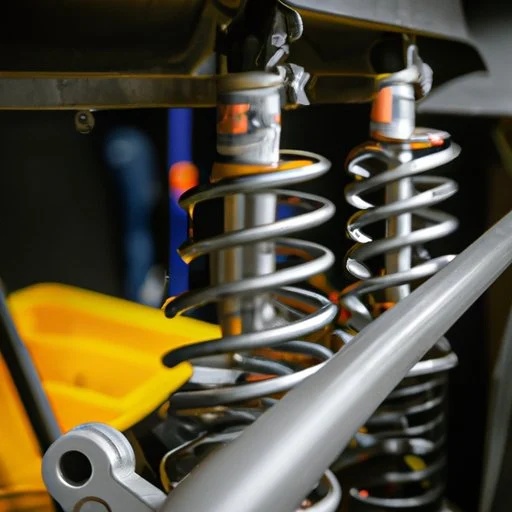
Write down the model year, body style, engine, drivetrain, trim level, and any factory performance or adaptive-suspension package. A coilover listed for a similar-looking vehicle may still use different mounting points, spring rates, electronic controls, or brake-line brackets.
Also note the current wheel and tire size, whether the car has aftermarket control arms or sway bars, and whether it is lowered already. These details affect clearance and suspension geometry. Success at this stage means you can give a shop a complete vehicle description instead of asking for a generic “coilover install.”
Check the manufacturer’s fitment notes before requesting prices. Look for restrictions such as separate front and rear kits, required upper mounts, compatibility with electronic dampers, or a minimum wheel diameter. If the kit requires canceler modules or warning-light solutions for factory electronic shocks, include those items in the parts estimate.
Step 2 Choose the intended use and coilover package
Decide whether the car is primarily a daily driver, a track vehicle, or a dual-purpose car. That choice affects the coilover’s spring rate, damper adjustment, ride height range, corrosion resistance, and expected maintenance. A stiff competition-oriented kit is not automatically a better choice for commuting.
Separate the advertised kit price from accessories. Some kits include camber plates, while others reuse the factory upper mounts. Some include spanner wrenches and replacement hardware; others require separate top hats, bearings, dust boots, helper springs, or electronic-damper modules.
When comparing products, confirm that the kit is intended for your exact chassis rather than relying on a retailer’s abbreviated title. A very cheap kit can produce an incomplete estimate if it omits necessary mounts or if the included spring and damper settings are unsuitable for the car’s weight.
Helpful tip
Ask the seller or installer whether the listed price is for a complete vehicle set. “Front coilovers” and “rear coilovers” may be priced separately, and some rear designs use a separate spring and shock rather than a threaded shock body.
Step 3 Get a labor estimate from a suspension-capable shop
Ask at least one reputable shop for a written labor estimate based on the exact kit and vehicle. A straightforward installation commonly takes several labor hours, but the actual time varies with suspension design, rust, access, seized fasteners, and whether the shop must transfer or modify mounts.
Request answers to these specific questions: Is installation priced by a flat rate or hourly labor? Does the price include removal of the original struts and springs? Does it include transferring brake-line brackets or ABS-wire mounts?
Will the shop set the ride height, and if so, to what measurement? Is a post-installation alignment included or billed separately?
A shop that regularly works on suspension modifications should be able to describe the process without promising that every car takes the same amount of time. An estimate that says only “coilover install: $___” is difficult to compare because it may exclude alignment, setup, or rust-related labor.
For planning purposes, installation labor may range from several hundred dollars to well over $1,000 depending on the vehicle and shop. Performance shops in high-cost areas generally charge more than general repair shops, and specialty setup work costs more than simply bolting in the assemblies.
Step 4 Add alignment and setup charges
Budget for a four-wheel alignment after the coilovers are installed. Changing ride height changes suspension geometry, and the alignment may affect tire wear, steering behavior, and stability. Even if the steering wheel appears centered, the car can still have incorrect toe, camber, or caster.
A basic alignment may cost roughly $100 to $250, while a performance alignment or a car requiring repeated adjustments can cost more. Ask whether the quote includes a printed alignment report showing before-and-after measurements. That report is more useful than a statement that the car was “checked.”
Ride-height adjustment is not the same as corner balancing. Ride height sets the car’s overall stance or fender measurements; corner balancing uses scales to adjust the suspension so the diagonal weight distribution is appropriate with the driver and intended load. Corner balancing is usually optional for a normal street car but valuable for track use or a carefully tuned dual-purpose car.
If your estimate includes corner balancing, ask whether alignment is performed afterward. Changing perch settings during corner balancing can alter alignment, so the services are related but not interchangeable.
Step 5 Allow for age, rust, and replacement parts
Original suspension components can be difficult to remove, especially in regions that use road salt. A seized lower strut bolt, damaged brake-line bracket, worn ball joint, or corroded mount can add parts and labor. The shop should contact you before performing extra work unless the item is an immediate safety issue covered by an agreed authorization.
Possible additions include upper strut mounts, mount bearings, bump stops, dust boots, control-arm hardware, eccentric alignment bolts, sway-bar end links, and replacement nuts or bolts. Not every car needs these parts, and a responsible estimate should identify them as likely, optional, or condition-dependent rather than adding them automatically.
Ask whether the coilover kit reuses any original components. Reusing a worn mount can create noise or play after installation, while replacing a perfectly serviceable part may be unnecessary. The right choice depends on the vehicle’s condition and the manufacturer’s instructions.
Step 6 Calculate the complete installed total
Put every line item into a simple written total. Use the following categories: coilover kit, required accessories, installation labor, replacement parts allowance, alignment, optional corner balancing, taxes, and shop fees. This makes it clear whether two apparently different quotes are actually offering the same work.
As a broad planning example, a budget kit might cost several hundred dollars, with labor and alignment bringing the project into the low thousands. A midrange street-performance kit often puts the complete project around $1,500 to $3,000. A premium kit, extensive setup, high labor rates, or additional suspension repairs can bring the total to $3,000 to $4,000 or more.
These figures are not a substitute for a local quote. Vehicle design, local labor rates, product choice, and the car’s condition matter too much for one nationwide number. The useful result is a transparent range with clear assumptions, not false precision.
If you are asking how much does it cost to install coilovers because you already bought the kit, remove the kit price from the estimate but do not assume the remaining cost is only labor. Alignment, setup, missing hardware, and damaged original parts may still apply.
Step 7 Approve the work with clear limits
Before scheduling, ask the shop to write down the parts being installed, the labor scope, the alignment service, the target ride height, and the process for approving additional repairs. Give the shop your intended use and disclose previous modifications. This prevents a shop from setting the car lower than practical or discovering incompatible parts after disassembly.
Ask what warranty applies to the labor and what warranty belongs to the coilover manufacturer. Also confirm whether the shop will provide the original parts and unused hardware. Keep the adjustment tools and documentation in the vehicle or with your maintenance records.
A realistic authorization might approve the quoted work plus a defined inspection allowance, with a phone call required before the shop exceeds it. If the shop cannot confirm basic fitment or refuses to explain what the price includes, pause and get another opinion rather than choosing solely on the lowest number.
What changes the installed coilover price?
The largest variables are the vehicle, the product, and the amount of setup required. A simple front-strut and rear-shock layout may be less labor-intensive than a car with difficult access, electronically controlled dampers, or suspension components that must be modified for proper fitment.
Labor rates also vary by region and by shop type. A general repair facility may charge less per hour, but a performance suspension shop may be better equipped to set ride height, diagnose clearance problems, and produce useful alignment settings. The lowest hourly rate is not necessarily the lowest finished cost if the car needs to return for corrections.
Parts cost versus labor cost
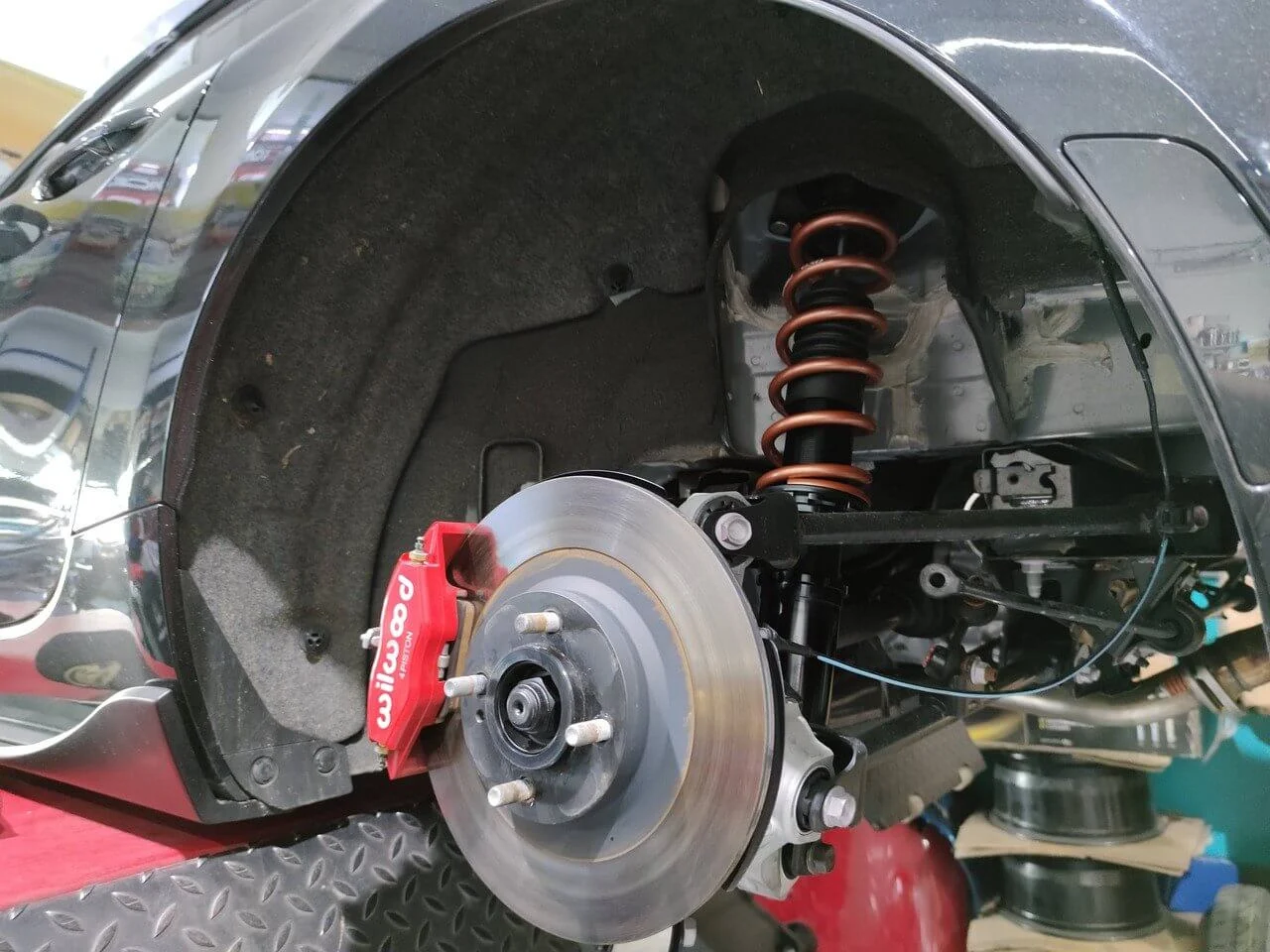
The coilover kit is usually the most visible expense, but it is not the only parts cost. A complete estimate should distinguish the hardware from the work needed to install and tune it.
- Kit price: The spring and damper assemblies, threaded bodies, adjustment hardware, and any included mounts.
- Supporting parts: Mounts, bearings, bump stops, dust boots, electronic-damper modules, or replacement fasteners.
- Labor: Removal, installation, transferring brackets, setting height, and correcting fitment issues.
- Alignment: Measuring and adjusting toe, camber, and caster where the vehicle allows it.
- Setup: Optional corner balancing, track-oriented alignment, and repeated ride-height adjustments.
When someone gives a single answer to how much does it cost to install coilovers, find out which of these categories the number represents. “Installed” should not be assumed to mean “aligned and professionally set up.”
Why vehicle condition matters
Suspension work exposes parts that may have been untouched for years. Rust can increase removal time, and worn adjoining components can make a new coilover installation unsafe or noisy. A shop may reasonably recommend repairs, but it should show you the problem and explain whether the repair is required for safe operation or simply recommended maintenance.
Modified cars require extra attention. Nonfactory control arms, wheel spacers, wide tires, aftermarket sway bars, and very low ride heights can create interference or reduce available suspension travel. A kit that physically bolts on may still perform poorly if the bump travel, tire clearance, or alignment range is wrong.
How to check the installation before accepting the car
Do not judge the finished work only by the car’s appearance. A level stance and clean hardware are encouraging, but the important checks concern fastener security, clearance, ride height, alignment, and road behavior. Ask for the alignment printout and discuss any remaining noise before leaving.
Inspect the visible installation
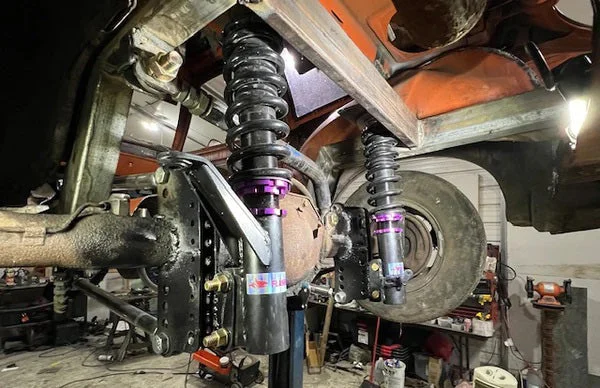
With the car safely on the ground, compare the left and right ride height on level pavement using the same measurement points. Small differences can come from fuel load, driver weight, or the vehicle’s design, but a substantial unexplained difference deserves investigation.
Look through the wheel openings for tire contact with the spring, threaded body, brake hose, or ABS wire. Turn the steering from lock to lock while stationary if the shop permits it, and listen for rubbing or binding. Do not place any part of your body under a vehicle supported only by a jack.
Ask whether all brake-line and ABS-wire brackets were secured as intended. A loose line can rub against a wheel or tire and become a serious problem. Check that the adjustment collars are locked according to the manufacturer’s instructions and that no damper adjuster is obstructed.
Review the alignment results
The alignment printout should show measured values before and after adjustment. The final numbers should fall within the shop’s chosen specifications, but “within factory range” may not be the ideal target for a lowered performance car. Ask the technician to explain any value that is outside the intended range.
Pay particular attention to toe. Excessive toe can cause rapid tire wear and unstable handling. Camber may become more negative as the car is lowered, and some vehicles have limited adjustment without aftermarket arms or plates.
The correct settings depend on the car, tires, ride height, and use.
Take a cautious road test
Start slowly on a familiar, smooth road. The steering should return toward center, the car should track without persistent pulling, and the suspension should not produce repeated clunks, scraping, or spring movement. A little additional firmness may be expected, but harsh crashing over ordinary bumps can indicate insufficient travel, unsuitable settings, or a mechanical problem.
After the first short drive, inspect for fresh rubbing marks and ask the shop to recheck anything that sounds abnormal. Do not continue driving at speed if the car pulls sharply, a wheel rubs, a brake hose is tight, or a suspension noise is accompanied by looseness or vibration.
Check your result
Before leaving, confirm that you have the alignment report, adjustment instructions, warranty information, and a clear answer about the final ride-height measurement.
Common quote and installation problems
Most disappointing bills or poor results come from an unclear scope of work rather than from one unusual part. The situations below help you identify what needs clarification.
| Issue | What to clarify |
|---|---|
| The quote is much lower than others | Ask whether alignment, taxes, mounts, seized hardware, and setup labor are excluded. |
| The car sits unevenly | Verify level ground, fuel load, measurement points, spring seating, and ride-height settings before assuming the kit is defective. |
| Clunking or squeaking appears | Have the shop inspect mounts, collars, spring seating, sway-bar links, and loose brackets; do not simply turn up the damper stiffness. |
| Rapid tire wear follows installation | Review the alignment report, especially toe, and check whether the new ride height exceeded the available adjustment range. |
| The factory warning light remains on | Confirm whether the vehicle needs compatible electronic-damper modules or coding and whether the chosen kit supports that system. |
A persistent problem after installation is a reason to return to the installer promptly. Do not compensate for a mechanical fault by making random damper or ride-height adjustments. If the shop cannot identify the cause, a second opinion from a suspension specialist is appropriate.
Coilover installation cost FAQs
These answers cover the questions that most often affect a beginner’s budget and expectations.
Is coilover installation worth paying for?
Professional installation is usually worthwhile when you lack safe lifting equipment, suspension experience, or the tools needed to remove loaded springs and seized hardware. The cost also buys access to alignment equipment and a technician who can identify clearance or fitment problems.
Can I install coilovers myself and only pay for an alignment?
Possibly, if you have the correct vehicle-specific instructions, safe support equipment, suitable tools, and experience with suspension work. You still need a professional alignment afterward, and a spring compressor or other specialized procedure may be required depending on the design. Stop if you are uncertain about supporting the vehicle, handling a compressed spring, or tightening a critical fastener to the required specification.
Does lowering the car make the installation more expensive?
It can. A lower setting may require more adjustment, create tire or suspension clearance issues, reduce alignment range, and make corner balancing or aftermarket alignment parts necessary. The lowest possible ride height is not automatically the best setting for handling or daily use.
Is an alignment included with coilovers?
Not automatically. Some installation packages include a basic alignment, while others charge separately. Confirm that the written quote names the alignment service and ask for the final measurement report.
How long should a coilover installation last?
The installation itself may take several hours, but the time varies widely with vehicle design and condition. Additional setup, rusted hardware, replacement parts, and alignment adjustments can extend the appointment. Ask the shop for an expected range rather than assuming every car can be completed in one short visit.
Make the cost and result easy to verify
The most useful answer to how much does it cost to install coilovers is a complete, itemized estimate rather than one attractive number. Price the vehicle-specific kit, required accessories, labor, alignment, possible replacement parts, and any optional corner balancing separately. For many street cars, planning around $1,500 to $4,000 is reasonable, but your exact total depends on the kit, local labor rate, vehicle condition, and setup goals.
Before approving the work, confirm fitment and the target ride height in writing. Afterward, review the alignment report, inspect clearance and brackets, and take a cautious test drive. If the car pulls, rubs, clunks, or shows a warning light, have the installer correct the issue before normal or high-speed driving.


