The correct spanner wrench size for coilovers depends on the diameter and shape of the adjustment collar. There is no single size that fits every coilover. Measure the collar, check the suspension manufacturer’s specifications, and choose a wrench that fits its notches or hooked edge without slipping.
Across the United States, drivers use coilovers on daily drivers, lowered street cars, track cars, and show vehicles. These suspension systems allow changes to ride height and, on some models, damping. To make those changes, you need a spanner wrench that matches the adjustment hardware on your specific suspension.
A wrench that is too small may not engage the collar. One that is too large can slip, damage the adjustment teeth, or scratch the threaded body. Before buying a tool, identify the coilover brand and model, measure the collar, and confirm whether the system uses a hook-style, pin-style, or another adjustment tool.
The goal is a secure fit, not simply finding a wrench with a similar-looking curve. Correct engagement helps you turn the collar with controlled force and reduces the risk of damaging the suspension. Always follow the manufacturer’s instructions, especially when changing spring preload or working on a vehicle supported by a jack.
Coilovers need a spanner wrench that matches the diameter and profile of their adjustment collars. Many systems use a curved hook wrench that engages a notch in a threaded ring. Others use pin spanners, special sockets, or proprietary tools. The correct size is the one specified for that exact adjustment ring.
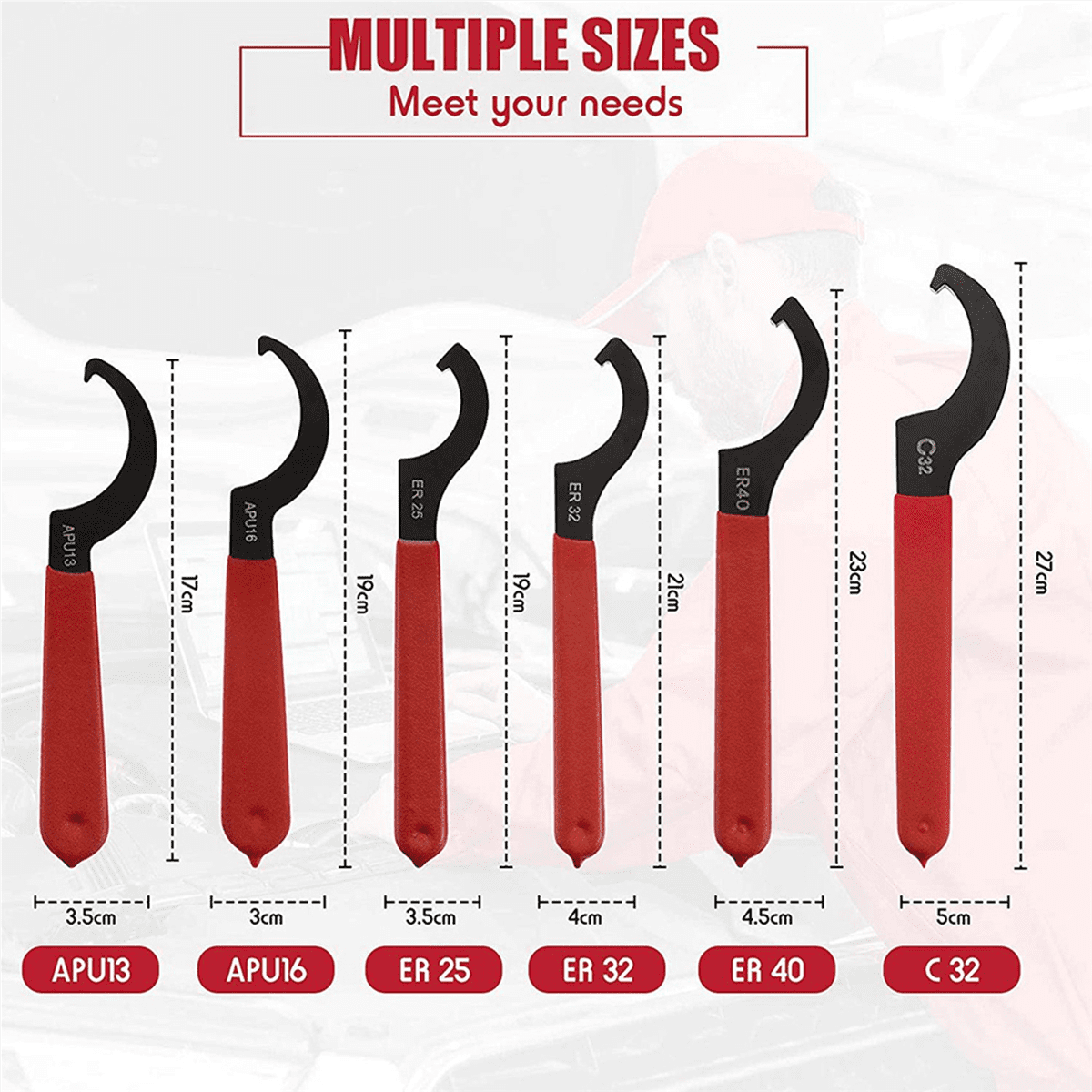
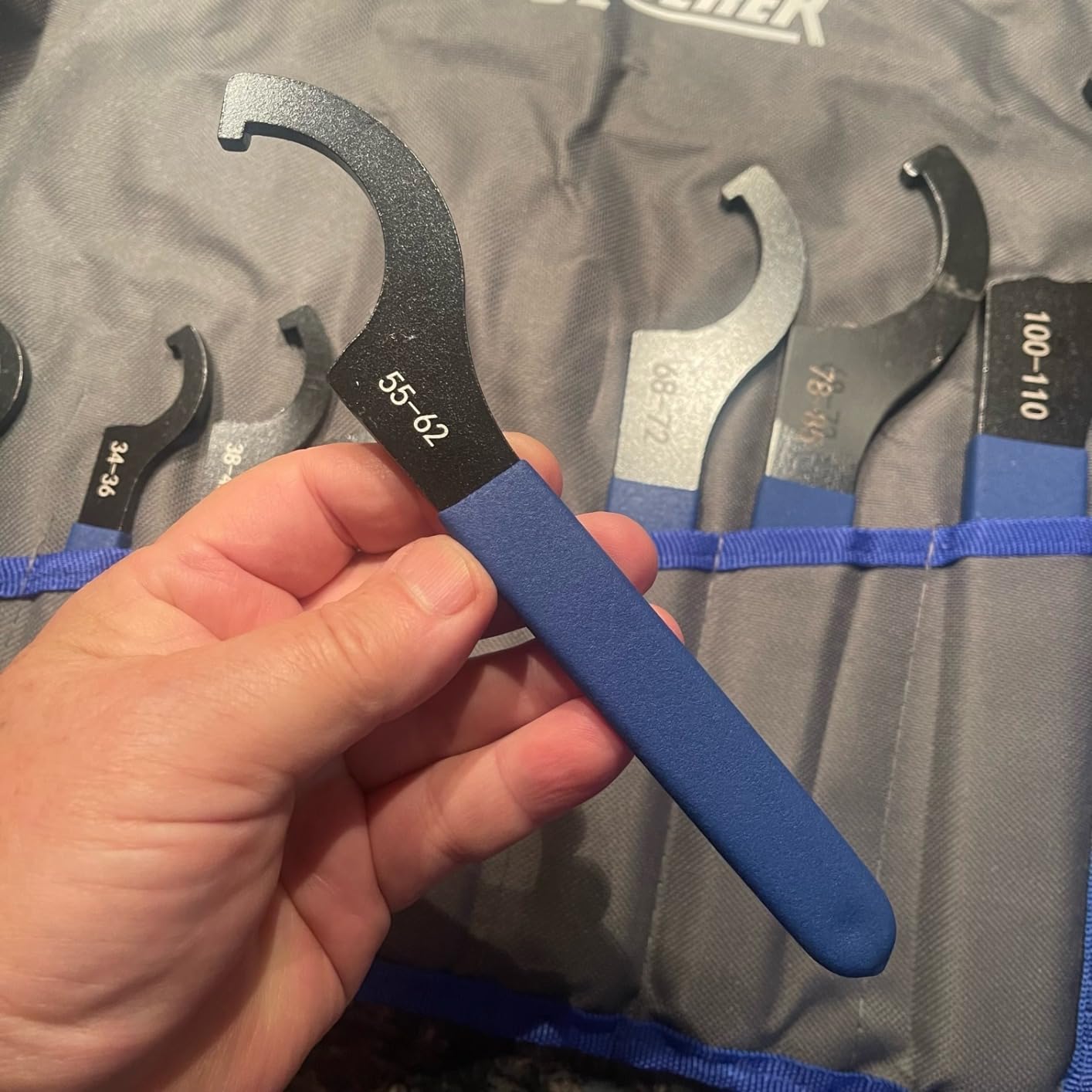
There is no universal coilover spanner wrench measurement. Even if two suspension kits fit the same vehicle, their collars may differ in diameter, thickness, notch shape, or tool engagement. A wrench advertised as universal may cover several sizes, but that description does not guarantee compatibility with every coilover.
Start with the installation manual, product specifications, or the suspension manufacturer’s replacement-tool listing. If those resources identify a tool by part number, use that information rather than relying on a general size chart.
Source: walmart.com
For a spring seat
Use the wrench specified for the threaded spring seat that supports the coil spring. Its dimensions may differ from those of the lower lock ring.
For a lock ring
Check whether the lock ring has the same diameter and engagement pattern as the adjustment collar. Do not assume both rings use the same wrench.
For damping adjustment
Many damping adjusters use a small knob or dedicated control, not a large hook wrench. Follow the product instructions to identify the correct tool.
Why There Is No Single Standard Size
Coilover manufacturers design adjustment rings to suit their suspension layout. The ring may have a different outside diameter, thickness, number of notches, or shape depending on the design. These differences affect how the wrench must engage the ring.
Some kits include two spanners because the spring seat and lock ring sit close together. Others provide one wrench or require a separate tool for a particular collar. A generic set may fit one ring but fail to engage another securely.
Brand and model
Use the specifications for the exact suspension kit, not just the vehicle make and model.
Collar design
The hook, pin, or other engagement feature must match the ring’s shape.
Available clearance
The handle must fit around nearby springs, shock bodies, brackets, and other suspension parts.
How to Measure a Coilover Collar for a Spanner Wrench
If you cannot find a manufacturer’s size chart, measure the adjustment collar carefully before choosing a wrench. You need to identify the dimension that controls tool fit, not simply measure the spring or shock body. A caliper is useful because it can measure collar dimensions more precisely than a flexible tape.
First, identify the ring you intend to turn. Coilovers may have a spring seat, a lock ring, a threaded lower mount, and a separate damping control. These parts serve different purposes and may require different tools or adjustment procedures.
Clean dirt from the collar so the notch edges are visible. If the collar is installed on the vehicle, inspect it with a light and avoid placing your hands near a loaded spring or an unsupported suspension component.
Source: bigamart.com
Measure the outside diameter
Use calipers across the collar’s outside edges where the wrench engages. Check the tool manufacturer’s instructions to see which diameter the stated wrench size refers to.
Inspect the engagement feature
Record the notch shape, opening width, depth, or pin spacing, as applicable. A matching diameter alone does not guarantee a proper fit.
Check ring thickness
Confirm that the wrench’s hook or pin can engage the collar without contacting adjacent parts or riding over the ring.
Confirm the measurement convention
Tool listings may describe the collar diameter, working range, pin spacing, or a manufacturer’s size designation. Do not treat these measurements as interchangeable.
Which Measurement Matters Most?
The most useful measurement depends on the wrench design. For a hook wrench, the collar’s working diameter and the hook’s engagement shape are central. For a pin spanner, the distance between the pins and their diameter must match the holes in the ring.
Suppose a collar measures approximately 60 mm across its outside edges. That measurement is only a starting point. It does not prove that a wrench labeled 60 mm will fit, because the tool maker may define the size differently or use a different hook profile. Verify the listed measurement convention before ordering.
Avoid guessing from photos
Product images can distort scale and may show several tools. Use dimensions or a fit chart rather than visual similarity alone.
Do not measure the spring diameter
Spring diameter and collar diameter are separate dimensions. A spring’s size does not tell you which spanner fits its seat.
Common Coilover Spanner Wrench Types
The right wrench type depends on how the adjustment collar is designed. Most owners encounter hook spanners, but some suspension systems require pin-style or manufacturer-specific tools. Check the collar itself before buying a set.
A tool that appears to fit may still apply force at the wrong point. The wrench should engage the intended feature firmly and allow you to turn the ring without slipping into the threads or contacting the spring.
Source: amazon.ca
Hook spanner wrench
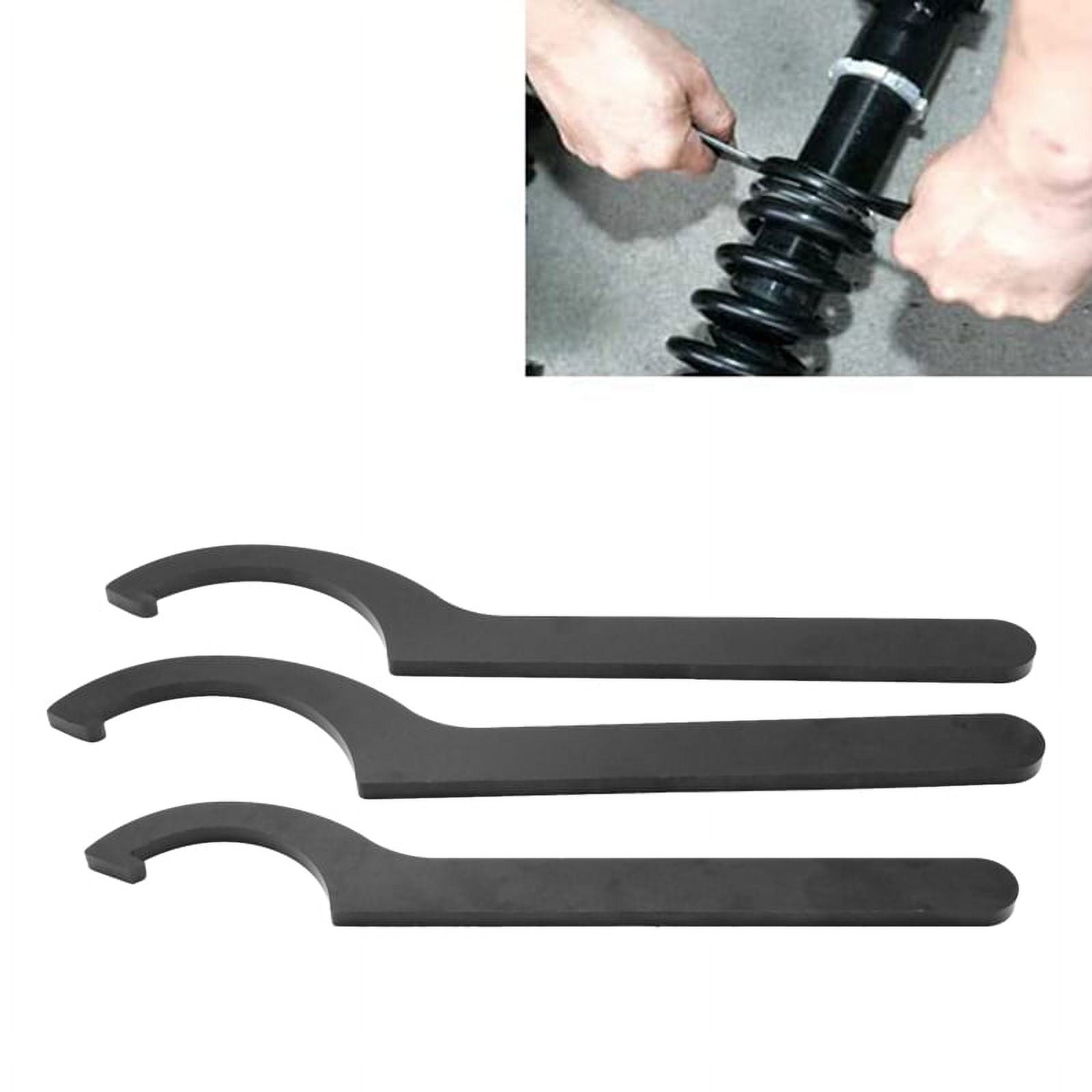
A curved hook engages a notch or edge on a compatible collar. The hook profile and working diameter must match the ring.
Pin spanner wrench
Pins engage matching holes in an adjustment ring. Pin spacing, diameter, and reach determine compatibility.
Adjustable or multi-size spanner
A set may cover several collar sizes. Confirm that the selected head locks securely and is approved for the intended load.
Brand-specific adjustment tool
Some systems require a tool made for their exact collar shape. A dedicated tool is often the simplest way to avoid fit problems.
Is a Universal Coilover Spanner Wrench Really Universal?
Universal usually means that a kit includes several sizes or an adjustable mechanism. It does not mean every wrench will fit every coilover. Collar dimensions, notch patterns, ring thickness, and available working space still matter.
A multi-piece kit can be useful when you maintain several suspension systems or when one coilover kit uses separate sizes for its spring seat and lock ring. However, the manufacturer’s tool remains the safer choice when a generic wrench does not seat correctly.
Check the stated size range
Look for the actual working dimensions of each wrench, rather than relying only on the word universal.
Inspect the metal and finish
Look for a sound handle, cleanly formed hook or pins, and no visible cracks, bends, or damaged edges.
Test the fit without force
Place the wrench on the collar before applying turning force. If it rocks, slips, or only catches at one point, stop and reassess the fit.
How to Choose the Right Wrench for Your Coilovers
Choose a spanner by matching the suspension specifications, collar measurements, and tool profile. Buying the largest set available is not always necessary. A correctly specified single wrench or a matched pair may be enough for a particular suspension kit.
Before ordering, find the coilover manufacturer and model number. Check the installation guide or parts list for the approved adjustment wrench, then compare that information with the dimensions of the tool being sold.
If the original wrench is missing, contact the suspension manufacturer or an authorized supplier with the kit’s model number and clear photos of the adjustment rings. Ask for the required working diameter and the exact engagement style.
Source: shopabunda.com
Start with the manual
Manufacturer documentation is the first choice because it can identify the approved wrench and explain which ring it adjusts.
Match the ring, not just the vehicle
Two different coilover kits for the same car may need different spanners. The vehicle’s year and model are not enough by themselves.
Consider handle clearance
A wrench can have the right hook size but still be too bulky to turn between the spring and nearby suspension parts.
Check return and replacement terms
If buying online, confirm that the size and tool style are listed clearly and that an incorrect fit can be exchanged.
A Simple Fit-Check Decision Table
Use this table to decide what to check before you purchase or use a wrench. It is a fit guide, not a universal measurement chart, because no single collar size applies to all coilovers.
The manual lists a tool part number
Use that part number to locate the correct wrench or an explicitly compatible replacement.
The manual gives a collar measurement
Compare the measurement with the wrench’s stated sizing convention and engagement profile.
No specifications are available
Measure the collar and its engagement features, then confirm the dimensions with the tool supplier or suspension manufacturer.
The wrench slips during a test fit
Do not apply more force. Check for the wrong size, a mismatched profile, dirt, corrosion, or a damaged collar.
How to Adjust Coilovers With a Spanner Wrench
Use the spanner wrench only after confirming which adjustment you intend to make. Some coilovers use threaded spring seats to change spring preload, while others use a threaded lower mount to set ride height. These adjustments are not always interchangeable, and the correct procedure varies by design.
Read the suspension manual before loosening any ring. The manual should explain the permitted adjustment range, the correct locking procedure, and whether the manufacturer requires the suspension to be unloaded or removed from the vehicle. Do not assume that every coilover can be adjusted safely in the same position.
Source: amazon.co.uk
Prepare the vehicle
Park on firm, level ground, apply the parking brake, and use wheel chocks. Follow the vehicle and suspension lifting instructions, using correctly rated jack stands at approved support points when lifting.
Identify the correct collar
Locate the spring seat, lock ring, or threaded mount named in the adjustment instructions. Do not turn an unknown ring simply because it looks adjustable.
Clean and inspect the threads
Remove loose dirt and check for corrosion, damaged notches, or cross-threading. Use only cleaning products and lubricants permitted by the manufacturer.
Seat the wrench fully
Place the hook or pins into their intended engagement points. Keep the wrench aligned with the collar and clear of the spring.
Make a small, controlled adjustment
Follow the manual’s direction and adjustment limits. Record the original position so you can track the change or restore the previous setting.
Secure the locking hardware
Tighten the lock ring or other locking feature as specified by the manufacturer. Use a specified torque value when one is provided; do not invent a torque value.
Inspect the collars, spring seating, clearances, and any parts disturbed during the adjustment. Lower the vehicle according to the service procedure and verify the resulting ride height or setting.
Signs That the Wrench Fits Correctly
A correctly sized spanner sits firmly against the collar’s intended engagement feature. It does not rock excessively, ride over the edge, or require an awkward angle to remain in place.
The handle should provide enough clearance for controlled movement. If the tool cannot turn without contacting the spring, damper body, brake hose, or another component, stop and follow the manufacturer’s approved procedure for gaining access.
Secure engagement
The hook or pins remain seated as you apply light hand pressure.
No visible damage
The wrench does not bend, the collar notches do not deform, and the threaded body remains undamaged.
Smooth controlled movement
The ring turns only when the correct locking and adjustment steps have been followed, without sudden slipping or unexpected movement.
Why Coilover Adjustment Rings Can Be Hard to Turn
A ring that will not turn may be dirty, corroded, locked against another ring, loaded by the suspension, or damaged. The cause matters because forcing the wrench can round off the notches or harm the threaded body.
Before trying again, check the manual for the required adjustment position. Some suspension systems must be unloaded or removed before the collars can be adjusted. Others permit adjustment while installed, but only under specified conditions.
Source: walmart.com
The wrong wrench size
A loose hook or mismatched pin pattern can slip under load. Stop and verify the measurements and tool profile.
Dirt or corrosion on the threads
Clean the accessible area using an approved method. If corrosion has damaged the threads or collar, seek repair guidance instead of forcing the ring.
The lock ring is still engaged
Some designs use a separate locking ring. Follow the prescribed sequence for releasing and securing it.
The suspension is carrying load
Spring force or suspension position may prevent adjustment. Follow the manufacturer’s unloading instructions and never loosen a loaded component without the specified procedure.
Damaged or seized threads
If the collar binds, jumps, or shows damaged threads, stop. A suspension technician can assess whether the assembly needs removal, repair, or replacement.
Should You Use a Hammer, Pliers, or a Pipe for More Leverage?
Do not strike the adjustment ring with a hammer and punch or grip it with ordinary pliers unless the manufacturer specifically approves that method. These tools can damage the collar, its notches, the threads, or the finish that helps protect the threaded body from corrosion.
Adding a pipe to the wrench handle can increase the force beyond what the tool or collar is designed to withstand. If the approved spanner will not turn with the prescribed method, stop and find the cause rather than adding leverage.
Stop if the tool slips
Repeated slipping can round the engagement points and make later adjustment harder.
Do not heat the collar casually
Heat can damage seals, coatings, or nearby suspension parts. Use only a repair method explicitly approved for the assembly.
Seek help for damaged hardware
A seized or damaged collar may need professional removal and inspection before the suspension can be used safely.
Common Mistakes When Choosing a Coilover Spanner
Most tool-selection problems happen because the buyer assumes that all coilovers use the same collar dimensions or that any curved wrench will work. Checking the actual adjustment hardware before ordering avoids much of this guesswork.
Correct tool fit is only one part of safe suspension adjustment. The operator must also know which ring controls ride height or preload, how the locking feature works, and whether the vehicle must be lifted or the suspension removed.
Source: amazon.ca
Choosing by car make alone
The same vehicle can have factory suspension, aftermarket coilovers from several brands, or different versions of a kit. Identify the installed suspension first.
Confusing spring rate with wrench size
Spring rate describes how much force is needed to compress a spring by a given distance. It does not determine the collar diameter or the required spanner.
Confusing preload with ride height
Moving a spring seat may change preload without providing the intended ride-height adjustment. Follow the coilover’s specific design and instructions.
Ignoring a second lock ring
Some designs use separate rings that must be loosened and secured in a set order. Check the manual before turning either ring.
Using a worn wrench
A rounded hook, bent handle, or worn pin may not hold the collar securely. Replace damaged tools instead of trying to compensate for poor engagement.
What If Your Coilovers Did Not Include a Wrench?
First, check the original packaging, installation instructions, and parts list. The wrench may be listed as a separate accessory or replacement part rather than as a standard item in every kit.
If the original tool is unavailable, send the manufacturer the suspension model number and clear photos of the adjustment rings. Ask whether a generic tool is approved and request the collar dimensions or replacement tool part number.
Keep the tool specification
Record the wrench part number and its confirmed collar compatibility for future maintenance.
Verify before using a substitute
Do not assume a wrench is compatible because its diameter appears close to the measurement.
How Often Should You Check Coilover Adjustment Hardware?
Inspect the adjustment collars during routine suspension checks and whenever you change ride height, notice unusual noises, or work on nearby components. Follow the manufacturer’s maintenance schedule rather than using one universal service interval.
Look for corrosion, damaged notches, visible thread damage, loose locking hardware, and signs that a spring is no longer seated as intended. Also check for leaks or damage to the damper body and nearby hoses, brackets, and fasteners.
A spanner wrench does not replace the need for a complete suspension inspection. If ride height changes unexpectedly, a collar appears loose, or the vehicle develops unusual handling, investigate the cause before driving at normal speed.
Source: amazon.in
After an adjustment
Confirm that the locking hardware is secured according to the manual and that the spring and related components remain correctly seated.
After winter driving
In areas that use road salt, inspect accessible collars and threads for corrosion. Clean them using a manufacturer-approved method.
After track use or hard driving
Inspect for damage and follow the manufacturer’s recommended checks for the conditions in which the car is used.
Before a major ride-height change
Review the permitted adjustment range and check tire clearance, alignment requirements, and any suspension travel limits.
Frequently Asked Questions
Q
Are coilover spanner wrenches a standard size?
No. Coilover spanners vary by collar diameter, engagement style, and manufacturer design. Check the suspension manual or measure the collar and confirm the wrench’s sizing convention before buying.
Q
Can I use a universal spanner wrench on any coilover?
Not necessarily. A universal set may cover several common collar sizes, but the hook shape, pin spacing, collar thickness, and available clearance must still match. Use a manufacturer-approved tool when a generic wrench does not fit securely.
Q
Do coilovers need two spanner wrenches?
Some coilovers use two adjustment rings that require separate tools or a pair of wrenches to loosen and lock them. Other designs use one wrench or a different locking method. Follow the instructions for your specific suspension.
Q
Can I adjust coilovers without a spanner wrench?
Use the designated adjustment tool unless the manufacturer explicitly approves an alternative. Pliers, hammers, and improvised tools can damage the collar or threads and may cause the tool to slip.
Q
Does a larger spring rate require a larger spanner wrench?
No. Spring rate and spanner size describe different things. Spring rate measures resistance to compression, while spanner size depends on the adjustment collar and the tool’s engagement profile.
Q
How do I know if my coilover spanner is too small?
The hook may fail to reach the collar notch, or the tool may not sit fully against the intended engagement surface. Do not force it. Compare the collar measurements and tool profile with the manufacturer’s specifications.
Q
Can I use a spanner wrench to change ride height?
Yes, if the coilover uses a threaded adjustment collar for that purpose and the manufacturer specifies a spanner for the adjustment. Some systems change ride height through a lower mount rather than by moving the spring seat, so identify the correct adjustment point first.
✦ Wrapping Up
Conclusion
The correct size spanner wrench for coilovers is the one that fits the adjustment collar on your exact suspension system. There is no single measurement that works for every brand or design. Start with the manufacturer’s tool specification, then measure the collar and its engagement features if the required size is not documented.
Choose a wrench that seats securely, offers enough clearance, and is suitable for the intended adjustment. Avoid forcing a collar that will not turn, and never improvise with tools that can damage the suspension. If the ring is seized, the threads are damaged, or the adjustment procedure is unclear, consult the suspension manufacturer or a qualified technician.
💡 Key Takeaway
Before ordering a coilover spanner wrench, identify your suspension brand and model, check the manual, measure the adjustment collar if needed, and confirm that the wrench’s hook or pins match the ring. Use the approved adjustment procedure and secure all locking hardware before driving.
Eric
Hi, I’m Eric Bennett, the person behind OffRoadTruckAccessories.com.
I created this blog to share my interest in trucks, off-road driving, automotive accessories, and DIY modifications. I enjoy learning how different truck accessories work, testing their usefulness, and understanding whether they are truly worth buying.
Will G37 coilovers fit G35? Learn which model years may share fitment, what changes with coupe, sedan, and AWD setups, and how to verify compatibility.