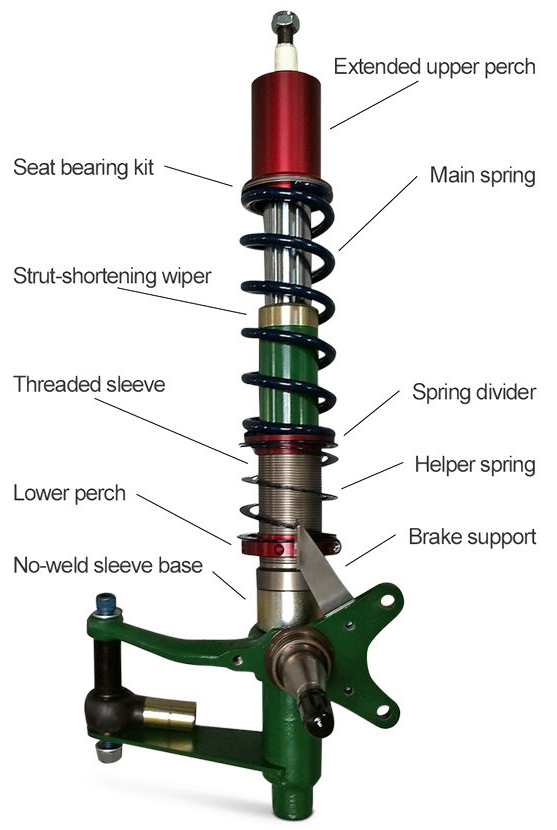
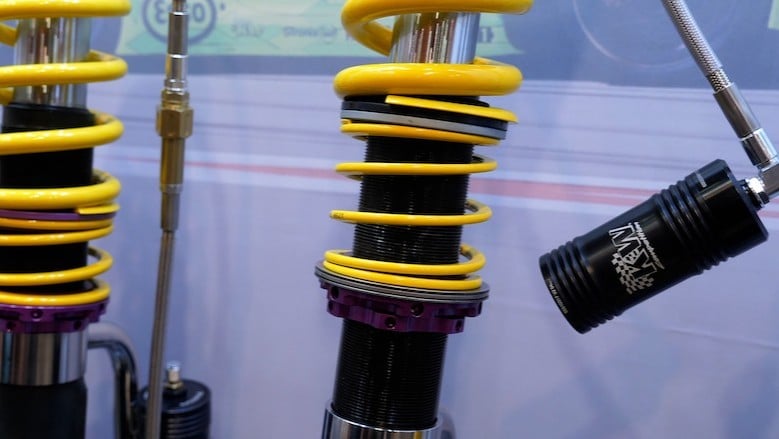
No, you do not always need helper springs on coilovers. You need them when your main spring can become loose or leave its seat as the suspension extends, unless the coilover design uses another approved way to keep the spring secure.
For drivers in the United States, the right coilover setup depends on the car, the suspension design, and how the vehicle is used. A daily driver on public roads has different needs from a lowered show car or a track car. Helper springs can help keep a suspension spring in place, but they are not a required upgrade for every vehicle.
A helper spring is a small, light spring that sits next to the main coilover spring. It often compresses almost flat when the car rests at its normal ride height. When the wheel drops and the suspension extends, the helper spring can expand and keep the main spring seated. This helps maintain a secure spring arrangement without making the helper spring a major part of the suspension’s normal spring rate.
Before buying helper springs, check whether your coilovers already include them, whether the main springs remain captured at full suspension droop, and whether the manufacturer requires a specific spring arrangement. The goal is a safe, compatible suspension setup, not simply adding more parts.
Helper springs are small auxiliary springs used in some coilover suspension systems. They sit alongside the main spring and help keep it in place when the suspension extends. Their purpose is mainly spring retention rather than adding substantial support while the car is resting on its wheels.
A coilover combines a coil spring and a shock absorber, also called a damper, into one assembly. The spring supports the vehicle and stores energy when the wheel moves. The damper controls that movement. A helper spring supports the correct position of the main spring during parts of the suspension’s travel where the main spring might otherwise become loose.
You may see helper springs on road cars, track cars, drift cars, and other vehicles with adjustable suspension. However, their presence depends on the spring length, suspension travel, ride height, and coilover design. Some systems use other approved methods to keep the main spring captured.
Source: storage.googleapis.com
Main spring
The primary spring that supports the vehicle and determines much of its suspension stiffness.
Helper spring
A light auxiliary spring that helps maintain contact between the main spring and its seats when the suspension extends.
Damper
The component that controls how quickly the suspension compresses and rebounds.
Spring seats
The surfaces that locate and support the springs within the coilover assembly.
How Does a Helper Spring Work?
At normal ride height, the vehicle’s weight compresses the helper spring. On many setups, the helper spring becomes nearly flat because the main spring carries most of the vehicle’s spring load. When the wheel moves down and the suspension extends, the helper spring can expand and help keep the main spring against its seats.
This matters when a vehicle goes over a dip, lifts a wheel over uneven pavement, or sits on a lift with its suspension hanging. Without a suitable spring-retention arrangement, the main spring may lose contact with a seat. A loose spring can move, make noise, or fail to return to its intended position when the suspension compresses again.
During normal driving
The helper spring is often compressed, leaving the main spring to do most of the supporting work.
During suspension extension
The helper spring expands and helps keep the main spring seated.
When the suspension compresses
The helper spring compresses again as the assembly returns to its normal operating position.
Are Helper Springs the Same as Main Springs?
No. The main spring is designed to support the vehicle through its normal operating range. A helper spring is generally much lighter and is used mainly to retain the main spring during extension. The two parts may look similar, but they serve different purposes and are not interchangeable.
A helper spring should not be treated as a way to increase the car’s load capacity. If a vehicle needs more spring support, the correct solution depends on the vehicle weight, suspension geometry, spring rate, and damper specifications.
Main spring
Provides the primary suspension support and influences ride stiffness.
Helper spring
Helps maintain spring retention, especially at full extension.
Do You Need Helper Springs on Coilovers?
You need helper springs when your particular coilover design requires them to keep the main spring securely seated throughout the intended suspension travel. If the main spring remains captured at full extension and the manufacturer approves the setup without helper springs, you may not need them.
The most useful check is whether the main spring remains secure when the suspension is fully extended. Normal ride height alone does not tell you the whole story. A spring can be firmly loaded while the car sits on the ground yet become loose when the wheel drops into a deep dip or the car is raised on a lift.
The answer also depends on the type of coilover. Some kits include helper springs as standard equipment. Others use a longer main spring, a different spring-seat arrangement, or another approved retention method. Follow the instructions for the exact coilover model rather than assuming that all systems need the same parts.
Source: storage.googleapis.com
You may need helper springs
The main spring becomes loose at full droop, the coilover manufacturer specifies helper springs, or the suspension design requires them for spring retention.
You may not need helper springs
The main spring remains securely captured throughout the permitted travel, and the manufacturer approves the existing spring arrangement.
You need a closer inspection
The car has been lowered substantially, the springs have been changed, or the suspension has been modified without confirming spring capture and damper travel.
When Are Helper Springs Most Useful?
Helper springs are especially useful when a coilover uses a relatively short main spring or when ride-height adjustments reduce the amount of spring compression at full extension. These conditions can allow the main spring to lose contact with its seat if the assembly does not have another retention method.
They can also be useful in motorsport suspension setups where the wheel needs to move through a broad range of travel. However, track use alone does not make helper springs mandatory. The correct arrangement depends on the suspension design and the demands placed on it.
Very low ride height
Lowering a vehicle may change the spring’s installed position and available travel, so spring capture must be checked.
Short main springs
A short spring may need an auxiliary spring to remain seated as the suspension extends.
Frequent suspension droop
Uneven roads, track curbs, and wheel lift can extend the suspension enough to expose a spring-retention problem.
When Can You Skip Helper Springs?
You can usually skip separate helper springs if the coilover is designed to retain its main spring without them. A sufficiently long main spring or an approved captive-spring design may keep the spring seated throughout the intended travel.
Do not remove helper springs simply because they look compressed at normal ride height. Their function may become clear only when the suspension extends. Before changing the spring stack, confirm the manufacturer’s permitted configuration and inspect the assembly through its full operating range.
Factory-approved spring arrangement
Use the spring configuration specified for the exact coilover model and vehicle application.
Secure spring capture
The main spring must remain correctly located through the suspension’s permitted extension and compression.
Signs Your Coilovers May Need Helper Springs
A spring that becomes loose when the suspension extends is the clearest sign that the spring-retention arrangement needs attention. You may also hear a clunk or rattle when the suspension moves between compression and extension. These sounds are clues, not proof that helper springs are the correct fix.
Other faults can create similar symptoms. Loose mounting hardware, worn bushings, a damaged spring seat, an incorrect spring diameter, or a poorly fitted coilover can also cause noise. Diagnose the source before buying parts.
Never crawl under a car supported only by a jack to inspect the suspension. Use correctly rated jack stands on a suitable surface and follow the vehicle and coilover service instructions. If checking full suspension travel requires spring compression or coilover disassembly, use a qualified technician.
Source: storage.googleapis.com
The main spring moves freely
If the spring can move out of position when the suspension extends, the retention setup may be incorrect.
Clunks or rattles over bumps
Noise may come from spring movement, but inspect the mounts, fasteners, bushings, and other suspension parts too.
The spring does not return to its seat
A spring that shifts or sits incorrectly after the suspension moves needs inspection before further driving.
The coilover setup has changed
A new spring, different ride height, or replacement damper can change how the springs fit and travel.
How to Check Spring Retention
Start by identifying the exact coilover model and finding its installation or service instructions. Check whether helper springs are required, which spring lengths and rates are approved, and how the spring seats should be adjusted.
A proper spring-retention inspection considers the suspension’s full extension, not just its resting position. A technician can check whether the main spring remains captured and whether the damper, brake hoses, ABS wiring, and other components remain within their intended travel limits.
If the spring becomes loose, do not assume that adding any small spring will solve the problem. The spring’s free length, compressed height, rate, diameter, and compatibility with the coilover all affect the result.
Identify the coilover
Record the brand, model, and approved spring specifications before changing the setup.
Check the instructions
Confirm the required spring stack, preload method, and adjustment limits.
Inspect the full travel
Verify spring capture and check for interference or overextension using a safe service procedure.
Helper Springs vs. Tender Springs: What Is the Difference?
Helper springs and tender springs can look alike, but their behavior and intended purpose differ. A helper spring is generally selected to keep the main spring seated. A tender spring may be designed to contribute to the effective spring rate over part of the suspension’s travel before it reaches coil bind or becomes fully compressed.
The terms are sometimes used loosely in product listings and suspension discussions. That can cause confusion when someone orders a spring based on its name alone. Check the manufacturer’s stated spring rate, free length, compressed height, and intended use rather than relying only on the label.
Both spring types can be part of a multi-spring coilover assembly. Neither should be selected without considering the main spring, damper stroke, available space, and intended suspension geometry.
Source: www.youtube.com > FIBA Motorsport
Helper spring
Primarily maintains spring contact and retention when the suspension extends.
Tender spring
Can contribute to the suspension’s effective spring behavior over part of its travel, depending on its design and operating point.
Main spring
Provides the primary load support and is selected for the vehicle’s weight, motion ratio, and handling goals.
Do Helper Springs Change Ride Quality?
A helper spring that is fully compressed at normal ride height usually has little effect on the effective spring rate at that operating point. Its main benefit is maintaining spring retention as the suspension extends. This does not mean every helper spring has zero effect under every condition.
If the auxiliary spring remains active during normal suspension movement, or if the assembly reaches its compressed limit in a different way than intended, it may affect how the suspension responds. The effect depends on the spring rates, installed lengths, coil-bind point, and load.
If your goal is a softer ride, do not add helper springs as a shortcut. First assess the main spring rate, damper settings, tire pressure, available travel, bump stops, and the condition of the suspension.
For comfort
Check the main spring rate and damper tuning before changing the auxiliary spring arrangement.
For spring retention
Use a compatible helper spring if the existing setup cannot keep the main spring seated.
How to Choose the Right Helper Springs for Coilovers
Choose helper springs by compatibility with the coilover, not by appearance or price alone. The spring must fit the intended spring seats, work with the main spring, and provide the required extension without interfering with the damper or other suspension parts.
Start with the coilover manufacturer’s application guide. Confirm the required inner diameter, free length, spring rate, compressed height, and any specified spacers or retainers. If the manufacturer offers an approved helper spring kit, its specifications can help you avoid an incompatible combination.
Do not assume that two springs with the same diameter are interchangeable. Their lengths, rates, end shapes, and compressed dimensions can differ. A spring that fits physically may still be unsuitable for the intended travel or load.
Source: hpacademy.com
Spring diameter
The spring must fit the specified seats and remain correctly located throughout travel.
Free length
The uncompressed length affects how much space the spring occupies when the suspension extends.
Spring rate
The rate determines how much force is needed to compress the spring by a given amount.
Compressed height
The compressed dimensions help determine whether the spring fits safely in the available space.
Manufacturer approval
The selected spring must be compatible with the coilover design and its intended use.
Does Helper Spring Rate Matter?
Yes. Spring rate matters, but the right value depends on the job the spring must do and the design of the complete assembly. A helper spring is commonly much softer than the main spring because it is intended to maintain spring contact rather than support the vehicle’s weight by itself.
A higher rate is not automatically better. A spring that is too stiff or too long may alter the intended setup, take up too much adjustment space, or interfere with available suspension travel. A spring that is unsuitable for the application may also fail to provide the required retention.
Use the specified spring rate and dimensions whenever the coilover manufacturer provides them. If the system has been modified or no reliable specification is available, have a suspension specialist confirm the correct spring combination.
Avoid guessing
Do not choose a rate based only on another vehicle’s setup or a generic online recommendation.
Consider the full spring stack
The helper spring, main spring, seats, spacers, and damper travel must work together.
Can You Install Helper Springs Yourself?
A skilled home mechanic may be able to install a manufacturer-approved helper spring kit, but the task can involve stored spring energy and suspension parts that affect vehicle control. The work must follow the exact service procedure for the coilover and vehicle.
Use the correct tools and a stable lifting setup. Do not loosen a spring seat or remove a spring while it is under load unless the service procedure explicitly permits that step and you have the required equipment. Coilover springs can release force suddenly and cause serious injury.
After installation, the spring arrangement, fasteners, clearances, and suspension travel must be checked. A professional alignment may also be needed if the work changes ride height or suspension geometry.
Before installation
Confirm the exact kit, tools, instructions, and spring specifications.
During installation
Follow the manufacturer’s procedure and avoid handling loaded springs without proper equipment.
After installation
Verify spring capture, clearance, fastener security, and alignment requirements before driving.
Common Helper Spring Mistakes to Avoid
The most common mistake is assuming that every coilover needs helper springs. Another is removing them because they look compressed when the car sits at normal ride height. Both decisions ignore the way spring retention changes as the suspension moves.
A second mistake is using helper springs to solve a problem they were not designed to fix. They do not correct worn dampers, bad alignment, inadequate bump travel, incorrect spring rates, or loose mounting hardware. Each issue needs its own diagnosis.
Incorrect spring combinations can also cause trouble. An unsuitable spring may fail to stay seated, take up adjustment space, or interfere with the suspension’s intended travel. Check the complete assembly rather than treating the helper spring as an isolated part.
Source: storage.googleapis.com
Buying based on looks
Similar-looking springs can have different rates, lengths, and compressed heights.
Ignoring full droop
A spring that is secure at rest may become loose when the suspension extends.
Changing preload without a plan
Preload adjustments can affect spring capture and suspension setup. Follow the manufacturer’s procedure.
Assuming helper springs fix harshness
Ride comfort depends on the complete spring, damper, tire, and travel setup.
Driving with a loose spring
Stop and arrange an inspection if a spring can move out of its seat or the coilover appears damaged.
Can Helper Springs Fix Coilover Noise?
They can help if the noise comes from a main spring that loses contact with its seat as the suspension extends. However, a clunk, click, or rattle can also come from loose fasteners, worn bushings, sway-bar links, top mounts, or other parts.
Inspect the source of the noise before replacing components. If the spring has shifted, the coilover should be checked for correct assembly and compatible parts. Do not continue driving if the spring is loose enough to move out of its intended position.
Noise when a wheel drops
Check spring retention and other components affected by suspension extension.
Noise during steering
Inspect the top mounts, spring seats, and components that move as the steering turns.
Noise after lowering
Recheck the spring arrangement, damper travel, fasteners, and clearances after ride-height changes.
Helper Springs for Daily Drivers, Lowered Cars, and Track Cars
The need for helper springs depends on the suspension design rather than the vehicle’s label. A daily driver may need them if its main springs become loose at full extension, while a track car may not need them if its coilovers already retain the main springs throughout the intended travel.
Lowering a vehicle deserves extra care because ride height changes can affect suspension geometry and available travel. Lowering the car does not automatically mean helper springs are required. It does mean you should verify spring capture, damper stroke, bump-stop clearance, and the position of brake hoses and ABS wires.
A road car must remain predictable over potholes, dips, and uneven pavement. A track car may have different spring rates and damper settings, but it still needs a properly retained spring assembly and adequate mechanical clearance. Follow any applicable vehicle inspection and road-use rules in your state.
Source: YouTube > milanmastracci
Daily drivers
Focus on secure spring seating, normal travel, comfort, and safe operation on uneven public roads.
Check the full suspension range after ride-height changes and confirm that the spring stays captured.
Track cars
Match the spring arrangement to the coilover design, tire and vehicle setup, and intended track use.
Show cars
A very low parked ride height does not remove the need for safe suspension travel and spring retention.
Do Helper Springs Increase Load Capacity?
No, helper springs are not a general way to increase a vehicle’s load capacity. Their main role is spring retention when the suspension extends. A vehicle that sags under its intended load may need the correct main spring, a suitable suspension design, or repairs to worn components.
Do not use a helper spring as a substitute for the vehicle manufacturer’s load limits or an approved suspension upgrade. Changes to spring rates can affect handling, ride quality, and available suspension travel.
For sagging suspension
Check the main spring specification, vehicle load, and suspension condition.
For added cargo or towing
Follow the vehicle’s rated limits and use suspension components approved for the application.
A Simple Decision Guide for Helper Springs
Use the following guide to decide what to check before buying helper springs. The key question is whether your coilover can keep the main spring correctly seated throughout the suspension’s intended travel. The answer should come from the manufacturer’s instructions and a safe inspection, not from ride height alone.
If you cannot confirm the spring arrangement, pause before changing parts. A suspension shop familiar with your coilover brand can check spring compatibility, preload, travel, and clearance. This is especially useful after a major ride-height adjustment or a change to the main springs.
Source: storage.googleapis.com
The main spring is loose at full extension
Have the spring-retention setup checked. Use the specified helper spring or another approved solution if required.
The main spring remains captured
If the manufacturer approves the configuration, separate helper springs may not be necessary.
The coilover instructions require helper springs
Keep the specified parts installed and follow the approved assembly procedure.
The car makes suspension noise
Find the source before ordering parts. Noise alone does not prove a helper spring is needed.
The coilovers have been modified
Confirm spring specifications, damper travel, spring capture, and clearance with a qualified technician if needed.
What Does a Correct Setup Look Like?
A correct setup uses compatible springs and seats, keeps the main spring securely located throughout the permitted travel, and allows the damper to operate within its intended range. The suspension should not bind, force a spring out of position, or pull brake hoses and wiring tight.
The ride height and spring preload should also follow the coilover manufacturer’s specifications. Once the installation is complete, verify fastener security and arrange an alignment when required by the work performed.
Secure spring seating
The main spring stays correctly positioned at full extension and through normal suspension movement.
Correct travel
The damper and suspension move within their approved compression and extension limits.
Proper clearance
Springs and suspension parts do not contact tires, bodywork, brake hoses, or wiring in an unintended way.
Frequently Asked Questions
Q
Do all coilovers come with helper springs?
No. Some coilover kits include helper springs, while others use a main spring or retention design that does not require them. Check the parts list and installation instructions for your exact coilover model.
Q
Can I remove helper springs from my coilovers?
Do not remove them unless the manufacturer approves a configuration without them. Removing a helper spring can allow the main spring to become loose when the suspension extends. Confirm spring capture and full suspension travel before making any change.
Q
Do helper springs make coilovers softer?
Not necessarily. A helper spring that is fully compressed at normal ride height usually contributes little to the effective spring rate at that point. Ride comfort depends on the main spring, damper settings, tires, bump stops, and available travel.
Q
Are helper springs needed on lowered cars?
Not on every lowered car. Lowering can change spring position and available travel, so you should check whether the main spring remains captured at full extension. Use helper springs if the coilover design requires them or the manufacturer specifies them.
Q
Can I use any helper spring with my coilovers?
No. The spring must match the coilover’s required diameter, length, rate, compressed height, and seat design. Use the manufacturer’s approved parts or ask a suspension specialist to confirm compatibility.
Q
Do helper springs stop coilover clunking?
They may stop noise caused by a main spring moving out of its seat, but clunking can have other causes. Inspect the mounts, bushings, fasteners, spring seats, and suspension links before deciding which part needs replacement.
Q
Are helper springs and tender springs interchangeable?
Not automatically. Helper springs mainly help retain the main spring, while tender springs may contribute to the effective spring rate over part of the suspension’s travel. Compare the manufacturer’s specifications and intended use before substituting one for the other.
✦ Wrapping Up
Conclusion
You do not need helper springs on every coilover setup. You need an appropriate spring-retention arrangement that keeps the main spring seated throughout the suspension’s intended travel. A helper spring is one common way to achieve that, especially when the main spring is short or can become loose at full extension.
Before buying or removing helper springs, identify your coilover model, review the manufacturer’s instructions, and confirm spring capture at full droop. Consider the spring dimensions, preload, damper travel, and clearances as part of the complete setup. If the spring is loose or the assembly has been modified, have a qualified suspension technician inspect it before driving.
💡 Key Takeaway
Check your coilover manufacturer’s instructions and verify that the main spring remains securely seated at full suspension extension. If it does not, use the approved helper spring or retention solution rather than guessing at spring size or rate.
Eric
Hi, I’m Eric Bennett, the person behind OffRoadTruckAccessories.com.
I created this blog to share my interest in trucks, off-road driving, automotive accessories, and DIY modifications. I enjoy learning how different truck accessories work, testing their usefulness, and understanding whether they are truly worth buying.
Will G37 coilovers fit G35? Learn which model years may share fitment, what changes with coupe, sedan, and AWD setups, and how to verify compatibility.