Do Leveling Kits Cause Problems? Complete Guide for Truck Owners
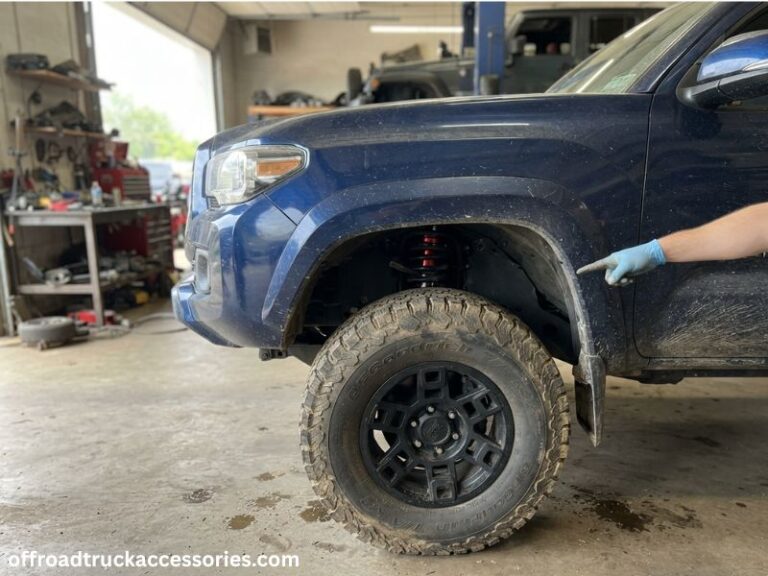
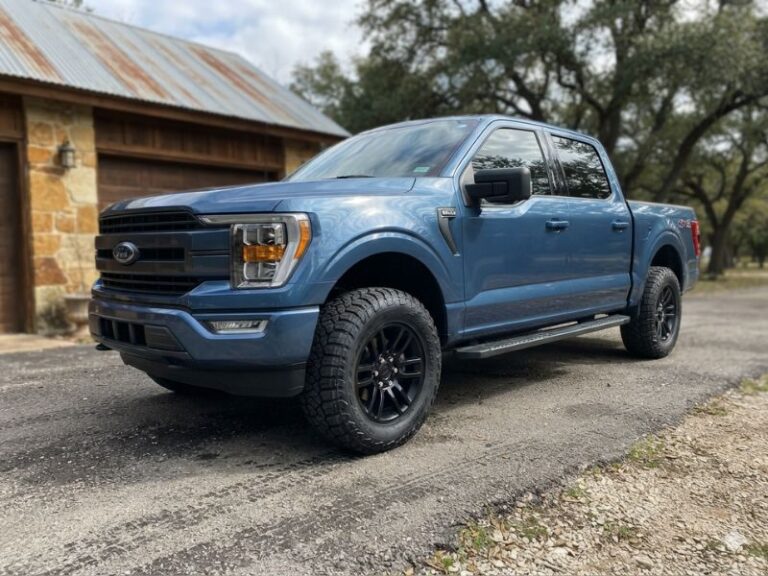
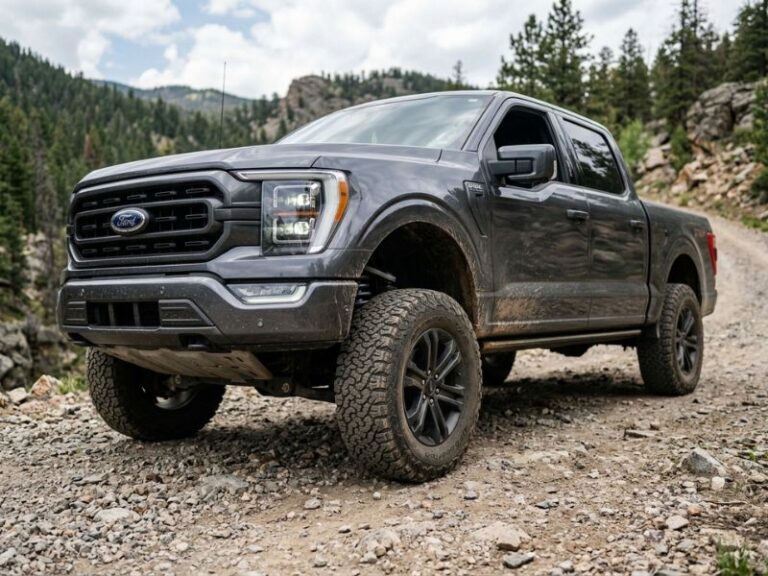
A leveling kit is one of the most common modifications for pickup trucks. It raises the front of the vehicle to reduce the factory nose-down stance and create a more balanced appearance. It can also provide additional tire clearance and slightly improve the front approach angle.
However, many owners wonder, do leveling kits cause problems after installation? The honest answer is that a properly selected and professionally installed leveling kit usually works well, but it can create problems when the kit is too tall, poorly designed, incorrectly installed, or combined with unsuitable wheels and tires.
Possible issues include changes in ride quality, premature suspension wear, incorrect wheel alignment, reduced suspension travel, uneven tire wear, altered towing behavior, and added stress on steering or drivetrain components. The risk depends on the truck’s suspension design, the height of the kit, the quality of its components, and how the vehicle is used.
A moderate leveling kit is generally less likely to cause problems than an aggressive setup. Understanding how leveling kits affect suspension geometry can help you choose a safe and reliable option.
Do Leveling Kits Cause Problems for Trucks?
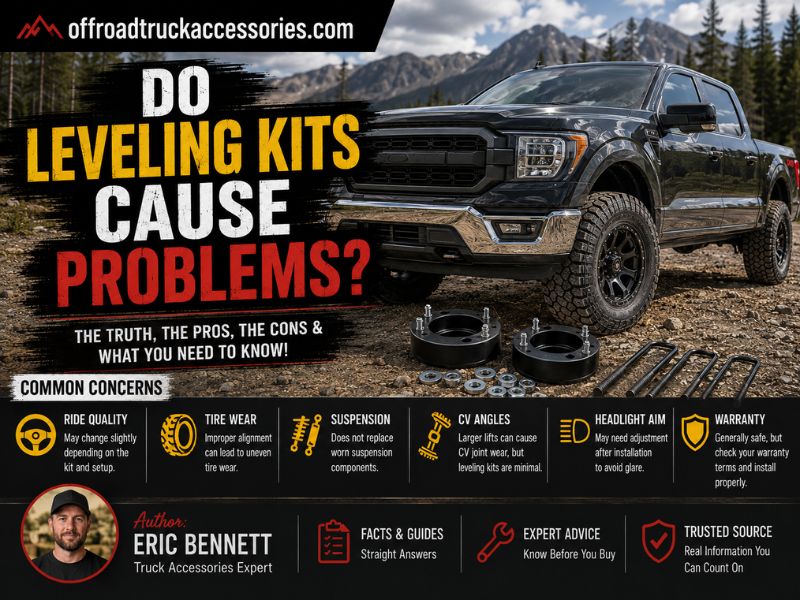
Yes, leveling kits can cause problems, but serious issues are not guaranteed. Most problems result from incorrect fitment, poor installation, excessive front lift, or failure to complete a wheel alignment afterward.
A small, vehicle-specific kit from a reputable manufacturer may have only a minor effect on normal driving. In contrast, an oversized spacer kit can place the suspension closer to its operating limits and create additional stress on components such as ball joints, control arms, CV axles, tie rods, shocks, and wheel bearings.
Leveling kits change how the front suspension sits at normal ride height. Even though the truck may look better, factory suspension angles and available travel can change. The higher the front is raised, the greater the chance of affecting steering geometry, component wear, and ride comfort.
This does not mean that every leveled truck will develop problems. Many owners drive leveled trucks for years without major failures. The outcome depends heavily on choosing the correct kit and installing it properly.
How a Leveling Kit Changes Truck Suspension
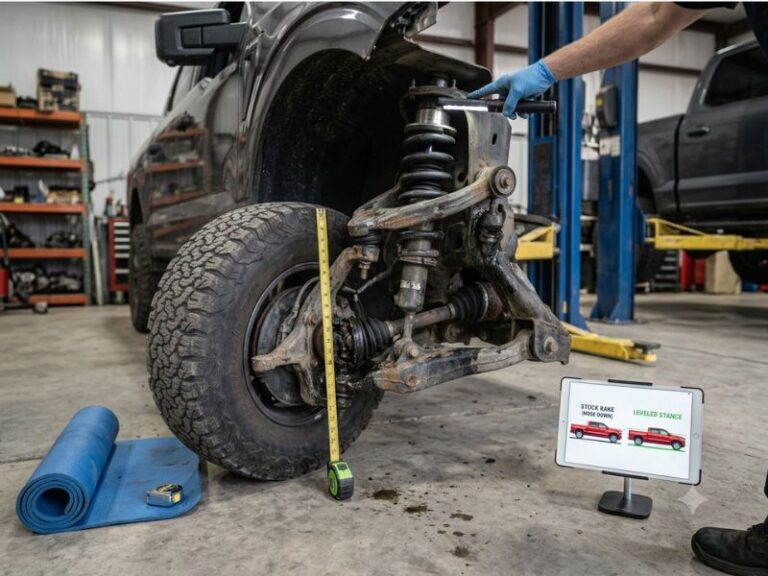
Most pickup trucks leave the factory with the rear sitting higher than the front. This difference is known as factory rake. Manufacturers use it so the vehicle remains closer to level when cargo or trailer tongue weight compresses the rear suspension.
A leveling kit raises the front to reduce that rake. Depending on the truck, the kit may use strut spacers, coil spring spacers, torsion keys, adjustable struts, replacement coilovers, or other suspension components.
When the front ride height increases, the following can change:
- Control-arm and ball-joint angles
- CV axle and tie-rod positions
- Camber, caster, and toe settings
- Shock or strut operating range
- Available upward and downward suspension travel
A mild change may remain within the suspension’s acceptable range. A larger adjustment may push the components closer to their limits.
Can a Leveling Kit Make the Ride Rougher?
A leveling kit can make the ride feel firmer or rougher, although the amount of change depends on the kit design.
A basic spacer kit usually keeps the original springs and shocks. Because the factory spring rate remains unchanged, the normal ride may still feel similar. However, some spacer designs alter the position of the strut or reduce available downward travel. This can make the suspension feel harsher over potholes, speed bumps, and uneven roads.
Torsion-key leveling can also create a firmer ride when the torsion bars are adjusted too aggressively. Increasing torsion-bar preload may reduce suspension droop and make the front end feel stiff.
Premium leveling systems that use replacement struts, shocks, or adjustable coilovers can provide better control than simple spacers. Their ride quality still depends on how the components are tuned. Some are designed for comfort, while others prioritize off-road performance and may feel firmer on pavement.
Larger and heavier tires can also make a leveled truck feel different. In some cases, owners blame the leveling kit when the real cause is increased unsprung weight, aggressive tire tread, or higher tire pressure.
Can Leveling Kits Cause Uneven Tire Wear?
Uneven tire wear is one of the most common problems after installing a leveling kit, especially when the truck is not aligned afterward.
Raising the front changes camber, caster, and toe. Even a small change can cause the tires to contact the road incorrectly. Excessive toe can quickly wear the inner or outer tread, while poor camber can produce uneven shoulder wear.
Signs of incorrect alignment include a truck pulling to one side, an off-center steering wheel, unstable highway tracking, and rapid tire wear.
A professional wheel alignment should be completed immediately after installation. The technician should verify that the suspension has enough adjustment range to return the measurements to acceptable specifications.
Some trucks cannot achieve ideal alignment with a taller leveling kit using factory components alone. In those situations, aftermarket upper control arms or additional alignment hardware may be necessary.
Keeping a printed before-and-after alignment report is useful. It confirms whether the suspension was successfully adjusted and helps diagnose future tire-wear problems.
Do Leveling Kits Damage Ball Joints and Control Arms?
A leveling kit can increase stress on ball joints and control arms by changing their normal operating angles.
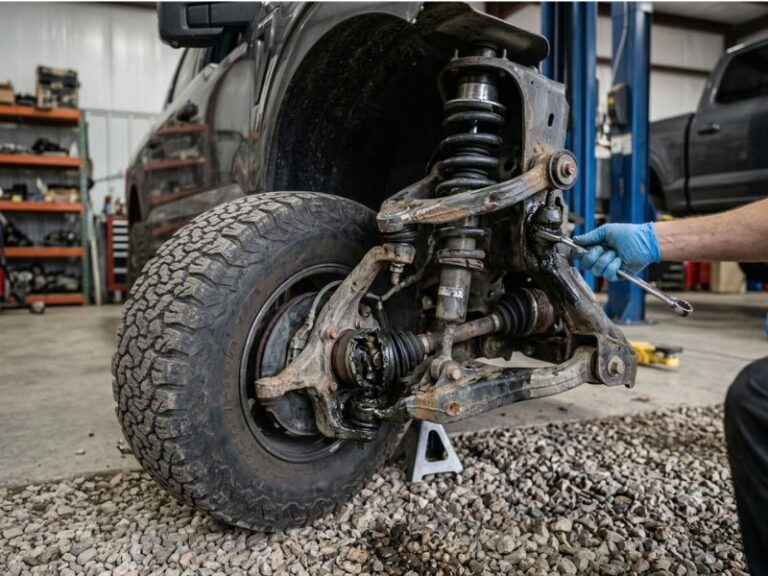
On an independent front suspension, raising the truck moves the control arms downward at rest. This may place the upper ball joint at a steeper angle and reduce how much movement remains before it reaches its limit.
If the kit is too tall, the ball joint may experience increased strain during full suspension extension. Repeated stress can contribute to premature wear, looseness, noise, or failure.
A moderate kit may remain within factory tolerances, while a more aggressive setup may require upgraded upper control arms. Aftermarket control arms are often designed to improve ball-joint angles and restore alignment range.
The need for control arms depends on the vehicle, suspension type, kit height, and manufacturer recommendations. They should not automatically be assumed necessary for every 2-inch kit, but they may be important on certain trucks.
Can a Leveling Kit Cause CV Axle Problems?
Four-wheel-drive trucks with independent front suspension use CV axles to transfer power to the front wheels. Raising the front suspension changes the CV axle angle.
A steeper axle angle can increase stress on the CV joints and rubber boots. This may lead to premature boot wear, grease leakage, clicking during turns, vibration, or eventual joint failure.
A small leveling kit usually creates less CV axle stress than a larger suspension lift. However, the exact effect varies by vehicle. Some trucks have more factory angle available than others.
CV axle problems are more likely when a leveling kit is combined with hard off-road use, oversized tires, aggressive wheel offset, or repeated full-droop suspension movement.
Drivers should inspect the CV boots regularly for cracking, grease leaks, or unusual angles. Some applications may benefit from a differential-drop kit, although this solution is not appropriate or necessary for every truck.
Can a Leveling Kit Reduce Suspension Travel?
Yes, certain leveling kits can reduce usable suspension travel.
Suspension travel includes upward compression and downward extension, often called droop. A spacer or aggressive torsion adjustment may change where the suspension rests within that range.
When too much downward travel is lost, the suspension can top out over dips or when a wheel drops into a hole. This may create a sharp impact, clunking noise, or uncomfortable ride.
Reduced travel can also limit tire contact on uneven terrain. A wheel that cannot move downward far enough may lose contact with the ground sooner, reducing traction.
Replacement coilovers or struts designed specifically for the new ride height may preserve suspension performance better than some basic spacer systems. Product design matters more than appearance alone.
Does a Leveling Kit Affect Steering and Handling?
A leveling kit can affect steering feel and handling because it changes front suspension geometry and vehicle stance.
Poor alignment may cause wandering, steering pull, slow steering return, or instability. Incorrect caster is especially noticeable during highway driving because it affects straight-line stability and steering-wheel return.
Raising the front may also slightly raise the vehicle’s center of gravity. A 1.5-inch or 2-inch change is usually modest, but the difference can become more noticeable when combined with taller tires and wider wheels.
Wheel offset also plays an important role. Wheels that extend farther outward increase the leverage placed on wheel bearings, tie rods, and steering components. The complete setup should be evaluated rather than blaming the leveling kit alone.
A properly aligned moderate kit generally maintains predictable everyday handling. Problems are more likely when suspension geometry is ignored.
Do Leveling Kits Cause Wheel-Bearing Wear?
A leveling kit by itself may not dramatically shorten wheel-bearing life, but related modifications can increase bearing stress.
Truck owners often install larger tires and wheels after leveling. Heavier tires require more effort to accelerate, stop, and steer. Aggressive wheel offsets move the tire farther away from the hub, increasing leverage on the bearing.
This added stress may contribute to humming noises, vibration, looseness, or premature wheel-bearing failure.
Using a reasonable wheel offset and avoiding excessively heavy tire combinations can reduce the risk. Correct wheel-bearing torque and regular inspections are also important.
Can a Leveling Kit Affect Towing and Hauling?
A leveling kit does not increase a truck’s towing capacity, payload rating, axle rating, or gross vehicle weight rating. The original manufacturer limits remain unchanged.
Because the front is raised and factory rake is reduced, the truck may appear rear-low or nose-high sooner when a heavy trailer or cargo load compresses the rear suspension.
This can affect headlight aim, steering feel, braking balance, and vehicle stability. Owners who tow frequently may prefer to retain a small amount of rake instead of making the unloaded truck perfectly level.
Rear airbags or helper springs can help manage loaded ride height, but they do not increase the truck’s legal or mechanical weight ratings.
Before choosing a leveling height, consider how often the truck carries cargo or pulls a trailer. A slightly lower front may be more practical for a working vehicle.
Can a Leveling Kit Cause Tire Rubbing?
A leveling kit can create more front tire clearance, but it does not guarantee that every larger tire will fit without rubbing.
Tire fitment depends on tire diameter, width, wheel offset, backspacing, fender shape, suspension travel, and steering angle. A tire may clear while the truck is parked but rub during full steering lock or suspension compression.
Common rubbing areas include inner fender liners, mud flaps, bumper brackets, control arms, and body mounts.
Choosing an overly wide tire or aggressive wheel offset can create rubbing even when the tire diameter seems appropriate. Always verify fitment for the exact truck model and wheel specifications.
Can a Leveling Kit Affect Fuel Economy?
A leveling kit may slightly reduce fuel economy, although the kit itself is not always the main cause.
Raising the front reduces the truck’s factory nose-down profile and may increase aerodynamic drag. The difference is usually modest with a small kit.
Larger tires often have a greater effect. Taller and heavier tires increase rolling resistance and rotational mass. Aggressive tread patterns can also require more energy to move.
Other factors include wheel weight, tire pressure, driving speed, engine gearing, and added accessories. A noticeable fuel economy reduction usually comes from the complete modified setup rather than the leveling kit alone.
Does a Leveling Kit Affect Warranty Coverage?
Installing a leveling kit does not normally cancel the entire vehicle warranty automatically. However, coverage for a specific repair may be denied if the manufacturer or dealership determines that the modification caused or contributed to the failure.
For example, an unrelated infotainment or engine defect should not normally be connected to a suspension modification. A damaged ball joint, shock, CV axle, or wheel bearing may receive closer inspection.
Warranty policies vary by manufacturer, region, vehicle, and service agreement. Owners should review their warranty documents and discuss the proposed modification with the dealership before installation.
Keeping the kit receipt, installer invoice, alignment report, and maintenance records can help document that the work was completed responsibly.
How to Avoid Problems With a Leveling Kit
Most leveling-kit problems can be reduced through careful planning.
Start by measuring the existing front-to-rear rake. Do not assume that every truck needs the same amount of lift. Accessories, engine options, cab configuration, suspension packages, and permanent cargo can change ride height.
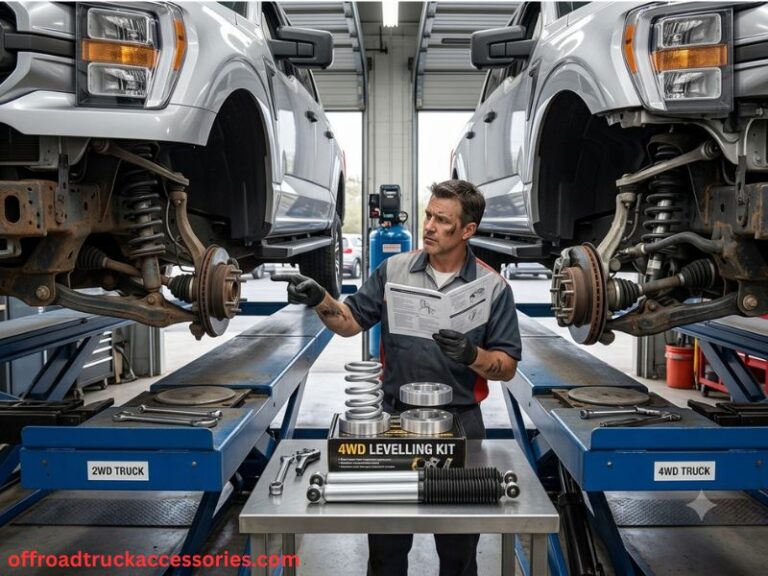
Choose a kit designed for the exact model year, drivetrain, and suspension package. A kit for a two-wheel-drive truck may not be suitable for the four-wheel-drive version.
Use quality components from a reputable manufacturer. Low-cost products may use poor materials, inaccurate dimensions, or incomplete hardware.
Professional installation is advisable when you are not experienced with suspension work. Fasteners should be tightened to the correct torque, and rubber-bushed components may need to be torqued at normal ride height.
Complete a wheel alignment immediately after installation. Then inspect the suspension regularly for loose hardware, damaged boots, unusual tire wear, leaking shocks, or steering changes.
Avoid choosing the tallest possible kit purely for appearance. A moderate height usually preserves better suspension geometry and ride quality.
Is a Leveling Kit Worth the Risk?
A leveling kit can be worthwhile when the goal is to improve stance, create modest tire clearance, and slightly raise the front bumper without installing a full lift kit.
The modification is generally more affordable and less complicated than a full suspension lift. Many trucks operate reliably with a quality 1.5-inch or 2-inch leveling system.
However, owners should understand that every suspension modification involves trade-offs. A leveling kit cannot improve appearance without changing at least some factory geometry.
Drivers who prioritize maximum factory ride quality, warranty simplicity, towing stance, and component longevity may prefer to keep the stock suspension. Drivers who value a level appearance and larger tire fitment may consider the small increase in maintenance risk acceptable.
The safest setup is usually a moderate, properly engineered kit installed with the correct supporting components.
Final Thoughts
So, do leveling kits cause problems? They can cause ride, alignment, tire-wear, suspension, steering, and drivetrain issues when the kit is oversized, poorly designed, incorrectly installed, or combined with unsuitable wheels and tires.
A quality vehicle-specific leveling kit installed at a moderate height is far less likely to create serious problems. Proper alignment, correct wheel fitment, routine inspections, and realistic towing expectations are essential.
Before installing one, measure the truck’s factory rake, review the kit manufacturer’s requirements, and consider how the truck is actually used. A carefully planned leveling setup can improve stance and tire clearance without significantly compromising everyday reliability.