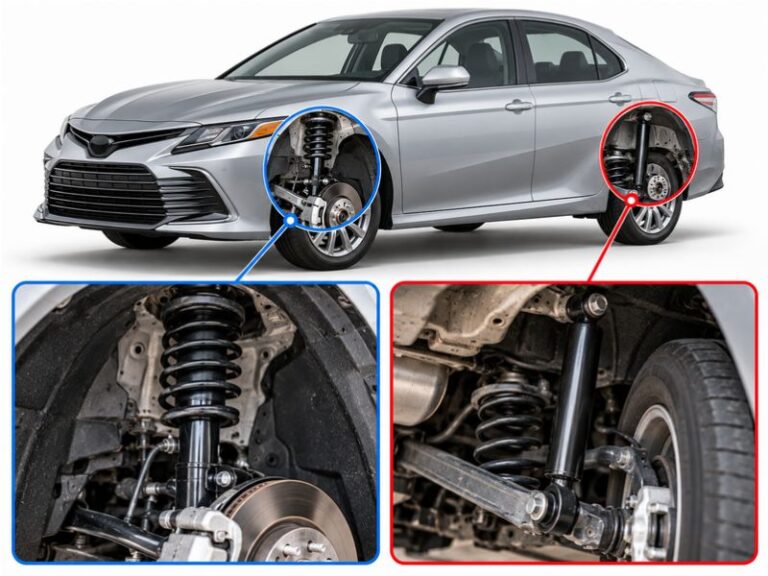
No, shock absorbers are not universal. Most vehicles need shocks that match their suspension design, mounting points, dimensions, and weight requirements. Some adjustable or universal aftermarket shocks fit several vehicles, but compatibility must be verified before installation.
If you drive a car, pickup truck, SUV, or motorcycle in the United States, choosing the right shock absorber is essential for safe and predictable handling. American roads range from smooth interstate highways to rough city streets, gravel roads, and uneven rural routes. A shock that fits one vehicle may not fit another, even when both vehicles look similar or share the same brand.
Shock absorbers help control spring movement, reduce bouncing, and keep tires in better contact with the road. Their size, mounting style, damping force, and operating range affect how the suspension behaves. Installing a shock with the wrong specifications can lead to poor handling, unusual tire wear, limited suspension travel, or damage to mounting parts.
The term universal can be misleading because some aftermarket shocks are designed to fit a range of applications rather than every vehicle. Before buying a replacement, check the year, make, model, trim, suspension package, and any modifications. Then compare the manufacturer’s fitment information with the dimensions and specifications of the existing suspension.
No. Most shock absorbers are designed for particular vehicle applications or a defined group of vehicles. They must connect correctly to the suspension and provide suitable damping throughout its working range. A shock that bolts into place is not necessarily the correct shock for that vehicle.
For example, a compact sedan and a full-size pickup may use different shock lengths, mounting points, and damping settings. Their suspension systems also manage different vehicle weights and loads. A shock designed for one application may be too short, too long, too soft, or too firm for the other.
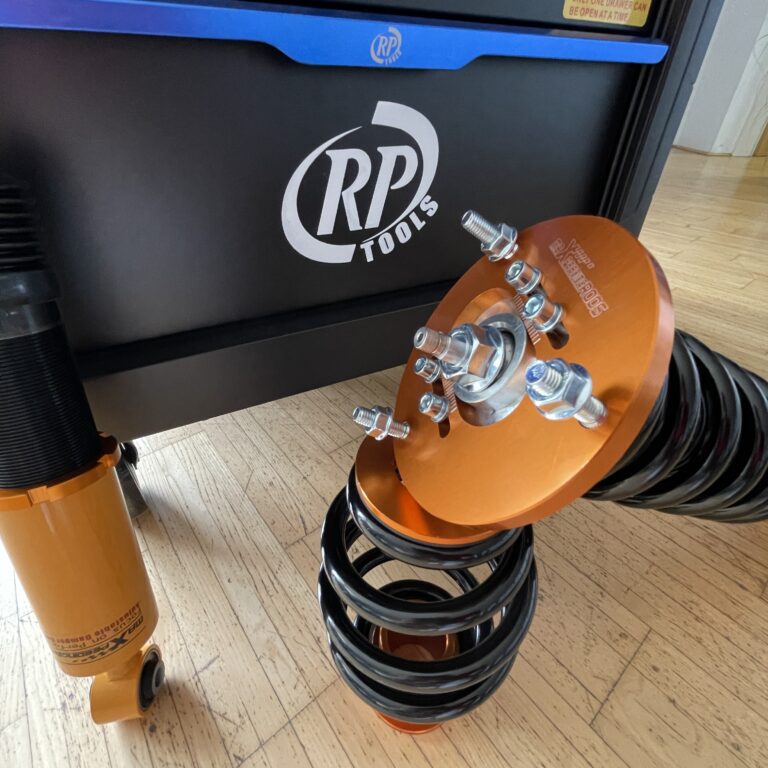
Some aftermarket manufacturers offer shocks described as universal or multi-fit. These products may use adjustable mounting hardware, common dimensions, or a design intended for several applications. However, buyers must still confirm the exact fit and operating specifications.
Source: carid.com
Vehicle-specific shocks
These are listed for particular vehicles or defined applications. They are generally the clearest option when replacing original equipment.
Universal or multi-fit shocks
These may work across several compatible applications, but their dimensions, mounting hardware, and performance limits still apply.
Adjustable shocks
These allow certain settings, such as damping or ride height on some designs, to be changed. Adjustability does not automatically make a shock fit every vehicle.
Custom suspension shocks
These are selected or built for modified vehicles, specialized loads, or unusual suspension layouts. Their use requires careful measurements and application knowledge.
What Does Universal Mean on a Shock Absorber?
Universal usually means a product can serve multiple applications within stated limits. It does not mean the product has unlimited compatibility. A listing may describe a universal shock for certain motorcycles, ATVs, trailers, or custom projects rather than passenger cars in general.
Some products include eyelet mounts, threaded studs, sleeves, or adapters to accommodate more than one mounting arrangement. Even when an adapter makes installation possible, the shock still needs the correct travel, damping, load capacity, and clearance. Always follow the specific manufacturer’s application guidance.
Read the full application description
Check the supported vehicle types, model ranges, dimensions, and mounting requirements rather than relying on the word universal.
Check the limitations
Look for exclusions related to suspension lifts, lowered vehicles, heavy loads, or particular mounting configurations.
Why Shock Absorbers Are Not Interchangeable
Shock absorbers may look similar on the outside, but their fit and performance depend on several design details. A difference in mounting style, length, travel, or damping can make a shock unsuitable even if its body diameter and general shape look right.
The suspension must move through its intended range without the shock reaching its mechanical limit too early. If a shock bottoms out before the suspension does, internal damage may occur. If it tops out during normal suspension movement, it can place unwanted force on mounts and related components.
The following factors are the main reasons one shock absorber cannot automatically replace another.
Source: i.pinimg.com
Mounting style
A shock may use an eyelet, stud, clevis, or another mounting arrangement. The mounting points must match or use an approved adapter.
Extended and compressed length
The shock must be long enough for the suspension to extend and short enough to compress without becoming the suspension’s unintended hard stop.
Suspension travel
Available shock travel must suit the movement permitted by the vehicle’s suspension geometry.
Damping characteristics
Compression and rebound damping must suit the spring rate, vehicle mass, axle design, and intended use.
Load capacity
The shock must be appropriate for the vehicle and its operating conditions. A shock that works on an unloaded vehicle may not perform correctly under a heavy load.
Clearance and construction
The shock must clear nearby tires, wheels, springs, brake lines, control arms, and other components throughout suspension movement.
Why Matching Length Alone Is Not Enough
Two shocks can have the same extended length but different compressed lengths, mounting widths, or internal damping. One may use a different piston design or valving intended for a different spring and vehicle weight. Those differences can affect comfort, stability, and the control of body movement.
For this reason, measuring an old shock is useful but does not replace application verification. The old part may already be incorrect, particularly if a previous owner installed a lift kit, lowering springs, or an unsuitable replacement. Use the vehicle manufacturer’s specifications and the replacement manufacturer’s fitment data together.
Compare both operating lengths
Check extended and compressed dimensions, not just the length of the shock while it is sitting on a workbench.
Confirm the mounting details
Compare stud diameter, eyelet width, sleeve dimensions, and fastener requirements where applicable.
Are Front and Rear Shock Absorbers the Same?
Front and rear shock absorbers are not necessarily the same, even when they belong to the same vehicle. Each axle has a particular suspension layout and may require different shock dimensions, mounting points, and damping characteristics.
Many cars use struts at the front and separate shocks at the rear. A strut is a structural suspension component that can support vehicle loads and help locate the wheel. A conventional shock absorber primarily controls suspension movement and does not serve the same structural role.
Some vehicles use shocks at both ends, but that does not make the front and rear parts interchangeable. The manufacturer’s parts catalog determines which shock belongs at each location.
Source: engineeringlearn.com
Front suspension
Front components must suit the steering and front suspension design. Some vehicles use complete strut assemblies instead of separate shock absorbers.
Rear suspension
Rear shocks must suit the rear axle or independent suspension geometry and the expected range of movement.
Left and right sides
Some vehicles use the same shock on both sides of an axle, while others have side-specific parts or different mounting details.
Can You Install a Rear Shock on the Front?
Do not install a rear shock on the front merely because its mounting ends appear to fit. The rear part may have the wrong dimensions, travel, damping, or construction for the front suspension. On a vehicle that uses front struts, a conventional rear shock cannot replace the structural strut assembly.
Use the exact approved part number or a verified equivalent for the front position. If a catalog lists one part for both axles, confirm that the listing explicitly supports both locations for your specific vehicle.
Verify the axle position
Check whether the replacement is specified for the front, rear, or both positions.
Do not rely on appearance
Similar-looking shock bodies do not prove that the parts have matching internal performance or structural functions.
Can Universal Shock Absorbers Fit Different Vehicles?
Yes, some universal shock absorbers can fit several vehicles when their mounting arrangements, dimensions, travel, and performance characteristics meet the requirements of each application. The key is that universal compatibility is limited to the applications supported by the manufacturer.
A universal motorcycle shock, for example, may be marketed for several small motorcycles or scooters with similar mounting dimensions. That does not make it suitable for a passenger car. Motorcycle suspension loads, mounting layouts, spring requirements, and vehicle dynamics differ from those of most cars.
Universal shocks are more common in certain custom projects, older vehicles, recreational vehicles, and specialized applications. For a standard daily-driven car or truck, a vehicle-specific replacement is often the simplest route because the intended application is clearly defined.
Source: m.media-amazon.com
Custom vehicles
A universal shock may work when the builder has measured the suspension and verified the full range of movement, load requirements, and mounting geometry.
Motorcycles and scooters
Some replacement shocks serve several models, but the mounting centers, spring rate, travel, and load requirements must still match.
Trailers and recreational equipment
Some products cover a defined range of trailer or recreational vehicle applications. Confirm axle design, load conditions, dimensions, and the manufacturer’s instructions.
Modified cars and trucks
Lifted or lowered vehicles may require shocks designed for the changed suspension geometry. The original factory shock may no longer have the required travel.
Are Universal Air Shocks Suitable for Every Car?
No. Air shocks use air pressure to change their support characteristics in applications designed for that purpose. They are not universal substitutes for ordinary hydraulic or gas-charged shocks.
An air shock must be approved for the suspension layout and load conditions. Incorrect installation or excessive pressure can place unwanted loads on suspension components. Never assume an air shock can replace a coil spring or another load-bearing component unless the vehicle and shock manufacturers specifically permit that arrangement.
Check the intended application
Confirm that the shock is designed for the vehicle, suspension type, and intended use.
Follow pressure limits
Use only the manufacturer’s specified air pressure range and installation method.
How to Choose the Correct Shock Absorber
The safest way to select a replacement shock absorber is to begin with the vehicle’s exact application and then verify the part specifications. Do not start by choosing the cheapest shock that looks similar or by relying on a general universal label.
In the United States, vehicle fitment can vary by model year, trim level, engine, drivetrain, towing package, suspension package, and factory options. Two versions of the same model may use different suspension components. Modified vehicles require additional checks because factory fitment data may not cover their current setup.
Source: ae01.alicdn.com
Step 1: Identify the Vehicle
Record the model year, make, model, trim, and drivetrain. Use the vehicle identification number, or VIN, when a parts supplier or manufacturer offers VIN-based fitment verification. A VIN lookup can narrow the options, but modified suspension systems may still need a physical inspection.
If the vehicle has a factory sport suspension, towing package, adaptive damping, or electronic suspension control, tell the parts supplier. These features can change which replacement parts are appropriate.
Check factory options
Identify special suspension packages and electronic controls before ordering.
Record modifications
Note lift kits, lowering springs, altered control arms, or other changes that affect suspension travel.
Step 2: Confirm the Part Number
Look up the original equipment part number or use a trusted manufacturer’s vehicle application catalog. Then check whether the replacement is listed as a direct-fit equivalent for the exact vehicle and axle position.
A cross-reference can help identify an aftermarket alternative, but the replacement manufacturer must support the application. A similar part number or matching appearance alone is not enough.
Vehicles with adaptive or electronically controlled dampers may need compatible units or an approved conversion kit.
Step 3: Compare Dimensions and Mounts
If the application is custom or the vehicle has been modified, measure the required extended and compressed lengths, mounting-center distance, and relevant mount dimensions. Check these measurements against the suspension’s actual movement limits and the replacement manufacturer’s specifications.
The shock should not limit normal suspension movement by bottoming out or topping out prematurely. Check clearance at the full range of suspension travel using an appropriate professional method when the geometry is uncertain. A static measurement with the vehicle parked may not reveal every clearance problem.
Measure the mounting centers
Use the same reference points specified by the manufacturer and account for any mounting sleeves or adapters.
Check operating travel
Confirm that compressed and extended lengths suit the suspension’s full operating range.
Verify clearance
Ensure the shock will not contact tires, springs, brake hoses, wiring, or other components.
Step 4: Match the Intended Use
Choose damping and construction for the vehicle’s normal operating conditions. A vehicle used for daily commuting may need different characteristics from one regularly carrying heavy cargo or operating on rough roads.
Do not assume that a firmer shock automatically improves safety or handling. Damping that is too firm or too soft for the spring and vehicle can reduce ride quality and compromise tire contact on uneven surfaces. Follow the application guidance rather than choosing solely by feel or marketing terms.
Daily driving
Prioritize correct fitment and damping suited to the original suspension and normal road use.
Towing and carrying loads
Check the vehicle’s approved load limits and select components specifically suitable for the application.
Off-road use
Verify travel, heat management, mounting strength, and compatibility with any suspension lift.
Shock Absorber Specifications You Should Compare
A specification comparison helps you determine whether a replacement shock is suitable, especially for a modified vehicle or a custom suspension project. The following table explains the main details to check before purchasing a part.
Use the manufacturer’s specifications for both the existing application and the proposed replacement. The numbers must be measured or defined in the same way to provide a useful comparison.
Source: m.media-amazon.com
Extended length
The distance between the specified mounting reference points when the shock is fully extended.
Compressed length
The distance between the same reference points when the shock is fully compressed.
Stroke
The available movement between the extended and compressed positions. It is commonly derived from the difference between those lengths when both are measured using the same reference points.
Mount type
The design and dimensions of the upper and lower attachment points.
Damping and application
The shock’s intended control characteristics and the vehicle or suspension setup for which the manufacturer specifies it.
A Simple Hypothetical Length Calculation
Suppose a shock has a listed extended length of 20 inches and a compressed length of 12 inches, both measured between the same mounting reference points. Its available stroke is 20 minus 12, or 8 inches.
This calculation only describes the shock’s dimensional range. It does not prove that the shock fits a particular vehicle. The suspension must have compatible mounting geometry and enough clearance, and its movement must remain within the shock’s safe operating range.
Extended length minus compressed length
This gives the shock’s stroke when the two measurements use consistent reference points.
Compare with suspension travel
Confirm that the shock can accommodate the required motion without topping out or bottoming out prematurely.
Common Mistakes When Buying Replacement Shocks
Many fitment problems begin when a buyer treats shock absorbers as simple tubes that can be swapped whenever their ends appear to match. Correct installation requires the right application, mounting hardware, travel, and damping characteristics.
Avoid these common mistakes to reduce the risk of buying the wrong part or creating a suspension problem.
Source: scooterworks.com
Assuming universal means universal fit
A universal listing usually covers a limited set of applications. Check the supported vehicles and specifications before ordering.
Choosing by length alone
Matching extended length does not guarantee correct compressed length, stroke, mounting dimensions, or damping.
Ignoring suspension modifications
A lifted or lowered vehicle may need a shock designed for the modified geometry rather than the original factory dimensions.
Mixing different shocks on one axle
Different damping characteristics from side to side can affect handling. Use a suitable matched pair where the manufacturer recommends it.
Overlooking electronic suspension
An ordinary passive shock may not be a direct replacement for an electronically controlled unit without a compatible conversion solution.
Ignoring damaged mounts
Worn bushings, cracked brackets, loose fasteners, or corrosion can undermine an otherwise correct replacement.
Should Shock Absorbers Be Replaced in Pairs?
Replacing shocks in pairs on the same axle is generally recommended because both sides should provide comparable damping. Replacing only one side can leave the vehicle with different suspension responses between the left and right wheels, particularly when the old shock has significant wear.
The exact repair should follow the vehicle and shock manufacturers’ guidance. If a damaged shock has also affected tires, mounts, springs, or other suspension components, those parts may need inspection or replacement as well.
Replace axle pairs when appropriate
Use matching, approved shocks on both sides of an axle when the application guidance calls for pair replacement.
Inspect related parts
Check bushings, mounts, springs, tires, and fasteners for wear or damage.
Can the Wrong Shock Absorber Damage Your Vehicle?
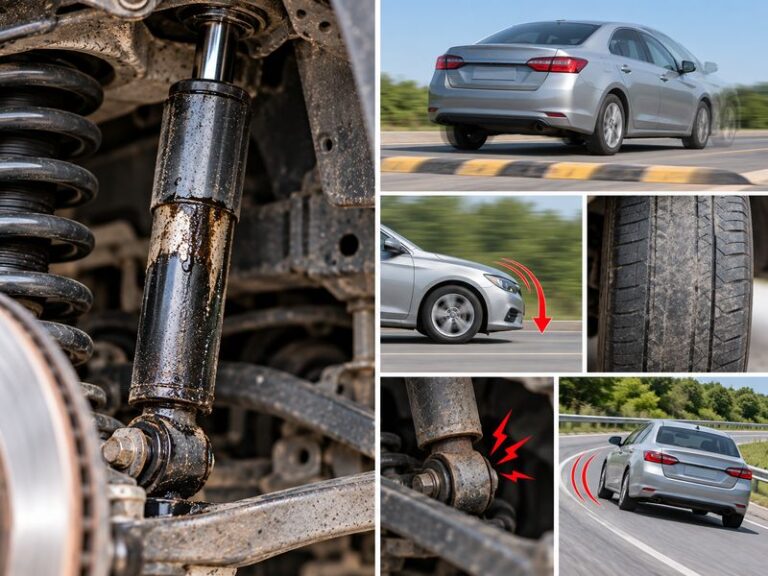
Yes. An unsuitable shock can cause poor suspension control and may damage components if it binds, reaches its travel limit too early, or puts excessive force on its mounts. Incorrect damping can also affect tire contact and vehicle stability, especially over rough roads or during sudden maneuvers.
The symptoms depend on the mismatch. A shock that is too short may limit extension. A shock that is too long may fail to provide the required compression clearance. A unit with unsuitable damping may allow excessive bouncing or make the suspension respond harshly to road impacts.
Do not continue driving if the shock is loose, incorrectly secured, leaking heavily, visibly bent, or causing severe handling changes. Have the suspension inspected before returning the vehicle to normal use.
Source: mechbasic.com
Excessive bouncing
This can indicate weak damping, but worn springs, tires, and other suspension problems can also contribute.
Knocking or clunking
Loose hardware, worn mounts, damaged bushings, or an incorrect shock fit can produce unusual noise.
Uneven tire wear
Poor suspension control can contribute to tire wear, although alignment, inflation, and other mechanical faults must also be checked.
Harsh or unstable handling
Unsuitable damping or limited suspension travel can affect the way the vehicle responds to bumps, turns, and braking.
When to Seek Professional Help
Ask a qualified mechanic or suspension specialist to verify fitment when the vehicle has an altered suspension, unusual mounting hardware, electronic dampers, or unclear application data. A professional can inspect the mounting geometry and confirm that the shock does not restrict the suspension’s operating range.
Use proper lifting equipment and approved support stands when working under a vehicle. Never rely on a jack alone. Coil springs can store substantial energy, and strut assemblies may require specialized spring compressors and safe procedures. If the repair involves a loaded spring or you are unsure how to release stored energy safely, have a trained technician perform the work.
Stop when fitment is uncertain
Do not force a shock into place, modify a mount without engineering approval, or use improvised hardware.
Follow torque specifications
Use the specified fasteners and tightening procedures from the vehicle or component manufacturer.
A Practical Shock Absorber Compatibility Checklist
Before purchasing a shock absorber, confirm the vehicle application first and then check the part details. This short checklist can help prevent a mismatch when shopping online or visiting an auto parts store in the United States.
Source: i5.walmartimages.com
Vehicle identification
Confirm the year, make, model, trim, drivetrain, and relevant factory suspension options.
Correct location
Verify whether the part belongs on the front or rear and whether the left and right sides use the same component.
Application approval
Check that the shock manufacturer explicitly lists the vehicle or the verified modified setup.
Dimensions and travel
Confirm mounting dimensions, extended length, compressed length, and required stroke.
Performance requirements
Verify damping, vehicle weight requirements, and suitability for normal driving, towing, or other intended use.
Related hardware
Check whether new mounts, bushings, sleeves, bolts, or electronic conversion components are required.
Installation requirements
Review torque values, safety instructions, and any alignment or calibration requirements specified for the repair.
What If the Catalog Shows Several Compatible Shocks?
If a parts catalog lists several approved options, compare the intended use, construction, adjustability, warranty terms, and any installation requirements. Confirm that each option matches the vehicle’s exact configuration and the manufacturer’s stated limitations.
If two listings disagree about compatibility, ask the manufacturer or supplier to verify the application using the VIN, original part number, and suspension details. Do not choose one based solely on a marketplace title that says universal.
Prefer documented compatibility
Choose a product with clear application data and support for the exact vehicle or verified custom setup.
Keep the specifications
Save the part number and fitment details in case you need to confirm the installation or order a matching replacement later.
Reader Questions That Deserve More Than a Universal Fit Label
The most useful next step depends on why you are replacing the shock. A standard replacement, a lifted truck, and a custom motorcycle may require different checks, even if each product listing uses similar words.
The key distinction is between physical fit and verified application compatibility. A part can attach to a mounting point and still be unsuitable for the suspension’s movement, load, or damping requirements.
Source: i.pinimg.com
Research and Coverage Notes
The article’s main answer is based on established suspension principles: shock absorbers must match the intended application, mounting geometry, operating travel, and damping requirements. No hands-on vehicle testing or independent fitment measurements were performed for this article.
The follow-up questions below are inferred from the main purchasing task rather than presented as verified search-volume findings. Their purpose is to help readers resolve common fitment decisions without implying that every question has been observed in live search results.
Question: Can a universal shock fit a lifted truck?
Coverage status: addressed. The article explains why suspension modifications change the fitment checks. The practical benefit is avoiding a shock that reaches its travel limit too early.
Question: Do front and rear shocks interchange?
Coverage status: addressed. The article explains differences in suspension layout and mounting requirements. The practical benefit is choosing the correct axle-specific part.
Question: How can shock length be checked?
Coverage status: addressed. The article explains extended length, compressed length, and stroke, while clarifying that measurements alone do not prove fitment.
Question: Should shocks be replaced in pairs?
Coverage status: addressed. The article explains why comparable damping across an axle matters and advises following the applicable manufacturer guidance.
Frequently Asked Questions
Q
Are shock absorbers the same for all cars?
No. Cars can use different shock dimensions, mounting designs, damping settings, and suspension layouts. Even two trims of the same model may require different parts. Use the vehicle’s exact application data and the shock manufacturer’s fitment catalog to identify a compatible replacement.
Q
Can I use universal shock absorbers on my car?
You can use a universal shock only if the manufacturer confirms that it is suitable for your vehicle or properly specified custom suspension. Check mounting points, compressed and extended lengths, travel, clearance, damping, and load requirements. The word universal by itself is not proof of compatibility.
Q
Are all shock absorbers the same size?
No. Shock absorbers vary in length, stroke, body dimensions, mount design, and internal construction. The correct dimensions depend on the suspension layout and the vehicle’s intended use. A matching overall length does not guarantee a safe or suitable fit.
Q
Can I replace just one shock absorber?
A single shock can sometimes be replaced, but replacing both shocks on the same axle is generally recommended to maintain more consistent damping. Follow the vehicle and replacement-part manufacturer’s instructions, and inspect the opposite shock and related suspension components for wear.
Q
Can I install a longer shock absorber to raise my vehicle?
A longer shock does not automatically lift a vehicle. Ride height is usually determined by springs, suspension geometry, or a purpose-designed lift system. A longer shock may be suitable for a modified suspension only when its travel, mounts, clearance, and operating range have been verified. Do not use an unsuitable shock as a substitute for a properly designed lift.
Q
How do I know which shock absorbers fit my vehicle?
Start with the year, make, model, trim, drivetrain, and suspension package. Use a trusted vehicle fitment catalog or manufacturer parts guide, and verify the correct axle position and part number. If the suspension has been modified, confirm the actual dimensions and operating travel with a qualified suspension specialist.
✦ Wrapping Up
Conclusion
Shock absorbers are not universal, although some aftermarket designs fit a defined range of vehicles. The correct replacement must match the suspension’s mounting points, dimensions, operating travel, damping requirements, and intended load conditions.
For a standard car, truck, or SUV, begin with the vehicle’s exact application and choose a replacement listed by the manufacturer. For a lifted, lowered, or custom vehicle, confirm the suspension geometry and full range of movement before buying a shock. A part that physically fits is not necessarily a part that performs correctly.
If fitment information is unclear, contact the shock manufacturer or a qualified suspension technician. That simple check can help avoid incorrect purchases, installation problems, and suspension damage.
💡 Key Takeaway
Before ordering, verify your vehicle’s exact configuration, confirm the shock’s part number and axle position, and compare its mounting dimensions and operating travel with the manufacturer’s requirements. Do not rely on the word universal alone.
Eric
Hi, I’m Eric Bennett, the person behind OffRoadTruckAccessories.com.
I created this blog to share my interest in trucks, off-road driving, automotive accessories, and DIY modifications. I enjoy learning how different truck accessories work, testing their usefulness, and understanding whether they are truly worth buying.
Shock absorbers are located near the wheels as part of the suspension system, usually between the vehicle’s body, frame, or subframe and a suspension component such as a control arm, axle, or wheel assembly. However, the exact answer to where are shock absorbers located on a car depends on the suspension design. Some vehicles have…
You should change shock absorbers when they are worn, leaking, damaged, or no longer controlling suspension movement properly. There is no single replacement interval that applies to every vehicle because shock absorber life depends on road conditions, vehicle weight, driving habits, suspension design, and component quality. If you are wondering when to change shock absorbers,…