Are Leveling Kits Bad for Suspension? Complete Guide
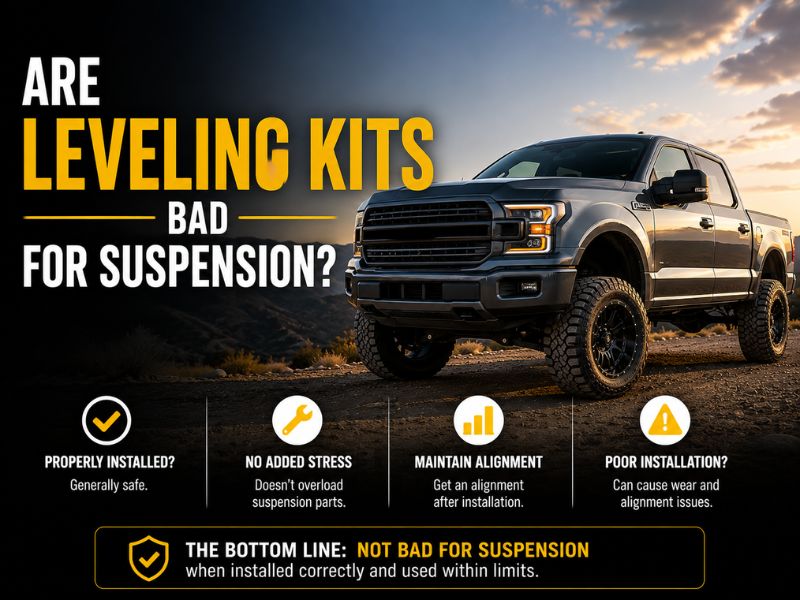
Are leveling kits bad for suspension? No, leveling kits are not automatically bad for suspension. A properly designed leveling kit installed within the recommended height range can work safely without causing major suspension problems. However, an aggressive leveling kit, incorrect installation, poor alignment, or oversized tires can increase stress on suspension components and lead to premature wear.
The complete details are explained below. In this article, you will learn how leveling kits change suspension geometry, which components are affected, when they can cause problems, how to prevent suspension damage, and whether a leveling kit is the right choice for your truck.
Are Leveling Kits Bad for Suspension?
Leveling kits are not inherently bad for suspension systems. They are one of the most common truck modifications because they provide a noticeable appearance improvement without the complexity of a full suspension lift.
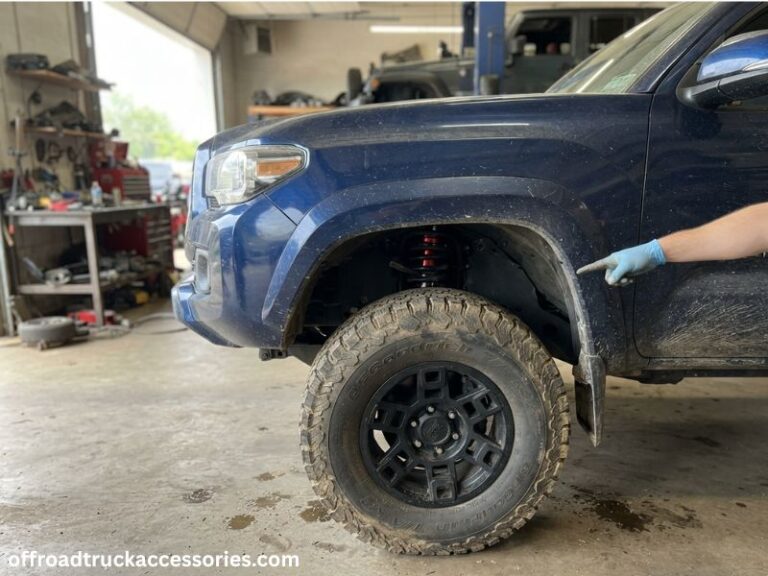
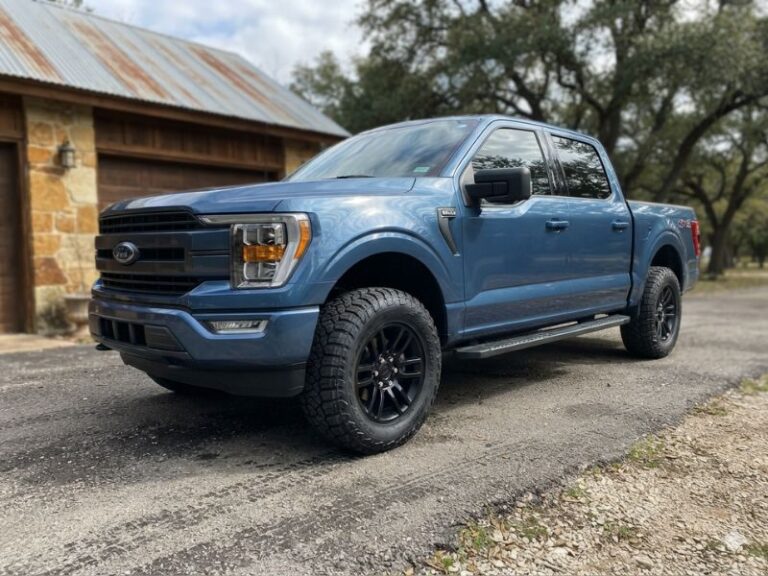
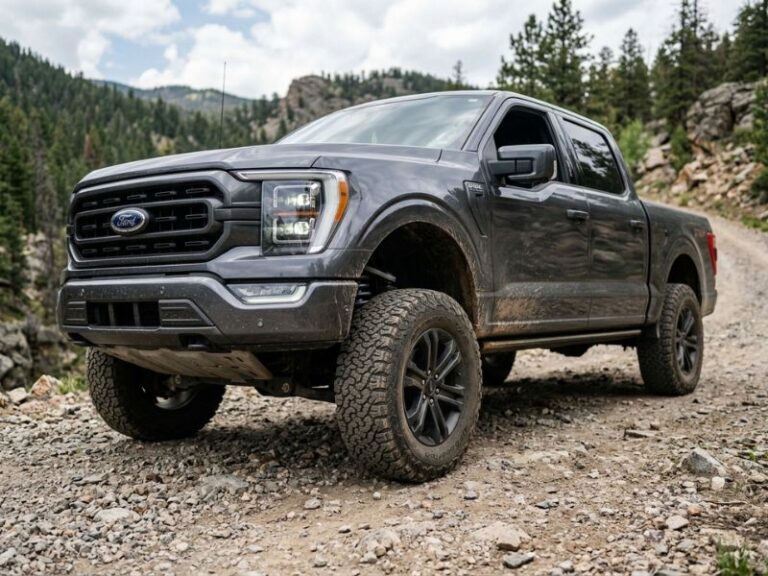
The main purpose of a leveling kit is to raise the front of the truck to reduce the factory rake, where the rear sits higher than the front.
When installed correctly, a leveling kit can provide benefits such as:
- Improved truck stance
- Better front-end appearance
- Additional tire clearance
- Ability to fit slightly larger tires
However, suspension systems are designed around specific operating angles and ride heights. Raising the front changes how suspension components move and support the vehicle.
The potential problems come from changing those relationships beyond what the factory components can handle.
A mild leveling kit may have little effect on suspension lifespan, while an aggressive setup can increase stress on:
- Ball joints
- Control arms
- Shocks
- Tie rods
- CV axles
- Bushings
The key factor is not simply installing a leveling kit. The key factor is how much the suspension geometry changes.
How Do Leveling Kits Affect Suspension Geometry?
A truck’s suspension is engineered to work at a specific factory ride height.
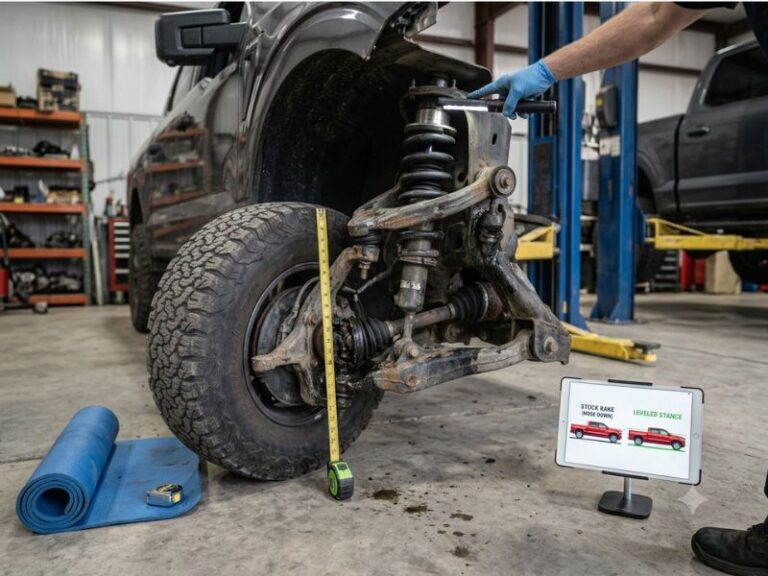
When you install a leveling kit, the front suspension sits lower relative to its original position while the body sits higher. This changes the angles and movement range of several components.
Depending on the truck, a leveling kit can affect:
- Upper and lower control-arm angles
- Ball-joint operating angles
- Shock position
- Steering linkage
- Alignment settings
- Suspension travel
For example, raising an independent front suspension truck changes the position of the control arms and steering knuckle. The suspension may still work correctly, but the components are no longer operating exactly where the manufacturer originally designed them.
A properly matched leveling kit keeps these changes within an acceptable range.
An overly tall kit can push components closer to their limits.
Do Leveling Kits Wear Out Ball Joints Faster?
Leveling kits can increase ball-joint stress, especially when the front suspension is raised significantly.
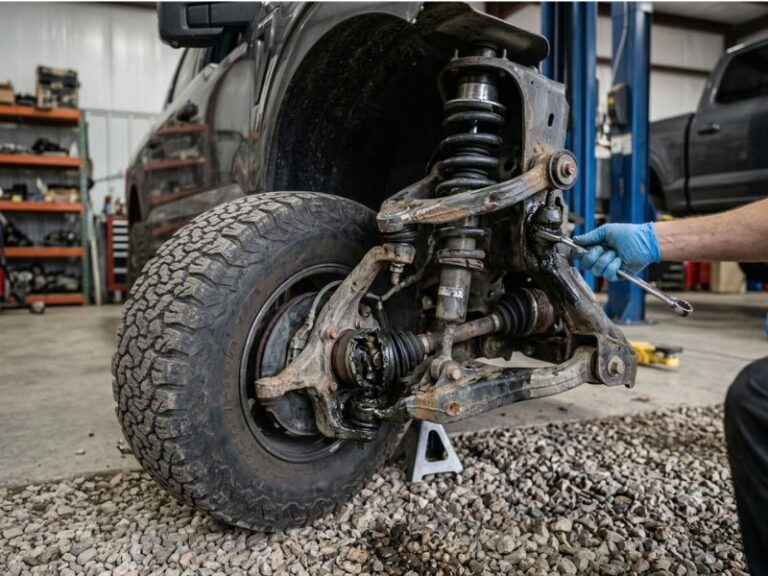
Ball joints connect the control arms to the steering knuckle and allow suspension movement while supporting vehicle weight.
When the truck is lifted, the control arms sit at a different angle. This can force ball joints to operate closer to their maximum movement range.
Possible signs of ball-joint stress include:
- Clunking noises
- Loose steering feel
- Uneven tire wear
- Excessive play in the suspension
- Alignment problems
The risk increases when combined with:
- Large tires
- Heavy aftermarket wheels
- Aggressive wheel offset
- Frequent off-road use
Many mild leveling kits are designed to work with factory control arms. However, taller leveling setups may require aftermarket upper control arms to restore proper geometry.
Do Leveling Kits Affect Control Arms?
Yes, leveling kits affect control arms because they change the suspension resting position.
Control arms are designed to move through a specific range. When the truck is raised, the control arms operate at a different angle.
Potential effects include:
- Reduced suspension movement
- Increased ball-joint angles
- Reduced alignment adjustment range
- Increased bushing stress
On some trucks, a small leveling kit keeps the control arms within a safe range.
On others, especially trucks with larger leveling heights, aftermarket control arms may be recommended.
The need for upgraded control arms depends on:
- Truck model
- Suspension design
- Leveling height
- Tire size
- Driving style
A properly designed kit should provide guidance on whether additional components are required.
Do Leveling Kits Damage Shocks?
Leveling kits can affect shock performance because they change the shock’s operating position.
Factory shocks are designed around the original suspension height.
When the front is raised, the shock may sit closer to full extension. This can reduce available downward movement.
Possible issues include:
- Shock topping out
- Harsher ride quality
- Reduced suspension travel
- Increased shock wear
A small leveling kit often works with factory shocks, especially if they are in good condition.
However, larger leveling kits may require longer shocks or replacement struts designed for the new ride height.
A common mistake is adding more lift without considering whether the shocks still have enough travel.
Do Leveling Kits Affect CV Axles?
On four-wheel-drive trucks, leveling kits can affect CV axle angles.
CV axles transfer power from the front differential to the wheels while allowing suspension movement.
Raising the front suspension increases the angle at which the CV joints operate.
A small change may be acceptable, but excessive lift can create additional stress.
Potential problems include:
- Torn CV boots
- Grease leakage
- Clicking noises during turns
- Increased joint wear
- Vibration under acceleration
The risk becomes higher with:
- Larger leveling kits
- Bigger tires
- Heavy wheels
- Off-road driving
This is why many 4WD owners choose conservative leveling heights rather than maximum lift.
Do Leveling Kits Reduce Suspension Travel?
Yes, leveling kits can reduce suspension travel.
Suspension travel includes:
- Compression travel, when the wheel moves upward
- Droop travel, when the wheel moves downward
A leveling kit raises the resting position of the suspension without increasing the total movement range.
This means the suspension may have less room to extend downward.
Reduced droop travel can cause:
- Less off-road traction
- Harsher ride over uneven surfaces
- Suspension components reaching their limits sooner
For daily driving, this may not be noticeable.
For serious off-road use, reduced travel can become a significant disadvantage.
A full suspension lift with properly matched shocks and springs is usually better for extreme terrain.
Do Leveling Kits Affect Alignment?
Yes, alignment is one of the biggest considerations after installing a leveling kit.
Changing suspension height affects:
- Camber
- Caster
- Toe
Incorrect alignment can cause:
- Uneven tire wear
- Steering pull
- Poor handling
- Reduced tire lifespan
A professional alignment should always be completed after installation.
The alignment technician should confirm that the truck can return to acceptable specifications.
If the alignment cannot be corrected, the leveling height may be too aggressive or additional suspension components may be required.
Skipping alignment is one of the easiest ways a leveling kit can create expensive problems.
Can Bigger Tires Make Suspension Problems Worse?
Yes, larger tires can increase stress on suspension components after leveling.
Many owners install leveling kits specifically to fit larger tires, but bigger tires add additional load.
Larger tires can increase:
- Unsprung weight
- Steering effort
- Suspension stress
- Brake demand
Heavy wheels and tires place more force on:
- Ball joints
- Wheel bearings
- Tie rods
- CV axles
A moderate leveling kit with reasonable tires may be very reliable.
A maximum-height leveling kit combined with oversized heavy tires creates much more stress.
The entire setup should be considered together.
Are Spacer Leveling Kits Worse for Suspension?
Spacer leveling kits are not automatically worse for suspension.
They are popular because they are affordable and simple.
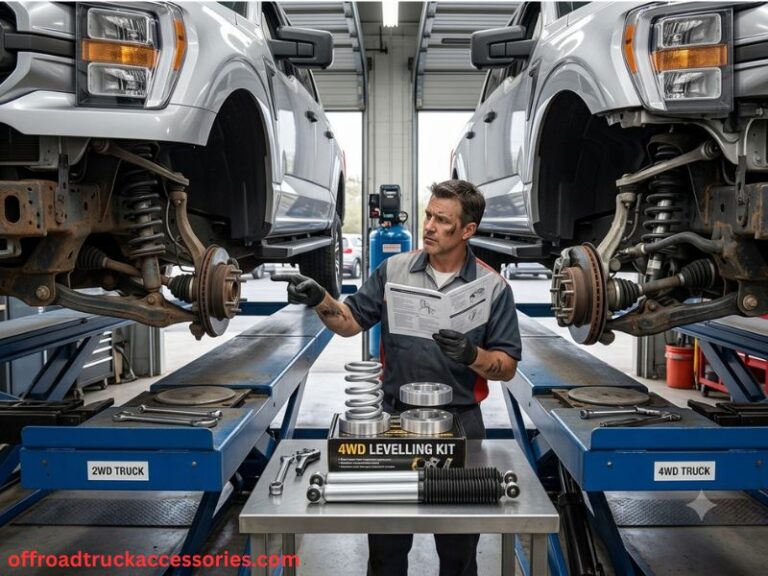
A spacer kit usually keeps the factory spring and shock components, adding a spacer to increase height.
Advantages include:
- Lower cost
- Easy installation
- Factory-like maintenance
However, spacer kits do not add suspension travel. They simply reposition the suspension.
Large spacers can create more aggressive suspension angles, which may increase stress on factory components.
The quality of the spacer and the lift amount are more important than the fact that it is a spacer design.
Are Torsion Key Leveling Kits Bad for Suspension?
Torsion key leveling kits are also not automatically bad.
They are commonly used on trucks with torsion bar suspension systems.
The concern is that increasing torsion preload raises the front suspension by changing the torsion bar position.
Excessive adjustment can lead to:
- Reduced suspension travel
- Increased ball-joint angles
- Rougher ride quality
- More stress on CV axles
A moderate torsion key adjustment may work well.
Turning the torsion keys to achieve maximum height is where many problems begin.
Can a Leveling Kit Cause Suspension Failure?
A properly installed leveling kit is unlikely to suddenly cause suspension failure.
Most problems develop gradually because of increased wear or incorrect setup.
Possible long-term issues include:
- Faster ball-joint wear
- Premature shock wear
- Alignment problems
- Tire wear
- CV axle stress
The risk depends on how the truck is used.
A daily commuter with a mild leveling kit experiences much less stress than a heavily modified off-road truck with large tires.
Regular inspection and maintenance are important after any suspension modification.
How to Prevent Leveling Kit Suspension Problems
A leveling kit can provide reliable performance when installed correctly.
To reduce risk:
Choose a kit designed specifically for your truck.
Avoid excessive lift heights.
Use proper wheel and tire combinations.
Complete a professional alignment after installation.
Inspect suspension components regularly.
Watch for:
- New noises
- Steering changes
- Uneven tire wear
- Vibration
- Loose suspension feel
Replace worn factory components before adding additional stress.
A well-planned modification is much safer than simply adding the most height possible.
Are Leveling Kits Worth It Despite Suspension Concerns?
For many truck owners, leveling kits are still worth it.
They provide a noticeable improvement in appearance and can create additional tire clearance without the cost of a complete suspension lift.
They are a good option for:
- Daily drivers
- Highway trucks
- Light-duty off-road use
- Owners wanting a better stance
They may not be ideal for:
- Extreme off-road builds
- Maximum tire sizes
- Heavy towing applications
The correct choice depends on your goals and how you use your truck.
Final Thoughts
So, are leveling kits bad for suspension? No, leveling kits are not automatically bad. A properly selected and installed leveling kit can be a safe modification that improves your truck’s appearance and functionality.
The problems occur when the kit creates excessive suspension angles, alignment is ignored, or the truck is modified beyond what factory components can handle.
Choose a quality kit, keep the lift height reasonable, complete proper alignment, and match your tires and wheels carefully. A balanced setup can provide the look you want while keeping your suspension reliable.