Coilovers are worth the money if you want adjustable ride height, more control over suspension settings, or better handling for a clear driving goal. They may not be worth the cost if you mainly drive on public roads and want a comfortable, reliable daily driver.
In the United States, car owners can choose from many suspension upgrades, from simple replacement shocks to full coilover kits. The right choice depends on how you use your car, the roads you drive on, and the money you can spend. A lower car may look better to you, but looks alone do not prove that the suspension works better.
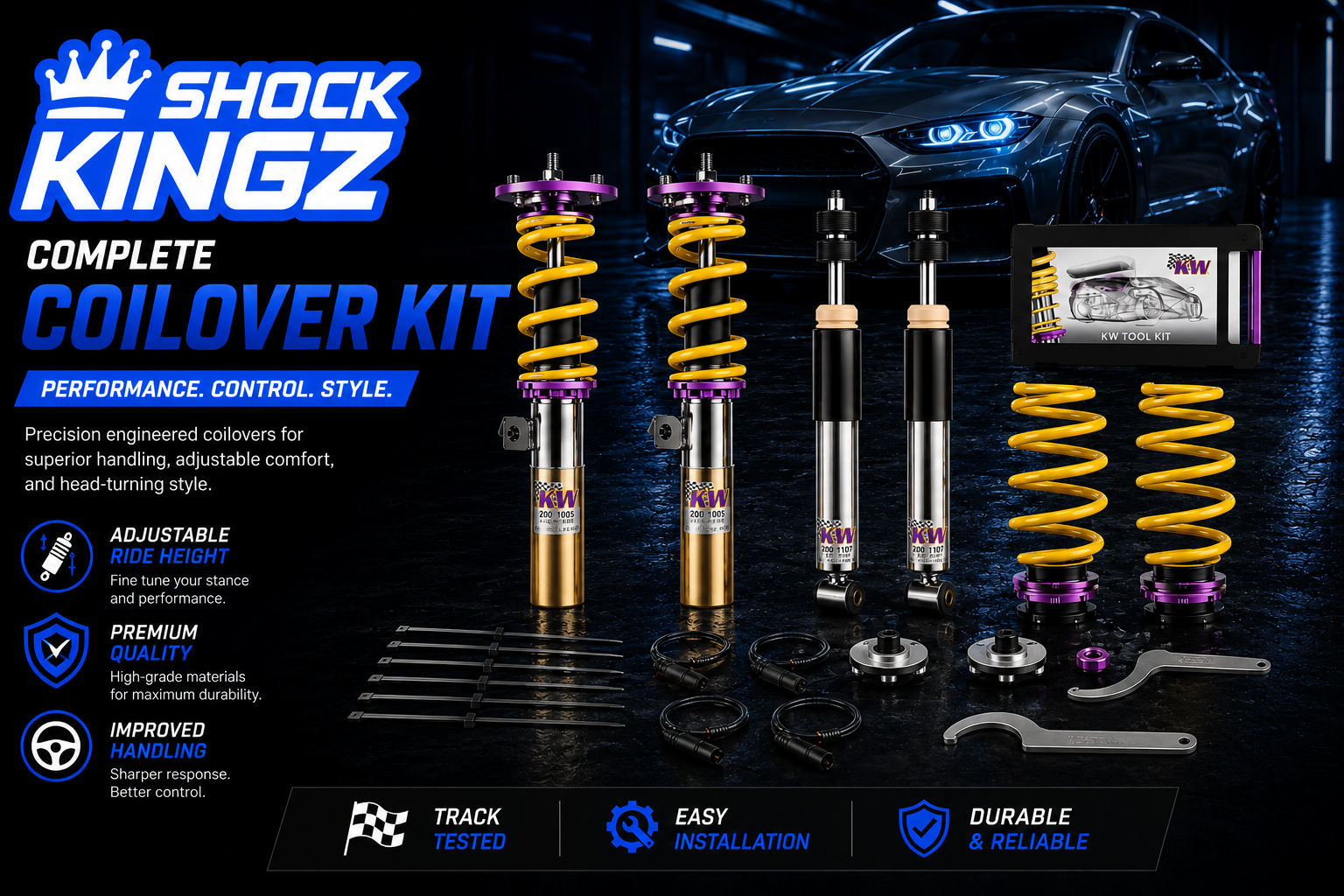
Coilovers combine a spring and a shock absorber in one suspension assembly. Many kits let you change ride height, while some also let you adjust damping, which controls how quickly the suspension moves. These settings can help you tune a car for street driving, track days, or other uses, but a poor setup can make the ride harsh and reduce grip.
The purchase price is only part of the cost. You may also need installation, a wheel alignment, new parts, and later repairs. Before buying coilovers, compare the full cost with a good set of replacement shocks and springs. This guide explains when the upgrade makes sense, what it can improve, and when your money is better spent elsewhere.
Coilovers are suspension units that pair a coil spring with a shock absorber, also called a damper. The spring supports the car and helps absorb bumps, while the damper controls spring movement. Together, these parts help keep the tires in contact with the road.
Many coilover kits let you change the car’s ride height. Some also allow damping adjustments, and certain designs offer separate controls for different parts of suspension movement. The available features depend on the kit, so check the exact product specifications rather than assuming every coilover offers the same settings.
Coilovers do not automatically make a car handle better. Spring rates, damper settings, tire grip, suspension geometry, and vehicle weight all affect performance. A well-chosen kit can improve control, but a poorly matched kit can make a car less comfortable and less predictable.
Source: suspensionsetups.com
Ride height adjustment
This feature lets you raise or lower the car within the kit’s approved adjustment range. It can help with appearance or clearance needs, but lowering too far can harm suspension travel and geometry.
Damping adjustment
Some kits let you change how quickly the suspension responds to bumps and body movement. More adjustment does not mean better performance unless you know how to set it.
Spring and damper matching
The spring and damper must work well together. A suitable match can control body movement without making the car needlessly harsh.
Vehicle-specific design
A kit should fit the car’s suspension layout, weight, and intended use. Fitment and approved ride-height limits matter more than appearance alone.
Coilovers vs. Standard Shocks and Springs
Most standard suspensions use springs and shock absorbers or struts designed around the vehicle’s original ride height and expected use. Many replacement kits retain a similar setup while restoring worn parts or changing the ride feel. Coilovers add an integrated spring-and-damper design and, in many cases, more adjustment options.
A complete coilover kit may replace the original spring and damper assemblies. However, the exact parts included vary. Some kits reuse factory mounts, while others include new mounts or require extra components. Check the fitment list before comparing prices.
Choose replacement suspension
This is often the better route when your main goal is to restore factory comfort, replace worn shocks, or keep maintenance simple.
Choose coilovers
These make more sense when ride-height adjustment or a wider range of suspension tuning is part of your plan.
How Much Do Coilovers Cost?
Coilover prices vary by vehicle, build quality, features, and intended use. A low-cost kit may cost a few hundred dollars, while more advanced kits can cost well over $2,000 before installation. Specialty motorsport systems can cost more. These are broad planning ranges, not verified current quotes for every car.
The cheapest listing is not always the cheapest option over time. A kit may need separate mounts, extra hardware, professional installation, or more frequent repairs. A more expensive kit may offer better adjustment, rebuild support, or documentation, but price alone does not prove that it performs better.
For a fair comparison, check what each kit includes and whether the manufacturer supports your vehicle. Compare the warranty, rebuild options, spare-part availability, adjustment method, and intended use. If a kit lacks clear fitment information or reliable support, its low price may not justify the risk.
Source: www.autoevolution.com
Entry-level kits
Often focus on basic height adjustment. Check ride quality, corrosion protection, warranty terms, and replacement-part availability before buying.
Midrange kits
May offer better damping control, construction, documentation, and support. Compare the exact features rather than relying on the price tier.
Premium kits
May provide wider tuning options, rebuildable dampers, or support for demanding use. They make sense only if those benefits match your needs.
Installation and alignment
These costs are separate from the kit price. The total depends on vehicle design, local labor rates, rust, seized fasteners, and any extra repairs.
A Realistic Installed-Cost Example
Consider a hypothetical U.S. installation with a $1,000 coilover kit, $700 in labor, $120 for a wheel alignment, and $80 for extra hardware. The total would be $1,900 before tax or unexpected repairs. These figures are examples for planning, not a quote or a survey of current market prices.
Now compare that total with a hypothetical $700 replacement suspension package, $400 in labor, and the same $120 alignment. The replacement setup would total $1,220. The coilovers would cost $680 more, so you should be able to explain what the added adjustment and performance options are worth to you.
$700 parts + $400 labor + $120 alignment = $1,220.
Added cost
$1,900 minus $1,220 = $680 more for the coilover option in this example.
When Are Coilovers Worth the Money?
Coilovers offer the clearest value when their adjustment features solve a real problem or support a specific goal. If you want to set ride height, tune body movement, or prepare a car for regular track use, a suitable kit may justify the extra cost. The key is to choose the features you will actually use.
They can also suit owners who want a particular stance and are willing to accept the costs and ride compromises. However, a lower car is not always a better-handling car. Excessive lowering can reduce suspension travel, alter alignment, and increase the chance of hitting the bump stops.
The value is less clear when the car is used mainly for commuting and its current suspension works well. If you do not need height adjustment or specialized tuning, a quality standard replacement setup may deliver the comfort and reliability you want for less money.
Source: www.youtube.com > James Freitas
You need adjustable ride height
Coilovers can help you set a suitable stance or adjust clearance within the limits of the suspension design. Keep enough travel for the roads you use.
You attend track days
A suitable kit can give you more control over body movement and suspension response. Track results still depend on tires, alignment, driver skill, and setup.
You enjoy suspension tuning
Adjustable damping can be useful if you can make changes methodically and judge the effect. Extra controls are less valuable when they remain unused.
Your original suspension is worn
A replacement is needed, but coilovers are only one option. Compare their full installed cost with a quality replacement package before deciding.
Are Coilovers Worth It for Daily Driving?
Coilovers can work well on a daily driver, but ride comfort depends on the kit, spring rates, damping, tires, ride height, and road surface. A well-designed street kit may provide controlled handling without an extreme ride. A stiff or poorly set kit can make potholes and broken pavement much harder to tolerate.
Drivers in areas with rough roads should pay close attention to ground clearance and suspension travel. A low setup may scrape on steep driveways, speed bumps, and parking ramps. It can also leave less room for the suspension to absorb a large bump.
If your car is a daily driver, look for a kit designed for street use rather than choosing one based only on how low it can go. If your main complaint is worn shocks or excessive bouncing, replacing those parts with suitable factory-style components may be the better investment.
Worth it for some drivers
Choose a street-focused kit if you need height adjustment and have confirmed that its ride quality suits your roads.
Often unnecessary
Keep the standard suspension or use quality replacements if comfort, low cost, and simple upkeep matter most.
Are Coilovers Worth It for Track Days?
Track drivers may gain more from coilovers because repeated cornering, braking, and acceleration make suspension control more important. A suitable kit can allow ride-height and damping changes that help match the car to its tires, weight, and intended use.
However, buying an expensive kit does not guarantee faster lap times. Incorrect spring rates or damping can reduce grip over bumps and make the car harder to control. Tires, brakes, alignment, driver practice, and consistent setup may provide more value than a costly suspension upgrade.
Before spending money, check whether the kit is designed for your type of track use and whether its manufacturer provides setup guidance. A rebuildable system may also make sense if you drive on track often and expect to service the dampers over time.
Best fit
Regular track users who need tuning options and are prepared to learn correct suspension setup.
Poor fit
Drivers expecting a bolt-on kit to make the car faster without changes to alignment, tires, or driving technique.
What Benefits Can Coilovers Provide?
The main benefits of coilovers are adjustable ride height, potential control over damping, and the ability to match the suspension to a specific use. These features can be useful when the kit is well designed and correctly set up. They are not automatic gains that every driver will feel.
A suitable coilover setup may reduce unwanted body movement during cornering and help the car respond more consistently. The result depends on the entire suspension system, including tires, bushings, alignment, and vehicle design. Some cars may gain more from tires or alignment work than from changing the suspension.
Coilovers can also offer a visual benefit by changing the distance between the body and the wheels. For some owners, that appearance is a valid reason to buy them. Still, appearance should be balanced against ground clearance, comfort, tire wear, and the condition of public roads.
Source: shiftmaxx.com
More control over ride height
Set the car to a suitable height for appearance, handling goals, or clearance needs, while staying within the kit’s safe range.
Potentially better body control
A suitable spring and damper combination may reduce excess roll, pitch, or bouncing. It must be tuned for the vehicle and driving conditions.
Tuning flexibility
Damping adjustment on supported kits lets owners test different settings for street or track use.
One matched suspension package
Many kits pair springs and dampers chosen to work together, although the quality of that match varies by design and price.
Do Coilovers Improve Handling?
Coilovers can improve handling when their spring rates, damping, ride height, and alignment suit the car and its tires. They may make body movements easier to manage and provide more consistent responses during cornering. But stiffer suspension alone does not create more tire grip.
If the suspension is too stiff for the road, the tires may struggle to follow uneven pavement. If the car is lowered too far, the suspension may lose useful travel or move into an unfavorable alignment range. Either problem can make the car less stable on rough roads.
For a road car, the goal should be predictable grip and control, not the lowest ride height or the firmest setting. For a track car, changes should be tested in a controlled setting and assessed against a clear baseline.
A good setup
Balances spring support, damper control, tire grip, suspension travel, and alignment.
A poor setup
May create a harsh ride, less grip on rough surfaces, unwanted tire wear, or unpredictable handling.
What Are the Downsides of Coilovers?
Coilovers can cost more than standard replacement suspension, and their extra features add little value if you never use them. Some kits also trade comfort for firmer body control or a lower stance. The size of that trade-off depends on the kit and setup.
Maintenance is another factor. Threaded adjustment collars can become hard to turn when exposed to dirt, water, and road salt. Dampers may also wear or leak, and some designs cost more to rebuild or replace than others.
A lowered car may have less ground clearance, less suspension travel, and more risk of scraping. Changes in suspension geometry can also affect alignment and tire wear. These issues do not make all coilovers unsuitable, but they should be part of the purchase decision.
Source: www.youtube.com
Higher total cost
Budget for the kit, labor, alignment, extra parts, and future maintenance rather than looking at the purchase price alone.
Possible loss of comfort
A stiff spring rate, poor damping match, or low ride height can make rough roads less pleasant.
More setup work
Adjustment features are useful only when you understand their purpose and keep settings within the manufacturer’s guidance.
Wear and corrosion
Road grime and salt can affect threaded parts and other hardware. The care required depends on the design and local conditions.
Fitment and geometry limits
A kit that does not suit the vehicle or is installed at an unsuitable height can cause clearance, alignment, and handling problems.
Do Cheap Coilovers Make Sense?
Low-cost coilovers can make height adjustment more accessible, but the purchase price tells you little about their ride quality or service life. Before buying, look for clear vehicle fitment, documented adjustment limits, a usable warranty, and access to replacement parts. Independent reviews can help, but they should match your vehicle and intended use.
Avoid judging a kit by its brand name or appearance alone. A less expensive system may be adequate for a modest street setup, while a costly system may offer features you do not need. The important question is whether the kit meets your needs without creating unreasonable maintenance or safety risks.
If the manufacturer provides little technical information or no clear support path, consider another option. A cheap kit can become expensive if it needs early replacement, causes ride problems, or cannot be repaired when a part wears out.
Check support
Confirm that spare parts, warranty service, and technical information are available for your exact kit.
Check the intended use
A kit made for show-oriented lowering may not suit daily driving or repeated track use.
Compare the full cost
Include installation, alignment, maintenance, and likely replacement needs before deciding.
Coilovers vs. Lowering Springs vs. Stock Suspension
Coilovers are not the only way to change how a car sits or handles. Lowering springs, quality replacement shocks, sport suspension packages, and the original suspension can all be sensible choices. The best option depends on whether you need a different ride height, better control, or simply a return to the car’s original behavior.
Lowering springs usually cost less than a full coilover kit, but they provide less ride-height flexibility. They are designed to lower the car by a set amount and should be matched with suitable dampers. Keeping stock suspension can be the best choice when comfort, predictable behavior, and low upkeep matter more than customization.
Source: cda.pl
Stock or factory-style replacement suspension
Best for drivers who want factory-like comfort, normal ground clearance, and straightforward maintenance.
Lowering springs with suitable dampers
Best for drivers who want a fixed drop and a sportier feel without needing frequent height adjustments.
Coilovers
Best for drivers who need adjustable ride height and, depending on the kit, control over damping.
Which Option Gives the Best Value?
For a commuter with worn shocks, a suitable replacement suspension package often gives the strongest value because it addresses the actual problem without adding unused adjustment features. For a driver who wants a fixed drop, lowering springs and compatible dampers may be enough.
Coilovers are more compelling when adjustable height is a central requirement or when you plan to tune the car for a defined driving use. Compare the full installed cost and the expected benefit rather than assuming a more complex system is always better.
Choose stock-style parts
When comfort, factory behavior, and predictable ownership costs are the main priorities.
Choose lowering springs
When you want a fixed ride-height change and do not need frequent adjustment.
Choose coilovers
When you will benefit from height adjustment or supported suspension tuning.
How to Choose Coilovers That Are Worth the Money
Start by defining what you want the suspension to do. Decide whether your main goal is comfort, appearance, sharper road handling, or regular track use. Then choose a kit designed for that purpose instead of paying for features that do not support your goal.
Confirm the exact make, model, year, trim, and suspension layout of your vehicle. Some cars use different suspension parts across trims or production years. A kit that fits one version may not fit another, and incorrect fitment can lead to extra cost or unsafe installation.
Read the technical details before purchasing. Look for the supported ride-height range, spring specifications, damping controls, installation instructions, warranty, and maintenance requirements. If these details are unclear, ask the manufacturer or a qualified suspension shop before placing an order.
Source: YouTube > Ryan Mayer
Set a complete budget
Include the kit, labor, alignment, hardware, taxes, and a reserve for unexpected repairs.
Choose the right design
Match the kit to street driving, occasional track use, or another clearly defined purpose.
Check adjustment limits
Confirm that the kit can reach your desired height without violating its approved range or sacrificing needed suspension travel.
Review service options
Check whether dampers can be rebuilt, which parts wear out, and how replacement components are obtained.
Plan professional setup
Use a qualified installer when you lack the tools or experience, and arrange a suitable wheel alignment after installation.
Questions to Ask Before Buying
A few direct questions can reveal whether a kit offers real value. Ask what it includes, whether factory mounts are reused, whether the dampers are rebuildable, and how the warranty handles normal wear. Ask for the recommended settings for your intended use as well.
If you plan to use the car on public roads in the United States, check applicable state and local rules for vehicle height, equipment, and inspection. Also confirm that the new ride height will not interfere with tires, brake lines, steering parts, or other components.
Will it fit my exact car?
Confirm vehicle details and any trim-specific limits before ordering.
What is included?
Check mounts, adjustment tools, hardware, instructions, and any required extra parts.
How is it serviced?
Confirm cleaning needs, corrosion care, rebuild support, and replacement-part access.
What alignment is needed?
Ask the installer to check the vehicle’s alignment requirements at the chosen ride height.
Installation, Alignment, and Long-Term Maintenance
Correct installation is essential to getting value from coilovers. Suspension parts support the vehicle and affect steering, tire contact, and stability. If you are not trained to work on suspension systems, have a qualified mechanic install the kit and inspect the related components.
After installation, the car may sit differently from side to side or settle slightly as the suspension is used. The installer should verify ride height, fastener torque, clearance, and the condition of nearby parts. Follow the kit manufacturer’s instructions for any rechecks and do not assume that every design needs the same settling period.
A wheel alignment is generally needed after a ride-height change because suspension geometry can alter wheel angles. Ask for an alignment suitable for your vehicle and intended use. Keep a copy of the alignment results so you can compare them with future checks if handling or tire wear changes.
Source: YouTube > Justin Buice
Inspect after installation
Check for unusual noises, tire contact, leaks, and clearance problems. Have any concerns assessed before continued driving.
Follow torque specifications
Suspension fasteners must be tightened using the vehicle and kit instructions, with the correct tools and procedure.
Keep adjustment parts clean
Follow the manufacturer’s care guidance to reduce corrosion and help threaded collars remain usable.
Watch for wear
Inspect for leaking dampers, damaged boots, unusual noises, uneven tire wear, and changes in handling.
Recheck when needed
Follow the maker’s inspection schedule and seek an alignment check if ride height changes or the car begins to pull or handle differently.
Signs That a Coilover Setup Needs Attention
Repeated bottoming, new knocking sounds, fluid leaks, tire rubbing, or sudden changes in ride height can point to a problem. These signs do not identify one exact fault, so a proper inspection is needed before replacing parts or changing settings.
If the car feels unstable, a tire contacts the body, or a suspension part appears damaged, stop driving it until the issue has been checked. Do not try to correct a mechanical problem by randomly changing damping or spring settings.
Harsh impacts or repeated bottoming
Possible causes include too little suspension travel, unsuitable settings, or a mechanical fault. Have the setup inspected.
Uneven tire wear
Check alignment, tire condition, pressure, and suspension parts rather than assuming the coilovers alone are responsible.
Leaks or unusual noises
Arrange an inspection to identify worn dampers, loose hardware, or other damaged parts.
A Simple Way to Decide if Coilovers Fit Your Budget
You can make a more confident decision by comparing the total cost with the benefit you expect to receive. Write down the suspension problem you want to solve, the features needed to solve it, and the cost of simpler alternatives. If the main benefit is only a change in appearance, decide whether that change is worth the added cost and upkeep to you.
Do not count every adjustment feature as a benefit unless you expect to use it. For example, a driver who never changes ride height may gain little from paying extra for a wide adjustment range. A track driver who tunes the car often may value those same features much more.
A useful decision should also account for what happens after the purchase. Consider the service life, the cost of replacement parts, and whether the car must remain reliable for daily travel. The right suspension is the one that meets your actual needs at a cost you can reasonably support.
Source: www.capitalone.com
Step 1: Define your goal
Write down whether you want comfort, lower ride height, better control, or track tuning.
Step 2: Compare alternatives
Price suitable replacement shocks, springs, and other compatible options alongside coilovers.
Step 3: Add all costs
Include installation, alignment, required hardware, maintenance, and possible repairs.
Step 4: Check the trade-offs
Consider ride comfort, road clearance, service support, and any legal requirements that apply.
Step 5: Buy only what you need
Choose the least costly suitable option that meets your goals without sacrificing essential safety or reliability.
Quick Decision Guide
Use this guide as a starting point, not a substitute for checking your vehicle’s condition and the specifications of the parts you are considering. The answer can change with your car, local road conditions, and budget.
Daily commuting with comfort as the priority
Usually start with quality factory-style replacement parts unless you have a clear need for adjustable ride height.
A fixed, modest drop
Compare lowering springs paired with suitable dampers against coilovers.
Frequent height changes
Coilovers may justify their cost if their adjustment range suits your vehicle and use.
Regular track use
Consider a track-appropriate kit if you are ready to invest in correct setup, maintenance, tires, and alignment.
A very tight budget
Do not sacrifice fitment, installation quality, or essential maintenance to afford a suspension upgrade.
Frequently Asked Questions
Q
Are coilovers worth it on a daily driver?
They can be worth it if you want adjustable ride height or a street-focused suspension setup with useful tuning options. The ride may become firmer, and a low setup can create clearance problems. If comfort and low maintenance matter most, quality factory-style replacement suspension may offer better value.
Q
How long do coilovers usually last?
There is no single service life that applies to every coilover kit. Quality, road conditions, driving style, corrosion, maintenance, and damper design all affect durability. Check the manufacturer’s service guidance and inspect the suspension for leaks, damage, and unusual noises.
Q
Are expensive coilovers always better?
No. A higher price may reflect better materials, more adjustment options, rebuild support, or motorsport features, but it does not prove better performance for every car. Compare the specifications, intended use, warranty, service options, and independent evidence relevant to your vehicle.
Q
Do coilovers make a car faster?
Coilovers may help a car handle more consistently when they suit the tires, suspension geometry, and driving conditions. They do not automatically increase engine power or guarantee quicker lap times. Tire grip, alignment, brakes, driver skill, and a correct suspension setup also affect performance.
Q
Do coilovers make the ride uncomfortable?
They can, especially if the spring rates are stiff, the damping is poorly matched, or the car is lowered too far. Some street-focused kits can provide a reasonable balance of comfort and control. Check vehicle-specific reviews and specifications before buying.
Q
Do I need an alignment after installing coilovers?
In general, yes. Changing ride height can alter suspension geometry and wheel alignment. Have a qualified shop check the alignment after installation and after significant height changes, following the vehicle and kit manufacturer’s guidance.
Q
Are coilovers better than lowering springs?
Neither option is always better. Lowering springs can be more affordable when you want a fixed drop and do not need frequent adjustment. Coilovers are more useful when adjustable ride height or supported damping changes are important to your goals.
✦ Wrapping Up
Conclusion
Coilovers are worth the money when their adjustment options solve a real need. They can suit drivers who want to change ride height, tune suspension response, or prepare a car for regular track use. The right kit can provide useful control, but its value depends on fitment, setup, road conditions, and the quality of the parts.
For a daily driver that mainly needs comfort and dependable service, standard replacement shocks and springs may be the smarter buy. Lowering springs may also make sense when a fixed drop is enough. Neither choice should be dismissed simply because coilovers offer more adjustments.
Before buying, compare the full installed cost, check service support, and plan for alignment and maintenance. Choose based on how you actually drive, not just how the car will look after the installation.
💡 Key Takeaway
Write down your main suspension goal, get an itemized installed quote for a suitable coilover kit, and compare it with a quality replacement suspension or lowering-spring package. Buy coilovers only when their specific benefits justify the extra cost and upkeep.
Eric
Hi, I’m Eric Bennett, the person behind OffRoadTruckAccessories.com.
I created this blog to share my interest in trucks, off-road driving, automotive accessories, and DIY modifications. I enjoy learning how different truck accessories work, testing their usefulness, and understanding whether they are truly worth buying.
Will G37 coilovers fit G35? Learn which model years may share fitment, what changes with coupe, sedan, and AWD setups, and how to verify compatibility.