Is a 3 Inch Leveling Kit Bad for Your Truck: Before You Buy
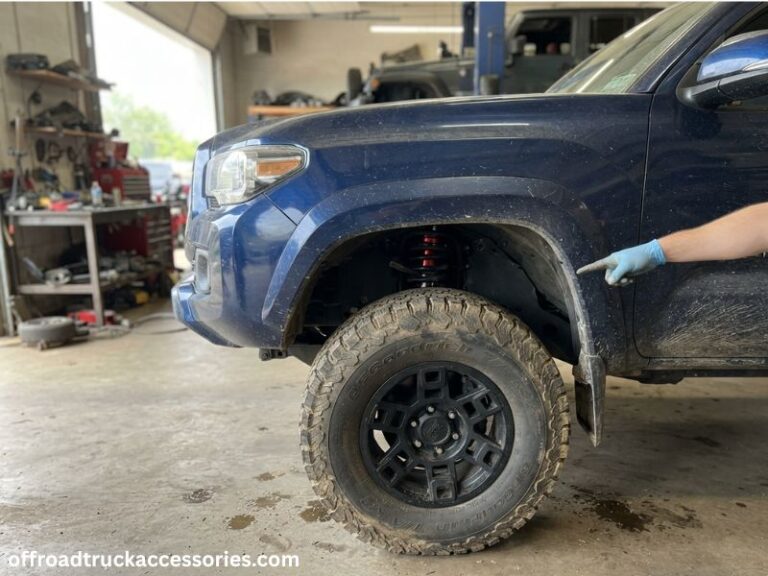
Is a 3 inch leveling kit bad for your truck? Not necessarily. A 3-inch leveling kit can be a safe and worthwhile upgrade when it is designed for your specific truck, installed properly, and followed by a professional wheel alignment.
However, because it raises the front suspension more than smaller leveling kits, it can place additional stress on suspension and steering components if the necessary supporting modifications are ignored.
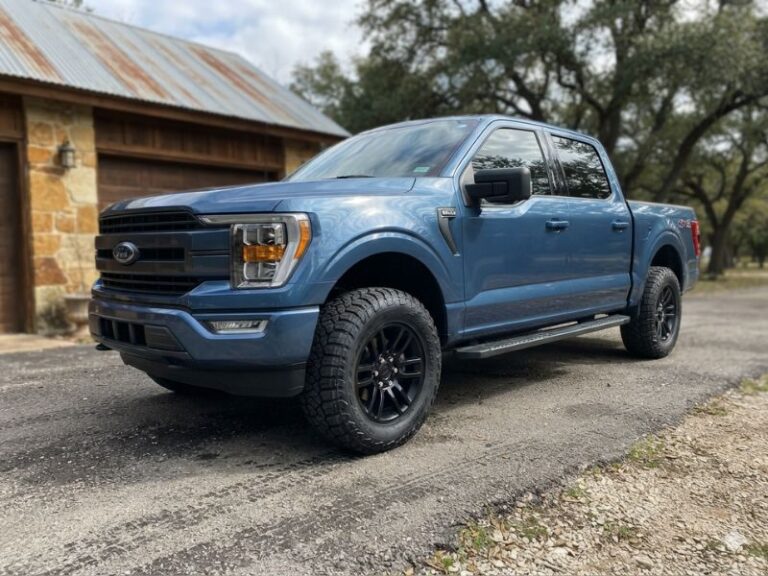
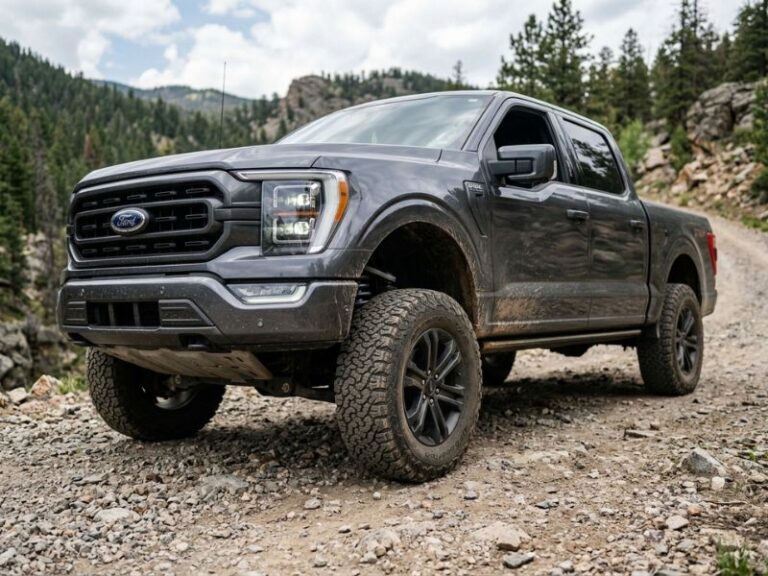
Many truck owners consider a 3-inch leveling kit to eliminate the factory rake, fit larger tires, and achieve a more aggressive appearance. While these benefits make it a popular upgrade, increasing the front ride height by three inches also changes suspension geometry, CV axle angles, ball joint angles, and steering characteristics.
Depending on your truck’s suspension design and how you use it, these changes may affect ride comfort, handling, tire wear, and the lifespan of certain components over time.
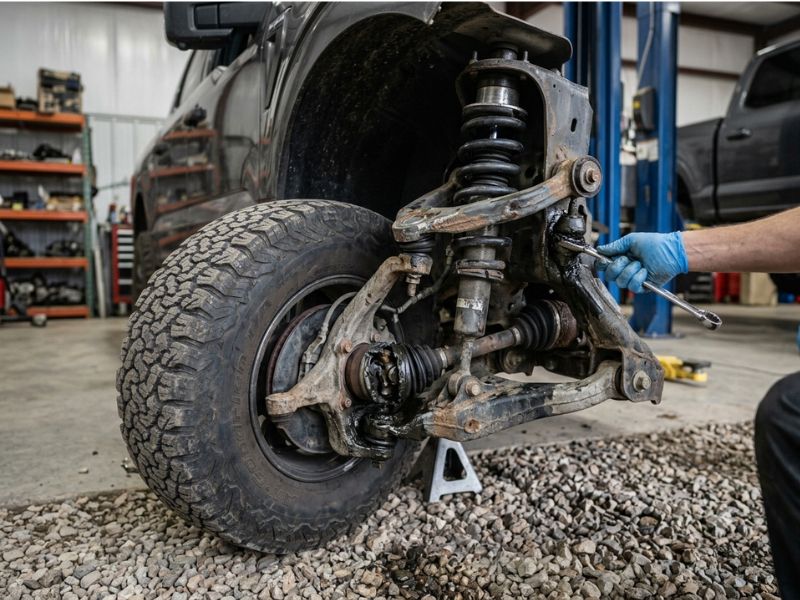
In this guide, you’ll learn everything you need to know before deciding whether a 3 inch leveling kit is bad for your truck. I’ll discuss its pros and cons, effects on ride quality and suspension, tire compatibility, alignment requirements, off-road performance, long-term reliability, and the situations where a 3-inch leveling kit is a smart upgrade—or when a smaller leveling kit may be the better choice.
By the end, you’ll have a clear answer to whether a 3-inch leveling kit is the right fit for your truck and driving needs.
Is a 3 Inch Leveling Kit Bad for Your Truck: Understanding Leveling Kits
Before diving into the specifics of a 3-inch kit, let’s establish a foundational understanding of what a leveling kit is and why trucks have a “rake” in the first place.
What is a Leveling Kit?
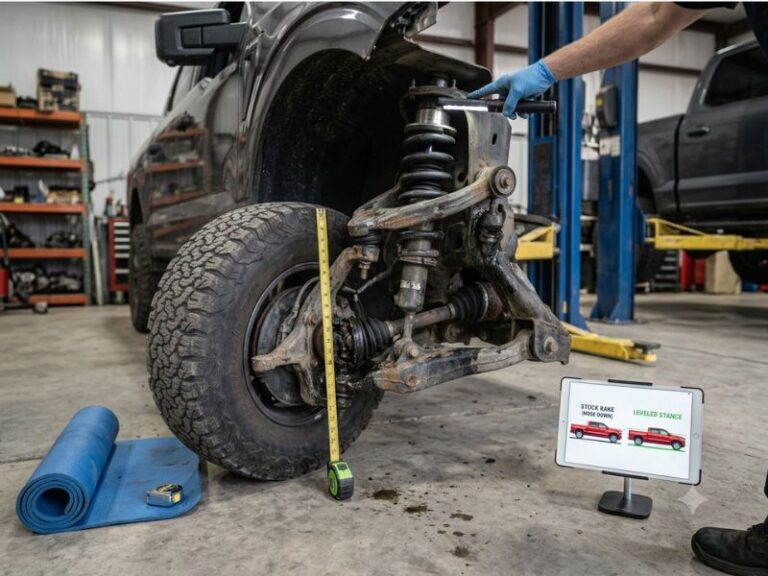
A leveling kit is a suspension modification designed to raise the front of your truck to match the height of the rear. Most trucks come from the factory with a slight forward tilt, known as “rake,” where the rear sits higher than the front. This design is intentional, primarily to accommodate heavy loads in the bed or when towing, preventing the rear of the truck from sagging excessively and creating an unsafe, nose-up attitude.
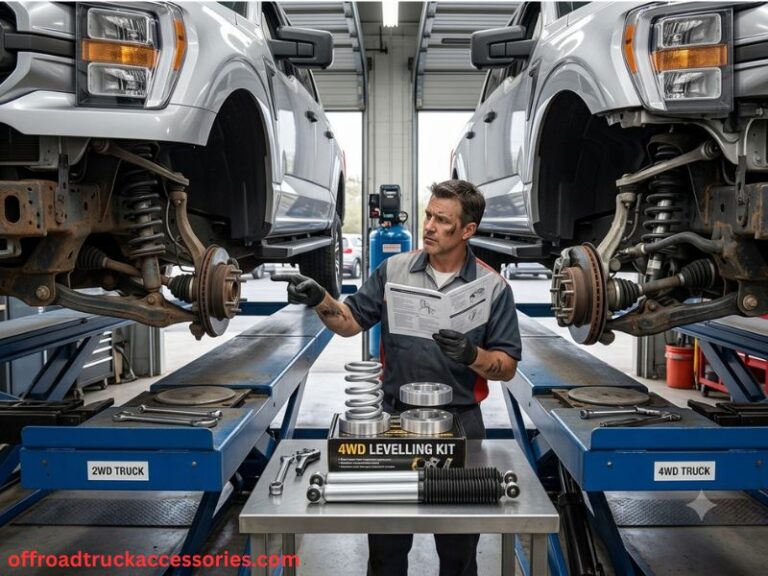
Leveling kits typically consist of spacers that are installed above or below the front coil springs, or sometimes new strut assemblies that provide the desired lift. The goal is purely aesthetic and functional: to make the truck appear level and often to create clearance for larger tires.
Why Do Trucks Have a Factory Rake?
The factory rake isn’t an oversight; it’s a deliberate engineering choice. Here’s why:
- Load Bearing: When you load the bed with cargo or hitch up a trailer, the added weight compresses the rear suspension. The factory rake ensures that even under a significant load, the truck remains relatively level or only sags slightly, maintaining proper steering geometry, headlight aim, and braking performance.
- Aerodynamics: A slightly lower front end can contribute to better aerodynamics and fuel efficiency, though the effect is often minor on trucks.
- Suspension Travel: The rake can also contribute to optimal suspension travel and articulation, particularly in off-road scenarios where the front and rear might move independently.
When you install a leveling kit, you’re essentially counteracting this factory design. While it achieves a desired aesthetic, it’s crucial to understand the implications of altering this engineered balance, especially with a more significant lift like 3 inches.
The Mechanics of a 3-Inch Leveling Kit
A 3-inch leveling kit is a substantial lift for the front of a truck, and it introduces several mechanical considerations that are less pronounced with smaller lifts. Understanding these mechanics is key to assessing whether such a kit is “bad” for your truck.
How a 3-Inch Lift Affects Suspension Geometry
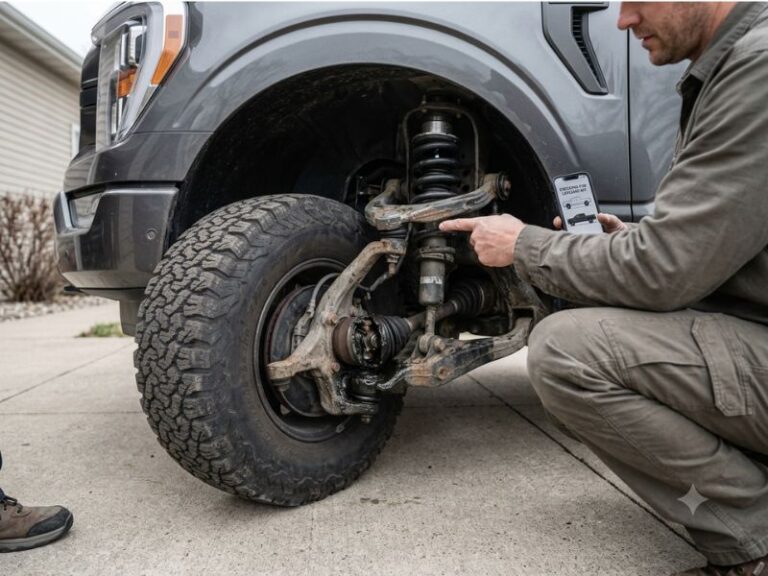
The primary concern with any lift, especially a significant one like 3 inches, is its impact on your truck’s suspension geometry. Your truck’s suspension components—control arms, tie rods, ball joints, CV axles (on 4WD models), and sway bar links—are designed to operate within specific angles and ranges of motion. When you raise the front end, these angles change.
- Upper Control Arms (UCAs): With a 3-inch lift, the angle of your UCAs becomes much steeper. This can cause the ball joint at the end of the UCA to bind or operate at an extreme angle, leading to premature wear. In some cases, the UCA itself might contact the coil spring or frame, limiting down travel.
- Lower Control Arms (LCAs): While less affected than UCAs, LCAs also experience altered angles, which can stress their bushings and ball joints.
- Tie Rod Ends: The steering tie rods connect your steering rack to the wheel hubs. A lift changes their angle, potentially leading to increased wear on the tie rod ends and affecting steering responsiveness.
- Sway Bar Links: These links connect your sway bar to the lower control arms. A lift can put them at an extreme angle, leading to noise, reduced effectiveness of the sway bar, and accelerated wear. Longer sway bar links are often recommended or required with 3-inch kits.
Impact on CV Axle Angles (4WD Trucks)
For 4WD trucks, the CV (Constant Velocity) axles are a major point of concern with a 3-inch leveling kit. CV axles connect the front differential to the front wheels and are designed to operate efficiently within a certain range of angles. When you lift the front of the truck by 3 inches, the CV axles are forced to operate at much steeper angles, especially at rest.
- Increased Wear: Steeper CV axle angles put significantly more stress on the CV joints and boots. This leads to accelerated wear, premature failure of the boots (allowing dirt and moisture in), and eventual failure of the joints themselves.
- Reduced Lifespan: It’s not uncommon for CV axles to fail much sooner than expected after a 3-inch leveling kit installation, sometimes within tens of thousands of miles, compared to their typical lifespan of over 100,000 miles.
- Vibrations: In some cases, extreme CV angles can cause vibrations, particularly under acceleration, which can be detrimental to other drivetrain components.
This is one of the most significant mechanical drawbacks of a 3-inch leveling kit on 4WD vehicles.
Coil Spring Preload and Ride Quality
Many 3-inch leveling kits achieve their lift by adding a spacer above the factory strut assembly. This spacer effectively “preloads” the coil spring, meaning the spring is compressed more than it would be at factory height even when the truck is at rest. While some preload is normal, excessive preload can negatively impact ride quality.
- Stiffer Ride: Increased preload makes the suspension feel stiffer because the spring has less initial travel before it starts to absorb bumps. This can translate to a harsher, less comfortable ride, where you feel more of the road imperfections.
- Reduced Down Travel: The spacer also limits the available down travel (droop) of the suspension. This means the wheel has less ability to drop into dips or articulate over uneven terrain, which can be detrimental for off-roading and can sometimes cause the suspension to top out harshly.
- Shock Absorber Limitations: Factory shock absorbers are designed for a specific range of travel. A 3-inch lift can push them beyond their intended operating limits, leading to premature wear, reduced dampening effectiveness, and a “bouncy” ride.
In essence, a 3-inch spacer kit often achieves its height by pushing your factory components to their limits, rather than redesigning the suspension for that height.
Potential Downsides and Risks of a 3-Inch Leveling Kit
Now that I’ve covered the mechanical changes, let’s consolidate the potential downsides and risks specifically associated with a 3-inch leveling kit.
Accelerated Wear and Component Failure
As discussed, the most significant risk is accelerated wear and potential failure of critical suspension and drivetrain components. This includes:
- Ball Joints: Upper and lower ball joints can wear out much faster due to extreme operating angles.
- Tie Rod Ends: Increased stress leads to premature wear.
- CV Axles and Boots: A major concern for 4WD trucks, leading to expensive repairs.
- Control Arm Bushings: Can degrade faster under increased stress.
- Shock Absorbers: Operating outside their intended range reduces their lifespan and effectiveness.
- Wheel Bearings: While less direct, altered geometry and increased stress can sometimes contribute to premature wheel bearing wear.
These failures aren’t just an inconvenience; they can lead to costly repairs and, in some cases, safety hazards if components fail unexpectedly.
Degraded Ride Quality and Handling
The ride quality is almost universally impacted by a 3-inch leveling kit, especially one using simple spacers.
- Stiffer and Harsher Ride: Due to increased coil spring preload and limited suspension travel, the truck will likely feel much stiffer and less compliant over bumps and rough roads.
- Reduced Comfort: Long drives can become less comfortable as the suspension struggles to absorb impacts effectively.
- Potential for “Top Out” and “Bottom Out”: With reduced down travel, the suspension can “top out” when the wheel drops into a dip, creating a jarring sensation. Conversely, if the shocks are over-extended, they can “bottom out” internally, damaging them.
- Altered Handling Characteristics: The higher center of gravity can lead to more body roll in corners. The altered suspension geometry can also affect steering feel and precision, making the truck feel less stable at higher speeds.
Alignment Challenges and Tire Wear
Achieving a proper alignment after a 3-inch lift can be challenging, and sometimes impossible, with factory adjustment ranges.
- Camber and Caster Issues: Lifting the front end significantly changes camber (the vertical tilt of the wheel) and caster (the forward or backward tilt of the steering axis). While some adjustment is possible, a 3-inch lift often pushes these angles beyond the factory adjustment limits.
- Uneven Tire Wear: Improper alignment, particularly excessive negative camber or toe-in/out, will lead to rapid and uneven tire wear, forcing you to replace expensive tires much sooner.
- Steering Instability: Incorrect caster can lead to a wandering steering feel or a lack of self-centering, making the truck harder to drive straight.
To correct alignment issues, aftermarket upper control arms (UCAs) with adjustable ball joints or revised geometry are often necessary, adding significant cost to the modification.
Impact on Towing and Hauling Capacity
While a leveling kit doesn’t technically change your truck’s rated towing or hauling capacity, it fundamentally alters how your truck performs under load.
- Loss of Rake: By eliminating the factory rake, your truck will sag more noticeably in the rear when loaded or towing. This can lead to a “nose-high” attitude, which is dangerous.
- Headlight Aim: A nose-high stance will cause your headlights to point upwards, blinding oncoming traffic and reducing your visibility of the road ahead.
- Braking Performance: A nose-high attitude can shift weight away from the front wheels during braking, reducing braking effectiveness and potentially causing instability.
- Suspension Overload: While the front is lifted, the rear suspension remains factory. If you frequently tow or haul heavy loads, the rear suspension might feel overloaded or “squishy” without corresponding rear suspension upgrades (like airbags or heavier springs).
If you regularly tow or haul, a 3-inch leveling kit might be detrimental to your truck’s practical utility and safety.
When a 3-Inch Leveling Kit Might Be Acceptable (and What to Consider)
Despite the potential drawbacks, there are scenarios where a 3-inch lift can be managed, but it almost always requires more than just a simple spacer kit.
For Aesthetic Purposes (with Caveats)
If your primary goal is purely aesthetic—to achieve a specific look or fit larger tires—and you rarely tow, haul, or venture off-road, a 3-inch lift might be considered. However, even then, you should be prepared for:
- Compromised Ride: Expect a stiffer ride than stock.
- Increased Maintenance: Be ready for more frequent inspection and potential replacement of suspension components.
- Alignment Costs: Budget for professional alignment and potentially aftermarket UCAs.
It’s a trade-off: looks versus long-term reliability and ride comfort.
When Paired with Other Suspension Upgrades
The “bad” aspects of a 3-inch leveling kit largely stem from pushing factory components beyond their limits. The situation changes significantly if you’re willing to invest in a more comprehensive suspension overhaul.
- Aftermarket Upper Control Arms (UCAs): These are almost essential for a 3-inch lift. They are designed with revised geometry to correct ball joint angles and allow for proper alignment, mitigating a major source of wear.
- Extended Length Shocks/Coilovers: Replacing factory shocks with longer, performance-oriented shocks or full coilover assemblies designed for a 3-inch lift is crucial. These components are engineered for the increased travel and height, providing better dampening and ride quality, and preventing the issues of over-extending factory shocks.
- Differential Drop Kits (for 4WD): For 4WD trucks, a differential drop kit can help reduce the severe angles of the CV axles by lowering the front differential slightly. This is a highly recommended modification to preserve CV axle life with a 3-inch lift.
- Longer Sway Bar Links: To maintain the effectiveness of your sway bar and prevent premature wear on the links, longer ones designed for the lifted height are often necessary.
When you combine a 3-inch lift with these supporting modifications, you’re no longer just “leveling” but performing a more complete suspension lift. This approach addresses many of the mechanical drawbacks, but it also significantly increases the cost and complexity.
Consider Your Truck’s Specific Design
Not all trucks are created equal when it comes to lifting. Some truck platforms handle lifts better than others due to their inherent suspension design and component strength. For example, some trucks might have more factory adjustment range or more robust components that can tolerate a 3-inch lift with fewer immediate issues, though long-term wear remains a concern.
Always research how a 3-inch lift specifically affects your make, model, and year of truck. Online forums and specialized truck shops can provide invaluable insights into common issues and recommended solutions for your particular vehicle.
Alternatives to a 3-Inch Leveling Kit
If the potential downsides of a 3-inch leveling kit sound concerning, especially if you’re not prepared for additional suspension upgrades, there are several alternatives to consider.
Smaller Leveling Kits (1-inch to 2-inch)
A smaller leveling kit, in the range of 1 to 2 inches, often provides a good balance between achieving a more level stance and minimizing the negative impacts on suspension geometry and component wear. These smaller lifts typically:
- Less Stress: Introduce less extreme angles on ball joints, tie rods, and CV axles.
- Better Ride: Have a less noticeable impact on ride quality, as coil spring preload is less severe.
- Easier Alignment: Usually allow for proper alignment within factory adjustment ranges.
- Cost-Effective: Are generally less expensive and often don’t require additional supporting modifications.
If your goal is simply to eliminate some of the factory rake and perhaps fit slightly larger tires, a 1.5-inch or 2-inch kit might be a much safer and more practical choice.
Full Suspension Lift Kits
For those who want a significant lift (3 inches or more) without compromising ride quality, handling, or component longevity, a full suspension lift kit is the superior option. These kits are engineered from the ground up to raise the entire truck while maintaining proper suspension geometry.
A typical full lift kit includes:
- New Lifted Coilovers/Struts: Designed for the increased height and often offering adjustable dampening.
- New Upper Control Arms: Corrected geometry for proper alignment and ball joint angles.
- Lifted Rear Springs/Blocks: To match the front lift and maintain load capacity.
- Extended Brake Lines: To accommodate increased suspension travel.
- Differential Drop Kits: To correct CV axle angles on 4WD models.
- New Steering Components: Such as longer tie rods, if necessary.
While significantly more expensive and complex to install, a full suspension lift kit ensures that all components are working harmoniously at the new ride height, preserving ride quality, handling, and component lifespan. This is the recommended path if a 3-inch or greater lift is truly desired for both aesthetics and functionality (e.g., serious off-roading).
Adjustable Coilovers
Adjustable coilovers offer a middle ground between simple spacers and full lift kits. These are complete strut and spring assemblies that allow you to adjust the ride height, typically from stock to 2.5 or 3 inches of lift. Many aftermarket coilovers are designed to improve ride quality over stock, even at lifted heights, and are engineered to accommodate the increased travel.
While more expensive than spacers, they offer:
- Improved Ride Quality: Better dampening and spring rates.
- Adjustability: Fine-tune your desired lift height.
- Better Component Compatibility: Often designed to work better with factory or aftermarket UCAs at higher lift settings.
However, even with adjustable coilovers set to 3 inches, you’ll still need to consider aftermarket UCAs and potentially a differential drop kit for 4WD trucks to fully mitigate the geometric issues.
Body Lift Kits
A body lift kit raises the truck’s body from its frame using spacers, typically ranging from 1 to 3 inches. It does not alter the suspension geometry at all, meaning ride quality, handling, and suspension component wear remain completely stock.
Body lifts are a good option if:
- Purely for Tire Clearance: You want to fit larger tires without affecting suspension.
- Preserve Ride Quality: You want to maintain the factory ride.
- Cost-Effective: Generally less expensive than suspension lifts.
However, body lifts have their own considerations:
- Aesthetics: The gap between the frame and body can be visible, though gap guards can mitigate this.
- Bumper Relocation: Bumpers may need to be relocated to maintain their aesthetic relationship with the body.
- Steering and Shifter Extensions: May be required depending on the vehicle.
A body lift is a distinct modification from a leveling kit and serves a different purpose, but it’s a viable alternative for achieving tire clearance without suspension compromise.
My Recommendation and Final Considerations
Based on the mechanical implications and potential downsides, my general recommendation is to approach a 3-inch leveling kit with significant caution, especially if it’s a simple spacer kit on factory suspension components. For most truck owners, particularly those who value ride quality, long-term reliability, and the ability to tow or haul without compromise, a simple 3-inch spacer leveling kit is likely to be detrimental in the long run.
If your primary goal is to achieve a truly level stance and fit larger tires, I would strongly advise considering one of these paths:
- 1.5-inch to 2-inch Leveling Kit: This is often the sweet spot for many trucks, providing a noticeable lift without pushing suspension geometry to its limits. It typically allows for proper alignment and has a minimal impact on ride quality and component wear.
- Full Suspension Lift Kit (3 inches or more): If you truly desire 3 inches of lift or more, and you want to maintain or improve ride quality, handling, and component longevity, a complete suspension lift kit is the correct and safest approach. This involves replacing many factory components with purpose-built lifted parts.
- Adjustable Coilovers with Supporting Mods: A good quality set of adjustable coilovers, combined with aftermarket UCAs and a differential drop (for 4WD), can provide a 3-inch lift with excellent performance and durability, bridging the gap between a simple spacer and a full lift kit.
Before making any decision, consider these final points:
- Your Driving Habits: Do you primarily drive on pavement? Do you off-road? How often do you tow or haul? Your usage dictates how critical component longevity and ride quality are.
- Your Budget: A 3-inch spacer kit is cheap upfront, but the potential for accelerated wear and costly repairs (CV axles, ball joints, tires) can make it more expensive in the long run. A proper suspension lift is a significant investment but often pays off in durability and performance.
- Professional Installation and Alignment: Regardless of the kit you choose, professional installation and a thorough alignment by a shop experienced with lifted vehicles are crucial.
- Warranty Implications: Be aware that modifying your suspension can void parts of your factory warranty. Check with your dealership if this is a concern.
Conclusion
So, is a 3 inch leveling kit bad for your truck? The answer is not a simple yes or no, but rather “it depends heavily on the type of kit and your willingness to invest in supporting modifications.” A basic 3-inch spacer leveling kit, by itself, often introduces significant compromises to your truck’s suspension geometry, leading to accelerated wear, degraded ride quality, and potential safety concerns, especially for 4WD models. However, if a 3-inch lift is achieved through a comprehensive suspension system that includes properly engineered components like aftermarket upper control arms, extended shocks, and differential drops, many of these drawbacks can be mitigated. Ultimately, for most truck owners seeking a modest lift, a 1.5-inch to 2-inch leveling kit or a full suspension lift kit offers a more balanced and durable solution than simply pushing factory components to their limits with an oversized spacer.