Is a 2.5 Leveling Kit Too Much? Pros, Cons & What to Know
Is 2.5 leveling kit too much? No, a 2.5 leveling kit is not too much for most trucks when it is designed for your vehicle and installed correctly. It provides a balanced appearance, creates room for larger tires, and increases front-end ground clearance while still maintaining good daily driving comfort.
However, the overall results depend on your truck’s suspension design, alignment, wheel and tire combination, and how you plan to use the vehicle.
Many truck owners ask, “Is 2.5 leveling kit too much?” because they want the benefits of a lifted look without sacrificing ride quality or reliability.
Compared to smaller leveling kits, a 2.5-inch lift offers a more noticeable stance and better tire clearance, making it a popular choice for both daily drivers and weekend off-road enthusiasts. At the same time, it can slightly change suspension angles, steering feel, and component wear if supporting modifications and a proper alignment are ignored.
In this guide, you’ll find everything you need to know before deciding whether a 2.5 leveling kit is the right upgrade for your truck.
I’ll cover the advantages and disadvantages, ride quality, handling, tire size compatibility, fuel economy, suspension impact, installation considerations, and the situations where a 2.5-inch leveling kit makes sense—or where a smaller lift may be the better option.
This comprehensive guide will help you confidently answer the question, “Is 2.5 leveling kit too much?” based on your truck, driving habits, and performance goals.
Understanding Leveling Kits and the “Rake”
Before diving into the specifics of a 2.5-inch kit, let’s establish a foundational understanding of what leveling kits are designed to do and why trucks have a “rake” in the first place.
What is a Leveling Kit?
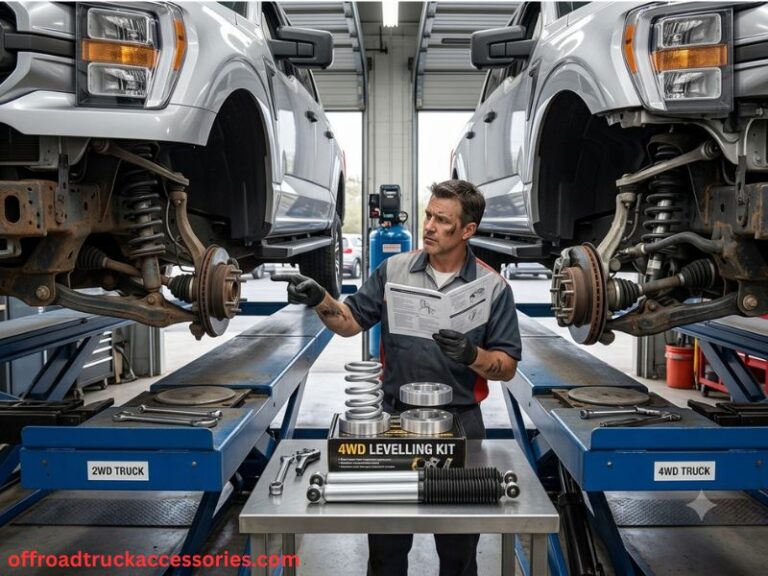
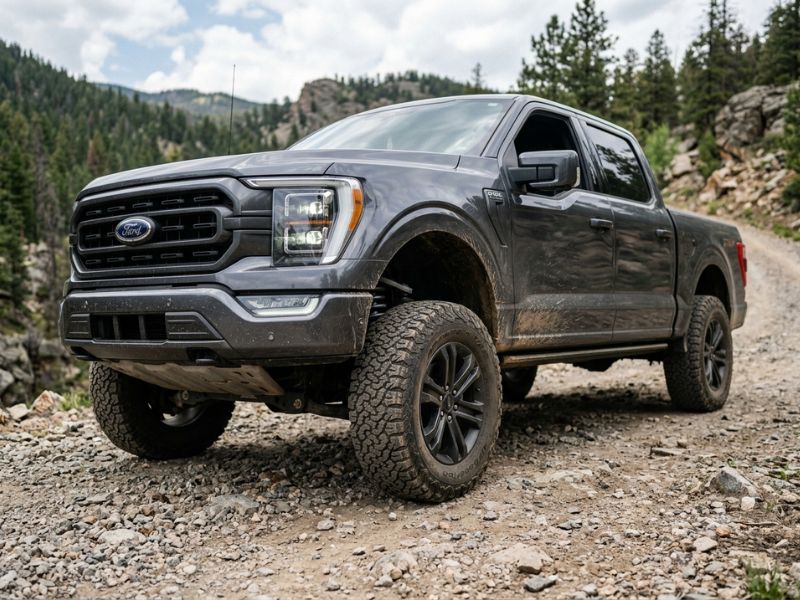
A leveling kit is a suspension modification designed to raise the front end of a truck or SUV to match the height of the rear. Most trucks come from the factory with the rear slightly higher than the front. This difference in height is known as the “factory rake.” Leveling kits typically consist of spacers that are installed above or below the front coil springs or struts, or sometimes replacement torsion keys for older torsion bar suspension systems. The goal is to achieve a more aesthetically pleasing, level stance and often to allow for slightly larger tires without rubbing.
Why Do Trucks Have a Factory Rake?
The factory rake isn’t an oversight; it’s a deliberate engineering choice. Manufacturers design trucks with a higher rear end for several practical reasons:
- Load Carrying: When you load cargo into the bed or hitch up a trailer, the rear suspension compresses. The rake ensures that even under a significant load, the truck remains relatively level, preventing the headlights from pointing skyward and maintaining proper steering geometry.
- Aerodynamics: A slight rake can contribute to better aerodynamics and fuel efficiency by directing airflow more effectively over and under the vehicle.
- Suspension Travel: It provides additional upward suspension travel in the rear, which is beneficial when carrying heavy loads or traversing uneven terrain.
When you install a leveling kit, you’re essentially removing this factory-engineered rake. While this can improve aesthetics and tire clearance, it’s crucial to consider the implications, especially if you frequently haul or tow.
Is 2.5 Leveling Kit Too Much? Factors to Consider
The question of whether a 2.5-inch leveling kit is “too much” doesn’t have a universal answer. It’s highly dependent on several specific factors related to your vehicle and your intended use. I’ll break down the key considerations here.
Vehicle Make and Model
Different trucks and SUVs have varying amounts of factory rake and different suspension geometries. A 2.5-inch lift on one model might perfectly level it, while on another, it might result in a “nose-high” stance or require more extensive modifications. For example:
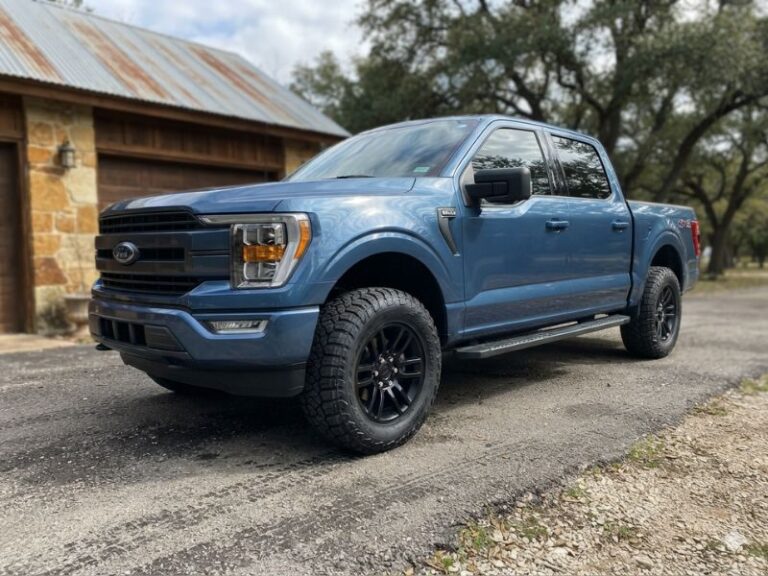
- Full-Size Trucks (e.g., Ford F-150, Ram 1500, Chevy Silverado 1500): Many full-size trucks have a factory rake of 2 to 3 inches. A 2.5-inch leveling kit often brings these vehicles very close to level, or even perfectly level.
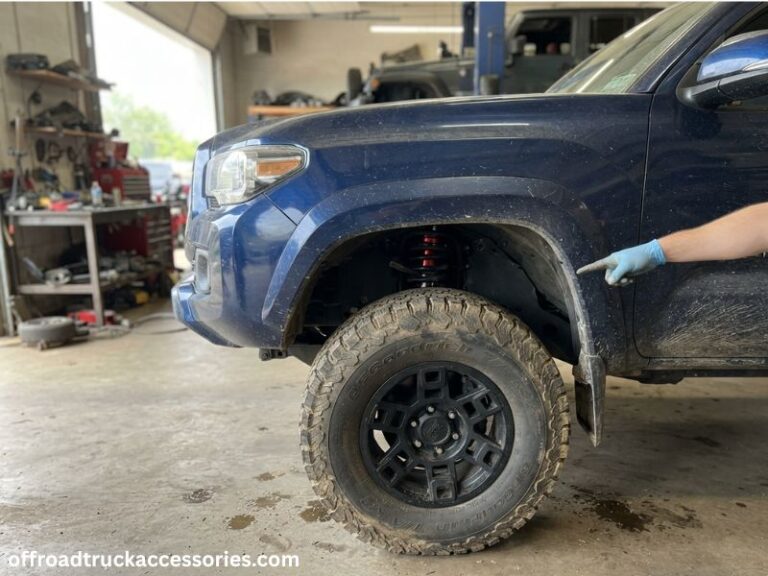
- Mid-Size Trucks (e.g., Toyota Tacoma, Chevy Colorado): These trucks often have less factory rake, sometimes in the 1.5 to 2-inch range. A 2.5-inch kit on these might result in a slightly nose-high appearance, especially if the rear isn’t also lifted.
- SUVs: The rake on SUVs can vary even more. It’s essential to measure your specific vehicle’s factory rake before deciding on a lift height.
Always research what other owners of your specific make and model have experienced with a 2.5-inch kit. Forums and manufacturer-specific communities are excellent resources.
Desired Aesthetic and Stance
Your personal preference for how your truck looks plays a significant role. Do you want it perfectly level, slightly nose-high, or do you still want a subtle rake for load-carrying purposes? A 2.5-inch kit will typically achieve one of the following:
- Perfectly Level: If your truck has approximately 2.5 inches of factory rake, this kit should make it perfectly level.
- Slightly Nose-High: If your truck has less than 2.5 inches of factory rake, the front will sit higher than the rear. This is sometimes called a “California lean.”
- Slight Rake Remaining: If your truck has more than 2.5 inches of factory rake (e.g., 3 inches), a 2.5-inch kit will reduce the rake but not eliminate it entirely.
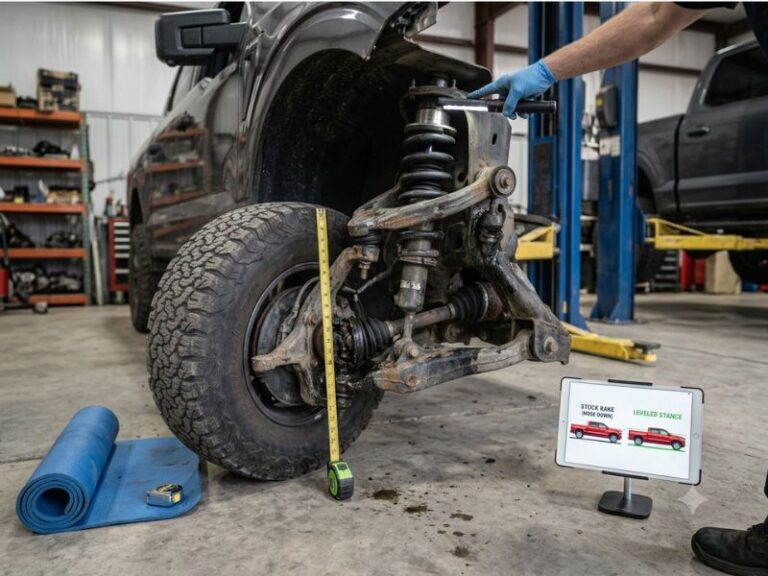
It’s a good idea to measure your truck’s current front and rear fender heights (from the center of the wheel to the fender lip) on level ground to determine your exact factory rake. This will give you a clear idea of what a 2.5-inch lift will achieve.
Tire Clearance Goals
One of the primary reasons people install leveling kits is to fit larger tires. A 2.5-inch lift typically provides enough clearance for tires that are one to two sizes larger than stock, depending on the wheel offset and tire width. For instance, many full-size trucks can fit 33-inch tires with a 2.5-inch level, and sometimes even certain 34-inch tires with minor trimming.
However, simply increasing tire height isn’t the only factor. Tire width and wheel offset (how far the wheel sticks out) also play a critical role in preventing rubbing, especially when turning or compressing the suspension. A 2.5-inch lift might be sufficient for a taller tire on a stock wheel, but if you’re also planning on aggressive aftermarket wheels with a negative offset, you might still encounter rubbing issues that require more trimming or a larger lift.
Driving Habits and Intended Use
How you use your truck is paramount when considering a 2.5-inch leveling kit:
- Daily Driver, Light Hauling: If your truck is primarily a daily driver and you occasionally carry light loads or tow small trailers, a 2.5-inch kit is generally fine. You might notice a slight sag in the rear when loaded, but it’s usually manageable.
- Frequent Heavy Hauling or Towing: If you regularly tow heavy trailers or carry significant loads in the bed, a 2.5-inch leveling kit can be problematic. Removing the factory rake means that when loaded, your truck will likely sit nose-high. This can lead to several issues:
- Headlights pointing upwards, blinding oncoming traffic.
- Reduced steering responsiveness and stability due to less weight on the front axle.
- Increased wear on rear suspension components.
- Potential for “porpoising” or an uncomfortable ride.
In these cases, I would recommend either a smaller leveling kit (e.g., 1.5-inch) that leaves some rake, or a full lift kit that raises both the front and rear, maintaining a slight rake or allowing for air bags or helper springs in the rear.
- Off-Roading: For mild off-roading, a 2.5-inch leveling kit can provide beneficial ground clearance and tire articulation. However, for serious off-roading, a true suspension lift kit that replaces components like control arms, shocks, and springs is usually preferred for better performance and durability. A simple spacer-based leveling kit can sometimes limit down travel or put excessive stress on factory components during aggressive articulation.
Potential Pros and Cons of a 2.5-Inch Leveling Kit
Like any modification, a 2.5-inch leveling kit comes with its own set of advantages and disadvantages. Understanding these will help you weigh your decision.
Advantages (Pros)
- Improved Aesthetics: This is often the primary driver. A level stance gives trucks a more aggressive, balanced, and commanding presence.
- Increased Tire Clearance: Allows for larger diameter tires, which can enhance both the look and, in some cases, off-road capability (more ground clearance under the axles).
- Cost-Effective: Leveling kits are generally one of the most affordable suspension modifications, especially when compared to full lift kits.
- Relatively Easy Installation: Many leveling kits can be installed by a mechanically inclined DIYer with basic tools, though professional installation is always recommended for safety and proper alignment.
- Maintains Factory Ride Quality (Mostly): Since most leveling kits use spacers, they typically retain the factory springs and shocks, meaning the ride quality usually remains very close to stock, unlike some more aggressive lift kits.
Disadvantages (Cons)
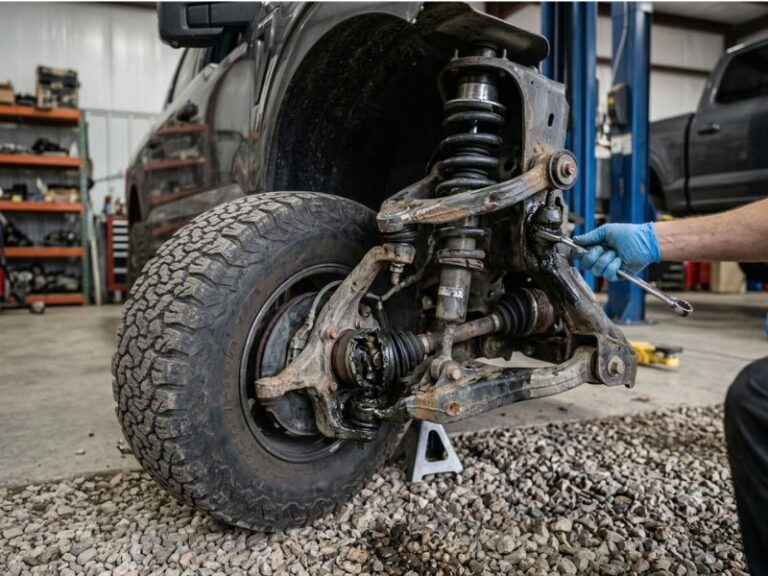
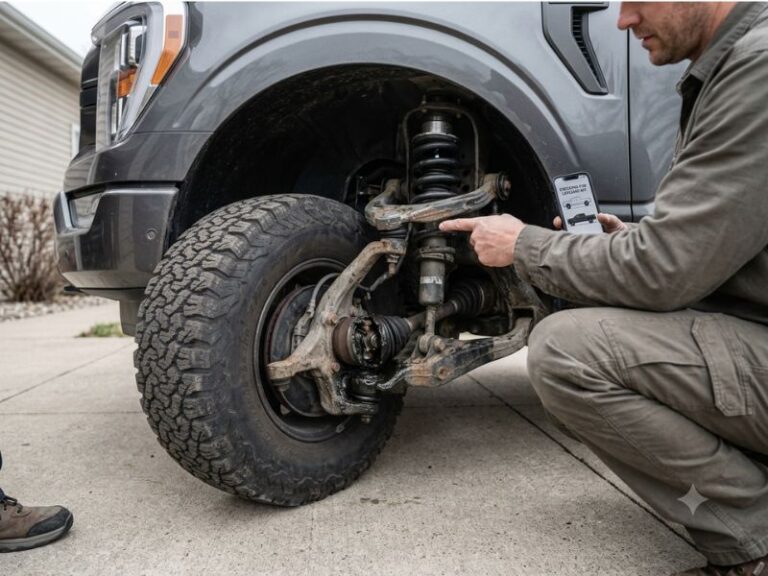
- Altered Suspension Geometry: Raising the front end without changing other components can alter the angles of your upper control arms (UCAs), lower control arms (LCAs), tie rods, and CV axles (on 4WD vehicles). A 2.5-inch lift is often at the upper limit where these angles start to become problematic.
- Steeper CV Axle Angles: On 4WD vehicles, steeper CV axle angles can lead to premature wear of the CV boots and joints, especially under aggressive driving or off-roading.
- UCA Contact: The upper control arm might come into contact with the coil spring or frame at full droop, limiting suspension travel and potentially causing noise or damage.
- Ball Joint Wear: Increased angles can put more stress on the upper and lower ball joints, leading to accelerated wear.
- Potential for Nose-High Stance: As discussed, if your truck has less than 2.5 inches of factory rake, or if you frequently carry heavy loads, the front end will sit higher than the rear.
- Reduced Down Travel: Spacer-based leveling kits often extend the strut/shock, effectively pre-compressing the suspension. This can reduce the available downward travel, which might be noticeable during off-roading or when hitting bumps.
- Alignment Challenges: After any suspension modification, an alignment is crucial. With a 2.5-inch lift, achieving proper alignment (especially caster) can sometimes be challenging with factory components. In some cases, aftermarket upper control arms might be necessary to correct caster and camber angles, adding to the overall cost.
- Impact on Headlight Aim: Raising the front end will cause your headlights to aim higher. You’ll need to re-aim them to avoid blinding oncoming drivers and to ensure proper road illumination.
- Potential for Warranty Issues: While a leveling kit itself might not void your entire vehicle warranty, if a component fails and the dealership can reasonably attribute the failure to the leveling kit (e.g., premature ball joint wear due to altered angles), they might deny warranty coverage for that specific repair.
Mitigating Potential Issues with a 2.5-Inch Leveling Kit
If you’ve decided that a 2.5-inch leveling kit is right for you, there are steps you can take to minimize the potential drawbacks and ensure a safer, more reliable setup.
Aftermarket Upper Control Arms (UCAs)
For many vehicles, especially those with independent front suspension, a 2.5-inch lift pushes the factory upper control arms to their limit. Aftermarket UCAs are designed with improved geometry to correct ball joint and alignment angles, particularly caster. This helps:
- Restore proper alignment specifications, improving handling and tire wear.
- Increase clearance between the UCA and the coil spring/frame at full droop.
- Often feature stronger ball joints or uniballs for increased durability.
While an added expense, I consider aftermarket UCAs a highly recommended upgrade when going with a 2.5-inch or higher lift on many modern trucks.
Differential Drop Kit (for 4WD)
On 4WD vehicles, a differential drop kit lowers the front differential slightly, reducing the angle of the CV axles. This helps alleviate stress on the CV joints and boots, potentially extending their lifespan. It’s a relatively inexpensive modification that can prevent costly repairs down the line, especially if you frequently engage 4WD or drive aggressively.
Proper Alignment
This is non-negotiable. Immediately after installing any leveling kit, you absolutely must get a professional wheel alignment. A good alignment shop will be able to adjust camber, caster, and toe to factory or near-factory specifications, preventing uneven tire wear and ensuring safe handling. Be sure to communicate that you’ve installed a leveling kit so they know what to expect and can make the necessary adjustments.
Headlight Adjustment
As mentioned, your headlights will aim higher after the lift. Adjusting them is crucial for both your safety and the safety of others on the road. Most vehicles have adjustment screws that allow you to lower the beam pattern. Consult your owner’s manual or a quick online search for your specific vehicle’s procedure.
Consider Rear Suspension Upgrades for Hauling/Towing
If you still plan to haul or tow heavy loads after installing a 2.5-inch leveling kit, consider supplemental rear suspension solutions to counteract the sag and maintain a level stance under load. Options include:
- Air Bags/Air Helper Springs: These are inflatable bags installed inside or around your coil springs or leaf springs. You can inflate them when carrying a load and deflate them when empty, providing adjustable load support.
- Helper Springs: These are additional leaf springs or coil springs that engage when the primary suspension compresses, providing extra support.
- Timbren SES (Suspension Enhancement System): These are progressive rubber springs that replace your factory bump stops, providing load support without affecting ride quality when unloaded.
These solutions allow you to enjoy the leveled look for daily driving while still having the capability to handle heavy loads without the adverse effects of a nose-high stance.
Alternative Lift Options to Consider
If after reading this, you’re still questioning whether a 2.5-inch leveling kit is too much, or if your needs fall outside its ideal use case, there are other suspension modification options worth exploring.
Smaller Leveling Kits (1.5-inch to 2-inch)
If your truck has less factory rake, or if you want to maintain a slight rake for occasional towing/hauling, a 1.5-inch or 2-inch leveling kit might be a better fit. These smaller lifts often cause fewer issues with suspension geometry and alignment, and are less likely to result in a nose-high stance.
Coilover or Strut Replacement Kits
Instead of just spacers, you can opt for full coilover or strut replacement kits that provide lift. These kits often include longer shocks and springs specifically designed for the lifted height. They can offer:
- Improved Ride Quality: Aftermarket coilovers are often tuned for better performance and ride comfort than factory units.
- Corrected Geometry: Many are designed to work better with the lifted height, reducing stress on other components.
- Adjustability: Some coilovers allow you to adjust the lift height, giving you more flexibility.
These are generally more expensive than simple spacer kits but offer a more comprehensive suspension upgrade.
Full Suspension Lift Kits
For lifts greater than 2.5 inches, or for serious off-roading and heavy-duty use, a full suspension lift kit is usually the best option. These kits typically replace multiple components, including:
- New coil springs or leaf springs.
- Longer shocks.
- Drop-down brackets for the front differential (on 4WD).
- New control arms.
- Extended brake lines.
Full lift kits are designed to maintain proper suspension geometry at the new height, offering superior performance, durability, and articulation compared to leveling kits. They also typically lift both the front and rear, maintaining the factory rake or allowing for a custom rake to be set.
My Recommendation and Final Thoughts
After considering all the factors, my general recommendation is this: a 2.5-inch leveling kit is a viable and popular option for many truck owners, especially those with full-size trucks that have a significant factory rake (2.5 inches or more). It’s an excellent way to achieve a level stance and fit larger tires without breaking the bank or drastically altering ride quality.
However, it’s crucial to be realistic about its limitations. If your truck has less than 2.5 inches of factory rake, if you frequently haul or tow heavy loads, or if you plan on aggressive off-roading, then a 2.5-inch leveling kit might indeed be “too much” for your specific needs without additional modifications. In these scenarios, I would strongly advise considering aftermarket upper control arms, a differential drop kit, and potentially rear load-assisting solutions.
Ultimately, the best approach is to measure your truck’s current rake, honestly assess your driving habits and future plans, and then choose a kit that aligns with those realities. Don’t just chase a number; chase the right solution for your vehicle and your lifestyle. A reliable answer to “is 2.5 leveling kit too much” comes from applying these points to the specific situation rather than relying on one rule.