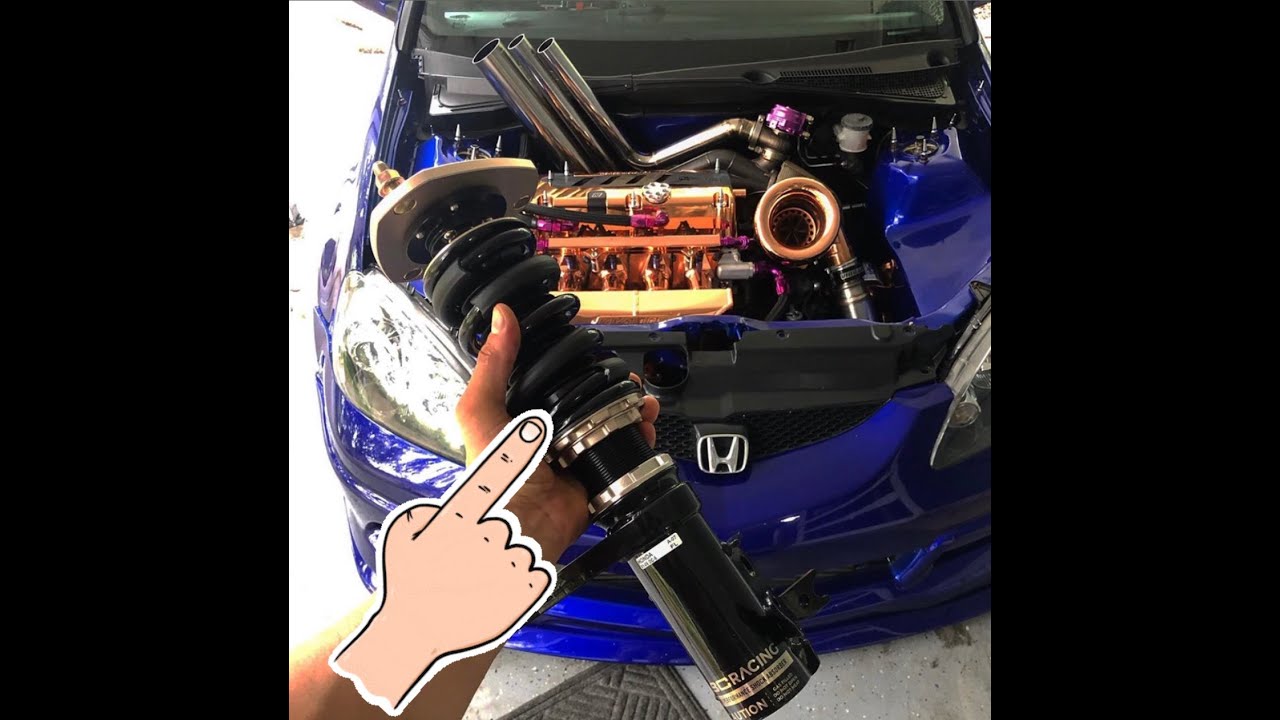
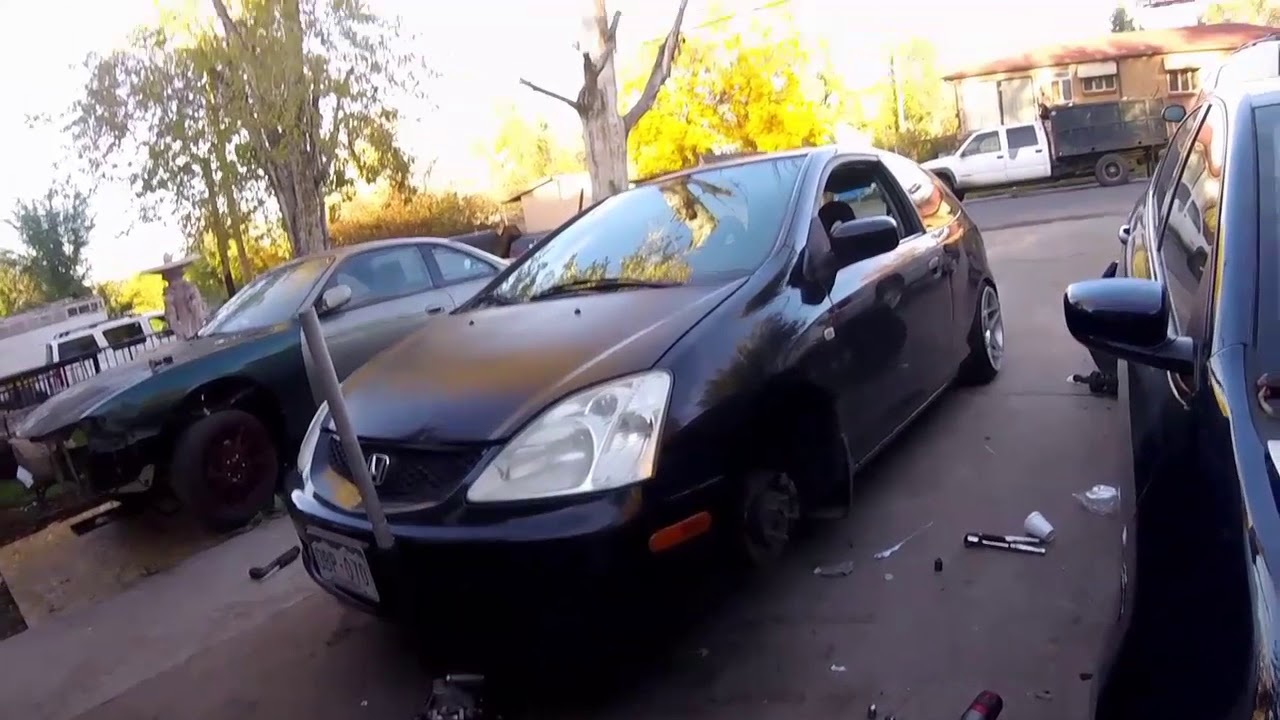
Some Acura RSX coilover kits can fit a Honda Civic EM2, but compatibility depends on the exact kit, model years, mounting design, and manufacturer application list. Do not assume every RSX suspension kit is a direct fit.
In the United States, the 2001–2005 Honda Civic EM2 coupe and the 2002–2006 Acura RSX are common platforms for suspension upgrades. Both belong to Honda’s compact-car family, which makes shared aftermarket suspension applications possible. However, a similar chassis layout does not prove that every strut, damper, spring, or complete coilover assembly will fit without changes.
Before buying used RSX coilovers for an EM2 Civic, identify the exact Civic trim, the RSX model year, and the coilover brand and part number. Check the manufacturer’s vehicle application list first. Then compare the mounting ears, bolt spacing, top mounts, adjustment range, and brake-line or sensor brackets. A part that bolts into place is not automatically safe or suitable for road use.
The answer is kit-specific: some RSX coilovers may fit an EM2 Civic, but not every kit is interchangeable. A coilover is a combined spring and damper assembly, often with adjustable ride height and damping. Its compatibility depends on the complete mounting design, not just the fact that both cars use a similar type of suspension.
The EM2 designation generally refers to the seventh-generation Honda Civic coupe sold in the United States from 2001 through 2005. The Acura RSX, sold from 2002 through 2006, uses the DC5 chassis designation. These vehicles share aspects of Honda’s compact-car engineering, but they remain distinct models with different body structures and suspension applications.
Some aftermarket manufacturers list one coilover kit for multiple Honda and Acura applications. Such a listing is useful evidence that the manufacturer intends the kit to fit those vehicles. A listing for an RSX alone, however, does not establish that the kit also fits an EM2. Confirm the exact part number rather than relying on a product photo, seller comment, or broad fitment claim.
Source: i.ytimg.com
Potentially compatible
The manufacturer explicitly lists the relevant RSX and EM2 model years for the same coilover part number.
Not yet verified
The listing mentions only the RSX, says it fits Honda vehicles generally, or provides no clear application details.
Not a safe assumption
The kit needs unapproved modifications, does not match the mounting points, or lacks essential installation hardware.
Which Model Years Should You Compare?
Start with the 2001–2005 Civic coupe and the 2002–2006 RSX sold in the United States. These ranges identify the main models in question, but they do not guarantee that every trim or aftermarket suspension revision shares the same fitment. The Civic sedan, Civic Si, Civic hatchback, and RSX should not be treated as interchangeable simply because they are related models.
Write down the year, trim, and chassis of the Civic, along with the donor RSX year and the coilover part number. If the suspension was removed from a modified car, ask whether its original mounts, brackets, or top hardware were changed.
Civic
Confirm that the car is the EM2 coupe and record its model year and trim.
RSX
Record the donor year and whether the kit was originally installed on a base RSX or a Type-S.
Coilover kit
Use the brand and exact part number to locate the manufacturer’s official application information.
Why RSX and EM2 Suspension Compatibility Varies
Coilover compatibility is determined by several physical and functional details. Two assemblies can look almost identical and still differ in bolt spacing, mount width, shaft length, spring dimensions, or bracket position. These differences can prevent installation or create problems after the car is lowered.
A complete coilover kit may include front and rear dampers, springs, top mounts, locking collars, adjustment tools, and small brackets. The original suspension may also use separate springs and dampers at the rear, so the shape of the assembly and the way it attaches to the body matter. Compare the entire kit, not only one front strut or one rear shock.
The most reliable approach is to use the manufacturer’s application guide and installation instructions. Physical comparison is useful as a second check, but it should not replace documented compatibility. If the application is unclear, ask the manufacturer to confirm the part number for the exact EM2 model year before spending money or attempting installation.
Source: blogger.googleusercontent.com
Mounting points
The bolt holes, mount width, and mounting angles must match the vehicle without force or unauthorized alteration.
Top mounts
Check the mount shape, stud pattern, bearing arrangement, and any camber-adjustment features.
Spring and damper dimensions
The spring seat, shaft, body length, and adjustment range must suit the intended suspension position.
Vehicle brackets
Brake hoses, ABS wiring, and other nearby components must have correct support and safe clearance.
Front Suspension Fitment
The front assembly needs to attach securely to the chassis and steering knuckle. Compare the lower mounting interface, bolt-hole spacing, bracket position, and upper mount. Even a small mismatch can prevent correct seating or change how the assembly is secured.
Also check the location of the brake-hose bracket and ABS sensor wiring, if equipped. These components must remain properly supported through steering movement and suspension travel. A coilover that fits the main mounting holes but leaves a hose stretched or a wire rubbing against the tire is not a complete, safe fit.
Do not force the bolts
Bolts should engage correctly through aligned mounting holes. Forcing misaligned hardware can damage threads or mounts.
Check full steering movement
Verify that hoses, wires, the tire, and nearby components remain clear when the steering moves from lock to lock.
Rear Suspension Fitment
The rear coilover arrangement must match the Civic’s spring and damper mounting points and available space. Compare the upper mount, lower attachment, spring-seat position, and assembly length. A rear shock that looks similar to the original may still have a different travel range or mounting design.
Check whether the kit is designed to replace the factory rear arrangement as a complete system. Do not assume that a spring and damper from one application can be mixed with parts from another without checking the manufacturer’s instructions. The correct combination must keep the spring seated and the damper within its intended operating range.
Spring seating
The spring must remain properly seated at full droop and through the intended range of movement.
Damper travel
The damper must not bottom out or top out during normal use.
How to Check Whether Your RSX Coilovers Fit an EM2
Check compatibility before removing the Civic’s factory suspension. A few minutes spent confirming the part number and application can prevent a costly installation attempt. If the kit is used, ask for clear photos of all four assemblies, their labels, the top mounts, and the mounting brackets.
Use the following order: confirm the application, inspect the parts, compare the mounting details, and check the installation instructions. If any important detail conflicts with the manufacturer’s specifications, stop and get clarification rather than adapting the suspension by trial and error.
Source: i.ytimg.com
Step 1: Find the part number
Look for a label, stamped number, box label, or original purchase record. Match it to the manufacturer’s catalog.
Step 2: Confirm the vehicle list
Make sure the exact kit is approved for the EM2 year and trim, not just the Acura RSX.
Step 3: Compare the complete set
Check all front and rear units, mounts, brackets, locking collars, and required hardware.
Step 4: Read the installation guide
Look for model-specific instructions, torque values, adjustment limits, and any required original components.
Step 5: Resolve unclear fitment
Send the manufacturer the part number and both vehicle details. Get a clear compatibility answer before installation.
What If the Coilovers Are Used and Have No Label?
Treat an unidentified set as unverified until its manufacturer and application can be established. Photos can help identify the design, but visual similarity alone cannot prove fitment. Ask the seller for the original receipt, model number, or packaging, and compare the details with an official catalog.
Inspect used assemblies for bent bodies, damaged threads, leaking dampers, cracked mounts, corrosion around load-bearing areas, and missing locking collars. A set that appears to bolt onto the car may still be worn, incomplete, or outside its safe adjustment range. If the parts cannot be identified or inspected properly, buying a known EM2-compatible kit is the more reliable choice.
Reject damaged parts
Do not install assemblies with bent shafts, cracked structural parts, badly damaged threads, or signs of unsafe repairs.
Check included hardware
Confirm that all required collars, mounts, brackets, and fasteners are present and suitable for the kit.
RSX Coilovers Versus EM2-Specific Coilovers
An EM2-specific kit is often the simplest choice when the goal is a predictable installation. A shared-application kit can also be suitable if its manufacturer explicitly lists the Civic and the exact part number. An RSX-only kit with uncertain compatibility may cost less upfront, but the price difference is not useful if the parts require unapproved changes or cannot be installed safely.
Compare the options by documented fitment, condition, available adjustment, warranty terms, replacement-part support, and the work needed for installation. Do not select a kit solely because it has a lower ride-height range or is advertised as suitable for a related Honda model. The right kit is the one that matches the car and the intended use.
Source: i.redd.it
EM2-specific kit
Best when you want a clearly documented application and fewer fitment questions.
Shared RSX and EM2 kit
A valid option when the same part number is explicitly approved for both vehicles.
RSX-only kit
Do not buy for an EM2 unless the manufacturer confirms the fit or provides a documented approved conversion.
Unknown used kit
Avoid relying on seller claims without a traceable part number, inspection, and fitment evidence.
Can You Mix RSX and EM2 Suspension Parts?
Mixing parts from different applications is not automatically safe, even when each component appears to fit. Spring rate, damper valving, mount dimensions, and available travel are designed to work together. A mismatch can affect handling, ride comfort, tire contact, and how the suspension behaves over bumps.
Use mixed components only when the manufacturer documents the combination or a qualified suspension specialist verifies the complete setup. Avoid combining random front and rear units from different kits, and do not assume that matching thread sizes or similar spring diameters prove that the parts work together.
Keep matched components together
Use the front and rear parts specified for the kit unless approved instructions state otherwise.
Verify replacement parts
Confirm spring rates, damper specifications, mounts, and adjustment limits when replacing an individual component.
Will RSX Coilovers Lower an EM2 Civic Correctly?
A coilover’s ability to bolt onto a car and its ability to lower that car correctly are two separate questions. Even when the mounting points match, the adjustment range and spring setup must suit the Civic’s weight, suspension geometry, and intended ride height. An assembly that sits too low can leave too little bump travel or create contact between the tire and body.
Do not set the ride height by winding every adjustment collar down as far as it will go. Follow the kit’s instructions for ride-height adjustment, spring preload, and damper settings. These are separate adjustments on many coilovers, and using one to compensate for another can produce poor results or damage components.
After setting the height, inspect the car on level ground and check for tire clearance at the front and rear. The tires must not contact the fenders, inner liners, or suspension components during steering or normal suspension movement. If the wheel and tire combination is unusually wide or has a different offset, clearance must be checked with that exact setup.
Source: m.media-amazon.com
Ride height
Use the approved adjustment range and leave enough suspension travel for the intended roads.
Spring preload
Set preload according to the manufacturer’s procedure rather than using it as a substitute for ride-height adjustment.
Wheel and tire clearance
Check clearance at full steering lock and through the expected suspension range.
Alignment
Arrange a professional wheel alignment after installation or a meaningful ride-height change.
Is a Very Low Setup Better?
A lower stance changes more than appearance. It can reduce available suspension travel, change alignment, increase the chance of tire contact, and make rough roads harder on the car. Roads in many parts of the United States include potholes, uneven pavement, steep driveways, and speed bumps that can expose problems with an excessively low setup.
Choose a height that preserves usable travel and clearance rather than chasing a specific visual gap. If the car bottoms out, rubs, or feels unstable, stop using it until the setup is inspected and corrected.
Daily driving
Prioritize travel, ground clearance, comfort, and tire clearance.
Track use
Use a setup appropriate for the event, with verified parts, alignment, and inspection.
Common RSX-to-EM2 Coilover Fitment Mistakes
Most fitment problems start when a buyer treats a similar-looking part as a confirmed match. The safest way to avoid wasted money is to check the exact application before purchase and to inspect the parts before installation. Do not let a low price or a seller’s confidence replace a clear part number and verified instructions.
Source: i.pinimg.com
Assuming every RSX kit fits
RSX-only listings do not establish EM2 compatibility. Confirm the exact part number and vehicle application.
Confusing related Civic models
The EM2 coupe, other seventh-generation Civic body styles, and the EP3 hatchback are distinct applications unless a manufacturer lists them together.
Ignoring the rear assembly
A front-end fit does not prove that the rear spring and damper arrangement is compatible.
Forcing mismatched mounts
Do not enlarge holes, grind mounting ears, bend brackets, or use improvised spacers to make an unverified kit fit.
Skipping alignment
Changing ride height can alter wheel alignment and tire wear. Check and correct alignment before regular driving.
Overlooking worn used parts
A physically compatible set may still be unsafe if it has leaks, damaged threads, bent parts, or missing hardware.
When Should You Stop the Installation?
Stop if a mounting hole does not align, a fastener does not engage correctly, the spring will not seat, or a hose or wire becomes stretched or trapped. Stop as well if the damper appears to be at the end of its travel at normal ride height or if the assembly needs an undocumented modification.
Support the vehicle with properly rated jack stands on a firm, level surface, and use suitable lifting points. Never work beneath a vehicle supported only by a hydraulic jack. If you lack the correct tools, service information, or experience with loaded suspension springs, have a qualified technician complete the work.
Secure the vehicle
Use the correct lifting points, wheel chocks, and rated stands; never rely on a jack alone.
Use correct fasteners
Follow the vehicle and coilover manufacturer’s hardware and torque specifications.
Seek professional help
Have a qualified shop inspect any uncertain mount, spring, steering, brake-hose, or suspension-travel issue.
What to Do After Installing Compatible Coilovers
A correct installation is only the first step. Before normal driving, confirm that all mounts and fasteners are secure, the springs sit correctly, and the suspension moves without binding. Check brake hoses and ABS wiring for proper routing, and make sure the wheels and tires clear the suspension and body.
Follow the coilover maker’s instructions for torque values, ride-height settings, damping adjustments, and any required post-installation checks. Do not use generic torque figures from an unrelated vehicle or kit. Replace one-time-use hardware when the service information requires it.
Get a wheel alignment after the installation and any significant ride-height change. Start with a cautious, low-speed check in a safe area, listening for knocks and checking for rubbing or unusual steering behavior. Stop if the vehicle pulls sharply, a tire contacts the body, or a suspension component shifts or makes a new impact noise.
Source: i.ytimg.com
Inspect all fasteners
Confirm the required hardware is installed and tightened to the applicable specifications.
Check clearances
Verify tire, wheel, brake-hose, sensor-wire, and body clearance throughout the intended range of movement.
Align the wheels
Use alignment specifications suitable for the vehicle and intended road or track use.
Reinspect after driving
Follow the manufacturer’s recheck schedule and investigate any noise, looseness, rubbing, or fluid leakage.
Signs the Setup Needs More Work
Clunks, repeated bottoming, uneven tire wear, steering pull, rubbing, or a spring that becomes loose at full droop can indicate a setup or installation problem. These symptoms do not identify one cause by themselves, so inspect the entire assembly rather than adjusting collars at random.
If the car feels unstable or a tire, brake hose, or wiring touches a moving part, do not continue driving it. Have the problem diagnosed and corrected before returning the car to the road.
Noise or impact
Check mount security, spring seating, damper travel, and clearance.
Uneven tire wear
Check wheel alignment, tire pressure, and suspension condition.
Rubbing or binding
Inspect tire clearance, hose routing, brackets, and suspension movement.
Research Notes and Next-Question Gap Map
The key decision is whether the exact coilover kit is documented for the exact EM2 application. The useful evidence is a manufacturer’s application list, part number, and installation instructions, supported by a physical inspection of the components. Similar vehicle architecture or a photograph of a modified car is not enough to establish universal compatibility.
The next questions below are inferred from the buyer’s decision path rather than claimed as verified search-volume findings. They address what a reader needs before buying, during installation, and after lowering the car. No claim is made here about current search rankings or a measured trend in demand.
Source: i.redd.it
Question: Do RSX coilovers fit every EM2 year?
Stage: Before purchase. Basis: Inferred next need. Coverage: Addressed in the model-year and application checks. Benefit: Prevents buyers from treating a broad model label as a guarantee.
Question: Can EP3 coilovers fit an EM2?
Stage: Before purchase. Basis: Inferred next need. Coverage: Related chassis are distinguished, but EP3 compatibility needs its own part-number check. Benefit: Keeps a separate fitment question from being treated as proof of RSX compatibility.
Question: Can used coilovers be installed without their original box?
Stage: Buying used parts. Basis: Inferred next need. Coverage: Addressed through identification and condition checks. Benefit: Reduces the risk of buying an unknown or damaged set.
Question: What should be checked after lowering an EM2?
Stage: After installation. Basis: Inferred next need. Coverage: Addressed through clearance, alignment, and road-safety checks. Benefit: Helps identify problems that are not visible when the car is parked.
Evidence Limits
This guide provides a fitment-checking method, not a verified cross-reference for every RSX coilover brand and part number. Without a specific kit identifier and a matching manufacturer application document, a universal yes or no would overstate what can be established. For a definitive answer, obtain the kit’s part number and confirm the EM2 application with its manufacturer.
Documented evidence
The vehicle identity, the stated manufacturer application, and the kit’s installation requirements are the key records to verify.
Not established
Universal fitment across all RSX coilovers, trims, model years, and suspension revisions has not been established.
Frequently Asked Questions
Q
Will 2002–2006 Acura RSX coilovers fit a 2001–2005 Honda Civic EM2?
Some kits may fit, but the model-year ranges alone do not confirm compatibility. Check the manufacturer’s application list for the exact part number and EM2 trim. If the manufacturer lists only the RSX, ask for confirmation before installation.
Q
Are RSX and EM2 coilovers the same?
Not necessarily. Some aftermarket kits may cover both vehicles, while others are designed for a single application. Similar mounting layouts do not prove that every damper, spring, top mount, or bracket is interchangeable.
Q
Will RSX Type-S coilovers fit a Civic EM2?
Do not assume that Type-S fitment carries over to the EM2. Verify the exact coilover part number and its approved vehicle list. The donor trim can help identify the kit, but the manufacturer’s compatibility information is the deciding evidence.
Q
Can I install RSX coilovers on my EM2 without modifications?
That depends on the exact kit. A kit listed for both vehicles may be designed for direct installation under its instructions. If mounting points do not align or the kit requires unapproved drilling, grinding, bending, or improvised spacers, stop and confirm the application instead of forcing the fit.
Q
Will RSX coilovers lower my EM2 Civic?
A compatible kit with a suitable adjustment range may lower the car, but the final ride height depends on the kit design and adjustment limits. Follow the manufacturer’s procedure, preserve sufficient suspension travel, check tire clearance, and obtain a wheel alignment after installation.
Q
Are used RSX coilovers worth buying for an EM2?
They may be worth considering when the exact kit is verified for the EM2, all required hardware is present, and the assemblies are in sound condition. Avoid unidentified parts or units with bent shafts, damaged threads, leaks, cracked mounts, or missing components.
Q
What information do I need to confirm fitment?
Get the Civic’s model year and trim, the RSX donor year and trim, the coilover brand, the exact part number, and the manufacturer’s application list. Clear photos of the mounts and labels can help, but written confirmation from the manufacturer is preferable when the application is uncertain.
✦ Wrapping Up
Conclusion
RSX coilovers can be a possible option for an EM2 Civic, but there is no sound basis for treating every kit as a direct fit. The Acura RSX and Honda Civic EM2 are distinct applications, and compatibility depends on the complete coilover design, mounting points, brackets, travel, and the manufacturer’s approved vehicle list.
For a reliable decision, identify the kit by its exact part number and confirm that the manufacturer lists your Civic’s model year and trim. Inspect used parts carefully, avoid unapproved modifications, and have the installation checked for safe suspension movement, hose routing, tire clearance, and alignment.
💡 Key Takeaway
Before buying or installing RSX coilovers, obtain the exact brand and part number, confirm EM2 compatibility with the manufacturer, and proceed only when the mounting hardware and installation requirements match the Civic.
Eric
Hi, I’m Eric Bennett, the person behind OffRoadTruckAccessories.com.
I created this blog to share my interest in trucks, off-road driving, automotive accessories, and DIY modifications. I enjoy learning how different truck accessories work, testing their usefulness, and understanding whether they are truly worth buying.
Will G37 coilovers fit G35? Learn which model years may share fitment, what changes with coupe, sedan, and AWD setups, and how to verify compatibility.