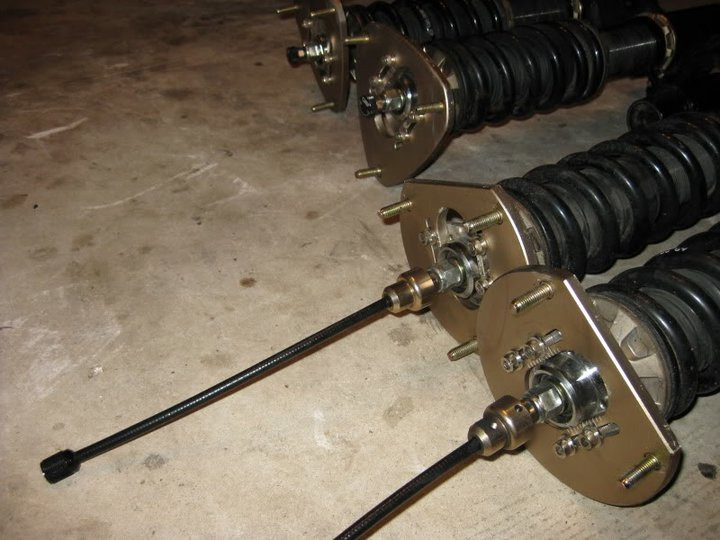
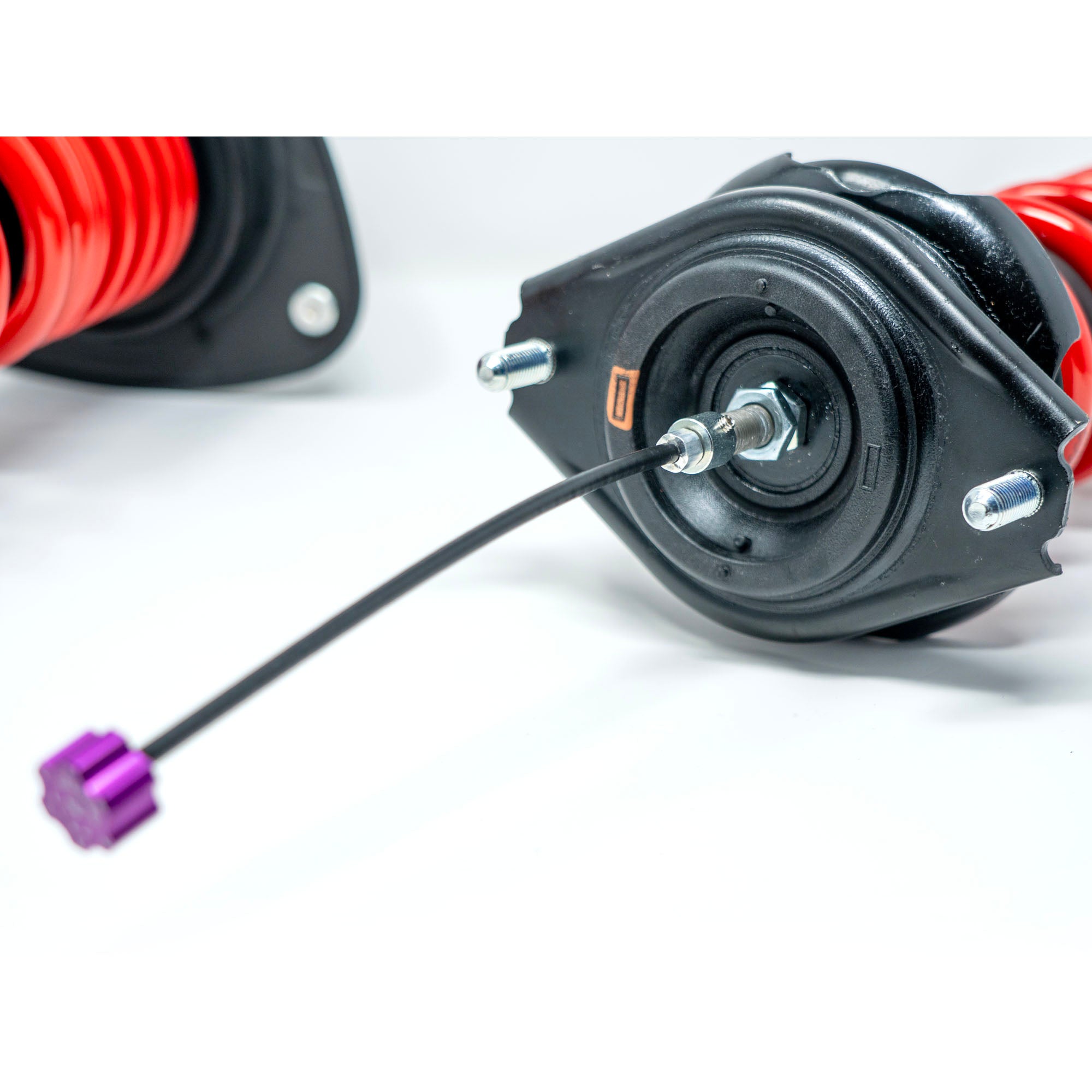
Rear extenders for coilovers are small extension shafts that let you reach a rear shock’s damping adjustment knob when the knob is hard to access inside a vehicle.
For drivers in the United States who install adjustable coilovers on a daily driver, sports car, or track car, rear damping extenders can make suspension adjustments much easier. Some rear shock adjusters sit behind trim panels, beneath the rear seats, inside the trunk, or near other parts of the body. An extender brings the adjustment point closer to an accessible area without requiring the driver to reach the original knob.
These parts are also called rear damping extenders, damper adjustment extensions, or remote adjustment extensions. They are different from coilover height adjusters and spring spacers. Their main job is to transfer your hand movement to the shock’s damping adjuster, where the design permits it. They do not automatically make the suspension softer, lower the vehicle, or increase its grip.
The correct extender depends on the coilover brand, shock design, adjustment mechanism, and available mounting space. Before buying one, check the suspension manufacturer’s fitment information and instructions. An extension that fits one coilover model may not work with another, even if both use similar-looking adjustment knobs.
Rear extenders for coilovers are accessories designed to make a rear shock’s damping adjustment control easier to reach. Many adjustable coilovers have a small knob or dial at the top of the damper. Turning that control changes the shock’s damping setting within the range allowed by the manufacturer.
The problem is that rear shock adjusters are often hidden by the vehicle’s design. A sports coupe may have an adjustment knob behind an interior panel, while another car may place the knob beneath the rear seat or inside the trunk. Removing trim every time you want to change a setting can be inconvenient. An extender provides a more accessible adjustment point.
Most conventional rear extenders are mechanical extensions that connect to the original adjustment shaft. Some use a flexible shaft, while others use a more rigid extension. The exact design varies by manufacturer and application, so the term does not describe one universal part.
For example, a driver may want to compare a firmer damping setting for a smooth track with a more compliant setting for ordinary street driving. If the original adjuster is difficult to reach, a compatible rear extender can reduce the work needed to make that change.
Source: ssdd-motorsport.com
Primary purpose
Extend access to an existing damping adjustment control.
Typical location
The rear shock or coilover assembly, with the accessible end positioned near a suitable opening or mounting point.
Main limitation
The extender only works with a compatible adjustment mechanism and does not create new suspension adjustment features.
What Does a Damping Adjuster Control?
A damping adjuster changes how the shock absorber resists suspension movement. The damper controls motion as the wheel moves up and down over bumps, during braking, and while the car turns. Depending on the design, the adjuster may influence compression damping, rebound damping, or a linked combination of both.
Compression damping describes resistance as the suspension compresses. Rebound damping describes resistance as the suspension extends again. Some coilovers use one control that affects both in a linked way, while other systems offer separate adjustments. Never assume that a knob has the same function on every suspension kit.
Compression
Affects resistance during suspension compression, according to the damper’s adjustment design.
Rebound
Affects resistance as the suspension extends after compression.
Combined adjustment
Some dampers link multiple damping circuits to one control.
Why Are Rear Adjusters Often Hard to Reach?
Vehicle packaging can leave little room around a rear shock tower. Interior trim, seat structures, trunk liners, and body panels may cover the original adjustment point. Some suspension layouts also place the rear spring and damper in separate locations, which can make it less obvious where the correct control is located.
An extender can make routine adjustments easier, but it should not be routed through an opening that allows it to rub against sharp edges or moving suspension parts. The final position must provide access without interfering with the vehicle’s normal operation.
Covered adjustment knob
An extender may let the driver reach the control without repeatedly removing interior trim.
Restricted hand clearance
An extension can provide more room to turn the adjuster where the manufacturer permits it.
How Do Rear Coilover Extenders Work?
A rear coilover extender transfers rotation from an accessible control to the damper’s original adjuster. When the driver turns the accessible end, the extension moves the original adjustment mechanism, provided the coupling is fitted correctly and the parts are compatible.
The extender does not normally alter the internal construction of the shock. Instead, it gives the user a practical way to operate the existing adjuster from another position. This distinction matters because the extension’s length and shape affect access, not the damper’s fundamental range of adjustment.
Many adjustable dampers use clicks or numbered settings to identify adjustment positions. The correct procedure for counting clicks, choosing a starting point, and reaching the ends of the adjustment range depends on the specific coilover. Do not force a knob against its stop or assume every system uses the same number of positions.
A properly installed extender should turn the intended adjuster smoothly without excessive play, binding, or contact with nearby parts. If the extension turns but the damping setting does not appear to change, check the coupling and the manufacturer’s adjustment procedure rather than applying more force.
Source: automotive-guides.com
Connection
The extender must engage the original adjuster in the manner specified by the suspension manufacturer.
Movement
Turning the accessible end should operate the intended damping control without binding.
Adjustment range
The original damper determines the available range, not the length of the extension.
Rigid Versus Flexible Extenders
Rigid extenders use a more fixed shaft or extension body. They may suit applications where the original adjuster and the accessible mounting point line up well. Their fit depends on the shape of the surrounding parts and the movement allowed by the assembly.
Flexible or cable-style extenders can help when the access point is offset from the shock adjuster. However, their routing must follow the manufacturer’s bend-radius and installation guidance. A cable that is sharply bent, pinched, or pulled tight may bind or fail to transmit adjustment smoothly.
Neither design is universally better. The correct choice depends on the adjuster’s construction, the available route, and the specific suspension kit.
Rigid design
Useful when a direct, aligned connection can be maintained.
Flexible design
Useful where the approved routing requires a bend or offset.
What Is the Difference Between Rear Extenders and Other Coilover Parts?
Rear damping extenders are easy to confuse with other suspension accessories because several parts can sit near the top or bottom of a coilover. The key difference is the job each part performs. An extender provides access to an existing damping adjuster; other parts change ride height, spring position, travel, or the damper’s mounting arrangement.
Knowing the difference prevents buying the wrong component. If the goal is to lower a vehicle, an adjustment extension will not accomplish it. If the goal is to change damping on a non-adjustable shock, an extender will not add that ability.
Source: kamispeed.com
Rear damping extender
Transfers movement to an existing damping adjustment control.
Ride-height adjuster
Changes the installed height of the suspension within the kit’s intended adjustment range.
Spring preload collar
Sets the spring’s initial compression according to the coilover design and setup procedure.
Helper spring
Helps keep the main spring seated when the suspension extends, where the system uses one.
Remote damping adjuster
A broader term for an adjustment control located away from the damper; its mechanism may differ from a simple extension shaft.
Do Rear Extenders Change Ride Height?
No. A damping extender does not directly raise or lower the vehicle. Ride height depends on the suspension’s design, adjustment settings, spring arrangement, vehicle load, and other setup factors.
If a car sits too high or too low, inspect the coilover’s height-adjustment procedure and confirm that the kit is approved for the vehicle. Do not try to correct ride height by changing the damping knob or adding an adjustment extension.
Height problem
Check the specified ride-height adjustment method.
Damping problem
Check the damper settings and adjustment procedure.
Do Rear Extenders Increase Suspension Travel?
A damping extender does not normally add suspension travel. Travel is limited by the coilover’s design, stroke, spring arrangement, bump stops, and the surrounding suspension geometry. A longer adjustment shaft should not be treated as a way to prevent bottoming out.
If the suspension bottoms out, tops out, or makes contact with the body, the issue needs a proper setup inspection. Changing an access accessory does not resolve a mechanical travel limit.
Suspension travel
Determined by the damper and suspension layout, not by the adjuster’s extension length.
Which Cars Can Use Rear Coilover Extenders?
Rear coilover extenders are used on some vehicles fitted with compatible adjustable suspension systems. Their usefulness depends more on the coilover design and the location of the rear adjuster than on the vehicle’s make alone. Two cars from the same manufacturer may need different extensions because their shock assemblies and access points differ.
In the United States, owners may encounter these accessories on modified sports coupes, compact performance cars, sedans, and track-oriented builds. Certain applications place the rear adjustment knob in a difficult location, while others leave it easy to reach. An extender is helpful only when it solves a real access problem.
Some coilover kits include rear adjustment extensions, while others list them as separate accessories or do not support them at all. Confirm the exact part number and compatibility before ordering. A listing that says an extender fits a particular vehicle may refer to one coilover series or model year rather than every suspension configuration for that car.
Source: racecompengineering.com
Street cars
An extender may make occasional comfort and handling adjustments more convenient.
Track cars
An accessible adjuster can help with controlled setup changes between sessions.
Show cars
An extension may reduce the need to remove trim when the suspension is adjusted during setup.
Daily drivers
The benefit depends on how often the driver changes damping and how hard the original control is to reach.
How to Check Compatibility Before Buying
Start with the brand and exact model of the coilover kit, not just the vehicle. Find the kit’s installation guide, parts diagram, or manufacturer fitment information. Check whether the rear damper has the adjustment mechanism required by the proposed extender.
Next, confirm the extension length, connection style, routing requirements, and any mounting hardware. If the kit uses a proprietary adjuster, a generic extension may not engage it correctly. Ask the suspension manufacturer or authorized supplier when the fitment details are unclear.
Coilover brand and model
Confirm the exact series and version printed on the kit or listed in its documentation.
Adjustment mechanism
Verify that the extension matches the damper’s original knob or shaft.
Length and route
Check that the extender can reach the intended access point without binding or interfering with trim.
Included hardware
Confirm whether the correct coupler, fastener, mounting bracket, or other required part is supplied.
How to Install Rear Extenders for Coilovers
Installation depends on the extender and coilover design. Some extensions attach directly to an exposed adjustment knob, while others require access to a concealed adjuster or a specific mounting point. Use the instructions for the exact suspension kit instead of following a generic procedure that may not match your hardware.
Before starting, park the vehicle on a level, stable surface and secure it against movement. If the installation requires lifting the car, use a suitable jack and correctly rated jack stands at the approved support points. Never work beneath a vehicle supported only by a jack.
You may need basic hand tools and a trim-removal tool if interior panels block access. Do not remove suspension fasteners, compress springs, or dismantle a pressurized damper merely to fit an access extension unless the manufacturer specifically requires that work and you have the proper equipment and training.
Source: coiloverdepot.com
Prerequisites
Have the correct extender, the coilover instructions, suitable tools, and a safe way to access the adjuster.
Safety
Support the vehicle correctly and keep hands clear of pinch points and loaded suspension parts.
Fitment
Follow the specified connection and routing method for the exact kit.
Step 1: Locate the Rear Damping Adjuster
Find the rear damper and identify its damping adjustment knob using the coilover manual. Depending on the car, the control may be accessible from the trunk, beneath a removable trim panel, or through another approved access point.
Do not mistake a ride-height collar, mounting bolt, or spring perch for the damping adjuster. If the control is hidden, use the vehicle and coilover documentation to confirm its location before removing trim.
Confirm the control
Match the part to the manufacturer’s diagram or installation instructions.
Step 2: Check the Extender and Coupling
Compare the extension with the original adjuster before fitting it. Confirm that the connector matches and that the extension is intended for the specific damper. Inspect the parts for damage, bent shafts, worn ends, or missing hardware.
Do not force a mismatched connector onto the original knob. If the parts do not engage as described by the manufacturer, stop and verify the part number or seek guidance from the supplier.
Inspect first
Look for damage, missing parts, or a connection that does not align properly.
Step 3: Fit the Extender as Directed
Attach the extension using the manufacturer’s specified method. Some designs slide over an adjustment shaft, while others use a set screw or another type of connection. Use the stated tightening method and torque value where one is provided; do not guess at a torque value.
Position the accessible end where it can be reached without putting tension on the shaft or cable. If a bracket or retaining clip is supplied, install it as directed. Do not drill the vehicle body or cut structural parts just to make the extension fit without confirming that the modification is approved.
Correct engagement
The coupling should sit securely and operate the intended adjuster.
Safe routing
Keep the extension clear of sharp edges, moving parts, hot components, and places where cargo can crush it.
Step 4: Test the Adjustment
Operate the extension gently through the adjustment range allowed by the manufacturer. Check that it turns the original control smoothly and that the accessible end does not slip, bind, or come loose. If the instructions specify a click count or starting position, follow that procedure.
Record the original settings before making changes. If the extender is fitted to both rear dampers, check each side individually. Do not assume that equal-looking knob positions mean the two dampers have identical internal settings unless the manufacturer’s instructions confirm how to set them.
Signs of correct installation
Smooth operation, secure attachment, no rubbing, and a clearly accessible control.
Signs of a problem
Slipping, binding, loose hardware, unexpected resistance, or contact with surrounding parts.
Step 5: Refit Trim and Recheck Clearance
If trim was removed, refit it carefully and make sure it does not press against the extender. The access point should remain usable without leaving loose panels, exposed sharp edges, or an opening that lets the extension move into an unsafe position.
Before driving, verify that all removed parts are secure and that the extension cannot contact moving suspension components. If the installation requires more extensive suspension disassembly, professional installation is the safer option.
Final check
Confirm secure hardware, free movement, proper trim fit, and no interference throughout the permitted adjustment range.
How Rear Extenders Affect Ride Comfort and Handling
A rear extender does not directly improve ride comfort or handling. It makes the damping control easier to reach, allowing the driver to adjust the damper more conveniently when the coilover supports that function. Any change in ride or handling comes from the damping setting itself, not from adding the extension.
A firmer setting may reduce some suspension movements, but it can also make sharp bumps feel harsher. A softer setting may improve compliance on some roads, yet it can allow more body movement or feel less controlled in certain conditions. The result depends on the damper, spring rate, tires, alignment, road surface, vehicle weight, and driving style.
There is no universal click setting that works for every car. A setup that feels suitable on a smooth road may feel uncomfortable on broken pavement. Track settings can also differ from street settings because tire grip, heat, cornering loads, and driver goals differ.
The most useful approach is to make small, documented changes while keeping other factors as consistent as practical. If the suspension manufacturer specifies a baseline setting, start there. Change one setting at a time, take note of the result, and avoid adjustments that make the vehicle unstable or difficult to control.
Source: www.youtube.com > SPRINGRATES
For daily driving
Aim for predictable control and reasonable comfort on the roads you use most often.
For track use
Follow the coilover maker’s setup guidance and make changes under controlled conditions.
For uneven roads
Do not assume the firmest setting is best; excess damping can reduce compliance over bumps.
Can Rear Extenders Make Coilovers Softer?
No. The extension itself does not soften the suspension. It can make it easier to select a softer damping setting if the damper’s adjustment range supports one. The amount of change depends on the damper’s design and the selected position.
If the ride remains harsh after adjusting damping, consider other causes such as an unsuitable spring rate, incorrect ride height, inadequate suspension travel, tire pressure, worn parts, or a setup that does not suit the vehicle. A damping extender cannot correct those problems.
Access improvement
The extension reduces the effort needed to reach the adjustment control.
Suspension change
The actual ride response changes only when the damper’s settings or other relevant suspension conditions change.
Common Rear Coilover Extender Problems and Mistakes
Most extender problems involve poor fitment, incorrect installation, or expectations that do not match the part’s function. A well-matched extension should improve access without changing the damper’s intended operation. If the control becomes difficult to turn or the extension feels loose, do not keep forcing it.
Check the connection and routing before changing suspension settings. An extension that binds can make adjustment unreliable and may damage the original control. If a part appears bent, cracked, or worn, replace it with a compatible component rather than attempting an improvised repair.
Source: newbrowningprosteelsafes.blogspot.com
Buying a universal part without checking fit
Similar-looking adjustment knobs may use different connections or movement requirements.
Choosing excessive length
An extension that is too long may be harder to secure and may interfere with trim or nearby components.
Forcing the adjuster
Excess force can damage the extension or the original damping control.
Routing near moving parts
Suspension movement can pinch or damage an extension placed in an unsuitable location.
Assuming the extender changes height
A damping extension is not a ride-height adjustment component.
What to Do If the Extender Will Not Turn
Stop applying force if the extension will not turn normally. Check whether the coupling is aligned and seated as specified, whether the cable is bent too sharply, and whether trim or another part is restricting movement. Compare the installation with the manufacturer’s instructions.
If the original damper knob also feels stuck, do not use pliers or add extra leverage unless the manufacturer expressly permits a particular method. The adjuster may be at an end stop, incorrectly engaged, damaged, or designed to operate differently than expected. Contact the coilover manufacturer or a qualified suspension shop if the cause is unclear.
First response
Stop, inspect the fit, and confirm the correct adjustment procedure.
When to get help
Seek qualified assistance if the original adjuster is damaged, the connection cannot be identified, or safe access requires suspension disassembly.
What If the Extender Keeps Coming Loose?
A loose extension may have the wrong connector, missing hardware, incorrect installation, or damage at the connection point. Remove or secure the part according to the manufacturer’s procedure before driving if it could move into a tire, suspension link, or other moving component.
Do not rely on improvised adhesive, extra screws, or an unapproved bracket to hold the extension in place. Use the specified replacement hardware or ask the supplier for a compatible solution.
Inspect
Check the coupler, retaining hardware, and extension for wear or damage.
Correct
Use the approved mounting method and verify clearance before returning the vehicle to service.
Are Rear Extenders Worth Buying?
Rear extenders are worth considering when the original damping controls are difficult to reach and the driver expects to adjust them more than occasionally. Their main value is convenience. They can save time when accessing a hidden knob and may reduce the need to remove trim for routine setup changes.
They may offer little benefit if the rear adjuster is already easy to reach or if the driver rarely changes damping. In those cases, the extra part adds another connection to inspect and another component that must be routed and secured correctly.
Price alone should not determine the choice. Confirm that the extender is designed for the installed coilovers and that the manufacturer supports the intended mounting position. A low-cost part that does not fit correctly can create more trouble than it solves.
If you are building a street or track car, decide how often you will adjust the rear suspension and whether the original control can be reached safely. If frequent access matters, a compatible extender may be useful. If access is already simple, keeping the original arrangement may be the better option.
Source: ssdd-motorsport.com
Consider buying one when
The rear damping knob is hidden, repeated adjustments are part of your setup process, and a compatible extension is available.
You may not need one when
The adjuster is easy to reach, settings rarely change, or the coilover manufacturer does not support the proposed extension.
Before ordering
Verify the coilover model, connector, length, installation method, and clearance requirements.
A Simple Decision Guide
Use the following guide to decide whether a rear extender addresses your actual problem. It is a practical fitment check, not a substitute for the suspension manufacturer’s compatibility information.
The knob is difficult to reach
An extender may help if the correct type is available for your coilover.
The knob is easy to reach
An extension may add little practical value.
The damper has no damping adjustment
An extender will not add an adjustment function.
The proposed part’s fit is unclear
Confirm the connection and application with the manufacturer before buying.
Rear Extenders and Routine Suspension Maintenance
Rear extenders need little routine attention, but they should be checked whenever the suspension or nearby trim is serviced. Look for loose fittings, cracks, corrosion where relevant, cable damage, and signs of contact with surrounding parts. A part that has shifted from its original position may no longer be safe to operate.
After a suspension adjustment, confirm that the accessible control remains secure and that the extension does not interfere with the wheel, spring, damper, brake lines, wiring, or other nearby components. The exact clearance check depends on the vehicle and suspension layout.
If the car develops a new clunk, rattle, handling change, or uneven ride height after installation, do not assume the extender is the cause or dismiss the symptom as normal. Inspect the installation and the suspension system as a whole. Loose mounting hardware, incorrect settings, worn parts, or another fault may require attention.
A damaged extender should be replaced with the correct part. Do not continue using an extension that slips, binds, or cannot reliably operate the original adjustment control. If the damper itself appears damaged or its adjuster no longer functions correctly, have the suspension inspected by a qualified technician.
Source: racecompengineering.com
Check attachment
Make sure the connection and any retaining hardware remain secure.
Check routing
Look for pinching, sharp bends, abrasion, and contact with moving or hot components.
Check operation
Verify that the extension moves the intended adjuster without unusual resistance.
Address new symptoms
Inspect the suspension rather than assuming a new noise or handling change is harmless.
Can You Drive Without Rear Extenders?
In many applications, the vehicle can still use its coilovers without an optional damping extension, provided the original adjuster and the rest of the suspension are correctly installed and functional. The extension is generally an access accessory, not a structural suspension component.
However, the answer depends on the specific kit and how the extension is installed. If removing it would leave a loose coupling, exposed hardware, or an unsecured component, follow the manufacturer’s removal procedure. Do not drive with a part that can contact the tire or moving suspension components.
Optional extension
Removal may be possible when the original adjustment control remains properly installed.
Uncertain installation
Check the kit instructions or have a qualified technician inspect the assembly before driving.
Frequently Asked Questions
Q
What are rear extenders for coilovers used for?
Rear extenders make a rear coilover’s damping adjustment knob easier to reach. They transfer movement to the original adjuster, which may otherwise be hidden behind a seat, trunk panel, or other part of the vehicle. They improve access rather than changing the damper’s basic function.
Q
Do rear coilover extenders change ride height?
No. A damping extender does not directly change ride height. Ride height is controlled by the suspension’s approved height-adjustment system and depends on the vehicle’s setup. Use the correct height adjuster if you need to change how high or low the car sits.
Q
Are rear damping extenders universal?
No. Compatibility depends on the coilover model, adjuster connection, extension length, and mounting arrangement. Check the exact suspension kit and manufacturer’s fitment information before purchasing an extender. Similar-looking parts may not connect or operate correctly.
Q
Can rear extenders make a car ride smoother?
The extender itself does not make the suspension softer. It can make it easier to select a different damping setting if the damper supports that adjustment. Whether the new setting improves comfort depends on the coilover design, spring rate, tires, road surface, and vehicle setup.
Q
Do rear extenders come with coilovers?
Some coilover kits include rear damping extensions, while others offer them separately or do not support them. Check the kit’s parts list and installation guide instead of assuming they are included. If you need an extension, confirm that the manufacturer approves it for your exact damper.
Q
Can I install rear coilover extenders myself?
Some extenders can be fitted with basic tools when the original adjuster is easy to access and the instructions are clear. Other installations may require interior trim removal or more involved access. If the work requires suspension disassembly, spring handling, or uncertain modifications, use a qualified suspension technician.
Q
How long should rear coilover extenders be?
The correct length is the one specified or approved for the coilover and the vehicle’s access arrangement. An extension must reach the intended adjustment point without tension, binding, or interference. Do not choose a longer part simply because it appears easier to reach.
Q
Can I drive with a loose rear extender?
Do not drive with a loose extension if it could move into the tire, suspension, or another moving component. Inspect the connection and use the specified hardware to secure it. If the original adjuster or mounting point is damaged, have the assembly checked before returning the vehicle to service.
✦ Wrapping Up
Conclusion
Rear extenders for coilovers make it easier to reach rear damping adjusters that are hidden or awkward to access. They are useful for drivers who change suspension settings for street use, track sessions, or other setup needs. Their main benefit is convenience, not extra suspension travel, a lower ride height, or an automatic improvement in handling.
The right extender must match the coilover’s adjustment mechanism and the space available in the vehicle. Correct installation should provide smooth operation, secure attachment, and safe clearance from trim and moving parts. If the extension binds, slips, or requires force, stop and check the fit rather than risking damage to the original adjuster.
For most owners, the best next step is to identify the exact coilover model and check whether its rear adjusters are difficult to reach. Compare that need with the manufacturer’s approved accessories before buying. If the adjustment control is already accessible, an extender may not offer enough benefit to justify another part.
💡 Key Takeaway
Check your coilover brand and model, confirm that the rear damper has a compatible damping adjuster, measure the access route, and choose only an approved extender that can be secured without binding or interfering with moving parts.
Eric
Hi, I’m Eric Bennett, the person behind OffRoadTruckAccessories.com.
I created this blog to share my interest in trucks, off-road driving, automotive accessories, and DIY modifications. I enjoy learning how different truck accessories work, testing their usefulness, and understanding whether they are truly worth buying.
Will G37 coilovers fit G35? Learn which model years may share fitment, what changes with coupe, sedan, and AWD setups, and how to verify compatibility.