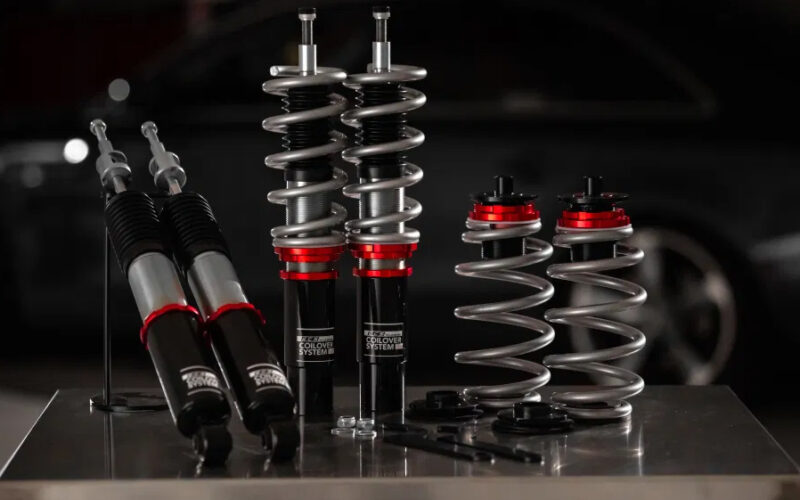
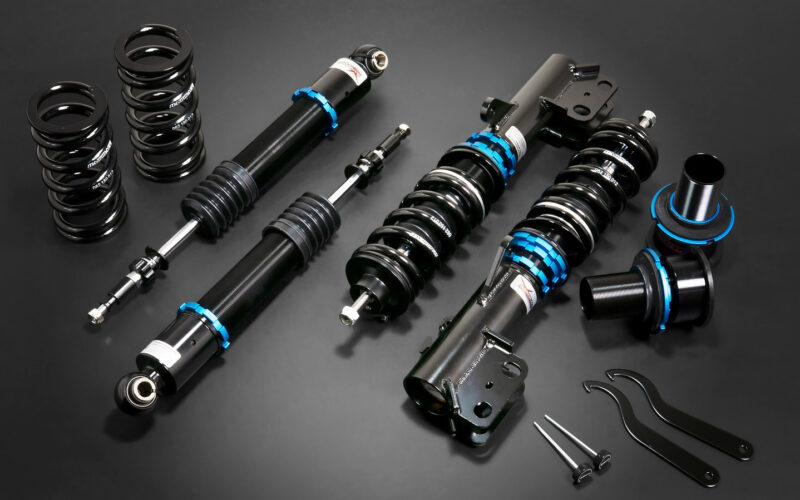
extenders on coilovers are small extensions that let you reach a shock’s damping adjuster when the adjuster is hard to access. They are common on rear suspension setups where the adjustment knob sits inside the trunk, under a seat, or behind a trim panel. Most extenders make tuning easier without removing suspension parts.
In the United States, drivers install coilovers on daily cars, lowered street cars, autocross vehicles, and track builds to adjust ride height and suspension response. Some coilover kits also let drivers change damping, which controls how quickly the shock absorber responds as the suspension moves. When an adjustment knob is buried near the top of a rear shock, an extender can bring that control to a more reachable spot.
A damping extender does not usually raise or lower the car, add spring rate, or change the shock’s internal design. It transfers the turning action from an accessible knob to the adjuster on the shock. The exact design depends on the coilover brand and model, so fitment matters. Before buying one, check the manufacturer’s instructions to confirm that the extension works with your particular damper.
Extenders on coilovers are accessories that extend access to a suspension damper’s adjustment control. They are especially useful when the adjustment knob sits in a place that is difficult to reach by hand. Instead of removing a wheel, opening suspension trim, or reaching into a narrow space, the driver can turn an accessible extension.
On many adjustable coilover systems, the damping adjuster changes the shock absorber’s resistance to movement. A small knob or screw at the top or bottom of the damper controls this setting. An extender connects to that control and lets the driver operate it from another location.
The word extender can describe several different products in suspension listings. In this article, it mainly means a damping adjustment extension, often sold as a rear damping extender. Always check the product description because not every part called an extender performs the same job.
Source: www.holley.com
Access extender
A shaft, cable, or extension piece that makes an existing damping adjuster easier to reach.
Damping adjuster
The original knob or screw on the shock absorber that changes the damper’s adjustment setting.
Coilover assembly
A suspension unit that combines a coil spring and shock absorber, often with provisions for ride-height adjustment.
Why Do Some Coilovers Need Extenders?
The main reason is limited access. A rear damper’s adjustment knob may sit above the wheel well, inside the trunk, or behind interior trim. The vehicle’s body can make the knob difficult to reach, even when the coilover itself is adjustable.
An extender can reduce the effort needed to change settings. This is helpful when a driver compares suspension behavior on different road surfaces or adjusts a track car between sessions. It can also make routine adjustments easier when the original control is hidden behind a removable panel.
Restricted rear access
Rear shock adjusters are often harder to reach than front adjusters because of the body structure and interior panels.
Frequent tuning
Drivers who regularly change damping settings can benefit from a control that is easier to reach.
Less disassembly
A properly installed extender may reduce the need to remove trim or other parts for routine adjustment.
How Do Coilover Damping Extenders Work?
A damping extender works by transferring the turning motion of an accessible control to the original adjuster. The extension does not normally produce the damping change itself. Instead, it lets the driver operate the shock’s existing adjustment mechanism from a more convenient position.
Many coilover adjusters use a small rotary control with defined steps or clicks. Turning the knob changes an internal damping setting. Depending on the design, this may alter the force that resists compression, rebound, or both. The number of settings and the direction of adjustment vary by manufacturer.
An extender must engage the original adjuster correctly. If the connection slips, binds, or does not seat fully, the knob may fail to turn as intended. Some designs also require the correct insertion depth, orientation, or mounting hardware. These details are why a generic extension should not be assumed to fit every coilover.
Source: suspensionsetups.com
Step 1: The driver turns the extension
The driver rotates the accessible knob or cable control using the method specified for that kit.
Step 2: The extension transfers movement
A rigid shaft or flexible mechanism transmits the rotation to the original damping adjuster.
Step 3: The damper setting changes
The connected adjuster changes its internal setting according to the damper’s design.
Step 4: Suspension response may change
The revised damping setting can affect body motion, wheel control, and the way the vehicle responds to bumps or steering inputs.
Do Extenders Change Compression or Rebound Damping?
The extender itself does not determine which damping function changes. That depends on the original shock absorber and its adjuster. A single adjustment knob may control rebound damping, compression damping, or a combined adjustment, while some advanced dampers provide separate controls.
Compression damping describes resistance as the suspension compresses. Rebound damping describes resistance as the suspension returns after compression. An extender simply gives access to the adjustment provided by the specific damper, so consult the coilover manual before changing settings.
Compression adjustment
Changes the damper’s response as the wheel moves upward relative to the vehicle body.
Rebound adjustment
Changes the damper’s response as the suspension extends after being compressed.
Combined adjustment
Changes more than one damping characteristic through a shared control, depending on the damper design.
Types of Extenders Used on Coilovers
Coilover extenders differ in how they connect to the adjuster and how they are routed through the vehicle. The correct style depends on the damper design, the available space, and the intended adjustment location. A longer extension is not always better because excess length can create routing and clearance problems.
Before selecting a type, identify the exact coilover kit and check whether its manufacturer offers a matching accessory. Some kits use a proprietary connection that will not work with an extension designed for another brand.
Source: www.youtube.com > Auto Care
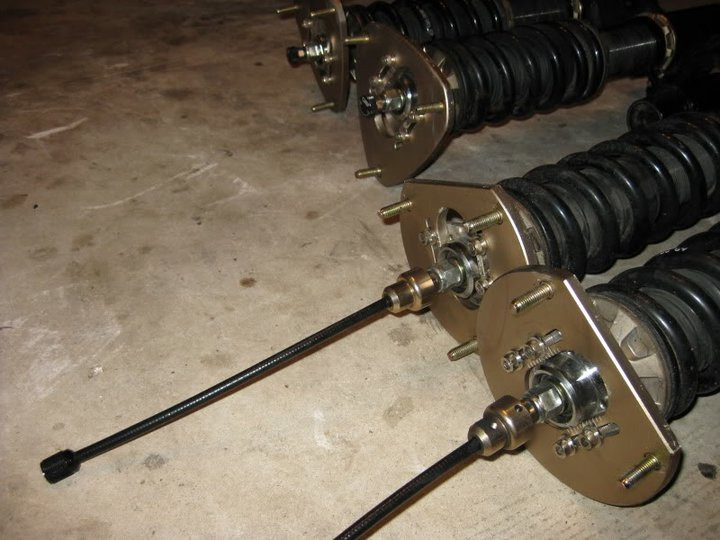
Rigid shaft extenders
Use a solid extension shaft to carry the turning motion from a reachable knob to the damper adjuster. They suit installations where a straight or nearly straight path is available.
Flexible cable extenders
Use a flexible mechanism to route adjustment access around bends or through confined spaces. The cable must follow the manufacturer’s minimum bend radius and routing instructions.
Rear adjustment extenders
Are designed for rear dampers where the original control may be hidden behind a trunk liner, parcel shelf, or interior panel.
Brand-specific extensions
Match a particular coilover adjuster shape, attachment method, or accessory system. These are often the safest starting point when the manufacturer lists an approved part.
Rigid Extenders Versus Flexible Extenders
Rigid extenders offer a direct mechanical connection and can be simple to fit when the adjuster is close to the desired access point. They may be unsuitable when the path includes a sharp bend or when suspension movement could place stress on the shaft.
Flexible extenders allow more freedom in routing, which can help when the adjustment point must pass through a narrow space. However, they still need secure mounting and suitable clearance. A flexible cable that is kinked, trapped, or stretched can become difficult to operate.
Choose the design based on the route and the manufacturer’s compatibility guidance, not just the advertised length. The goal is reliable adjustment without adding strain to the original damper control.
Choose a rigid shaft when
The path is short, the adjuster connection matches, and the extension can remain aligned throughout suspension movement.
Choose a flexible cable when
The route needs a bend and the manufacturer supports the cable arrangement for the particular coilover.
What Benefits Do Coilover Extenders Provide?
The main benefit of a coilover extender is easier access to damping adjustments. It can make a practical difference when the original knob is hidden or when reaching it requires removing trim or other components. This convenience can save time during setup changes, although the amount of time saved depends on the vehicle.
Extenders can also make repeatable tuning more convenient. A driver can record a known setting, make a controlled change, and compare how the car behaves on the same route or under similar conditions. This approach is more useful than turning the knob at random and relying on memory.
An extender does not automatically improve ride quality, grip, or lap times. Those outcomes depend on the damper, spring rates, tires, alignment, road surface, vehicle weight, and selected damping setting. The extension only changes how easily the driver reaches the adjustment control.
Source: suspensionsetups.com
Convenient access
Makes it easier to reach an adjuster that would otherwise be difficult to operate.
Simpler setup changes
Can reduce the need to remove interior trim or reach into a confined area for each adjustment.
More consistent tuning
Supports repeatable changes when the driver records the original setting and adjusts one variable at a time.
Potential maintenance convenience
Can make it easier to inspect or operate an adjustment control, provided the extension remains secure and accessible.
Are Extenders Worth It for Daily Driving?
For a daily driver, an extender is most useful when the damping adjuster is difficult to reach and the owner expects to change settings. Someone who leaves the suspension at one setting for months may gain little from easier access.
Consider how often you adjust the dampers and how much work the original access point requires. If the adjuster is already easy to reach, an extension may add cost and extra hardware without a meaningful benefit.
Likely useful
The rear adjusters are hidden, and you regularly change settings for different driving conditions.
May be unnecessary
The original adjusters are accessible, or you rarely change damping after setup.
Coilover Extenders Versus Other Suspension Parts
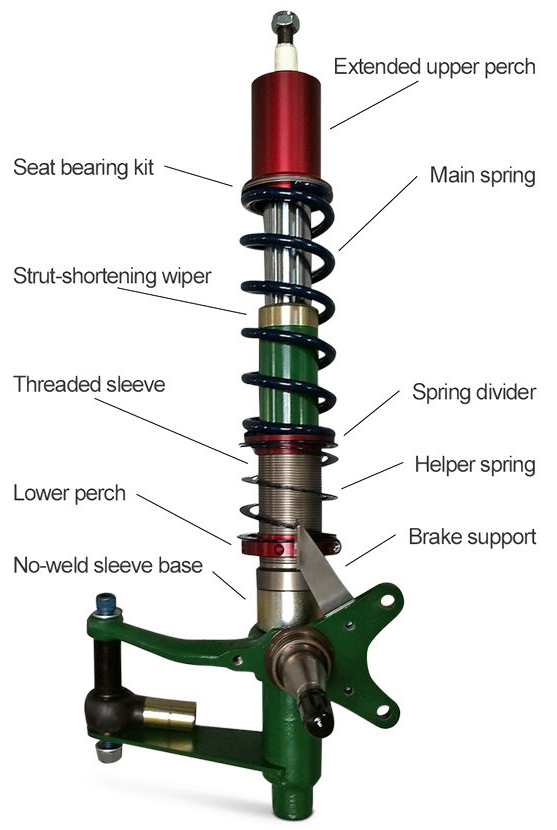
The word extender can cause confusion because suspension manufacturers sell several parts that change the layout or adjustment of a coilover assembly. A damping extender, a spring spacer, and a helper spring do different jobs. Identifying the correct part prevents buying an accessory that cannot solve the problem.
A damping extender provides access to an existing adjustment control. A ride-height adjuster changes the installed height of the vehicle through the suspension’s adjustment mechanism. A spring spacer changes the position of a spring or affects its installed geometry, while a helper spring helps maintain spring seating when the suspension unloads.
Source: suspensionsetups.com
Damping extender
Extends access to the shock absorber’s damping adjuster. It does not normally change ride height or spring rate.
Ride-height adjustment collar
Changes the suspension’s installed position according to the coilover design. The correct adjustment method varies between systems.
Spring spacer
Changes the position or installed geometry of a spring, depending on where and how the spacer is designed to fit.
Helper spring
Helps keep the main spring seated when suspension travel allows the assembly to unload. It is not a damping adjustment extension.
Preload adjustment
Changes how much the spring is compressed from its free length at the installed position. Its effect depends on the coilover’s spring and height-adjustment design.
Do Coilover Extenders Raise or Lower a Car?
A damping adjustment extender does not normally raise or lower the vehicle. It provides access to the damper control, while ride height is set through the coilover’s designated height-adjustment mechanism.
If a listing uses the term extender for a different suspension component, read its technical description before assuming its function. Never use a damping extension as a substitute for the correct height-adjustment parts.
For ride height
Use the adjustment procedure specified for the exact coilover model.
For damping access
Use a compatible adjustment extender when the original knob is difficult to reach.
How to Choose the Right Coilover Extender
Choose an extender by matching it to the exact damper and checking the available installation space. The vehicle make and model alone may not be enough because different coilover kits can use different adjustment mechanisms on the same car.
Start with the coilover manufacturer’s part number and installation manual. Look for an approved extension, the required connection style, and any stated limits on length or routing. If the product listing does not identify compatible damper models, ask the manufacturer or supplier to confirm fitment before ordering.
Source: ssdd-motorsport.com
Confirm the coilover model
Record the brand, series, model number, and any relevant revision or part number.
Check the adjuster connection
Verify that the extension fits the shape and mechanism of the original damping control.
Measure the required reach
Estimate the distance from the adjuster to the intended access point while allowing for safe routing and movement.
Review the installation route
Check for clearance from tires, suspension links, exhaust parts, wiring, sharp edges, and moving panels.
Confirm included hardware
Check whether the kit includes the required fasteners, brackets, protective sleeves, or mounting pieces.
Does Extender Length Matter?
Yes. The extension must reach the desired control location without being stretched, bent beyond its permitted limit, or placed where it can catch on another component. Excess length may also make routing and mounting harder.
Do not choose a length based only on a photograph or a general measurement from another vehicle. Body shape, suspension layout, and interior trim can change the best route. Use the dimensions and installation guidance for the specific kit.
Too short
May not reach the intended access point or may place stress on the original adjuster.
Too long
May create loose sections, awkward bends, or interference with nearby parts.
Correctly routed
Should remain secure and operate smoothly without interfering with suspension movement or vehicle components.
How to Install Coilover Damping Extenders
Install a coilover extender according to the instructions for the specific extension and damper. Some extensions attach directly to the adjuster, while others require a mounting bracket or a particular routing method. Do not force a connection that does not fit correctly.
The steps below provide a general overview rather than a model-specific repair procedure. Read the kit instructions first, and use the vehicle service manual when access requires removing interior parts, lifting the vehicle, or working near suspension components.
Source: suspensionsetups.com
Step 1: Identify the original setting
If the manufacturer permits it, record the current damping setting before making changes. Follow the manual’s method for counting clicks or positions, and never force the adjuster against its stop.
Step 2: Make the work area safe
Park on firm, level ground, switch off the vehicle, and allow hot parts to cool. If lifting is necessary, use approved lifting points and properly rated jack stands. Never work beneath a vehicle supported only by a jack.
Step 3: Reach the adjuster
Remove only the trim or access parts required by the manufacturer’s instructions. Keep removed fasteners organized and avoid pulling on nearby wiring.
Step 4: Fit the extension
Connect the extender to the original damping adjuster using the specified orientation and hardware. The connection should seat correctly without excessive force.
Step 5: Route and secure it
Follow the approved path and secure the extension as directed. Keep it clear of moving suspension parts, the tire, exhaust heat, sharp edges, and pinch points.
Step 6: Check operation
Operate the extension gently through its permitted adjustment range. Confirm that the control responds normally and does not bind, slip, or become disconnected.
Step 7: Refit the removed parts
Reinstall any trim, covers, and fasteners according to the service instructions. Make sure the extension remains accessible and cannot be trapped by the panel.
How to Tell Whether Installation Was Successful
A successful installation leaves the extender securely attached, easy to operate, and clear of surrounding parts. The control should move in the way specified by the manufacturer, with no unusual resistance or slipping at the connection.
If the knob does not respond, stop rather than applying more force. The extension may be incompatible, incorrectly seated, or routed in a way that creates binding. Compare the connection with the manufacturer’s instructions and correct the problem before driving.
Secure connection
The extender stays attached during normal operation and does not wobble excessively or slip.
Smooth adjustment
The original adjuster can be operated within its specified range without unusual resistance.
Safe clearance
The extension does not contact the tire, suspension links, exhaust, or other moving or hot components.
Common Coilover Extender Problems and Fixes
Most extender problems involve fitment, poor routing, a loose connection, or confusion about how the original damping adjuster works. A control that suddenly becomes hard to turn should not be forced, since the problem may involve the extension or the damper itself.
Check simple installation issues first. If the extension is properly attached and routed but the original adjuster still fails to operate, consult the coilover manufacturer or a suspension specialist before replacing parts.
Source: suspensionsetups.com
The extender does not fit
Check the exact coilover series and part number. A similar-looking adjuster may use a different connection, so do not modify the extension unless the manufacturer explicitly allows it.
The adjustment knob will not turn
Check for a kink, misaligned connection, excessive bend, or trapped cable. If the original adjuster remains stuck after the extension is removed according to the manual, seek qualified inspection.
The setting seems unchanged
Confirm that the extension engages the original control and that the damper actually offers an adjustable function. A turning knob alone does not prove that the internal setting changed.
The extension comes loose
Inspect the attachment and required retaining hardware. Replace damaged parts and use the specified securing method rather than relying on improvised adhesive or fasteners.
The extension contacts another part
Stop using the setup until the route is corrected. Contact with a tire, moving linkage, or hot exhaust can damage the extension and may create a safety risk.
Can a Bad Extender Damage Coilovers?
A correctly fitted extender should operate the original adjuster without placing unusual loads on it. A poorly matched, misaligned, or forced connection may damage the adjustment mechanism, while a badly routed extension can wear or break during use.
If the control suddenly becomes stiff or the extension no longer engages properly, stop turning it. Do not use pliers or another tool to force the adjuster. Follow the manufacturer’s troubleshooting procedure or have a qualified suspension shop inspect the parts.
Avoid forced rotation
Use only the operating method and adjustment range specified by the damper manufacturer.
Inspect the routing
Look for bends, abrasion, heat damage, pinching, or contact with moving components.
Replace damaged parts
Use a compatible replacement rather than an improvised repair that could fail during driving.
How Extenders Fit Into Suspension Tuning
An extender makes damping adjustments easier, but good suspension tuning still requires a controlled approach. Begin with the coilover manufacturer’s recommended baseline. Then change one setting at a time and compare the vehicle’s response under similar conditions.
For street use, the goal is a setup that maintains predictable control over normal road surfaces. A setting that feels firm in a parking lot may behave differently on uneven pavement, and a softer setting is not automatically more comfortable or safer. Tire condition, alignment, spring rate, ride height, and damper condition all affect the result.
For track use, drivers may adjust damping to suit tire grip, surface changes, and handling balance. Any adjustment should stay within the manufacturer’s permitted range. A damping extender is a convenience tool, not a substitute for a sound setup or proper vehicle inspection.
Source: suspensionsetups.com
Start from a known baseline
Use the manufacturer’s recommended settings and record the initial position so you can return to it.
Make small changes
Adjust one control at a time, using the steps or increments specified by the manufacturer.
Keep a tuning record
Write down the setting, road or track conditions, and the handling or comfort change you observe.
Recheck the complete setup
If the car handles poorly, inspect tires, alignment, ride height, spring seating, and damper condition instead of assuming the extender is the cause.
Should You Adjust Damping While Driving?
Do not reach for a damping adjustment control while driving on public roads. Stop in a safe, legal location, secure the vehicle, and follow the manufacturer’s instructions before changing the setting. Some adjustment locations may require additional access or lifting, making roadside changes unsuitable.
A remote or extended control does not make it safe to adjust the suspension while the car is moving. If the vehicle has a dedicated electronic suspension system, use only its approved controls and operating procedures.
Make adjustments while parked safely and test the result only when the vehicle is ready for normal driving.
For track cars
Make setup changes in the designated pit or service area and follow event safety rules.
Frequently Asked Questions
Q
Are coilover extenders necessary?
No. Extenders are optional accessories for coilovers with compatible damping adjusters. They are useful when the original knob is hard to reach, but they offer little benefit when the adjuster is already easy to access or rarely needs changing.
Q
Do all coilovers use the same extenders?
No. Coilover brands and models can use different adjuster shapes, attachment methods, and cable requirements. Check the exact model and the manufacturer’s compatibility information before buying an extender.
Q
Do coilover extenders make the ride softer?
No, not by themselves. An extender gives access to an existing damping control. The ride may feel different after you change the damper setting, but the outcome depends on the coilover design, spring rate, tires, road surface, and selected adjustment.
Q
Can I install coilover extenders myself?
Some extenders are simple to install when the adjuster is accessible and the instructions are clear. Others require trim removal, careful routing, or access near suspension components. Follow the manufacturer’s procedure, use proper vehicle support when lifting is required, and seek professional help if the connection or routing is unclear.
Q
Can I use a longer extender if the original one is too short?
Only if the longer extension is approved for your coilover and can be routed safely. Extra length can cause loose sections, binding, or contact with moving and hot parts. Confirm the required length and routing limits with the manufacturer before changing the extension.
Q
Are rear damping extenders different from front extenders?
They can be. Rear extenders often need a longer or differently routed connection because the adjuster may sit behind the trunk or interior trim. Front suspension layouts can have different access and clearance needs. Use the extension designed for the particular damper and mounting position.
Q
How do I know if my coilovers have adjustable damping?
Check the product specifications, installation manual, or manufacturer’s part number. An adjustment knob or screw may indicate an adjustable damper, but its function and adjustment range must be confirmed for that model. A ride-height collar alone does not mean the damper has adjustable damping.
Q
Can a coilover extender affect vehicle safety?
A properly fitted extender should not interfere with normal suspension movement. However, a loose or poorly routed extension can contact a tire, suspension link, or hot component, and a forced connection can damage the adjuster. Inspect the installation and correct any interference before driving.
✦ Wrapping Up
Conclusion
Extenders on coilovers make damping adjusters easier to reach, especially when rear shock controls sit behind trim or in other confined areas. Depending on the design, an extender uses a rigid shaft or flexible mechanism to transfer movement to the original adjustment control. It does not normally change ride height, spring rate, or damping performance on its own.
The right extension must match the coilover model, connect securely, and follow a safe route. Before installation, confirm compatibility, read the instructions, and check clearance around moving suspension parts and hot components. If the adjuster binds or fails to respond, stop and investigate rather than forcing it.
For drivers who change damping settings regularly, an extender can make suspension tuning more convenient. For drivers who rarely adjust their coilovers, the original control may be sufficient. Choose based on access needs, correct fitment, and the manufacturer’s guidance rather than assuming every coilover needs an extension.
💡 Key Takeaway
Find your coilover brand and model number, check whether the manufacturer offers a matching damping extender, and confirm the required length and routing before purchasing or installing one.
Eric
Hi, I’m Eric Bennett, the person behind OffRoadTruckAccessories.com.
I created this blog to share my interest in trucks, off-road driving, automotive accessories, and DIY modifications. I enjoy learning how different truck accessories work, testing their usefulness, and understanding whether they are truly worth buying.
Will G37 coilovers fit G35? Learn which model years may share fitment, what changes with coupe, sedan, and AWD setups, and how to verify compatibility.