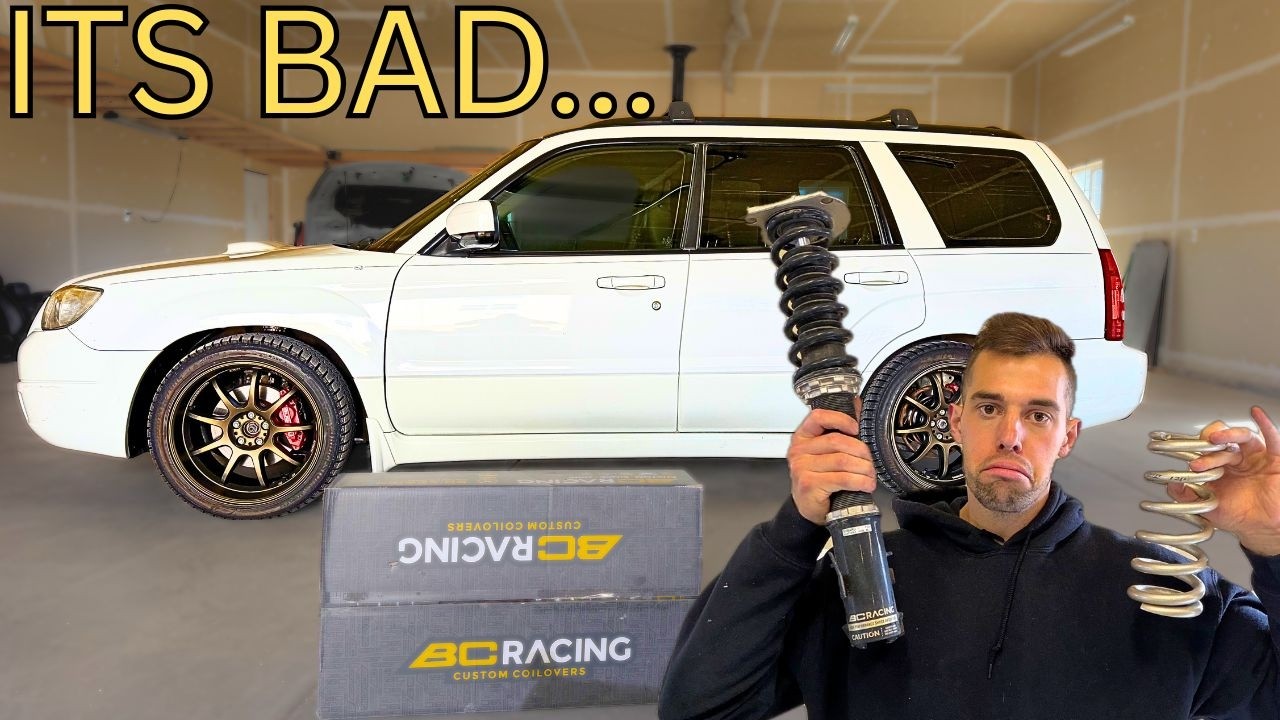
Yes, BC Racing coilovers can be good for daily driving if you want adjustable ride height and sharper handling. However, ride comfort depends on your car, spring rate, damping settings, road conditions, and installation quality.
For drivers in the United States, a daily-driven car must handle more than smooth roads. It may face potholes, rough city streets, highway joints, speed bumps, steep driveways, and long commutes. BC Racing coilovers can help you set your car’s ride height and adjust its damping, but a lower stance and firmer suspension may make these everyday conditions less pleasant.
BC Racing offers several coilover series for different vehicles and uses. The BR Series is a common option for street cars that also see spirited driving or occasional track use. Its adjustable damping gives drivers room to change the suspension feel, although adjustment cannot make every spring and damper combination comfortable on every road.
The main question is not whether BC Racing coilovers are good in general. It is whether the specific kit for your vehicle can provide the balance of comfort, handling, clearance, and maintenance you need. Before buying, compare the kit’s spring rates, adjustment range, vehicle fitment, warranty terms, and service requirements with your current suspension.
What Makes BC Racing Coilovers Suitable for Daily Driving?
BC Racing coilovers can suit a daily driver because they combine a spring and damper assembly in a package designed for a particular vehicle application. Many kits offer adjustable ride height and damping, giving owners more control over how the car sits and responds to bumps, body roll, and changes in direction.
A coilover is not automatically more comfortable or better handling than a factory suspension. The result depends on the original suspension, the aftermarket kit’s design, the selected spring rates, tire choice, ride height, and setup. A well-matched kit may feel controlled and predictable, while an overly stiff or poorly installed setup can feel harsh and unsettled.
For daily driving, the strongest reason to choose BC Racing is the ability to tailor the suspension to a specific goal. That might mean reducing excessive body movement, correcting an uneven stance, or choosing a moderate drop without giving up all practical road manners.
Source: www.youtube.com > Nefarious Racing
Adjustable ride height
Many BC Racing kits let you change how high or low the vehicle sits. This is useful for setting a moderate street stance, although the permitted range and adjustment method depend on the kit.
Adjustable damping
Damping controls how quickly the suspension responds to movement. The adjustment can change the balance between a more compliant feel and greater body control, within the limits of the spring and damper design.
Vehicle-specific fitment
A kit designed for the correct vehicle can provide suitable mounting points and application-specific components. Confirm the exact year, trim, drivetrain, and suspension configuration before ordering.
Room for personal tuning
Drivers can often refine the setup after installation. The best setting for a smooth highway may differ from the setting that feels composed on a winding road.
What the BR Series Is Designed to Offer
The BC Racing BR Series is commonly considered by street-car owners who want adjustable suspension for everyday use and occasional spirited driving. Its damping adjustment and height adjustment make it more flexible than a fixed-height lowering spring setup, provided the kit is correctly selected and installed.
The BR Series should not be treated as a universal comfort upgrade. The exact specifications vary by vehicle application, and a setup intended for one chassis may have different spring rates or mounting details from a kit for another. Check the specifications for the precise kit rather than relying on a general product description.
Best fit
Drivers who want a lower stance, adjustable suspension feel, and a balance between commuting and occasional performance driving.
Main limitation
Drivers who prioritize a plush factory-like ride over height adjustment and sharper handling may find a conventional replacement suspension more suitable.
Are BC Racing Coilovers Comfortable on Rough Roads?
BC Racing coilovers can be comfortable enough for daily use, but rough roads reveal their limits. Potholes, broken pavement, sharp road seams, and speed bumps can feel more pronounced than they do with a soft factory suspension, especially when the car is lowered or fitted with stiff springs.
Comfort is not controlled by the damper setting alone. Spring rate, available suspension travel, tire pressure, tire sidewall height, bushings, and the condition of the rest of the vehicle all affect the ride. A driver may soften the damping and still find the car harsh if the spring rate is high or the suspension has too little room to move.
In the United States, road conditions can change greatly between smooth interstate highways and damaged city streets. If your commute includes rough pavement, choose a suitable spring rate and avoid lowering the car more than necessary. A modest drop is generally easier to live with than a setup that frequently hits its bump stops or scrapes on ordinary roads.
Source: martiniworks.com
Potholes and sharp bumps
A stiff setup may transmit more impact into the cabin. Slow down for unavoidable road hazards and avoid driving through potholes at speed.
Highway driving
A well-matched setup may feel controlled at highway speeds, but comfort still depends on the tires, road surface, alignment, and damping settings.
Speed bumps and steep driveways
A lower vehicle has less clearance. Approach obstacles slowly and at an angle only when appropriate for the road layout and vehicle design.
Long commutes
Small differences in impact harshness and vibration can become tiring over time. Test the setup on your actual commute before deciding that the ride is acceptable.
Can Softer Damping Make the Ride Smooth?
Reducing damping can make some impacts feel less abrupt, but the result depends on the damper design and the original setting. Damping controls suspension movement rather than replacing the spring’s load-bearing role, so a soft adjustment cannot turn a stiff spring into a soft one.
If the car continues to crash over bumps, check the spring rate, tire pressure, bump-stop engagement, and available suspension travel. Also inspect for loose mounts, worn bushings, or other faults. Do not assume that every harsh impact can be fixed by turning the adjustment knob.
Start from the specified baseline
Use the kit manufacturer’s recommended starting setting and count adjustments carefully if the instructions require counting from a particular end of the range.
Change one setting at a time
Make a small change, drive the same route under similar conditions, and note the difference before making another adjustment.
Stop if the car behaves poorly
Repeated bottoming, loose handling, unusual noises, or poor tire contact calls for inspection rather than more trial-and-error adjustment.
How BC Racing Coilovers Affect Handling
BC Racing coilovers can improve the sense of control a driver gets from a car when the kit is appropriate and correctly tuned. A suitable setup may reduce excessive body roll, help the car respond more consistently to steering inputs, and support a lower center of gravity when ride height is reduced without compromising suspension geometry.
However, less body roll does not automatically mean more grip or safer handling. Tire quality, alignment, suspension geometry, road surface, and the driver’s actions remain critical. A very stiff setup may reduce compliance on uneven pavement, which can make it harder for the tires to maintain consistent contact with the road.
For daily driving, the goal should be balanced handling rather than the firmest possible setup. The car should remain predictable during emergency maneuvers, braking, lane changes, and wet-weather driving. A setup that feels impressive on a smooth road may not be the best choice for broken pavement or poor weather.
Source: thecarhow.com
Reduced body movement
Appropriate spring and damping choices can help limit unwanted pitch and roll during braking, acceleration, and cornering.
More consistent response
A well-set suspension can make steering response feel more controlled, especially when the original dampers are worn.
Alignment remains essential
Changing ride height can alter camber, toe, and other alignment measurements. A professional alignment is necessary after installation and after significant ride-height changes.
Stiffness has trade-offs
Excessive stiffness may increase harshness and reduce compliance over uneven surfaces. It is not a substitute for proper suspension geometry or good tires.
Are They Good for Highway and City Driving?
For highway driving, BC Racing coilovers may offer a stable and controlled feel when the spring rates, damping, alignment, and tires work well together. On city streets, frequent potholes, low-speed bumps, and steep entrances can make the same setup feel less comfortable.
Drivers who split time between city roads and highways should tune for the roughest conditions they regularly face. If the car becomes nervous over bumps, skips across uneven pavement, or feels unsettled during lane changes, have the setup and alignment checked rather than assuming a firmer adjustment will improve it.
City use
Prioritize ground clearance, suspension travel, and a compliant setting for repeated low-speed bumps.
Highway use
Prioritize predictable response, correct alignment, suitable tires, and stable damping without making the ride unnecessarily harsh.
Choosing the Right Spring Rate for a Daily Driver
The spring rate is one of the most important factors when choosing coilovers for a daily driver. It describes how much force is needed to compress a spring by a given distance. A higher rate generally resists compression more strongly, while a lower rate allows more movement under the same load.
The right rate depends on the vehicle’s weight, weight distribution, suspension design, intended ride height, and driving goals. There is no single spring rate that is best for every daily-driven car, even within the same model family. A heavy vehicle, a lightweight sports car, and a front-wheel-drive compact may need different specifications.
Before purchasing a kit, review the spring rates listed for your exact application. Ask the manufacturer or a qualified suspension shop whether a street-oriented rate is available if comfort is your priority. Do not assume that a softer spring is always better, because the damper must be matched to the spring and the vehicle must retain appropriate suspension control.
Source: www.youtube.com
Lower spring rates
These may allow more suspension movement and improve comfort in some setups, but the full result depends on damper matching, travel, and vehicle weight.
Higher spring rates
These can support stronger body control and certain performance goals, but they may make sharp road impacts more noticeable.
Vehicle-specific specifications
Compare the actual front and rear rates for the exact kit rather than copying settings from a different chassis.
Professional setup advice
A suspension specialist can help determine whether the kit’s available rates suit your roads, tires, vehicle load, and comfort needs.
Should You Order Custom Spring Rates?
Custom spring rates may be worth considering when a driver has clear requirements that differ from the standard kit setup. Examples include carrying unusual loads, using a particular tire and wheel package, or needing a specific balance for a modified vehicle.
Custom rates are not a guaranteed comfort upgrade. The dampers may need to be revalved or otherwise matched to the selected springs, depending on the design. Confirm compatibility with BC Racing or an experienced suspension specialist before changing the supplied specifications.
Ask about damper matching
Confirm that the damper can control the proposed spring rate throughout the intended range of movement.
Explain your real use
Describe daily mileage, road quality, passengers, cargo, wheel and tire sizes, and any track use before choosing a rate.
Ride Height, Ground Clearance, and Suspension Travel
Ride height affects more than appearance. Lowering a car reduces clearance beneath parts of the vehicle and can change suspension geometry and available travel. For a daily driver, a moderate ride height is often a better compromise than an extreme drop.
Suspension travel is the distance the wheel and suspension can move through their usable range. If a lowered car has too little travel, it may hit its bump stops often, creating harsh impacts and reducing control over rough roads. A height adjustment should not be used to force the suspension into a position that the kit was not designed to support.
Many coilover designs allow ride-height adjustment through a threaded body or related adjustment hardware, but the correct procedure varies by kit. Follow the model-specific instructions. Do not assume that moving the spring perch or changing preload is interchangeable with changing the overall height.
Source: fitmentindustries.com
Protect everyday clearance
Check clearance at driveways, speed bumps, parking ramps, and road entrances you use regularly.
Avoid frequent bottoming
Repeated hard impacts may indicate insufficient travel, an unsuitable setting, or a component fault. Have the cause checked.
Keep left and right settings consistent
Follow the kit’s ride-height and corner-setting instructions, taking into account vehicle-specific requirements and measured results.
Recheck alignment
A height change can alter alignment. Arrange a new alignment whenever the suspension setup changes enough to affect the manufacturer’s specifications.
Can You Daily Drive a Very Low Car?
You can daily drive a very low car in some settings, but it demands more care and can be less practical. The car may scrape on common obstacles, have limited suspension travel, and need frequent adjustments or repairs after contact with the road.
If you regularly carry passengers, use steep parking garages, or drive on damaged streets, choose a ride height that leaves enough clearance for those conditions. The best daily setup is one you can use without constantly avoiding ordinary road features or risking damage to the vehicle.
A moderate drop
Usually offers a more practical balance between appearance and everyday access than an extreme lowering setup.
A very low setup
May suit show-oriented builds, but it can require more compromises in comfort, clearance, alignment, and maintenance.
How to Adjust BC Racing Coilovers for Daily Driving
The best daily-driving setup starts with the manufacturer’s instructions, not a random number of clicks copied from another car. Damping adjusters, adjustment ranges, and baseline settings can differ by model, so first identify the exact kit and confirm how its controls work.
If the coilovers are already installed, inspect the suspension and tires before tuning. Worn tires, incorrect tire pressure, loose hardware, damaged mounts, and alignment problems can all affect ride quality. Changing damping will not correct these faults.
Once the vehicle is in sound condition, make small, controlled changes. Keep the ride height fixed while testing damping, and use the same familiar route when possible. This makes it easier to identify whether a change improves comfort or merely alters the feel of the steering and body movement.
Source: thecarhow.com
Step 1: Identify the kit
Find the exact BC Racing series and vehicle application. Read the instructions to identify the adjustment direction, range, and recommended starting point.
Step 2: Check the vehicle
Verify tire pressure, tire condition, mounting hardware, ride height, and alignment. Repair faults before making suspension adjustments.
Step 3: Record the baseline
Write down the current settings and ride height so you can return to them if a change makes the car worse.
Make a small change using the specified method. Do not force an adjuster past its stop or assume every kit uses the same direction and number of clicks.
Step 5: Test on familiar roads
Drive at safe speeds and note impact harshness, body movement, noise, and stability. Avoid high-speed testing on public roads.
Step 6: Keep the better setting
If the change improves the ride without creating unwanted movement or instability, record it. Otherwise, return to the baseline and investigate other causes.
How Can You Tell if the Settings Are Wrong?
A setup may be too harsh if ordinary road seams create sharp impacts or the vehicle repeatedly bottoms out. If the car continues to bounce after bumps, feels unsettled, or loses composure over uneven pavement, the damping, spring rate, tire condition, or suspension travel may be unsuitable.
There is no universal setting that works for every vehicle. If the adjustment range does not produce acceptable behavior, seek help from a suspension shop familiar with the exact kit rather than forcing the car to fit a preferred number of clicks.
Sharp impacts
Check tire pressure, spring rate, ride height, and bump-stop engagement before assuming the damping is solely responsible.
Excessive bouncing
Inspect damper function and the full suspension setup. Do not use a road test at unsafe speeds to diagnose the issue.
Clunks or rattles
Have the mounts, fasteners, links, and other suspension parts inspected promptly.
Poor stability
Stop performance testing and have the alignment, tires, and suspension checked before continuing normal use if the vehicle is difficult to control.
Durability, Maintenance, and Long-Term Ownership
BC Racing coilovers can provide useful service for a daily-driven car, but their lifespan depends on road conditions, climate, mileage, installation, setup, and maintenance. No single mileage figure can reliably predict when every kit will need service or replacement.
Daily use exposes suspension parts to rain, road salt, dirt, water, temperature changes, and repeated impacts. In regions where winter road salt is common, corrosion can make threaded adjustments harder to move. In wet or dusty areas, regular cleaning and inspection can help reveal problems before they become more serious.
The condition of the dampers, seals, springs, adjustment threads, mounts, and other hardware matters more than a general claim that one brand always lasts longer. Follow the maintenance guidance for your kit and ask BC Racing or its authorized support channel about service options for your exact model.
Source: bcracing.com.au
Inspect for leaks
Look for signs of damper fluid leakage, damaged seals, or other changes that may indicate a service issue. Have uncertain findings assessed by a qualified technician.
Keep threaded areas clean
Remove road grime using an appropriate method. Avoid aggressive tools or chemicals that may damage protective coatings or seals.
Watch for corrosion
Inspect adjustment threads and exposed hardware, especially after winter driving or regular exposure to road salt.
Listen for new noises
Clunks, grinding sounds, or repeated knocks may indicate loose hardware, worn parts, or a setup problem that needs attention.
Follow service guidance
Use the instructions and service recommendations for the specific kit instead of assuming that every coilover has the same maintenance schedule.
Are BC Racing Coilovers Reliable for High Mileage?
High-mileage use is possible, but reliability depends on the actual condition of the suspension and the environment in which it operates. A car used mainly on smooth roads may experience different wear from a car driven every day over potholes, gravel, and salted winter roads.
Before buying a used vehicle with BC Racing coilovers, inspect the units for leaks, corrosion, damaged threads, uneven ride height, and unusual noises. Ask for installation and service records when available. If the suspension’s history is unknown, budget for a professional inspection rather than assuming that the kit is either worn out or in perfect condition.
Used kits
Confirm the part number, application, condition, and availability of replacement or service parts before purchasing.
Daily mileage
Consider road quality and environmental exposure as well as the odometer reading when assessing likely maintenance needs.
How Much Do BC Racing Coilovers Cost to Own?
The total cost of BC Racing coilovers includes more than the kit’s purchase price. Depending on the vehicle and shop, owners may also need installation, alignment, replacement hardware, related suspension repairs, and future servicing. Exact prices vary by application, location, labor rates, and kit availability, so a current quote is more useful than a single broad estimate.
Installation can cost more when existing components are seized, corroded, damaged, or difficult to access. Some vehicles may also need related parts to restore safe operation or correct problems revealed during the work. Ask the shop to separate the coilover price, labor, alignment, and any additional work in its estimate.
A less expensive setup is not always the cheapest to own if it requires extra work or does not meet your needs. At the same time, the highest-priced coilover is not automatically the best daily-driver choice. Compare the features you will actually use, the manufacturer’s support, the service options, and the total installed cost.
Source: suspensionlist.com
Kit price
Check the current price for the exact vehicle application and confirm which components are included.
Installation labor
Request a quote from a shop familiar with your car and aftermarket suspension. Ask whether seized fasteners or related repairs could increase the cost.
Wheel alignment
Include a professional alignment after installation. Additional alignment work may be needed if other components are worn or damaged.
Long-term service
Consider cleaning, inspection, possible damper servicing, and eventual replacement when comparing ownership costs.
Are BC Racing Coilovers Worth the Money?
They may be worth the money if you will use the adjustable ride height and damping, and if the selected kit suits your driving needs. The value is less clear when the main goal is simply to restore a comfortable factory ride.
Compare the complete cost with quality replacement dampers and springs designed for your vehicle. If your factory suspension is worn, a well-matched replacement setup may restore control and comfort without requiring the extra adjustment and maintenance that coilovers can involve.
Good value for adjustable setups
The additional flexibility may justify the expense for drivers who want to tune height and suspension feel.
Less compelling for comfort alone
A conventional replacement suspension may be more practical when factory-like comfort and low maintenance are the main goals.
BC Racing Coilovers vs. Stock Suspension and Other Options
BC Racing coilovers are not the only way to improve a daily-driven car’s suspension. The right choice depends on whether you want a lower ride height, better control, a comfortable replacement for worn parts, or a suspension that can serve both street and occasional track use.
Factory suspension is often a sensible choice for drivers who like the car’s original ride and do not need adjustable height. Quality replacement dampers can restore performance when old parts wear out. Lowering springs paired with suitable dampers may provide a fixed drop with less adjustment, while a complete coilover kit offers more flexibility at the cost of added setup needs.
No option is automatically superior. Compare the specific components, compatibility, ride-height goals, available travel, service support, and expected costs. A complete suspension system that suits the car and its use is more valuable than a product selected only for brand recognition.
Source: suspensionlist.com
BC Racing coilovers
Best considered when adjustable height and damping are important and the chosen kit supports your comfort and handling goals.
Factory suspension
Often suitable for drivers who value original ride quality, straightforward upkeep, and the vehicle’s intended ground clearance.
Quality replacement dampers and springs
Can be a practical choice for restoring worn suspension while keeping the vehicle close to its original ride height and behavior.
Lowering springs with compatible dampers
May suit drivers who want a fixed reduction in ride height and do not need the adjustment range of a coilover system.
Higher-end performance coilovers
May offer features suited to specific performance goals, but price and brand reputation alone do not establish better daily comfort.
Who Should Buy BC Racing Coilovers?
BC Racing coilovers make the most sense for drivers who want to tune their car’s stance and handling while keeping it usable on public roads. They are a stronger fit when the owner is willing to invest in proper installation, alignment, setup, and maintenance.
Drivers who spend most of their time on rough roads, carry passengers frequently, or want a soft ride with minimal upkeep should compare alternatives carefully. If the vehicle is already comfortable and handles well, changing the suspension may create costs and compromises without solving a real problem.
Consider them if
You want adjustable ride height, a more tailored suspension feel, and a setup that can balance commuting with spirited driving.
Think twice if
You prioritize plush comfort, maximum ground clearance, minimal maintenance, or a suspension setup that needs little adjustment.
Get professional advice if
Your car has major modifications, unusual loads, fitment concerns, or suspension symptoms that may require repairs before an upgrade.
Common Mistakes to Avoid with Daily-Driven Coilovers
The most common coilover mistakes come from focusing on appearance or stiffness instead of the complete suspension setup. A car can look lower and feel firmer without being more comfortable, more predictable, or safer on public roads.
Correct installation and adjustment matter because the suspension supports the vehicle and helps maintain tire contact with the road. If you are not familiar with suspension work, use a qualified installer who can follow the vehicle and kit instructions, tighten fasteners to the specified values, and complete the required alignment.
Do not ignore new noises or handling changes after installation. A clunk, persistent vibration, steering pull, uneven tire wear, or repeated bottoming can signal a problem that needs inspection. Avoid hard driving until a serious suspension or steering concern has been resolved.
Source: www.youtube.com > Nefarious Racing
Choosing the wrong kit
Verify year, model, trim, drivetrain, and any relevant factory suspension options before ordering.
Lowering the car too far
Excessive lowering can reduce travel, affect geometry, and cause scraping. Choose a height suited to actual road conditions.
Ignoring alignment
A ride-height change can alter toe and camber. Incorrect alignment may cause tire wear and poor handling.
Copying another car’s settings
Different vehicles, spring rates, tires, and road conditions can require different settings. Use the correct kit instructions as the starting point.
Overlooking maintenance
Dirty threads, corrosion, leaks, and loose hardware can affect adjustment and operation. Inspect the suspension regularly.
Using unsafe adjustment methods
Follow the manufacturer’s procedure and use suitable tools. Never work under a vehicle supported only by a jack.
When Should a Suspension Shop Inspect the Car?
Arrange an inspection if the vehicle develops unusual knocking, repeated bottoming, visible damper leakage, uneven ride height, steering instability, or rapid and uneven tire wear. These symptoms do not identify one specific cause, so a technician should examine the whole system.
Professional help is also appropriate when you need a spring-rate change, cannot establish the correct adjustment baseline, or are unsure whether the ride height leaves enough suspension travel. Suspension work affects vehicle control, and incorrect assembly or adjustment can create serious risks.
Before installation
Ask the shop to inspect worn suspension and steering parts that could affect the new setup.
After installation
Confirm that the hardware, ride height, and alignment meet the relevant specifications.
After a serious impact
Have the suspension and wheels checked if a pothole or road obstacle causes new noise, vibration, pulling, or visible damage.
A Practical Decision Guide for Your Daily Driver
The easiest way to decide whether BC Racing coilovers are right for your daily driver is to start with your main goal and the roads you use. A driver seeking adjustable stance and sharper response has different needs from someone trying to make an older commuter comfortable again.
Use the comparison below as a starting point, not as a substitute for checking the exact kit specifications. The comfort ratings are qualitative expectations based on the type of suspension setup, not measured test results for every BC Racing application.
Source: martiniworks.com
You want a lower stance and adjustable feel
BC Racing coilovers may be a good fit if the kit is designed for your car and you are willing to tune and maintain it.
You drive on rough roads every day
Favor a suitable street spring rate, moderate ride height, adequate travel, and a compliant setup. Compare conventional suspension options before buying.
You want the softest ride possible
Keep or restore a suitable factory-style suspension unless a specific coilover kit can demonstrate that it meets your comfort requirements.
You drive spiritedly on weekends
A well-matched BC Racing kit may provide useful adjustment and body control while remaining suitable for ordinary commuting.
You want a show-car stance
Consider the impact on clearance, travel, ride comfort, tire wear, and practical road access before committing to an extreme drop.
Questions to Ask Before Ordering
A short conversation with the seller or suspension shop can prevent a costly mismatch. Provide the exact vehicle details and describe your daily route, desired ride height, passenger needs, and tolerance for a firmer ride.
Ask what the supplied spring rates are, how damping is adjusted, whether alternate rates are supported, and what maintenance or servicing the kit may require. Also confirm warranty conditions, fitment limitations, and the correct alignment procedure for your vehicle.
Fitment
Does the kit match the exact year, trim, drivetrain, and relevant factory suspension configuration?
Comfort
Are the standard spring rates appropriate for regular street use, and are suitable alternatives available?
Setup
What ride-height range and adjustment baseline does the manufacturer specify?
Support
What are the warranty terms, service options, replacement-part availability, and recommended maintenance steps?
Total cost
What will the kit, installation, alignment, and any related repairs cost together?
Frequently Asked Questions
Q
Are BC Racing coilovers too stiff for daily driving?
Not always. The ride depends on the specific kit, spring rates, damping settings, tires, ride height, and road conditions. A suitable street setup may be manageable for daily use, while a stiff or excessively low setup can feel harsh on potholes and broken pavement.
If comfort is your priority, confirm the spring rates before buying and choose a moderate ride height. Adjust damping according to the manufacturer’s instructions, but remember that softer damping cannot fully compensate for an unsuitable spring rate or insufficient suspension travel.
Q
Can you daily drive BC Racing BR Series coilovers?
Yes, the BR Series is commonly considered for street cars that need adjustable ride height and damping. Whether it works well for your commute depends on the exact vehicle application and how the kit is set up.
Check the spring rates, fitment, available adjustment range, and service requirements for your vehicle. Correct installation, alignment, and a sensible ride height are important for both comfort and predictable handling.
Q
How long do BC Racing coilovers last?
There is no single reliable lifespan that applies to every BC Racing kit. Mileage, road quality, climate, road salt, installation, maintenance, and driving style all affect wear.
Inspect for damper leaks, corrosion, damaged adjustment threads, unusual noises, and changes in ride height. Follow the service instructions for your specific kit and contact the manufacturer or an authorized service provider when components need attention.
Q
Are BC Racing coilovers better than lowering springs?
Neither option is always better. BC Racing coilovers can offer adjustable ride height and damping, which is useful if you want to tune the suspension. Lowering springs with compatible dampers may be simpler if you want a fixed drop and do not need extensive adjustment.
Compare the complete systems, including damper compatibility, spring rates, available travel, installation cost, and expected comfort. The best choice is the one that suits your vehicle and daily driving conditions.
Q
Do BC Racing coilovers need an alignment after installation?
Yes. Changing the suspension and ride height can affect wheel alignment, including toe and camber. A professional alignment after installation helps ensure that the vehicle meets the appropriate specifications and can help prevent uneven tire wear.
Alignment may need to be checked again after significant ride-height changes or suspension work. Follow the vehicle and suspension manufacturer’s guidance, especially if the car has additional modifications.
Q
Can BC Racing coilovers improve ride comfort over worn factory suspension?
They may feel better than worn or damaged factory suspension if the new kit is correctly matched to the vehicle and set up for the road. However, that does not mean they will be more comfortable than a healthy factory system.
If your current suspension feels harsh, bouncy, or unstable, have it inspected before choosing an upgrade. Replacing worn dampers, bushings, mounts, or other faulty parts may solve the problem without requiring coilovers.
Q
Are BC Racing coilovers worth it for a commuter car?
They can be worth it if you want adjustable height, a tailored suspension feel, and better control while accepting the potential trade-offs in comfort and upkeep. Their value is less clear if your main goal is a soft ride and simple maintenance.
Compare the full installed cost with quality replacement dampers and springs. Consider your road conditions, desired ride height, and how often you would actually use the adjustment features before spending the money.
✦ Wrapping Up
Conclusion
BC Racing coilovers can be good for daily driving when the kit suits your vehicle, the spring rates match your needs, and the suspension is set up correctly. Adjustable damping and ride height give drivers useful control, but they do not guarantee a soft ride or better handling in every situation.
For a typical street car, a moderate ride height, suitable spring rates, correct alignment, and careful damping adjustment offer a sensible starting point. Drivers who regularly face potholes and broken roads should place comfort and suspension travel ahead of an extreme drop or a very firm setting.
The right decision depends on what you want from your car. If adjustable stance and a more tailored driving feel matter to you, BC Racing may be a worthwhile option. If your main priorities are factory-like comfort and low maintenance, compare a quality conventional replacement suspension before buying.
💡 Key Takeaway
Before ordering BC Racing coilovers, confirm the exact vehicle fitment, spring rates, damping adjustment method, ride-height range, service support, and total installed cost. Choose a street-focused setup, have it professionally installed and aligned, and test the result on the roads you drive every day.
Eric
Hi, I’m Eric Bennett, the person behind OffRoadTruckAccessories.com.
I created this blog to share my interest in trucks, off-road driving, automotive accessories, and DIY modifications. I enjoy learning how different truck accessories work, testing their usefulness, and understanding whether they are truly worth buying.
Will G37 coilovers fit G35? Learn which model years may share fitment, what changes with coupe, sedan, and AWD setups, and how to verify compatibility.